
Pinterest 2012: Early Brand Campaigns

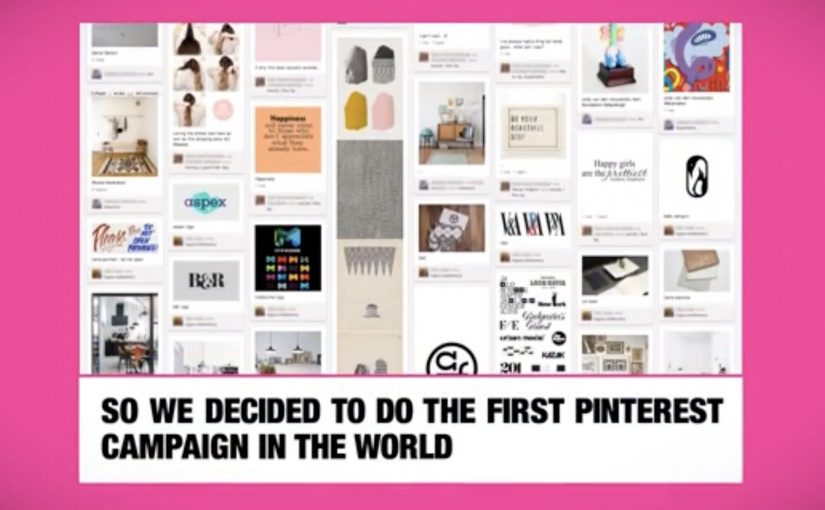
Pinterest is one of the most talked about and fastest growing social networks of 2012. What makes this social site different from the others is its pinboard-styled social photo sharing feature that allows users to create and manage theme-based image collections.

Since it is still very new, a lot of major brands do not know what to make of it. However, a couple have already found creative ways to exploit the potential of the new social media destination.

Why the native loop matters

In early-stage social platforms, the first campaigns that win tend to be the ones that treat the platform’s native behavior, pinning, collecting, repinning, as the mechanic, not as an afterthought. The native loop, the repeatable cycle of pinning, repinning, and collecting, is what makes participation feel like curation instead of work.

In global consumer brands and agencies, early pilots work best when the platform’s native loop is the unit of design, not a channel to paste old formats into.

The real question is whether your idea makes the platform’s default action rewarding before you add any media spend.

Brands should ship only what is native-first, and skip anything that needs heavy explanation to feel like it belongs.

Four early Pinterest plays worth studying

Women’s Inspiration Day by Kotex

In Israel, Kotex reportedly identified 50 inspiring women and looked at what they were pinning on Pinterest, then sent them virtual gifts. If they re-pinned the gift, Kotex would send a real gift by mail. Smoyz, the agency behind the effort, claims nearly 100% of the women posted something about their gift, not only on Pinterest, but on Facebook, Twitter and Instagram.

Puzzle by Peugeot Panama

Peugeot Panama ran a contest that awarded fans who completed their Pinterest puzzle. The brand’s Pinterest presence featured images of cars running over two or more boards. In each case, a board was missing. To get the missing pieces, fans had to go to Peugeot Panama’s website to find and complete the full image set.

Color Me Inspired by Guess

Color Me Inspired by Guess

Guess challenged its fans to create boards based on four spring colors: Noir Teal, Hot House Orange, Red Hot Overdue and New Plum Light. Participants were asked to title their boards as “Guess My Color Inspiration” and pin at least five images, each tagged with #GUESScolor, in them. Four winners were then chosen by fashion bloggers Kristina Bazan of Kayture, Michelle Koesnadi of Glisters and Blisters, Jennifer Rand of Belle De Couture and Samantha Hutchinson of Could I Have That.

Pinterest Lottery by British Midland International
Pinterest Lottery by British Midland International

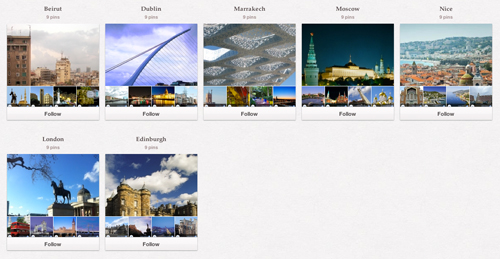
British airline “bmi” launched a game of chance to engage its fans. With “Pinterest Lottery”, bmi encouraged fans to re-pin up to six images of its travel destinations Beirut, Dublin, Marrakech, Moscow, Nice, London and Edinburgh. At the end of each week, the company chose a number at random, and users who had re-pinned the image with that number qualified for a chance to win a free return flight.

What these early campaigns get right

These ideas differ in execution, but they all turn Pinterest behavior into a simple loop you can complete and share.

Extractable takeaway: When a platform is new, design around the action people repeat, then let the reward validate the behavior, not the other way around.

  • They make “repin” the action, not the decoration. The platform behavior is the participation mechanic.
  • They reward curation. People are not asked to broadcast. They are asked to build a board that reflects taste.
  • They turn visuals into utility. Gifts, missing puzzle pieces, color palettes, destination boards. Each idea uses images as a system, not as wallpaper.

Rules for your first Pinterest test

  • Start with one native behavior. Make it do the heavy lifting, then build the incentive around it.
  • Design for identity, not reach. Boards are self-expression. Campaigns that respect that feel less like ads.
  • Keep the rules explainable. If the mechanic cannot be retold in one sentence, participation drops.

A few fast answers before you act

What made Pinterest feel different from other networks in 2012?

Its core object was a curated pinboard. People collected and organized images by theme, which made self-expression look like curation rather than status updates.

What is the common pattern across these early brand campaigns?

They use Pinterest’s native loop. Pin, repin, collect, complete, as the interaction, then attach a reward or outcome to it.

Why did Kotex’s approach travel well?

Because the output was personal and “worth pinning”. The gift reflected what someone had already revealed about themselves through their boards.

Why do puzzle and lottery mechanics fit Pinterest?

Because Pinterest already feels like collecting. Turning boards into completion tasks or numbered sets makes the platform behavior feel like a game, not a campaign.

What is the biggest risk when brands jump onto a new platform too early?

Forcing old formats into new behaviors. If the campaign does not feel native to how people already use the platform, it gets ignored or mocked.
GOL: Valentine’s Flight Seat Challenge

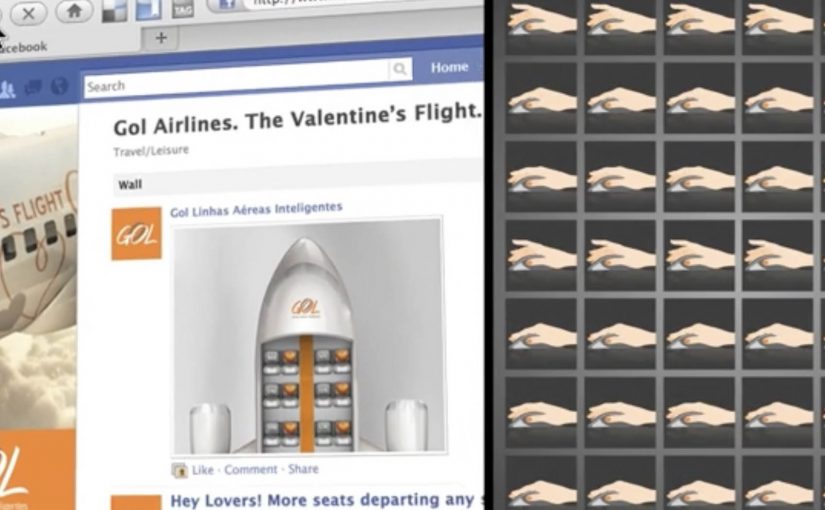
Brazilian airline GOL ran a Facebook activation designed to grow its online community and raise brand awareness in a highly competitive airline market. The insight behind it was simple. A trip can be one of the most romantic Valentine’s gifts to receive.

Over the Valentine’s weekend, GOL posted a series of images featuring empty airplane seats on its Facebook wall, without warning. The first people to see each image and comment the correct seat numbers won a pair of return tickets to any of GOL’s destinations.

The campaign was reported to have grown GOL’s Facebook community from 12,000 to over 200,000 in three days, making it number one in its category for the period.

A giveaway that rewards attention, not effort

The mechanism is a speed game disguised as a romantic prize. You do not fill out a form or write a story. You notice a post. You read a seat layout. You comment a number faster than everyone else.

In mass-market consumer categories, lightweight “attention rewards”, small prizes for noticing and reacting in the feed, can outperform complex promotions because they fit how people already behave in social feeds.

Why it lands

The execution stacks three accelerators. Surprise timing. A simple visual puzzle. A high-value reward that feels emotionally relevant to the weekend. That combination converts scrolling into urgency, and urgency fuels sharing and repeat checking, even among people who never win. The real question is whether your winner logic is instantly believable at feed speed.

Extractable takeaway: If you want rapid community growth, design a loop where the behaviour is already native to the platform, and the winner selection is instantly credible. Speed plus clarity beats creativity-plus-forms.

What the brand is really buying

Beyond awareness, this format buys habit. People learn that the page can drop value without notice, so they follow, refresh, and invite friends to watch too. The prize is the hook. The real outcome is an audience that has trained itself to pay attention at the brand’s tempo.

Steal this: Surprise-seat giveaway loop

  • Use a recognisable visual trigger. A seat map is instantly readable, even at feed speed.
  • Keep participation to one action. Commenting is frictionless. That matters more than polish.
  • Make the rules self-verifying. Everyone can see the seat numbers and understand who was first.
  • Lean on surprise scheduling. Unannounced drops drive repeat checking far better than a fixed timetable.
  • Match prize to context. A Valentine’s weekend mechanic wants a prize that feels like a shared experience.

A few fast answers before you act

What is the Valentine’s Flight Seat Challenge in one sentence?

It is a Facebook giveaway where GOL posted surprise images with empty seat layouts, and the first users to comment the correct seat numbers won return tickets.

Why does “first to comment” work so well on Facebook?

Because it rewards attention and speed, which are native behaviours in a feed. It also creates a visible, easy-to-trust winner logic.

What makes the seat map a strong creative device?

It is instantly legible, visually distinctive in the feed, and turns the brand’s core product into a simple game mechanic.

What is the biggest risk with this format?

Perceived fairness. If timing, moderation, or winner confirmation is unclear, the campaign can trigger backlash rather than growth.

What should you measure beyond follower count?

New follower retention after the weekend, engagement rate on subsequent posts, repeat participation behaviour, and whether awareness lift correlates with search and booking intent.

GOL Airlines: Mobile Check-in banner you fly

Here is a pretty innovative banner ad from AlmapBBDO in Brazil for GOL Airlines. The banner challenges you to imagine what it would be like to “fly” on your mobile phone.

You submit your mobile number into the banner. Seconds later you get a live call with flight instructions. At the same time the page transforms into a flying game controlled directly from your phone keypad.

You then fly a virtual plane across a major Brazilian travel site while destination deals appear underneath the route you choose. Flying is simple. Touch numbers to change direction and trigger special manoeuvres. The ad finishes by reminding you that flying is easier when you check in via your mobile phone.

In travel categories where products feel interchangeable, interactive creative wins when it turns a service benefit into a felt experience in seconds.

A banner that calls you back

The key move is not the game. It is the phone call. The call instantly makes the experience feel “live” and personal, and it bridges the banner and the handset into one connected moment. Once the call happens, the user is no longer passively viewing an ad. They are inside a two-device interaction.

The real question is whether your creative can make the service benefit happen inside the unit, rather than only claiming it.

This is a classic example of making the handset part of the unit. The mobile phone becomes the interface, which proves the check-in promise instead of describing it.

The mechanic: second-screen control without an app

Most second-screen ideas fail because they ask people to download something or switch contexts. This one uses what every phone already has. The keypad. In other words, the phone becomes a simple remote control for what happens on the page. That choice removes onboarding friction and makes the interaction feel surprisingly accessible for a banner unit.

It also creates a clean narrative arc. Number entered. Call received. Instructions delivered. Game begins. Deals appear. The brand claim lands as the closing line rather than the opening pitch.

In consumer travel marketing, where attention is scarce and booking friction is high, this kind of second-screen viewer control turns “convenience” into something you can feel.

Why the “flying game” format fits the job

The game is not meant to be deep. It is meant to create one sensation. Control. When you steer the plane with your own phone while destination deals appear under your route, the ad links that felt control to the check-in promise.

Extractable takeaway: If your benefit is “ease,” build a small interaction that gives the viewer control and a useful reward in the same moment. In a “message as mechanism” execution, the claim is delivered through the interaction itself, not a line of copy.

Steal this from GOL’s mobile check-in banner

  • Use a real-world channel as the trigger. A live call is stronger than a visual prompt because it changes the user’s state immediately.
  • Make the phone the interface. If you are selling a mobile service, let the mobile device do the work inside the experience.
  • Keep controls primitive and universal. Keypad inputs beat complex gestures when you need instant comprehension.
  • Reward the interaction with utility. Deals, destinations, availability, or next steps should appear as part of play, not after it.
  • End with the service tie-back. Let the experience earn the claim, then state it plainly.

A few fast answers before you act

What is the core idea of the GOL mobile-controlled banner?

You enter your phone number into a banner, receive a live call with “flight” instructions, and then control an on-page flying game using your phone keypad while travel deals appear as you fly.

Why does a phone call change the effectiveness of a banner ad?

It makes the experience feel immediate and real, and it creates a bridge from passive viewing to active participation without asking the user to install anything.

What category situations benefit most from this pattern?

Categories where the product is hard to differentiate visually and the benefit is “convenience” or “ease.” Airlines, ticketing, banking, utilities, and service platforms.

What is the biggest execution risk?

Operational friction. If the call is delayed, fails, or feels spammy, the experience collapses. Timing, consent clarity, and reliability are everything.

How would you modernise the mechanic without changing the concept?

Keep the phone as controller, but use a consent-forward trigger and fast connection method. For example, a one-tap call prompt or a verified in-browser handoff that still preserves the “live instructions” feeling.