
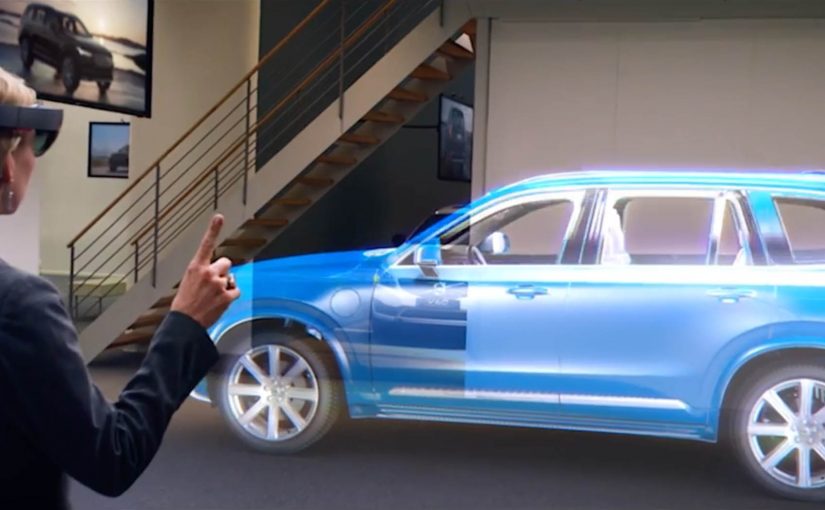
Volvo HoloLens Showroom: Virtual Dealership

The showroom no longer needs cars

Car dealerships traditionally depend on physical inventory.

Space, logistics, and availability limit what customers can see, touch, and configure. That constraint disappears when Volvo introduces a showroom experience powered by Microsoft HoloLens.

Instead of walking around parked cars, customers step into a virtual environment where full-size vehicles appear as holograms.

How the HoloLens showroom works

Using HoloLens, customers explore Volvo cars at real scale. This is mixed reality, digital objects anchored to the physical space around you.

They walk around the vehicle. Look inside. Inspect details. Colors, trims, and configurations change instantly. The experience feels physical, even though no car is present.

The showroom becomes software-driven. Inventory becomes optional.

In high-consideration retail, the job is helping people visualize options confidently before commitment, even when the product is not physically present.

Why this matters for automotive retail

This is not a gimmick. Virtual showrooms reduce the need for large floor space and allow dealerships to showcase the full portfolio, including models and options that are rarely stocked physically. Because customers can see the car at full scale and switch configurations instantly, they can compare options without relying on imagination, which makes commitment feel safer.

Extractable takeaway: If you can make options visible at real scale and changeable in seconds, you can sell preference, not availability, even when the product is not physically present.

For customers, the experience becomes calmer and more focused. There is less pressure. More exploration. Better understanding before committing.

Experience beats inventory

The deeper shift is about viewer control.

The real question is whether your showroom is designed for preference discovery or for stocking convenience.

Dealerships should treat mixed reality as a configuration layer that complements physical touchpoints, not as a tech demo.

Customers explore at their own pace. Sales staff guide rather than push. The conversation moves from availability to preference.

The dealership turns into a configuration studio, not a warehouse.

  • Make configuration the starting point. Let customers explore options first, then map the shortlist to what they can test and buy.
  • Keep staff in guide mode. Use people to frame trade-offs and confirm choices, not to gate access to information.
  • Design the experience like software. Treat the showroom as a repeatable configuration studio, not a one-off installation.

A few fast answers before you act

Is this replacing test drives?

No. A mixed reality showroom helps customers narrow configurations before a physical test drive.

What do customers actually do in the HoloLens showroom?

They walk around a life-size hologram, look inside, inspect details, and switch colors, trims, and configurations in real time.

What is the real business benefit?

Reduced reliance on physical inventory, clearer configuration conversations, and better use of showroom space.

Why does mixed reality fit automotive retail?

Cars are high-consideration purchases, so visualization can carry as much weight as specification.

What has to be true for this to feel real?

The hologram must stay aligned to the physical space, and configuration changes must respond instantly so customers trust what they are seeing.
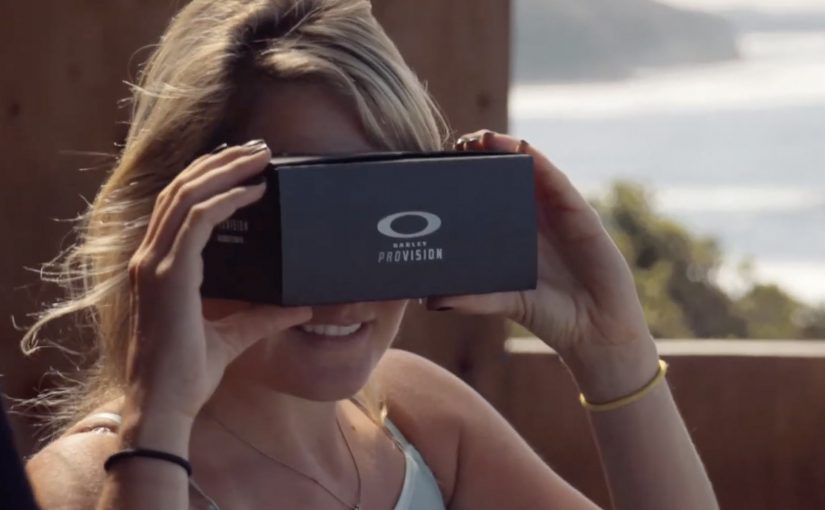
Oakley: Pro Vision with Google Cardboard

When you picture a virtual reality (VR) headset, you probably imagine something high-tech and far too expensive to feel practical. Google Cardboard takes that assumption and flips it by turning a simple cardboard cutout into a phone-powered VR viewer.

Oakley borrows that logic and puts it exactly where people already accept cardboard. The packaging. Instead of being thrown away, the box becomes the device that unlocks the experience.

Packaging that turns into a VR product

Google launched Google Cardboard as a cardboard cutout that turns Android phones into a VR headset. Oakley integrates that fold-and-slot concept into its sunglass packaging, so customers can transform the pack into a viewer and use their phone to access 360-degree content.

The payoff is described as a “you are there” look at extreme sports like surfing, skiing, mountain biking, skateboarding, and skydiving. It is less about specs and more about perspective.

In consumer product marketing, converting packaging from waste into a usable experience can create perceived value without adding new components.

Why this lands for an action-sports brand

This works because the medium matches the promise. Oakley is not only showing extreme sports. It is letting you look from inside the moment, using viewer control to make the content feel personal. The “VR made from packaging” twist also creates a good kind of surprise. The customer discovers the brand added value where they expected disposal.

Extractable takeaway: If your story is about immersion or perspective, build the experience trigger into something the customer already touches, then let the first interaction deliver the benefit before they read any explanation.

The commercial intent underneath

This is a purchase-adjacent experience. It turns the post-purchase moment into brand time, and it extends the product narrative beyond the sunglasses themselves. The packaging becomes a bridge between retail and content, with the customer doing the assembly that makes the story memorable.

The real question is whether the packaging can turn post-purchase curiosity into a usable brand experience, not whether it can imitate premium VR hardware.

What to steal from packaging-led immersion

  • Reuse an accepted “throwaway” material. If it is already in hand, it is frictionless distribution.
  • Make the first use obvious. Assembly and activation should be legible without instructions.
  • Match the experience to brand territory. Immersive POV content fits performance and extreme sports.
  • Design for sharing. If it looks clever on camera, people will demonstrate it for you.

A few fast answers before you act

What is Oakley Pro Vision in this context?

It is a packaging-led idea where an Oakley box folds into a Google Cardboard style VR viewer, using a phone to deliver 360-degree extreme sports content.

Why use Google Cardboard instead of a dedicated headset?

Because it lowers cost and setup. A phone plus folded cardboard is enough to deliver an immersive experience without asking people to buy new hardware.

What does 360-degree content add versus normal video?

It gives viewer control over where to look, which increases the sense of presence and makes the experience feel closer to a real point of view.

Where does the marketing value come from?

From turning packaging into a reusable object and extending brand time after purchase, while linking the product to high-adrenaline moments people want to feel.

What is the main failure mode with this pattern?

If the fold, fit, or onboarding is unclear, people will not assemble it. The physical usability has to be as strong as the content.