Lexus Hoverboard. Engineering a Brand Moment

Lexus builds a hoverboard. On purpose.

Lexus does not build a hoverboard to sell it.

They build it to show what the brand stands for.

The Lexus Hoverboard is a real, rideable board that levitates above the ground using magnetic levitation. It is not CGI. It is not a concept sketch. It is engineered, tested, and demonstrated.

This is brand storytelling executed through engineering, not advertising copy.

How the hoverboard actually works

The hoverboard uses magnetic levitation technology.

Superconductors inside the board are cooled with liquid nitrogen. When placed above a specially designed magnetic track, the board locks into position and floats.

The result is controlled levitation. Not free roaming, but stable, directional hovering that makes riding possible.

The constraints are part of the point. This is not science fiction. It is applied physics.

Why Lexus created it anyway

Lexus positions itself around precision, control, and advanced engineering.

The hoverboard compresses those values into a single, highly visual artifact. You do not need to read a brochure to understand it. You see it.

By placing professional skateboarders on a levitating board in a custom-built skate park, Lexus turns engineering into a cultural moment.

This is not a product launch

The hoverboard is not a prototype for future mobility.

It is a brand signal.

Lexus shows that it can take complex technology, make it work in the real world, and present it in a way that feels controlled rather than chaotic.

That matters in categories where trust in engineering is everything.

What this says about modern brand building

Brands increasingly compete on what they can demonstrate, not what they can claim.

When technology is real, visible, and difficult to fake, it carries more weight than messaging.

The Lexus Hoverboard works because it is unnecessary. It exists only to make a point.


A few fast answers before you act

Is this a real hoverboard?
Yes. It levitates using superconductors and magnetic tracks, not visual effects.

Why can it only be used in specific locations?
Because the magnetic infrastructure is part of the system.

What is Lexus really selling here?
Confidence in engineering, precision, and control.

Oakley Pro Vision

When you picture a virtual reality (VR) headset, you probably think of something really high-tech and far too expensive to be practical. Apparently, the guys at Google thought the same thing. So last year they launched Google Cardboard, a cardboard cutout that turned Android phones into a neat virtual reality headset.

Since people tend to throw away the cardboard packging of their sunglasses. Oakley decided to integrate Google Cardboard into their packaging and give customers a unique 360 degree view of various extreme sports – surfing, skiing, mountain biking, skateboarding and sky diving.

Project Soli: Hands Become the Interface

Google ATAP builds what people actually use

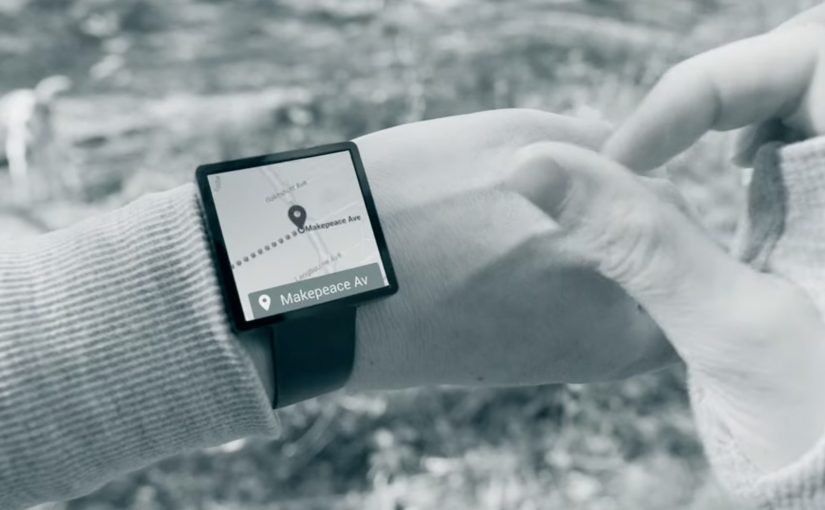
Google ATAP is tasked with creating cool new things that we’ll all actually use. At the recently concluded Google I/O event, they showcase Project Soli. A new kind of wearable technology that wants to make your hands and fingers the only user interface you’ll ever need.

This is not touchless interaction as a gimmick. It is a rethink of interface itself. Your gestures become input. Your hands become the control surface.

The breakthrough is radar, not cameras

To make this possible, Project Soli uses a radar that is small enough to fit into a wearable like a smartwatch.

The small radar picks up movements in real time and interprets how gestures alter its signal. This enables precise motion sensing without relying on cameras or fixed environmental conditions.

The implication is straightforward. Interaction moves from screens to motion. User interfaces become something you do, not something you tap.

In wearable computing and ambient interfaces, the real unlock is interaction that works in motion, without relying on tiny screens.

Why this matters for wearable tech

Wearables struggle when they copy the smartphone model onto tiny screens. Project Soli pushes in the opposite direction.

Instead of shrinking interfaces, it removes them. The wearable becomes a sensor-driven layer that listens to intent through movement.

If this approach scales, it changes what wearable interaction can be. Less screen dependency. More natural control. Faster micro-interactions.


A few fast answers before you act

Is Project Soli just gesture control?

It is gesture control powered by a radar sensor small enough for wearables, designed to make hands and fingers the primary interface.

Why use radar instead of cameras?

Radar can sense fine motion without relying on lighting, framing, or line-of-sight in the same way camera-based systems do.

What is the real promise here?

Interfaces that disappear. Interaction becomes physical, immediate, and wearable-friendly.