
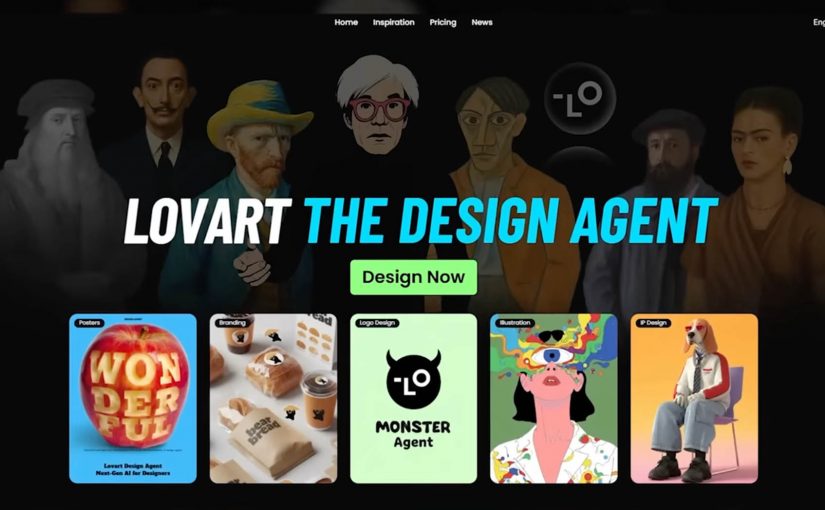
Lovart AI: Photoshop, Now as Simple as Paint

The Lovart AI ‘designer for everyone’ moment just got real

For decades, creative software demanded expertise. Layers. Masks. Rendering. Color theory. Not because it was fun, but because the tools were built for specialists.

Lovart frames a different future. Instead of learning the tool, you describe the outcome, and an AI design agent orchestrates the work across assets and formats.

What Lovart is really selling. Creative output as an agent workflow

The shift is not “design got easier”. The shift is that the workflow collapses into intent. You type what you are trying to achieve, and the system produces a coordinated set of outputs.

In enterprise brand teams, the main unlock from agentic design tools is faster option generation while governance and taste still decide what ships.

For consumer experience teams, that matters because the same system can start feeding campaign adaptation, ecommerce assets, CRM creative, and localized variants from one brief.

In the positioning and demos around Lovart, the promise is that you can move from a prompt to a usable bundle of creative. Brand identity elements. Campaign assets. Even video outputs. Without tutorials, plugins, or the classic “maybe I will learn Photoshop someday” hurdle.

By “agentic design tools,” I mean systems that plan and execute multi-step creative work across assets and formats, not just generate a single output.

Why Photoshop starts to feel like Microsoft Paint

This is not a diss on Photoshop. It is a reframing of value.

When an agent can produce a coherent set of assets quickly, the advantage shifts away from operating complex software and toward higher-order thinking:

  • What is the offer.
  • What is the story.
  • What is the differentiation.
  • What should the system optimize for. Consistency, conversion, memorability, or speed.

If everyone can generate assets, the edge belongs to people who can direct the system with clarity and taste, not just execute.

The commercial test is simple. Does this reduce cycle time, lower production friction, and increase useful variation without weakening brand control.

The real constraint moves upstream. Taste, strategy, and governance

The future hinted at here is not more content. It is a faster creative pipeline, which means the operating challenge moves to guardrails, approvals, and reusable brand logic.

Extractable takeaway: When production gets cheap, the advantage shifts to upstream constraints. A shared definition of “good”, plus guardrails and review rhythms, beats faster output alone.

  1. How do you keep quality high when output becomes abundant.
  2. How do you keep brand coherence when anyone can spin up campaigns in minutes.

For enterprise teams, the real decision is where this sits in the stack. Concepting, campaign adaptation, localization, ecommerce variation, or CRM asset production, and who owns briefing, review, and quality control.

The real question is whether you can define “good” once and enforce it consistently when output becomes abundant.

Brand teams should treat agentic design as a governance problem first, not a production shortcut.

This is where the craft does not disappear. It relocates. From hands-on production to creative direction, guardrails, and decision-making.

Directing agentic design without losing the brand

Lovart is a signal that creative tooling is becoming agentic. The barrier is no longer the interface. The barrier is whether your team can turn brand intent into reusable rules, decision criteria, and review checkpoints across channels.

  • Write the brief like a spec. Describe the offer, the audience, the constraints, and what “good” looks like before you generate.
  • Decide the guardrails up front. Clarify what must stay consistent across assets, and what can vary for speed and experimentation.
  • Keep humans as the decision layer. Use the agent for options and iteration, then apply taste and governance to choose what ships.

The pressure point is not adoption alone. It is whether your operating model, approval flow, and content stack are ready for it.


A few fast answers before you act

What is Lovart in one sentence?

Lovart is a design-oriented agent experience that turns a brief into a guided workflow. It plans, generates, and iterates across assets, rather than handing you a blank canvas.

How is this different from using Photoshop plus AI tools?

The difference is orchestration. Instead of switching between tools and prompts, the workflow becomes “brief to deliverables” with the system managing steps, versions, and outputs.

Does this replace designers?

It can replace some production tasks and speed up concepting. It does not replace taste, direction, brand judgment, and the ability to decide what is worth making.

What should brand teams watch closely?

Brand safety, rights and provenance, and consistency. Faster creation increases the need for clear guardrails, review, and a shared definition of “good.”

What is the simplest way to test value?

Pick one repeatable asset type, run the same brief through the workflow, and compare speed, quality, revision cycles, and brand-control effort against your current process.
Ford Smart Lane-Keeping Bed

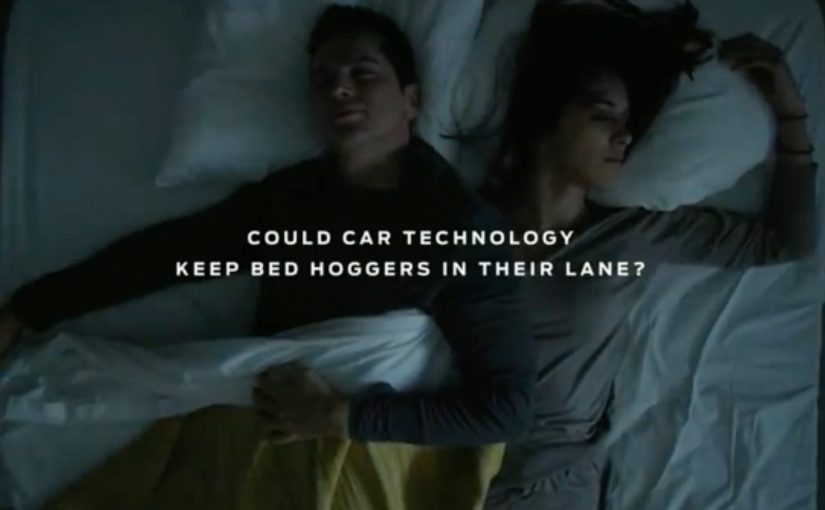
Ford Europe has unveiled a “Lane-Keeping Bed” that ensures partners always have equal amounts of sleeping space. The idea was inspired by the driver-assist technology that prevents unintentional drifting in new models like the 2019 Ford Ranger.

As demonstrated in the video below, pressure sensors detect when an active dreamer strays to the opposite side of the mattress and triggers an integrated conveyor belt that puts them back where they belong.

Like Ford’s noise-cancelling dog kennel, the Lane-Keeping Bed is only a prototype in the company’s “Interventions” series of innovations that extend beyond the car industry.

What makes this more than a gimmick

The best part of this idea is how clearly it translates a car behavior into a home behavior. Lane-keeping takes a drifting object and gently guides it back. Here, the drifting object is a person during sleep, and the “guidance” is a slow conveyor movement that restores the boundary without turning the moment into a fight. That matters because it turns a familiar assistive correction into a domestic fix people can understand in seconds.

Why it works as a brand signal

Ford’s “Interventions” framing matters. It positions the company’s tech capabilities as transferable. Sensors, assistive correction, and comfort innovations are not locked inside vehicles. They can show up wherever people experience everyday friction.

Extractable takeaway: When a product behavior is hard to explain in its native category, move it into a familiar everyday setting where the tension is obvious and the benefit can be seen instantly.

In consumer brands, the fastest way to make a technical capability stick is often to place it inside an everyday tension people already recognize.

The real question is whether a brand can make an assistive technology feel useful, human, and memorable outside its core category.

This works because Ford is not pretending to sell beds. It is using the prototype to make its driver-assist logic easier to notice, remember, and talk about.

What to borrow if you build products or campaigns

  • Start from a real tension. Mattress hogs are a universal problem, and the benefit is instantly understood.
  • Make the mechanism visible. Pressure sensors plus a moving belt is easy to demonstrate, so the story travels.
  • Prototype to communicate capability. Even if it never ships, it can reframe what your brand is “good at”.

A few fast answers before you act

What is Ford’s Lane-Keeping Bed?

It is a prototype bed concept that uses pressure sensors and an integrated conveyor belt to move a drifting sleeper back to their side of the mattress.

What inspired the idea?

It was inspired by Ford’s driver-assist technology that helps prevent unintentional drifting in vehicles like the 2019 Ford Ranger.

How does it detect someone moving across the bed?

Pressure sensors detect when a sleeper strays to the other side, then trigger the conveyor belt response.

Is this a real product for sale?

No. It is presented as a prototype within Ford’s “Interventions” series, which explores ideas beyond the car industry.

What is the main takeaway?

Take a capability you already own. Translate it into a different everyday context where the tension is obvious and the benefit is immediate.

Robomart: driverless grocery at your door

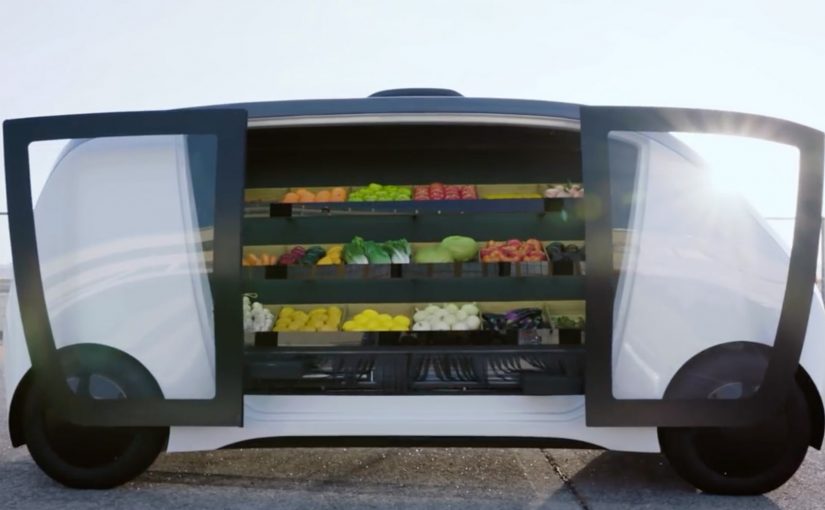
A mobile grocery store pulls up outside your door. You unlock it with a code, step up to the vehicle, pick what you want from everyday items and meal kits, and you are done. This spring, Robomart, a California-based company, teams up with grocery chain Stop & Shop to trial what it positions as a driverless grocery store service in Boston, Massachusetts.

What Robomart is solving in grocery

Grocery is often described as a roughly $1 trillion market, yet only a small fraction of spend moves online. Two frictions dominate. On-demand delivery is expensive for retailers to fund sustainably. And for many shoppers, the moment that matters is still the same: picking your own food.

How the Robomart experience works

The flow is designed to feel like the convenience of the old door-to-door model, updated with autonomous tech.

  1. You summon the mobile store using a mobile app.
  2. When it arrives outside your door, you enter a code to unlock the doors.
  3. You grab what you want from the on-board selection of everyday items and meal kits.

In this post, “driverless” is shorthand for a self-serve visit where the customer interaction is handled by software, not a human driver at the door.

In US metro areas where time-poor households do quick top-up shops, a curbside micro-store can trade delivery labor for self-serve convenience.

Why the code-unlock handoff feels trustworthy

The mechanism is simple: you physically see the inventory, you choose the exact item, and you only open what you are entitled to via an authenticated code. Because the handoff is “pick it yourself” instead of “accept a substitution,” the model reduces the trust and quality anxiety that makes grocery delivery feel risky for fresh and high-preference items.

Extractable takeaway: If you want on-demand convenience without paying full delivery labor, move the last meter of work back to the shopper, but keep the moment of choice in their hands.

The bigger pattern: autonomy scales door-to-door retail

For decades, consumers have enjoyed the convenience of a local greengrocer, milkman, or ice-cream vendor coming door to door. It rarely makes economic sense to scale. The claim here is that autonomous driving changes the cost equation enough to make the model viable at scale. The vehicle becomes a moving retail shelf, and the app becomes the “front door” that controls access and payment.

This model succeeds when autonomy removes labor cost, while shopper control stays high on selection, timing, and authentication.

For digital and retail leaders, the key design move is the same across variants. Make the pickup moment fast, self-serve, and verifiably secure. The rest is unit economics, route density, and replenishment discipline.

A second proof point: Nuro and Kroger’s autonomous lockers

A similar model shows up in summer 2018, when Nuro teams up with supermarket giant Kroger for autonomous grocery delivery in Scottsdale, Arizona. The mechanics differ. It is not a roaming mini-store. It is pre-picked orders loaded into secure lockers. But the handoff is the same. A code unlocks your groceries.

  • Customers place an order with Kroger via a smartphone app.
  • Staff load the autonomous pod’s secure lockers with the customer order at the depot.
  • When the “R1” autonomous delivery pod arrives, the customer enters a code to open the locker and access their groceries.

The two examples illustrate a useful split. Robomart maximizes shopper choice at the vehicle. Nuro and Kroger maximize efficiency by pre-picking, then making the handoff secure and low-touch.

What to steal for retail and CX teams

  • Design for viewer control at the moment of choice. If customers cannot see and select, they will demand tighter guarantees on substitutions, freshness, and refunds.
  • Make access visibly secure. Code-based access is not just a security control. It is a trust signal that “this is yours” and that the inventory is protected.
  • Keep the interaction time-boxed. The value proposition collapses if a “2-minute pickup” becomes a 10-minute browse, and route plans start to break.
  • Instrument the handoff, not just the app. Track unlock success, dwell time, abandoned sessions, and replenishment accuracy. That is where the model wins or dies.
  • Decide what you are scaling. If you scale choice, accept more on-vehicle assortment and replenishment complexity. If you scale efficiency, accept more pre-pick labor and substitution policy.

A few fast answers before you act

What is Robomart, in this post?

A “store on wheels” experience you summon via app, then unlock with a code so you can pick items directly from the vehicle.

Where does the Stop & Shop trial take place?

Boston, Massachusetts.

Why has grocery been slow to move online?

Retailers struggle to fund on-demand delivery economics, and many consumers prefer to pick their own food, especially for fresh and high-preference items.

What is the comparable example mentioned?

Nuro and Kroger’s autonomous grocery delivery service in Scottsdale, Arizona, using secure lockers opened by code on an “R1” pod.

What has to be true for this model to scale?

High route density, fast and reliable unlock-and-pickup flows, disciplined replenishment, and clear policies for availability, substitutions, and refunds.