
Novalia: Playable Album Cover DJ Deck

You pick up a record, touch the artwork, and the sleeve behaves like a DJ controller. Swipe to scratch. Tap to trigger effects. Use the crossfader. The physical album cover becomes an input device, not just a package.

That’s the latest project from Novalia, a Cambridge-based company that turns classic print into smart, touch-based surfaces using conductive ink and sensors, previously seen in work like The Sound of Taste.

How the album cover becomes a controller

For this release, Novalia works with DJ Qbert to create what is described as the world’s first interactive DJ decks on an album cover. The cover includes a printed mixer and deck layout. Touching the surface activates a companion setup with the Algoriddim djay app, allowing the user to scratch, mix, and fade any songs they already have loaded in the app directly from the paper surface.

Under the hood, the cover uses printed touch sensors. Those sensors translate finger position and gestures into control signals that the DJ app can interpret like a hardware controller.

In music and entertainment packaging, interactive print can turn a passive object into a playable interface, which makes “physical media” feel alive again. Here, interactive print means a printed surface with touch-sensitive inputs that control a connected digital experience.

Why this lands

This works because it collapses the gap between artwork and performance. The cover is not a souvenir. It is an instrument. That shift creates immediate curiosity and a strong demo moment, and it makes the format, vinyl and packaging, part of the innovation rather than a nostalgic constraint.

Extractable takeaway: If you want people to care about a physical format, give it a job. Turn the object into an interface that controls something digital, so “owning it” unlocks a behaviour, not just a collectible.

What the tech is really proving

Novalia is not just showing a clever one-off. It is demonstrating that printed surfaces can behave like UI. Buttons, sliders, decks, and triggers, without looking like electronics. The real question is how a printed object can stop being packaging and start behaving like an interface people want to use.

That opens the door for interactive posters, magazine inserts, packaging, and merchandise that can control sound, apps, or connected experiences while staying lightweight and familiar.

What to steal from interactive print packaging

  • Make the object the interface. The most memorable interaction is the one that defies expectations of the format.
  • Use a companion app people already accept. Pair print with a mainstream app so the learning curve stays low.
  • Design for demo. If it looks good on camera, your audience will do distribution for you.
  • Keep the interaction legible. Touch, swipe, fade, scratch. Actions should map to familiar behaviours.

A few fast answers before you act

What is a “playable” album cover?

It’s an album sleeve printed with touch sensors so the artwork functions like a controller. Your fingers become the input, and the connected app produces the sound.

What does Novalia contribute to this project?

Novalia provides the interactive print technology. Conductive ink touch sensors and the electronics layer that translates touches into control signals.

Do you control only the album’s music?

The setup is designed to control tracks loaded into the companion DJ app, so the interaction is not limited to the album content itself.

Why is this more compelling than a QR code to a playlist?

A QR code points somewhere else. This makes the physical object itself the experience, which increases replay value and perceived uniqueness.

Where does this pattern make sense outside music?

Anywhere the packaging or printed surface can become an input. Posters, product boxes, magazine inserts, event badges, and retail displays that trigger sound, data capture, or app control.
Grolsch: The Movie Unlocker

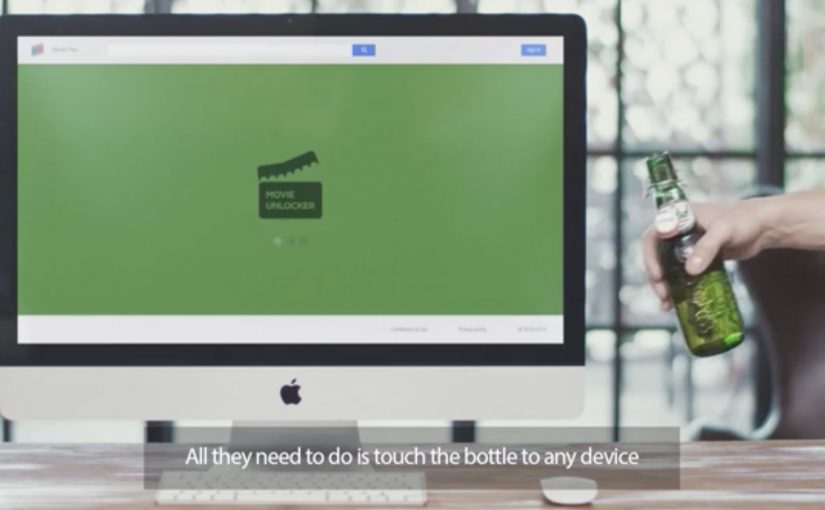
Paying for movies with a credit card is framed as yesterday’s behaviour. Grolsch positions a new alternative as “Movie Unlocker” technology, letting consumers use the beer bottle itself as the key to watch movies online.

The bottles are described as being fitted with custom Bluetooth beacons that transmit a unique code when brought close to a laptop or smartphone with Bluetooth Low Energy, or BLE, enabled. That code verifies the user and unlocks access to the chosen movie.

How the bottle becomes the checkout

The mechanism is a proximity-based redemption flow. Open the beer. Bring the bottle near your phone or laptop. The beacon transmits an identifier. The partner website receives it, validates it, and then grants access.

Functionally, it’s the same “code under the cap” idea, but moved from manual entry to a one-touch interaction triggered by distance and Bluetooth.

In consumer promotions, frictionless redemption mechanics often outperform bigger media spend because they turn the product into the access token.

Why “bottle-as-ticket” works

This lands because the value exchange is immediate and physical. The bottle is proof-of-purchase, and the unlock moment happens in the same context as consumption. At-home. On-device. With minimal steps. That makes the reward feel like a feature of the product, not a separate campaign hoop.

Extractable takeaway: If you want high participation in a reward mechanic, eliminate typing and logins where possible. Use a physical trigger that makes redemption feel like a natural extension of the product ritual.

What the brand is really optimizing

The real question is how to make purchase verification feel like part of the product experience rather than a separate redemption step.

Beyond “cool tech,” this is about repeat preference. It attaches a digital entertainment benefit to a beer purchase, creating a reason to choose Grolsch again the next time someone is deciding in-store.

What to steal from bottle-as-ticket

  • Turn proof-of-purchase into a trigger. Let the product initiate the unlock, not a coupon field.
  • Design for the living room moment. Redemption should work where consumption happens.
  • Keep the exchange legible. “Beer near device equals movie” is easy to explain.
  • Make authentication invisible. Users should feel the magic, not the plumbing.

A few fast answers before you act

What is Grolsch Movie Unlocker?

It’s a promotion mechanic where a beer bottle transmits a unique Bluetooth Low Energy code to help unlock a movie online.

What does BLE do here?

BLE enables low-power proximity communication so a nearby bottle can pass an identifier to a phone or laptop without pairing like a normal accessory.

Is this replacing payment or replacing a promo code?

It functions like replacing the promo code step with a proximity trigger. The “payment” is effectively the purchase of the beer tied to the unlock.

Why is this better than typing a code?

It reduces friction. Fewer steps usually means higher completion and less drop-off in promotional redemptions.

What’s the biggest practical risk?

Reliability and onboarding. If Bluetooth is off, compatibility is unclear, or the unlock flow is confusing, the perceived magic disappears fast.

Jibo: The Social Robot for the Family

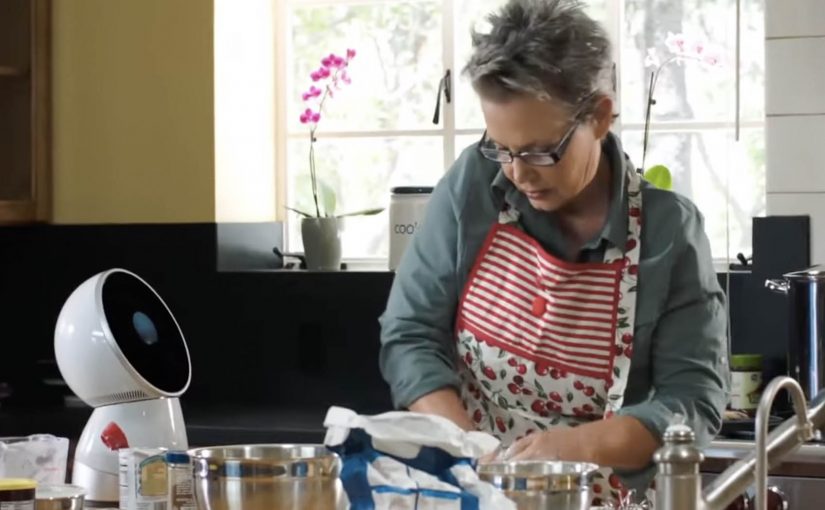
A robot that provides a personal and meaningful human experience is set to become reality through Jibo, an 11 inch tall, 6 pound, swiveling circular robot. Friendly, helpful and intelligent, Jibo is billed as the world’s first social robot for the family. Here, “social robot” means a robot designed to feel present and interactive in everyday home life, not just to complete tasks.

Here is a short demo video created for its crowdfunding campaign.

The pitch is “relationship”, not “utility”

The mechanism is straightforward. A small tabletop robot with a swiveling body and a screen uses motion, timing, and conversational cues to feel present in the room, rather than behaving like a static gadget. That matters because a sense of presence makes the product easier to imagine in the home than a static device would.

In consumer technology launches, the hard part is not explaining what the product does. It is making people feel why they would want it in their home.

Why it lands

This works because it frames the robot as a character. When a device has personality, the viewer stops evaluating it like a spec sheet and starts imagining it as part of daily routines. That shift is exactly what a crowdfunding-style launch needs, because belief and emotional attachment matter before the product is widely available.

Extractable takeaway: If you are launching something unfamiliar, do not lead with feature lists. Lead with a clear role the audience can picture, then use design and behavior to make that role feel natural and desirable.

What the business intent really is

The demo video is doing more than product explanation. It is creating a category frame. “Social robot for the family” is a positioning stake, and the crowdfunding moment is the fastest way to turn curiosity into momentum, pre-orders, and a community that will advocate for the concept.

The real question is not whether the robot can do enough, but whether people can imagine wanting it around them every day. For a product like this, positioning the relationship comes before explaining the utility.

What product marketers should borrow

  • Make a new category legible. Give the audience a simple label they can repeat to others.
  • Use behavior as proof. How the product moves, reacts, and “shows attention” can persuade faster than technical claims.
  • Sell the role. “What is this in my life” beats “what is this in the lab”.
  • Build community early. Crowdfunding works best when supporters feel like first insiders, not early buyers.

A few fast answers before you act

What is Jibo?

Jibo is a small tabletop robot positioned as a “social robot for the family”, designed to deliver a more personal, human-feeling interaction than a typical gadget.

How big is it?

The project describes Jibo as about 11 inches tall and around 6 pounds.

What does “social robot” mean here?

It refers to a robot designed for human interaction and presence in the home, using behavior and personality cues rather than only task execution.

Why launch via a crowdfunding demo video?

Because new categories need belief before they need scale. A demo video can communicate the role, the feeling, and the promise quickly, then convert interest into early supporters.

What is the main lesson for product marketers?

When the product is unfamiliar, show the “relationship” it creates in context, then let the technology sit behind the experience.