
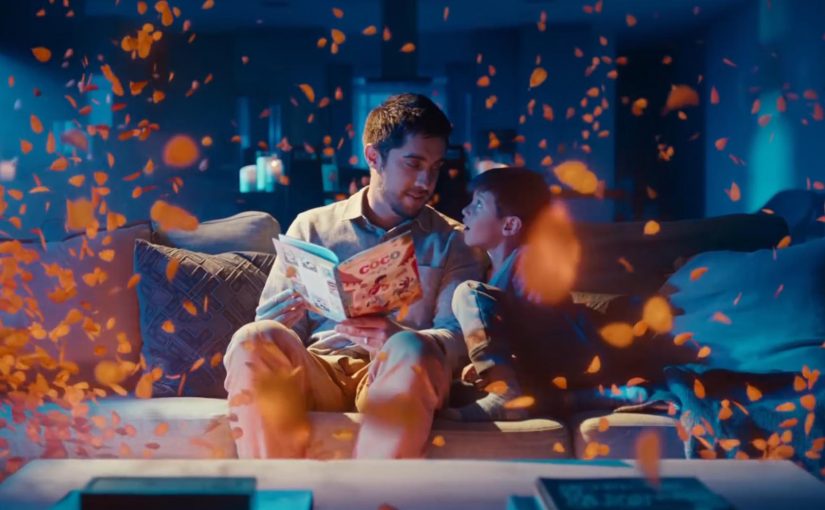
Google Home Mini: Disney Little Golden Books

You start reading a Disney Little Golden Book out loud, and your Google Home joins in. Sound effects land on cue. The soundtrack shifts with the scene. The story feels produced, not just read.

The partnership. Disney storybooks with an audio layer

Google and Disney bring select Disney Little Golden Books to life by letting Google Home add sound effects and soundtracks as the story is read aloud.

How it works. Voice recognition that follows the reader

The feature uses voice recognition to track the pacing of the reader. If you skip ahead or go back, the sound effects adjust accordingly. If you pause reading, ambient music plays until you begin again. Because it can follow your pacing in real time, the audio can land on cue without you triggering effects manually.

Why it lands. Produced storytime without a screen

In family living-room media, the win is turning passive reading into a shared, timed audio experience without adding another screen. The listener hears the same beats the reader sees, so the room stays in one moment instead of splitting attention across devices.

Extractable takeaway: When you add an audio layer to an analog ritual, sync it to human pacing rather than button presses, so the experience feels guided while staying hands-free.

The real question is whether the audio layer earns its place by deepening the ritual, not by adding novelty.

This is a strong pattern for smart speakers because it increases interactivity without pulling a family into more screen time.

How you start. One voice command

To activate it, say, “Hey Google, let’s read along with Disney.”

Always listening during the story

Unlike typical commands, the smart speaker’s microphone stays on during the story so the device can follow along and add sound effects in the right moments.

Privacy note in the product promise

To address privacy concerns, Google says it does not store the audio data after the story has been completed.

Where it works

This feature works on Google Home, Home Mini, and Home Max speakers in the US.

What to copy for read-along audio experiences

  • Anchor to a ritual. Start with something people already do, then add audio that fits the habit.
  • Follow the human pace. Track reading speed, pauses, and backtracking so timing feels natural.
  • Keep it screen-free. Make the audio layer the enhancement, not a gateway to another display.
  • State the privacy posture. If the mic stays on, explain clearly what is and is not retained.

A few fast answers before you act

What is “Read along with Disney” on Google Home?

It is a Google and Disney feature that adds sound effects and music to select Disney Little Golden Books while you read aloud.

How does it stay in sync with the reader?

Voice recognition follows the pacing of the read-out-loud audio and adjusts if you pause, skip ahead, or go back.

How do you start it?

Use the voice command shown in the post, then begin reading the supported book out loud so the speaker can follow along.

What is the key experience detail that makes it feel “produced”?

The audio layer lands on cue as you read, so the story rhythm feels guided without the reader needing to trigger effects manually.

What is the stated privacy promise during the story?

The product promise described here is that audio is used to follow the reading experience and is not kept after the story completes.
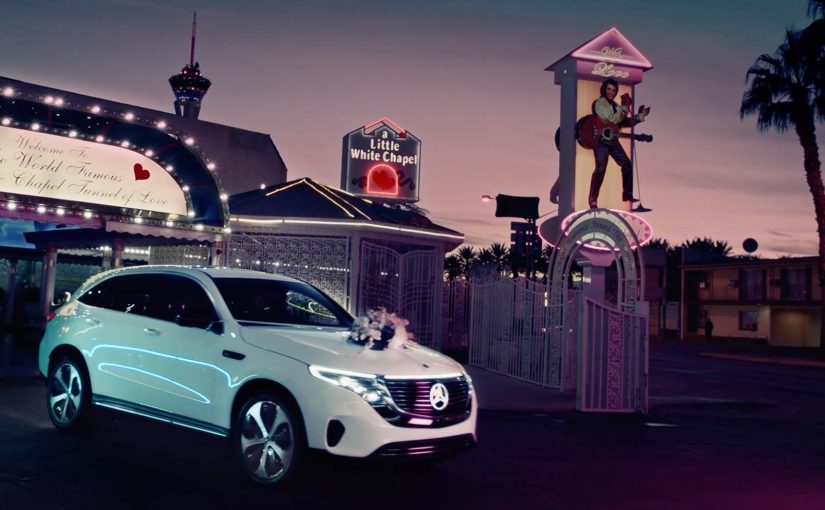
Mercedes-Benz: Yes, A.I. Do

For the world premiere of their new Mercedes-Benz EQC at CES 2019 in Las Vegas, Mercedes transformed their new model into a wedding carriage. Four lucky couples were invited to test drive the new Mercedes-Benz EQC on the roads of Las Vegas and experience its special A.I. features first hand. In this context, “A.I. features” refers to the in-car intelligent functions Mercedes chose to demonstrate during the drive.

The real question is how you make a new, tech-heavy product feel experienceable in minutes, not explainable in slides.

Why this launch twist works

By wrapping a CES tech premiere in a wedding ritual and putting couples behind the wheel, Mercedes turns abstract capability into visible behavior. The ritual creates instant stakes and attention, so the A.I. moments are noticed as part of a real drive, not as claims.

Extractable takeaway: If your features are hard to describe, borrow a human ritual people already recognize so the experience carries the technology.

  • It turns a product reveal into a story. A “wedding carriage” reframes a tech premiere into an experience people immediately understand.
  • It makes A.I. tangible. Instead of describing features on a stage, it puts them into a real drive where reactions matter.
  • It earns attention without shouting. The setup is unusual enough to travel, while still keeping the car at the center.

In consumer-tech and automotive launches where attention is fragmented and skepticism is high, familiar rituals help audiences grasp “what is happening” before they judge “what it does”.

Steal the ritual frame for launches

Wrap a launch moment in a simple, human ritual. Then invite a small group to experience the product in-context so the story carries the technology, not the other way around.

  • Pick a ritual that already means something. Use a simple human frame to make the launch instantly legible.
  • Let real use do the persuading. Put the product into an in-context experience so reactions carry more weight than narration.
  • Keep the product as the stage. The theme should guide attention toward the product experience, not away from it.

A few fast answers before you act

What happened in the Mercedes-Benz “Yes, A.I. Do” activation?

For CES 2019 in Las Vegas, Mercedes used the EQC premiere as a wedding-carriage themed experience and invited four couples to test drive the car and experience its A.I. features first hand.

Why use couples and a wedding theme for a car launch?

It creates an instantly recognizable narrative frame, which makes the activation easier to remember and easier to share than a standard demo.

What is the main takeaway for product launches?

Give the viewer a clear story hook, then let the product prove itself through a real experience rather than through claims.

How do you keep a stunt from overshadowing the product?

Make the product the “stage”. The theme should guide attention toward the experience of the product, not away from it.

Ford: Noise-Cancelling Kennel

A dog hears the first firework bang and starts to panic. The family tries the usual fixes. Closing curtains. Turning up the TV. Comforting words. But the noise still cuts through, and the stress spreads to everyone in the room.

Ford’s noise-cancelling kennel concept takes a different angle. It treats fireworks like an engineering problem. The prototype uses microphones to detect sudden loud sounds, then a built-in audio system plays opposing frequencies to reduce the noise inside the kennel. Sound-deadening materials, including high-density cork, add a physical layer of insulation on top of the active cancellation.

In consumer innovation storytelling, especially when the tech is hard to “see,” the fastest way to earn belief is to show it solving a small, relatable problem.

The real question is whether your R&D can earn belief by solving a tiny, emotional problem in the real world.

The idea is inspired by the Active Noise Control Ford introduced in the Edge SUV to make journeys quieter. Inside the Edge SUV cabin, microphones pick up unwanted noise and the audio system counteracts it with opposing sound waves. Here, the same principle is applied to a safe space for dogs during fireworks.

Why this lands with people who do not care about car tech

Because the benefit is immediate and emotional. Fireworks anxiety is common, and the problem shows up at home, not in a showroom. The kennel reframes Ford’s engineering as something that protects a family moment, not just something that improves a drive.

Extractable takeaway: When your technology is invisible, translate it into a felt reduction of a specific stressor. Reducing the sharp peaks of fireworks noise inside a safe space lowers the trigger that starts panic, so calm becomes observable in seconds.

What Ford is really building with “Interventions” thinking

This is a brand-positioning move disguised as a pet story. By “Interventions” thinking, Ford is repurposing a familiar experience into a purposeful disruption that makes the benefit felt immediately. It signals that automotive R&D can be repurposed into everyday life solutions, and it does it without a hard sell. The prototype is the proof-of-intent.

What to steal if you want to translate R&D into culture

  • Start with a problem people already feel. Fireworks fear is instantly understood without explanation.
  • Use a single, credible technology transfer. One tech. One benefit. No feature soup.
  • Make the benefit visible in seconds. Calm is the KPI here, not product specs.
  • Let the prototype be the story. A working concept creates more belief than a manifesto.

A few fast answers before you act

What is Ford’s noise-cancelling kennel concept?

It is a prototype dog kennel designed to reduce fireworks noise using active noise control and sound-insulating materials, giving anxious dogs a calmer space.

How does the noise cancellation work in simple terms?

Microphones detect the loud sound, then speakers play an opposing sound wave to reduce it. Physical insulation also helps block and absorb noise.

Is this a product you can buy?

It is presented as a concept/prototype rather than a retail product, used to demonstrate how existing Ford technology could be applied to everyday problems.

Why connect this to the Ford Edge SUV?

Because the kennel borrows the same Active Noise Control principle used to reduce unwanted noise in the vehicle cabin, then applies it to a different environment.

What is the main risk with “tech repurposed for good” ideas?

If the link between the original technology and the new use case feels flimsy, it reads as a gimmick. The transfer has to be technically believable and emotionally relevant.