
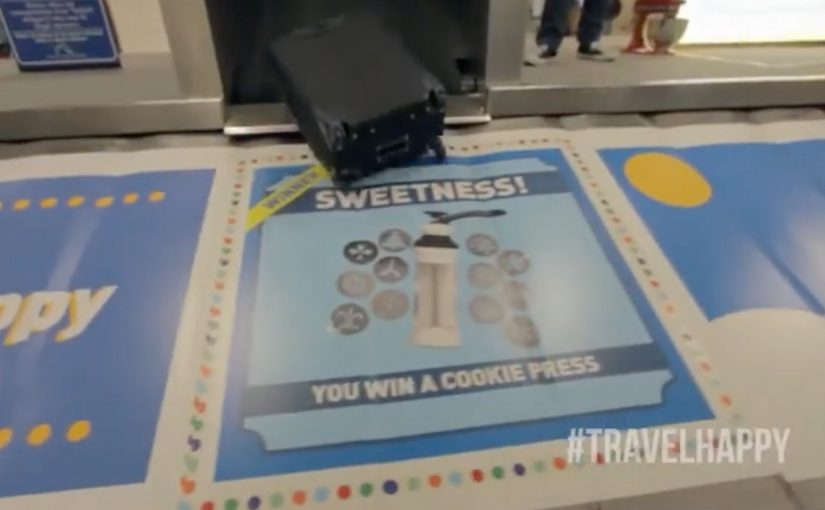
Zappos Thanksgiving Baggage Claim

Thanksgiving Eve is one of the most stressful days to travel. So Zappos shows up in a place most people associate with impatience. The baggage claim carousel.

At Houston’s George Bush Intercontinental Airport, Zappos turns sections of a baggage carousel into a roulette-style game. Parts of the moving belt are marked with prizes and slogans. When your suitcase arrives and lands on a prize square, you win what it lands on. That can be a product prize or a gift card. Suddenly, the worst part of the journey becomes the most watchable part.

Why the idea works

The activation flips the emotional context. Baggage claim is pure friction. Zappos turns it into anticipation. People are already looking at the carousel. They are already waiting. The brand simply changes what “waiting” feels like by adding suspense and a tangible upside.

The CX mechanics are simple by design

  • No app. No instructions. You just wait as usual.
  • Instant feedback. Your bag lands. You know if you win.
  • Social energy. People around you start watching your outcome too, because it is a shared moment.

What to steal

  • Pick a real pain point where attention is already guaranteed, then redesign the emotion of that moment.
  • Make participation automatic. If people must opt in, you lose most of the crowd.
  • Use a reward that is immediate and credible, so the surprise feels real, not promotional.

A few fast answers before you act

What is the Zappos Thanksgiving baggage claim activation?

A roulette-style baggage carousel game at an airport on Thanksgiving Eve where travelers win prizes based on where their luggage lands.

Why is baggage claim such a strong place for this?

It is a high-friction moment with captive attention. Everyone is already watching the belt and waiting.

What is the core experience design principle?

Reduce friction by changing the emotion of the same behaviour. Waiting stays the same, but it becomes suspense and delight instead of irritation.
Adidas Boost

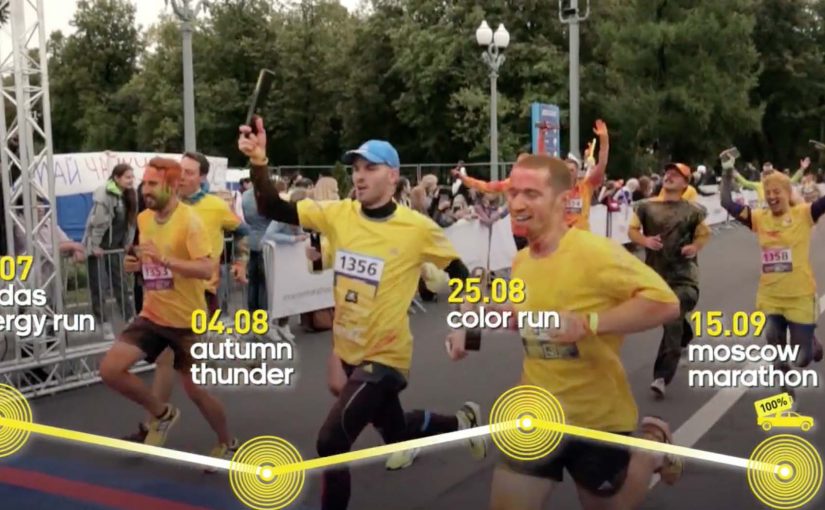
Adidas is using its new Boost technology. Built around returning energy to runners. To promote it, TBWA\Moscow created a running project that does something surprisingly literal. It turns running energy into electricity to light up a stadium.

The project is called “Charge the city with the energy of running”. It covers four races. Adidas Energy Run, Autumn Thunder, Color Run and the Moscow Marathon. Runners are given mobile generators that transform kinetic energy into electricity. The collected energy from hundreds of runners is then channeled to illuminate a stadium in Protvino. A town whose stadium has had no light since 1984.

Why this works as a product story

The benefit claim behind Boost is “energy return”. This activation makes that claim physical. You do not just hear about energy. You see it converted. Stored. And used for something meaningful.

Why the race selection matters

By spanning multiple races, the idea scales naturally. More events means more runners. More runners means more energy. The story gets stronger with participation, and every participant can feel like they contributed to a shared output.

What to borrow for brand activations

  • Make the product promise measurable. Convert the benefit into something people can see and count.
  • Build a shared outcome. Lighting a stadium is a clear “we did this together” moment.
  • Use participation as media. The crowd is not an audience. The crowd is the engine.

A few fast answers before you act

What is Adidas Boost in this context?
A running-shoe technology positioned around returning energy to runners, promoted here via a real-world energy-generation project.

What was the “Charge the city with the energy of running” project?
A TBWA\Moscow activation where runners used mobile generators to convert kinetic energy into electricity to light a stadium in Protvino.

Which races were included?
Adidas Energy Run, Autumn Thunder, Color Run and the Moscow Marathon.

What was the impact point in Protvino?
The collected electricity was used to illuminate a stadium that had no light since 1984.

Why is this a strong marketing mechanic?
Because it turns the product promise into visible proof, and makes participation create the outcome.

Beaming Rocket: LG MiniBeam Street Projections

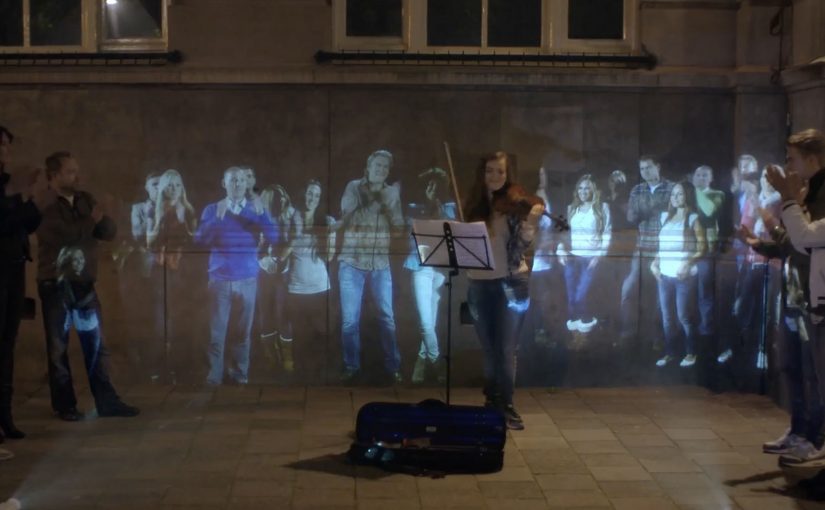
LG, to make everyday life more fun and exciting, decided to bring a few surprises to the street. They found Juan, a video artist who took his hobby to another level with LG’s portable projectors. Together they surprised and entertained people in ways never expected.

Portable projection as street-level theatre

The mechanism is the point. A small, mobile projector turns almost any surface into a temporary screen, and that mobility lets the experience pop up where people least expect it. Instead of asking people to come to a venue, the “venue” appears around them for a few seconds, then moves on.

In consumer electronics marketing, the fastest way to prove portability is to show the product leaving the living room and creating value in public spaces.

Why it lands

This works because it turns a spec sheet into a story. Brightness and portability are hard to communicate in words, but they become self-evident when a projection transforms a wall, a street corner, or a passing moment into something shareable.

Extractable takeaway: When a product benefit is experiential, demonstrate it through a simple, repeatable scene that makes the benefit visible without explanation.

What LG is really selling here

The film is doing more than showcasing “fun.” It is positioning a portable projector as a creative tool, not just a gadget. That widens the audience beyond home viewing into creators, event moments, and spontaneous social experiences.

What to steal

  • Demonstrate the core benefit in the real world. If mobility is the claim, the story needs movement.
  • Keep the format lightweight. Short, surprising moments travel better than long, complex narratives in public.
  • Use people as the proof layer. Real reactions sell the experience faster than product copy.
  • Make surfaces part of the idea. The environment should feel like a collaborator, not a backdrop.
  • Design for repeatability. If the concept can happen in many places, it scales as a content engine.

A few fast answers before you act

What is “Beaming Rocket” in one sentence?

It is an LG MiniBeam film built around a video artist who uses a portable projector to create surprising street projections and spontaneous moments for passers-by.

What product truth does the film demonstrate?

Portability and ease of use. The projector can be carried, set up quickly, and used on everyday surfaces without a formal venue.

Why is street projection a strong demo format?

It makes brightness, scale, and immediacy visible in a single scene, and it naturally generates bystander attention and shareable reactions.

What is the main execution risk if you copy this approach?

Weak payoff. If the projected content is not instantly legible or delightful, the “surprise” becomes confusion and people walk on.

What should you measure if you run a similar activation?

Dwell time, crowd build rate, social sharing volume, sentiment, and whether the content creates downstream lift in search or product page visits.