
WestJet: Christmas Miracle

A Christmas moment built for the worst part of travel

Airports during the holiday season are generally filled with tired, disgruntled people facing delays, lost luggage, and a long list of small mishaps. WestJet uses that exact setting to deliver a Christmas miracle at the point where people least expect anything good to happen. The baggage belt.

With the help of a virtual Santa Claus, the airline asks unsuspecting passengers waiting to board flights to Calgary from Toronto and Hamilton International Airports what is on their Christmas wishlists.

Then more than 150 WestJet employees play Santa’s elves, gathering personalized presents and delivering them to the Calgary airport before the passengers land. At baggage claim, the carousel brings the surprise to life and the travelers receive their holiday miracle.

The mechanic that turns “nice idea” into a real surprise

The work is not the Santa screen. The work is the fulfillment race. Capture wishes at the departure gate, buy the gifts immediately, clear logistics fast enough to beat a flight, and make the reveal happen at a single shared moment where everyone is already looking in the same direction.

That last detail matters. Baggage claim is a forced wait with a fixed focal point. When the surprise arrives there, the reaction is collective, contagious, and easy to film without feeling staged.

In service brands, the fastest way to earn trust is to transform a routine pain point into a visibly human act of care.

Why it lands

It respects the viewer’s skepticism. People are used to holiday messages. They are not used to holiday logistics that actually deliver. The story also stays legible even if you miss the setup. You see gifts on a baggage belt, you see genuine reactions, and you instantly understand the promise being made about the brand. The real question is not whether a holiday message can feel warm, but whether the brand can operationalize that warmth in a way people instantly believe.

Extractable takeaway: If you want surprise-and-delight to travel, design the reveal around a shared focal point, then make the fulfillment real enough that people would talk about it even without a camera.

Not their first airport Christmas

This is not WestJet’s first attempt at spreading airport Christmas cheer. The year before, the airline created a Christmas-themed flash mob, complete with dancing elves, right in the middle of an airport.

A final note to close the year

And with that, a very Merry Christmas and a Happy New Year. Here is a lovely remake of “Little Drummer Boy” by Pentatonix to bring this last Ramble of the year to a close.

What service brands should steal from WestJet’s reveal

  • Pick a moment everyone already shares. The best reveal locations are places where attention naturally converges.
  • Make the operational proof the message. The buying, wrapping, and delivery speed is the real differentiator.
  • Engineer one clean narrative arc. Ask. Fulfill. Reveal. React. Do not clutter it with subplots.
  • Let the audience do the advocacy. When people feel genuinely seen, they narrate it for you.

A few fast answers before you act

What is WestJet’s “Christmas Miracle” execution?

Passengers share their Christmas wishlists with a virtual Santa at the departure airport, then those gifts appear for them at baggage claim after landing, turning a routine airport wait into a shared surprise moment.

Why does baggage claim work as the reveal location?

It is a forced wait with a single focal point. Everyone is already watching the same place, so the surprise becomes collective and instantly memorable.

What is the core mechanic behind the campaign?

Real-time fulfillment. Capturing wishes is easy. Buying, wrapping, transporting, and staging gifts before the flight lands is the proof that makes the story credible.

What makes this more shareable than a typical holiday ad?

The reactions read as unmistakably real, and the narrative is simple enough to retell in one sentence without explanation.

What is the main lesson for other brands?

Transform a predictable pain point into a visible act of care, then design the reveal so it happens in a shared moment people naturally witness together.
Zappos Thanksgiving Baggage Claim

Thanksgiving Eve is one of the most stressful days to travel. So Zappos shows up in a place most people associate with impatience. The baggage claim carousel.

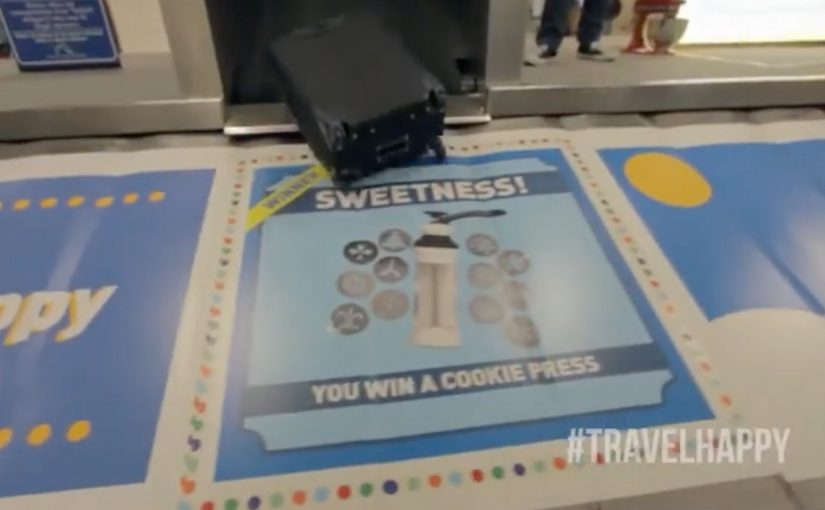
At Houston’s George Bush Intercontinental Airport, Zappos turns sections of a baggage carousel into a roulette-style game. Parts of the moving belt are marked with prizes and slogans. When your suitcase arrives and lands on a prize square, you win what it lands on. That can be a product prize or a gift card. Suddenly, the worst part of the journey becomes the most watchable part.

Why the idea works

The real question is how you turn captive waiting into a brand moment without adding any extra steps. The activation flips the emotional context. Baggage claim is pure friction. Zappos turns it into anticipation. Here, “activation” means a brand experience that reworks an existing touchpoint rather than creating a new destination. People are already looking at the carousel. They are already waiting. By making the outcome visible and immediate, the same waiting behavior becomes suspense. This is smart experience design because it changes the feeling of the wait without adding friction.

Extractable takeaway: When attention is guaranteed, you do not need more messaging. You need a simple mechanic that changes what the same behavior feels like.

The CX mechanics are simple by design

  • No app. No instructions. You just wait as usual.
  • Instant feedback. Your bag lands. You know if you win.
  • Social energy. People around you start watching your outcome too, because it is a shared moment.

In enterprise retail and travel environments, the biggest CX wins often come from redesigning unavoidable waiting, not adding steps.

Design moves worth copying

  • Pick a real pain point where attention is already guaranteed, then redesign the emotion of that moment.
  • Make participation automatic. If people must opt in, you lose most of the crowd.
  • Use a reward that is immediate and credible, so the surprise feels real, not promotional.

A few fast answers before you act

What is the Zappos Thanksgiving baggage claim activation?

A roulette-style baggage carousel game at an airport on Thanksgiving Eve where travelers win prizes based on where their luggage lands.

Why is baggage claim such a strong place for this?

It is a high-friction moment with captive attention. Everyone is already watching the belt and waiting.

What is the core experience design principle?

Reduce friction by changing the emotion of the same behaviour. Waiting stays the same, but it becomes suspense and delight instead of irritation.

How does it work without an app or instructions?

Participation is automatic. You wait for your bag as usual, and the belt markings tell you instantly whether you won.

What is the minimum you need to replicate the pattern?

A captive-wait moment, a visible game mechanic, instant feedback, and an immediate, credible reward.

Spanair: Unexpected Luggage

On December 24th the flight from Barcelona to Las Palmas arrived close to midnight. 190 people were flying while everyone else celebrated Christmas Eve. Spanair decided to do something special for those 190 passengers.

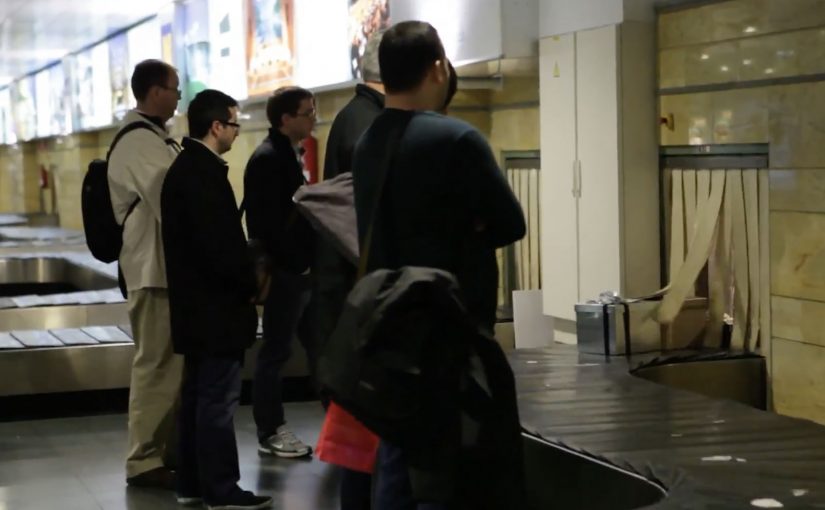
Instead of a routine wait at baggage claim, the luggage carousel delivered an unexpected sight. Wrapped gifts came down the belt before the suitcases did, turning a tired, end-of-day moment into a shared surprise.

How the baggage-claim surprise is engineered

The mechanic is as physical as it gets. Move the brand moment to the one place every passenger must stand still. Then use the carousel as the reveal device, with gifts replacing the expected flow of bags long enough for the crowd to realize something has changed.

In European airline marketing, the most memorable “service stories” are often built from small interventions in unavoidable touchpoints, where emotion is already high and attention is captive.

Why it lands

It respects the situation. Christmas Eve travel is already loaded with absence, fatigue, and sacrifice. The surprise works because it does not ask passengers to do anything new. It simply changes what the moment means, and it does so in front of everyone, so the reaction becomes collective rather than private.

Extractable takeaway: If you want a brand moment to feel generous rather than promotional, place it inside an unavoidable friction point, and make the reveal about relief and recognition, not about brand messaging.

What Spanair is really buying

This is “customer experience” as media. The spend is focused on a small number of people, but the output is a story that travels because it is easy to retell and easy to believe. A luggage belt of gifts is visual proof, not a claim.

The real question is how to turn a routine service touchpoint into proof that people will remember and retell.

What to steal for your own service brand

  • Use captive moments. Baggage claim, check-in lines, boarding queues, and waiting rooms are attention-rich environments.
  • Let the environment do the talking. When the space changes, you do not need much copy.
  • Design for group emotion. Collective reactions create social permission to film, share, and talk.
  • Make the proof unmistakable. If the story can be doubted, it will not travel far.

A few fast answers before you act

What is the core idea of Unexpected Luggage?

Surprise passengers at baggage claim by swapping the expected luggage moment for a gift reveal, turning a routine wait into a shared holiday experience.

Why does baggage claim work so well as a stage?

Everyone must be there, everyone is watching the same thing, and the carousel is already a natural reveal device. That makes the surprise instantly legible.

What makes this feel authentic instead of gimmicky?

The gesture fits the context. It acknowledges what it means to travel on Christmas Eve and gives something back without requiring participation or performance from passengers.

What is the biggest risk when copying this approach?

If operations are not tight, the surprise turns into delay and frustration. The moment must feel like relief, not disruption.

Does this only work for airlines?

No. The same pattern can work in any service setting with a captive, shared wait, as long as the intervention fits the moment and does not create extra friction.