
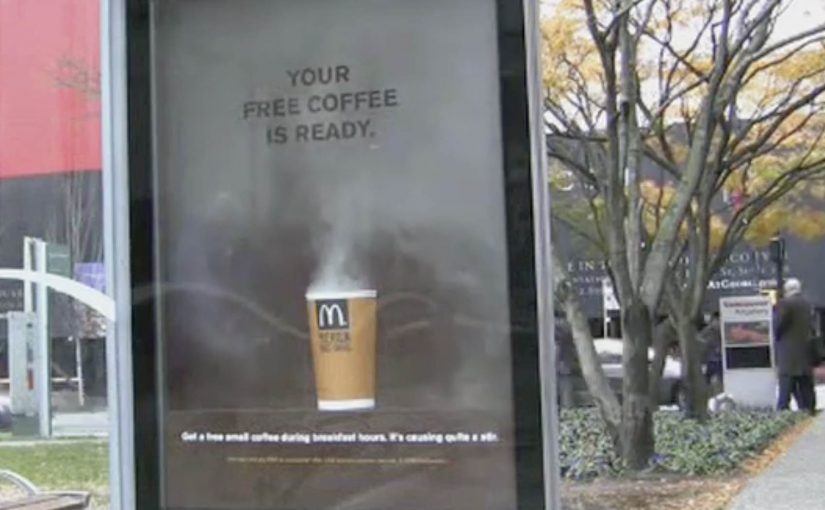
McDonald’s: Steaming Bus Shelter

McDonald’s: Steaming Bus Shelter

Over the last couple of months we have seen some innovative bus shelter ideas from Cadbury and Coca-Cola. Now McDonald’s joins in with a cup of coffee that looks like it is still breathing.

Steam that writes the message for you

Instead of printing “hot coffee” on the poster, the execution uses real-looking steam rising from the cup. As the steam drifts across the panel, a simple line appears and disappears, turning a static bus shelter into a time-based reveal.

Interactivity here is low-tech but real. The ad changes over time in front of you, without screens, taps, or instructions. That works because a behavior you can see in real time makes the product benefit feel proved rather than merely claimed.

In out-of-home advertising, the strongest work turns waiting time into a short, sensory experience that people understand in a glance.

Why this lands in the street

Steam is a credibility cue. It signals warmth, freshness, and immediacy. At a bus stop, that matters because you are standing still, watching your breath in the cold, and you have time for one small surprise that feels physical rather than “ad-like”. The reveal also creates a micro-rhythm. By micro-rhythm, the ad creates a simple pattern of pause, reveal, and reset that a passer-by can read in seconds. Nothing happens. Then it happens. That pacing earns a second look.

Extractable takeaway: If you can make the medium behave like the product, you reduce explanation to near zero. The environment becomes your proof point, and the call-to-action feels like the obvious next step.

What McDonald’s is really buying with this shelter

This is a promotion mechanic disguised as a moment of theatre. The shelter does three jobs at once: it dramatizes the heat of the coffee, it frames the offer as “ready now”, and it catches commuters at the exact time window when a breakfast purchase is plausible.

The real question is whether the shelter makes hot coffee feel immediately available in the exact moment a commuter might buy it.

It also borrows the social logic of street magic. When something unexpected happens in public, people point it out. That turns one paid placement into multiple conversations, and it does it without adding complexity for the passer-by.

What to steal for your next transit activation

  • Use a single sensory cue. One clear signal beats layered cleverness in a noisy street.
  • Build a reveal that loops. A repeating moment gives late arrivals a chance to see it.
  • Make the message readable mid-glance. Design for people who look up for two seconds, not twenty.
  • Time the call-to-action to the context. Commuters make different choices at 8am than at 8pm.
  • Let the placement do the targeting. Transit media already filters for routines. Do not overcomplicate the copy.

A few fast answers before you act

What makes this bus shelter execution “interactive”?

The panel changes in real time in front of the viewer. The steam effect creates a repeating reveal, so the message appears and disappears rather than sitting permanently on the poster.

Does this need digital screens to feel modern?

No. The “modern” part is the behavior. A physical effect that updates over time can feel as fresh as a screen when it is tightly connected to the product benefit.

What is the main marketing objective here?

To drive immediate trial during a breakfast window by making “hot coffee” feel tangible, and by framing the offer as available right now.

What is the biggest risk with executions like this?

If the effect is subtle, unreliable, or hard to see from a normal standing distance, the entire idea collapses. The reveal must be legible without effort.

When is a bus shelter the right medium for this kind of idea?

When your message benefits from a short looped demonstration, and when your audience is naturally paused. Transit environments provide both attention and repetition.
Coca-Cola: Where Will Happiness Strike Next

Coca-Cola: Where Will Happiness Strike Next

A vending machine that behaved like a brand promise

The simplest activations often travel the farthest when the “idea” is visible in one glance. Coca-Cola’s Happiness Machine is a clean example of that kind of instantly understood storytelling.

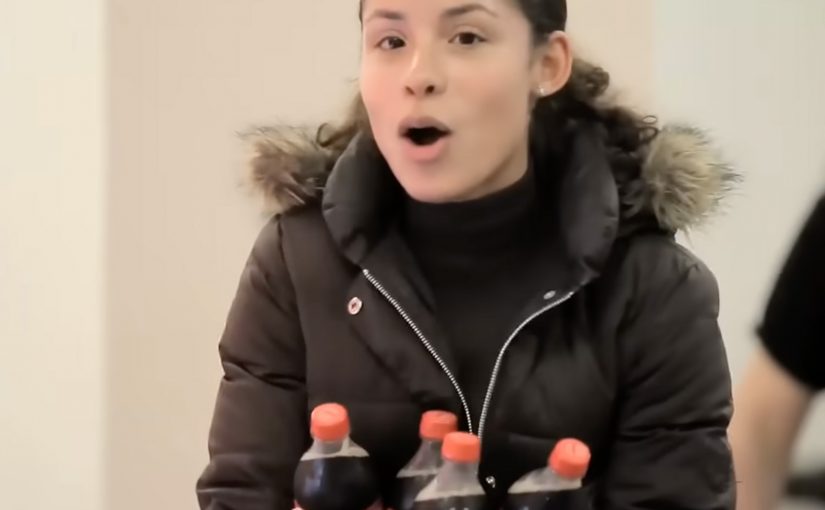
A Coca-Cola vending machine was transformed into a happiness machine that delivered “doses” of happiness by dispensing more than people expected from a normal purchase.

How the Happiness Machine mechanism worked

The mechanism was a familiar object with an unexpected behavior.

A vending machine is supposed to be transactional. Insert money, get a product. By breaking that script and delivering more than expected, the machine turned an everyday moment into a surprise experience that people immediately wanted to share.

The physical interface did the heavy lifting. No explanation was required because the “before versus after” was obvious in real time.

In global FMCG organizations, activations scale faster when a bystander can understand the payoff in three seconds.

Why the surprise felt contagious

Surprise creates attention, but generosity creates warmth. The experience worked because it did not feel like a trick. It felt like a gift. That distinction matters.

Extractable takeaway: Brands should pair a surprise twist with generosity so sharing feels like celebrating people, not exposing them.

People are happy to share content when it makes them look human, not gullible.

And because the moment happened in public, reactions became social proof. Social proof here means other people’s visible reactions validating that the moment is worth paying attention to.

The business intent behind “doses” of happiness

The intent was to make Coca-Cola’s “happiness” positioning tangible in a way advertising rarely can.

The real question is whether your brand promise can be experienced in public without anyone needing a caption.

Instead of describing a feeling, the brand staged it. The vending machine became a repeatable format that produced real reactions. Those reactions became content, and that content extended the experience far beyond the original location.

Stealable moves from the Happiness Machine

  • Use a familiar object. If people understand the baseline instantly, the twist lands faster.
  • Break a script with generosity. “More than expected” creates goodwill and shareability.
  • Design for public reaction. The audience is not only the participant. It is everyone watching.
  • Make the brand promise physical. If your positioning is emotional, create a moment people can feel, not just read.

A few fast answers before you act

What is the Happiness Machine, in one sentence?

A normal Coca-Cola vending machine behaves unexpectedly by giving people more than they paid for, creating a gift moment instead of a transaction.

How does the mechanism work?

Use a familiar object. Break the expected script. Deliver an instant, legible payoff. Let public reactions create social proof and distribution.

Why does this kind of surprise travel so well?

Because the story structure is clean. Normal situation. Unexpected twist. Human reaction. That sequence is easy to capture and easy to share.

What business intent does this serve?

It makes the “happiness” positioning tangible. Instead of describing a feeling, the brand stages a moment people can experience and witness.

What can brands steal from this execution?

Keep the setup simple, make the payoff instantly understandable, and design for spectators as much as participants. The crowd is part of the creative.

What should you measure if you copy this pattern?

In-the-moment attention and dwell time, organic capture and shares, sentiment, and recall. Also track whether people retell the action, not just the logo.

Cesviamo: The Condom Mob

Cesviamo: The Condom Mob

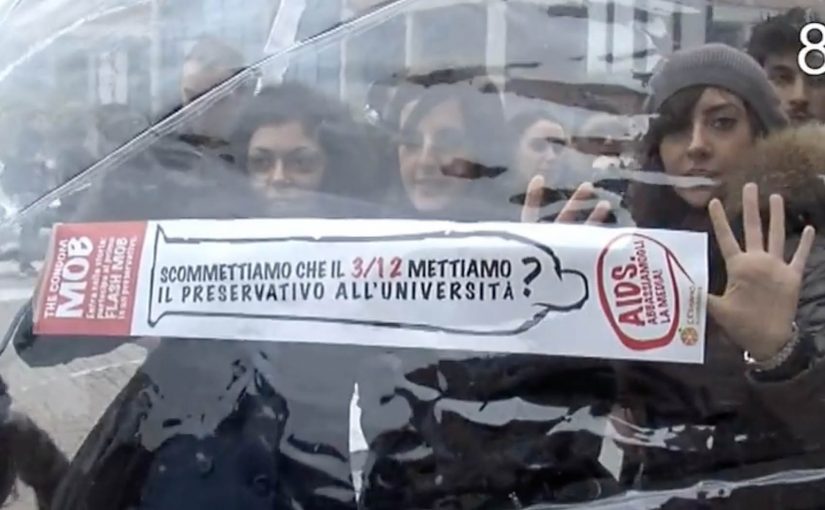
Cesviamo is an Italian social network created by CESVI, a non-profit organization, and this campaign is built to do three things at once. Increase awareness of the site. Explain how the social network works by turning fundraising into “funraising”. Here, “funraising” means making participation itself part of the fundraising appeal. And make people, especially students, more conscious about AIDS.

The execution is the “Condom Mob”. A large, public stunt where 100 young people enter a giant condom as a highly visible symbol against AIDS. The post reports that participation exceeded expectations, reaching 223 people in the condom in one case and 230 in another.

How the stunt acts as a product demo for the network

The mechanic is designed to be understandable at a glance, then extend into the platform. The “mob” delivers immediate attention, while the narrative around funraising and participation cues the idea of joining, sharing, and building momentum through the social network itself. Because the stunt is legible in seconds and maps directly to joining and sharing, it works as both attention device and product demo for the network.

In European nonprofit and cause-led communication, a single, highly legible public action can cut through faster than awareness copy, because it creates a shareable proof moment that people feel compelled to talk about.

Why it lands

It uses contrast and scale to force attention. A condom is already a charged object. Making it oversized and public turns it into a conversation starter, which helps the AIDS message travel beyond the people who were physically present. The “mob” format also frames the topic as collective responsibility, not private embarrassment.

Extractable takeaway: If you need awareness plus platform adoption, choose one symbol that is instantly readable, then design the stunt so the audience’s next step naturally points back to joining and participating in your owned experience.

What CESVI is really trying to achieve

The business intent is behavioral. The real question is whether a public spectacle can turn student attention into repeat participation inside the network. Normalize discussion. Pull students into the cause. And position Cesviamo as a place where participation is easy, social, and measurable. For cause campaigns like this, spectacle is only useful when it feeds a repeatable participation path. The stunt is the ignition. The platform is where attention can be converted into repeat involvement.

What to steal for your own cause campaign

  • Make the symbol unavoidable. Choose one visual that communicates the issue without explanation.
  • Design for “I have to tell someone”. If the moment creates a story people can repeat in one sentence, distribution follows.
  • Connect spectacle to a next step. Awareness without an action path leaks value. Point clearly to how to join, donate, or participate.
  • Measure participation, not just reach. Headcount and involvement are stronger proof than impressions for cause work.

A few fast answers before you act

What is the core idea of the Condom Mob?

A large, public stunt where young people enter a giant condom to spark AIDS awareness and drive attention back to CESVI’s Cesviamo network.

Why does “funraising” matter in this context?

It reframes giving and participation as something people do together, making it easier to recruit students and first-time supporters.

What makes the symbol effective?

It is instantly recognizable and directly tied to prevention. That directness reduces the need for explanation and increases talk value.

How should the next step be designed?

The stunt should hand people to one obvious action, such as joining, donating, or participating, so attention does not dissipate after the moment passes.

What is the main risk with a stunt like this?

If the spectacle overwhelms the cause, people remember the shock but miss the message. The narrative and next step must stay explicit and repeated.