
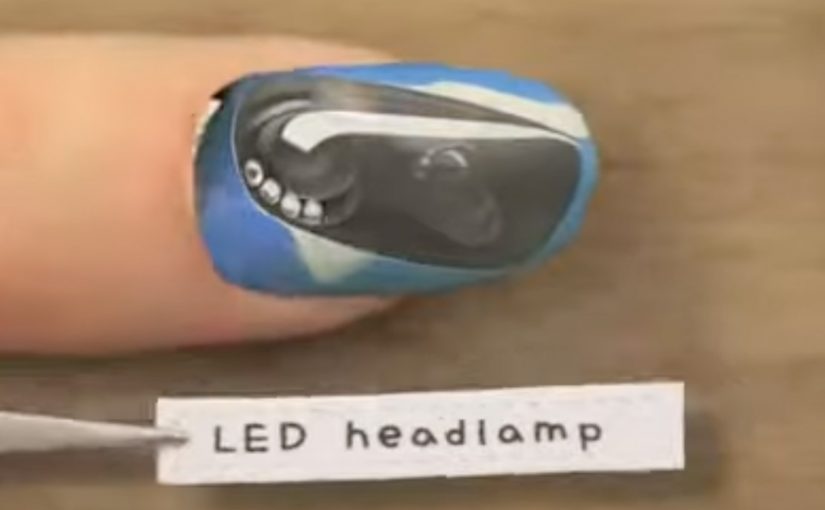
Kia: Nail Art Animation

Kia: Nail Art Animation

A car commercial painted on a fake nail

Kia wanted to highlight the micro-features, meaning the small design and usability details, of their smallest car model, the Picanto. So they created a stop-motion car commercial on a fake nail. The film was billed at the time as the world’s first nail art animation.

It reportedly took 25 days to create, and used 1,200 bottles of nail polish across 900 fake fingernails.

The trick: match “micro-features” with micro-scale filmmaking

Stop-motion is an animation technique where you photograph small, incremental changes frame by frame, then play the frames back to create motion.

Here, the canvas is the punchline. By putting the story on a fingernail, the craft becomes the message. Because the viewer has to pay attention to tiny brushwork to follow the motion, the “micro” idea feels experienced, not merely claimed.

Kia’s Picanto Nail Art Animation is a stop-motion commercial created by painting hundreds of miniature frames onto fake fingernails, turning the “micro” idea into a literal production constraint.

In urban small-car marketing, novelty only matters when it directly reinforces the product promise in a way people can retell in one sentence.

The real question is whether your creative constraint makes the product promise feel inevitable, not just interesting.

This kind of craft-heavy micro-format is worth copying only when the constraint directly maps to the attribute you want people to believe.

Why it lands: the medium proves the claim

This is not just “a weird technique”. It is a tight alignment between what Kia wants you to notice and what the viewer cannot help noticing. Patience, precision, tiny details.

Extractable takeaway: When the medium forces attention onto the same detail you are selling, the audience experiences the claim rather than evaluates it.

The result is a feature demo that does not feel like a feature demo, because the viewer is busy admiring how it was made.

What the brand is buying with this level of craft

The intent is simple. Make a small car feel like a smart choice, not a compromise. Micro can mean cheap or micro can mean cleverly designed. This execution pushes the second interpretation.

It also creates built-in distribution. People share the making-of story as much as the spot itself.

Steal this micro-detail storytelling pattern

  • Let the production constraint carry the positioning. If you sell “small but smart,” make the format small but smart.
  • Design for instant explainability. “A car ad on a fingernail” is a headline by itself.
  • Make craftsmanship visible. When the effort is obvious, skepticism drops.
  • Connect novelty to product truth. Weirdness alone fades. Alignment endures.

A few fast answers before you act

What is Kia’s Picanto Nail Art Animation?

It is a stop-motion commercial for the Kia Picanto created by painting animation frames onto fake fingernails, so the car and its features appear in motion on a tiny nail-sized canvas.

How was the stop-motion effect created on nails?

Each frame was painted as a miniature nail artwork on separate fake nails. The nails were then photographed frame by frame, and the images were stitched together to create movement.

Why is this a smart way to communicate “micro-features”?

Because the medium embodies the message. A micro-scale format forces attention onto tiny details, which makes “small but thoughtfully designed” feel proven, not claimed.

How long did it reportedly take, and what made it so labor-intensive?

It reportedly took 25 days and required painting and photographing hundreds of tiny frame changes. The labor is the point. The visible effort makes “micro-details” feel credible.

What should you copy if you want to tell a “detail story” in your own category?

Pick a constraint that naturally spotlights the detail you care about. If the constraint does not reinforce the promise, the craft reads as novelty and the message evaporates.
Marmite: Bringing Home the Kiwis

Marmite: Bringing Home the Kiwis

A centenary gift that tastes like home

Sanitarium Marmite is a Kiwi staple and a national icon of 100 years. Today, one in five Kiwis live abroad. Many of these 600,000 Kiwis miss their Marmite, as it is hard to get overseas.

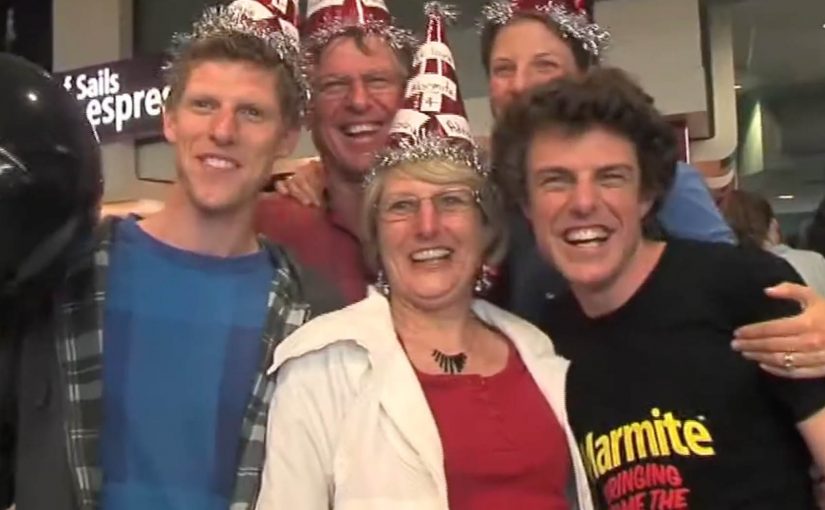
So to commemorate its 100th year in New Zealand, Ogilvy Auckland launched a contest which reunited long-lost Kiwis with their homeland and everything they love about it, including Marmite.

The mechanic: one-way tickets as a proof of intent

All the interested candidates had to do was tell the Marmite judges what makes them, or their loved ones, a deserving candidate to avail one of the 100 one-way free air tickets from anywhere in the globe. The one-way ticket is the proof of intent, because it commits the brand to the reunion, not just a symbolic gesture.

A diaspora is the portion of a country’s people living overseas, often staying emotionally tied to “home” through food, language, sport, and ritual.

Marmite’s “Bringing Home the Kiwis” is a centenary contest that offered 100 one-way flights to bring overseas New Zealanders back home, using the return itself as the campaign’s emotional centerpiece.

In small countries with a large diaspora, local brands can act as a bridge by enabling a real reunion.

Why it lands: it makes nostalgia actionable

Most “homesickness” marketing stays symbolic. This one turns longing into logistics. The prize is not merchandise. It is presence. That is why the story travels. It is instantly understandable, and emotionally high-stakes without feeling manufactured.

Extractable takeaway: When the emotion is separation, the strongest brand move is a mechanism that creates presence, not another object that points to it.

The business intent behind the generosity

The brand is buying disproportionate meaning. Marmite becomes a shorthand for “home,” and the campaign demonstrates it through a gesture people talk about long after the winners land.

It also solves a real friction point in the insight. If the product is hard to get abroad, then “bring them back” is a bolder way to dramatize what the brand represents.

This is the right kind of generosity when your brand promise is “home” and your audience’s friction is distance.

The real question is whether you are willing to make your positioning physically true for a small number of people, rather than symbolically true for everyone.

Nice idea, but it is clearly in the same family as “bring them home” diaspora campaigns, including JWT Argentina’s 2009 effort, titled “Bring Home the Argentinians”.

What to steal if you want a diaspora idea that is more than a slogan

  • Use a prize that embodies the insight. Flights beat gift packs when the emotion is separation.
  • Keep entry simple, but make the stories rich. Let candidates supply the narrative energy.
  • Build a clear number hook. “100 for 100 years” is easy to remember and retell.
  • Make the payoff visible. Arrivals and reunions are the credibility layer, not a voiceover.

A few fast answers before you act

What is Marmite’s Bringing Home the Kiwis campaign?

It is a centenary contest that offered 100 one-way flights from anywhere in the world to bring overseas New Zealanders back home. People nominate themselves or loved ones with a short story, tying the brand to the emotional idea of “home”.

Why does the “one-way ticket” prize work so well?

Because it turns nostalgia into logistics. The reward is presence, not merchandise, so the brand promise feels demonstrated rather than advertised.

Why is “100 for 100 years” a smart structure?

It is a simple number hook that is easy to remember and retell. It also makes the generosity feel purposeful instead of arbitrary.

What is the real business intent behind the generosity?

Marmite buys disproportionate meaning and becomes shorthand for “home,” while dramatizing a real friction point. It is hard to get abroad, so the campaign makes “home” the centerpiece.

What makes the story travel beyond New Zealand?

The payoff is visible and universal. Arrivals and reunions act as the credibility layer, so the idea works as a story, not just a claim.

What should other brands copy from this pattern?

If your positioning is emotional, make the mechanic physical. Choose a prize that embodies the insight, keep entry simple, and let real people supply the narrative energy.

Rajec: Frozen Art to Sell Water in Winter

Rajec: Frozen Art to Sell Water in Winter

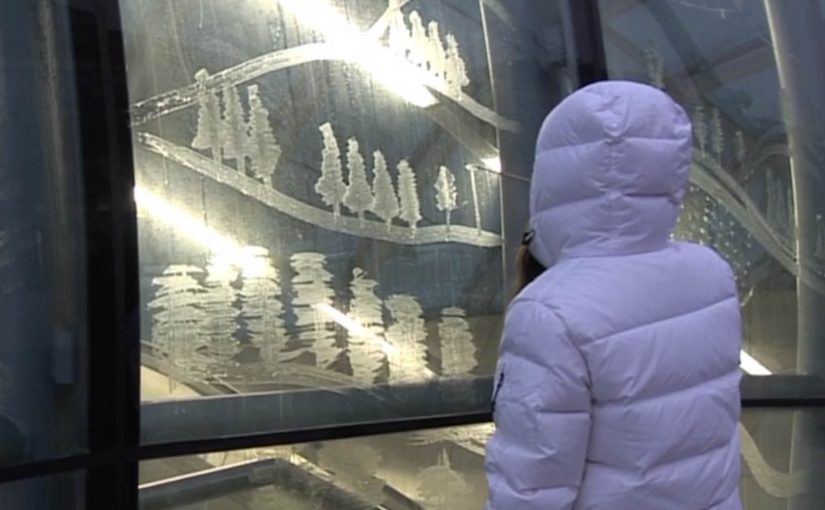
Rajec wants people to buy spring water even when it is cold outside, so the brand turns its own product into the medium. Artists use Rajec water to create frosty artworks overnight in high-footfall locations, so the next morning the city wakes up to “Patented by Nature” made visible.

The mechanic is simple and budget-smart. Pick specific public locations, give artists permission to work within the constraints of freezing weather, and let the cold do the production. The result is temporary ice art that looks native to winter, but still unmistakably tied to water.

In Central European FMCG categories, winter is where habitual consumption drops. So a physical, weather-native installation can reframe the product as seasonally relevant instead of seasonally optional.

Why frozen artwork is a strong “Patented by Nature” proof

It makes the positioning literal. The environment “patents” the result, because the cold is doing real work. That gives the campaign an authenticity cue that polished advertising often struggles to achieve, especially for a product as familiar as water.

Extractable takeaway: When your brand promise depends on “naturalness”, build a proof that requires nature to complete it. Then place that proof where people can stumble on it without opting in.

What the campaign is really optimizing for

The real question is how to make bottled water feel worth noticing in the season when people are least inclined to buy it. This is a smart seasonal demand play because it turns winter from a sales headwind into the proof itself.

This is designed to create winter salience with minimal spend. Here, winter salience means staying mentally available in the season when bottled water is easiest to ignore. The installations function as local talk triggers, photo moments, and brand reminders, without needing long media flights. You get attention because it is unexpected and temporary, and you get relevance because the execution only exists in winter conditions.

What to steal for your own seasonal demand problem

  • Exploit the season instead of fighting it. Use weather and constraints as production tools.
  • Make the product physically present. When the product is the material, the brand tie is harder to miss.
  • Design for ephemerality. Temporary work creates urgency and increases the chance people share it.
  • Choose “commuter proof” locations. Busy, repeat-traffic spots do the frequency building for you.

A few fast answers before you act

What is the core idea of Rajec Frozen Artwork?

Use Rajec water to create ice artworks overnight in frequented public places, so winter itself becomes the production method and the brand proof.

Why does this help sell water in winter?

It restores relevance by linking the product to the season people least associate with water buying, and it does so with a physical cue people notice without trying.

What makes the execution feel credible rather than “advertising”?

The cold does real work. The result looks like something the environment caused, which supports the “Patented by Nature” idea.

What kind of location makes this work best?

High-footfall public locations work best because repeat exposure turns a temporary installation into a stronger memory cue without requiring paid media weight.

What is the main risk in copying this approach?

If the brand link is too subtle, it becomes “nice street art” with weak recall. The product-to-art connection needs to be unmistakable.