
NIVEA Creme: Second Skin Project

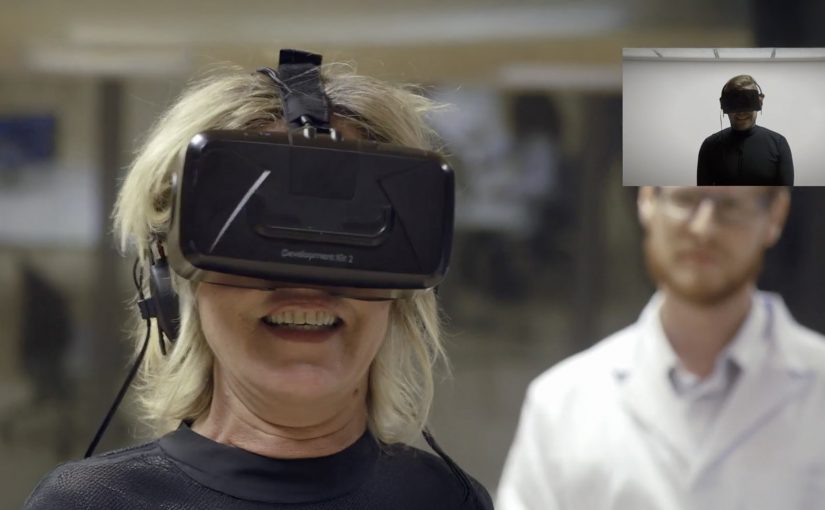
A mother puts on a headset and a skin-like suit. Her son does the same, thousands of kilometres away. The promise is simple. If they cannot be together for Christmas, technology will let them feel a hug anyway.

That is the set-up in NIVEA Creme’s “Second Skin Project” with Leo Burnett Madrid. The film introduces Laura in Madrid and her son Pablo, who is away volunteering in Paraguay. They are invited to test a “Second Skin” garment that is presented as a high-tech fabric designed to simulate human skin and transmit the sensation of touch at distance, paired with virtual reality headsets.

The story then pivots. What looks like a tech demo is used to make a point about touch, not technology. The most persuasive moment is not the suit. It is the human reunion that follows, designed to underline NIVEA Creme’s belief that nothing beats skin-to-skin contact.

The “Second Skin” mechanism that pulls you in

The film borrows credibility from advanced-sounding materials and VR. That framing creates anticipation, because the viewer wants to know whether the experiment can actually work. The suit and headset are the narrative engine that earns attention for long enough to land the real message.

In global consumer brands where heritage products compete with endless alternatives, emotional proof often carries more weight than functional claims.

The real question is whether the tech is the story, or whether it is just a credible pretext for the brand to own the value of touch.

The twist that protects the brand meaning

There is a risk with tech-led emotion. The technology can become the hero and the brand becomes a sponsor. This script avoids that by using the tech as a decoy. The reveal shifts the spotlight back to the product truth. A hug is still the best “gift” and NIVEA Creme wants to be associated with that intimacy.

Extractable takeaway: When you borrow a shiny mechanism to earn attention, make the emotional payoff explicitly restate what the brand believes, or the gadget takes the credit.

How to use “purpose + tech” without losing the human truth

  • Use technology as the hook, not the conclusion. Let it earn attention, then pay it off with a human truth.
  • Make the brand stance explicit. Here the stance is clear. Technology can be amazing, but touch matters more.
  • Cast real stakes. Distance, holidays, and family history make the outcome feel earned.
  • Keep the product role emotional, not technical. NIVEA Creme is not “the innovation”. It is the comfort cue that frames the story.

A few fast answers before you act

What is the NIVEA Creme Second Skin Project?

It is a Christmas-season film and experiment setup where a mother and son test a VR-led “Second Skin” suit that is presented as transmitting the feeling of touch at distance, then the story reveals the value of real human contact.

Why does the campaign use VR and a “second skin” suit?

Because it creates a believable question the audience wants answered. Can technology replicate a hug? That curiosity holds attention long enough for the campaign’s real point to land.

What is the core message NIVEA Creme is trying to own?

That skin-to-skin contact matters. The work uses technology to highlight that, even in a world of advanced tools, nothing replaces human touch.

What makes this more than a generic emotional video?

The narrative structure. It starts as a tech experiment, then pivots into a human reunion. That contrast makes the conclusion feel stronger than a straight sentimental story.

What is the biggest risk with “tech-as-story” campaigns?

Audience misattribution. People remember the gadget and forget the brand meaning. The fix is to ensure the emotional payoff clearly belongs to the brand stance, not the device.
Hyundai Genesis: A Message to Space

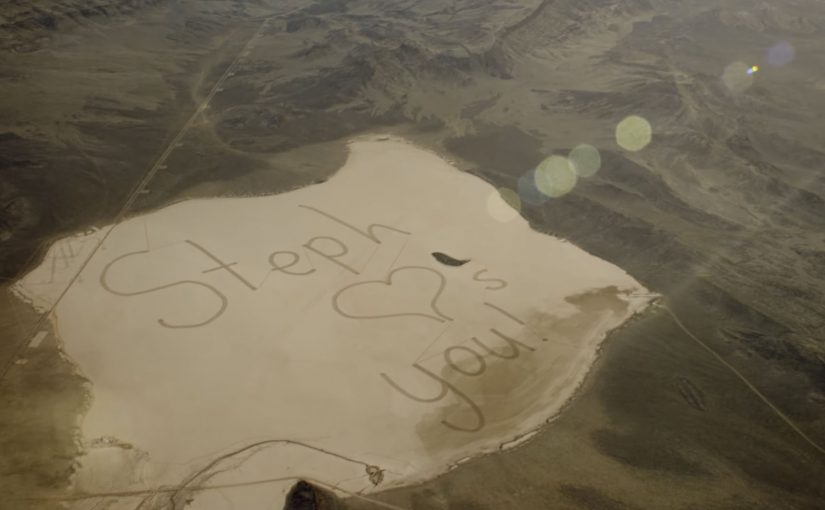
Eleven Hyundai Genesis sedans drive in formation across Nevada’s Delamar Dry Lake, not to show handling, but to write a sentence.

A 13-year-old girl from Houston, Stephanie, misses her astronaut father as he works aboard the International Space Station. Hyundai turns that human truth into a brand-scale gesture. The cars “draw” “Steph loves U” in tire tracks across the dry lake bed. The result is described as larger than one and a half Central Parks. It is also described as being certified by Guinness World Records as the world’s largest tire track image.

From choreography to a message you cannot ignore

The mechanism is straightforward and bold. Take a blank natural canvas. Assign each car a path. Choreograph the movement so the negative space becomes handwriting at a gigantic scale. Then validate the scale with a record body so the stunt becomes a fact people repeat, not just a film people watch.

In global automotive marketing, where products often feel interchangeable in feed-based media, a physical proof stunt creates memorability by turning precision into a story people can retell.

Why it lands

It works because the brand is not asking for attention. It is earning attention by doing something that only coordinated engineering and serious planning can pull off. The emotional hook is intimate, and the execution is absurdly large. That contrast creates instant share value, and it gives the Genesis name a halo of control and capability without needing to say it out loud.

Extractable takeaway: If you need breakthrough, build a single, verifiable act that scales a private human moment into a public artifact, and make the artifact the headline, not your messaging.

What the stunt is really selling

The real question is how to turn a private emotion into a public proof of brand capability without making the brand feel like the hero.

This is one of the rare brand stunts where scale sharpens the emotion instead of burying it.

On the surface, it is a daughter sending a message. Underneath, it is Hyundai demonstrating disciplined coordination. Eleven vehicles behaving like one pen. The brand promise becomes “we can execute the impossible precisely”, which is a stronger feeling than another round of luxury feature claims.

What to borrow from this precision stunt

  • Start with a real relationship. One clear human story beats a composite “target audience”.
  • Make the action the media. A physical artifact outlives the launch window and travels as proof.
  • Engineer a repeatable headline. A record, a scale comparison, or a singular first can carry the story.
  • Let meaning come from constraints. Fewer words. Bigger commitment. Higher credibility.

A few fast answers before you act

What is “A Message to Space”?

It is a Hyundai Genesis marketing stunt where 11 cars drive in formation to create a massive tire track message, “Steph loves U”, intended to be visible to a father on the International Space Station.

What is the core mechanism that makes it shareable?

A simple sentence rendered at extreme scale through choreographed driving, then amplified by third-party validation and a short film that captures the creation.

Why use a Guinness World Records angle?

Records reduce skepticism. They turn “big” into a named achievement people can cite, which helps the story travel beyond advertising audiences.

What is the biggest risk with this style of stunt?

If the human story feels manufactured, the spectacle becomes empty. The emotional truth has to lead, or the record becomes the only thing people remember.

What is one modern adaptation of the same pattern?

Create a single, verifiable public artifact that embodies your brand promise, then design the content around documenting the artifact, not explaining it.

Marmite: Bringing Home the Kiwis

A centenary gift that tastes like home

Sanitarium Marmite is a Kiwi staple and a national icon of 100 years. Today, one in five Kiwis live abroad. Many of these 600,000 Kiwis miss their Marmite, as it is hard to get overseas.

So to commemorate its 100th year in New Zealand, Ogilvy Auckland launched a contest which reunited long-lost Kiwis with their homeland and everything they love about it, including Marmite.

The mechanic: one-way tickets as a proof of intent

All the interested candidates had to do was tell the Marmite judges what makes them, or their loved ones, a deserving candidate to avail one of the 100 one-way free air tickets from anywhere in the globe. The one-way ticket is the proof of intent, because it commits the brand to the reunion, not just a symbolic gesture.

A diaspora is the portion of a country’s people living overseas, often staying emotionally tied to “home” through food, language, sport, and ritual.

Marmite’s “Bringing Home the Kiwis” is a centenary contest that offered 100 one-way flights to bring overseas New Zealanders back home, using the return itself as the campaign’s emotional centerpiece.

In small countries with a large diaspora, local brands can act as a bridge by enabling a real reunion.

Why it lands: it makes nostalgia actionable

Most “homesickness” marketing stays symbolic. This one turns longing into logistics. The prize is not merchandise. It is presence. That is why the story travels. It is instantly understandable, and emotionally high-stakes without feeling manufactured.

Extractable takeaway: When the emotion is separation, the strongest brand move is a mechanism that creates presence, not another object that points to it.

The business intent behind the generosity

The brand is buying disproportionate meaning. Marmite becomes a shorthand for “home,” and the campaign demonstrates it through a gesture people talk about long after the winners land.

It also solves a real friction point in the insight. If the product is hard to get abroad, then “bring them back” is a bolder way to dramatize what the brand represents.

This is the right kind of generosity when your brand promise is “home” and your audience’s friction is distance.

The real question is whether you are willing to make your positioning physically true for a small number of people, rather than symbolically true for everyone.

Nice idea, but it is clearly in the same family as “bring them home” diaspora campaigns, including JWT Argentina’s 2009 effort, titled “Bring Home the Argentinians”.

What to steal if you want a diaspora idea that is more than a slogan

  • Use a prize that embodies the insight. Flights beat gift packs when the emotion is separation.
  • Keep entry simple, but make the stories rich. Let candidates supply the narrative energy.
  • Build a clear number hook. “100 for 100 years” is easy to remember and retell.
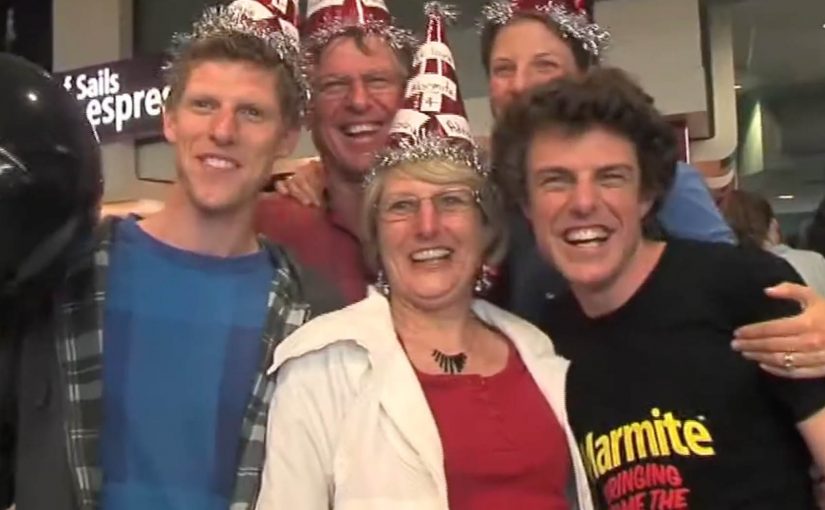
  • Make the payoff visible. Arrivals and reunions are the credibility layer, not a voiceover.

A few fast answers before you act

What is Marmite’s Bringing Home the Kiwis campaign?

It is a centenary contest that offered 100 one-way flights from anywhere in the world to bring overseas New Zealanders back home. People nominate themselves or loved ones with a short story, tying the brand to the emotional idea of “home”.

Why does the “one-way ticket” prize work so well?

Because it turns nostalgia into logistics. The reward is presence, not merchandise, so the brand promise feels demonstrated rather than advertised.

Why is “100 for 100 years” a smart structure?

It is a simple number hook that is easy to remember and retell. It also makes the generosity feel purposeful instead of arbitrary.

What is the real business intent behind the generosity?

Marmite buys disproportionate meaning and becomes shorthand for “home,” while dramatizing a real friction point. It is hard to get abroad, so the campaign makes “home” the centerpiece.

What makes the story travel beyond New Zealand?

The payoff is visible and universal. Arrivals and reunions act as the credibility layer, so the idea works as a story, not just a claim.

What should other brands copy from this pattern?

If your positioning is emotional, make the mechanic physical. Choose a prize that embodies the insight, keep entry simple, and let real people supply the narrative energy.