
UNIQLO: Lucky Machine Social Pinball Launch

UNIQLO: Lucky Machine Social Pinball Launch

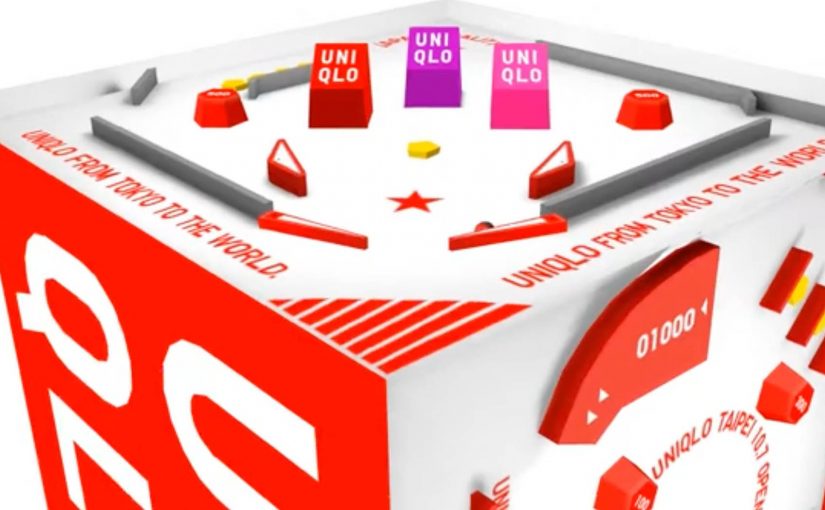
Here is another cool digital campaign from UNIQLO, this time they are promoting the launch of their new UK store via an online pinball machine (built in Papervision) that is socially connected.

You start with a single ball, but on connecting with Facebook you get a bonus 3 to help you climb the leader board for a share of thousands in prizes.

UNIQLO are well known for their digital campaigns and this once again hits the mark, providing a seriously simple pinball machine that feels so easy to master that you’ll be there, racking up some great brand engagement time over the campaign.

Why a simple game is a strong store-launch mechanic

A new store opening is a local moment. A game turns it into a repeated behavior. If the experience is light, fast, and replayable, it can generate more total attention than a one-off announcement.

Extractable takeaway: For store launches, a lightweight replay loop can compound attention over days, not just spike it once.

  • Instant entry. You can play immediately without committing time to learn.
  • Built-in replay loop. “One more try” is the whole point of pinball.
  • Competition creates stickiness. Leaderboards turn casual play into a goal.

Social connection as a value exchange

The Facebook connection is not framed as “follow us”. It is framed as a direct advantage in the game. Extra balls. Better odds of climbing the leaderboard. A clearer path to prizes. Here, the value exchange is simple: you trade a Facebook connection for immediate in-game advantage.

That is the important shift. Social is not an add-on. It is a gameplay benefit, which makes the opt-in feel earned rather than demanded.

The real question is whether your “social” step feels like friction, or like a fair trade that makes the experience better.

What this teaches about gamification done properly

  1. Keep the mechanic obvious. If people do not understand how to win, they leave.
  2. Reward the right action. Extra balls is a reward that directly improves the experience.
  3. Make progress visible. Leaderboards and scores give people a reason to return.
  4. Make prizes feel real. A “share of thousands” is a tangible incentive that fits the competitive loop.

In retail launch marketing, a simple replay loop can outperform a big announcement because it turns curiosity into time spent.

What to take from this if you run retail or digital campaigns

  1. Design for time spent, not just reach. A replayable game builds engagement minutes, not impressions.
  2. Use social as a functional advantage. Tie opt-ins to benefits users actually value.
  3. Let the format do the messaging. A campaign that is fun is a campaign people return to voluntarily.
  4. Keep the barrier to entry close to zero. The simpler the first 10 seconds, the better the retention.

A few fast answers before you act

What is UNIQLO “Lucky Machine”?

It is a socially connected online pinball game built to promote the launch of a new UNIQLO UK store, with leaderboards and prizes.

How does Facebook connection change the experience?

Connecting with Facebook gives players a bonus three balls, improving their chances to climb the leaderboard and compete for prizes.

Why is pinball a good format for engagement?

It is quick to start, easy to replay, and naturally encourages “one more try”, which increases time spent with the brand.

What is the main growth mechanic?

A simple value exchange. Social connection provides a direct gameplay advantage, which drives opt-ins without heavy persuasion.

What is the transferable lesson for campaign design?

If you want engagement time, choose a format that is inherently replayable, then attach social behaviors to real user benefits.
Best Buy: Twelpforce on Twitter

Best Buy: Twelpforce on Twitter

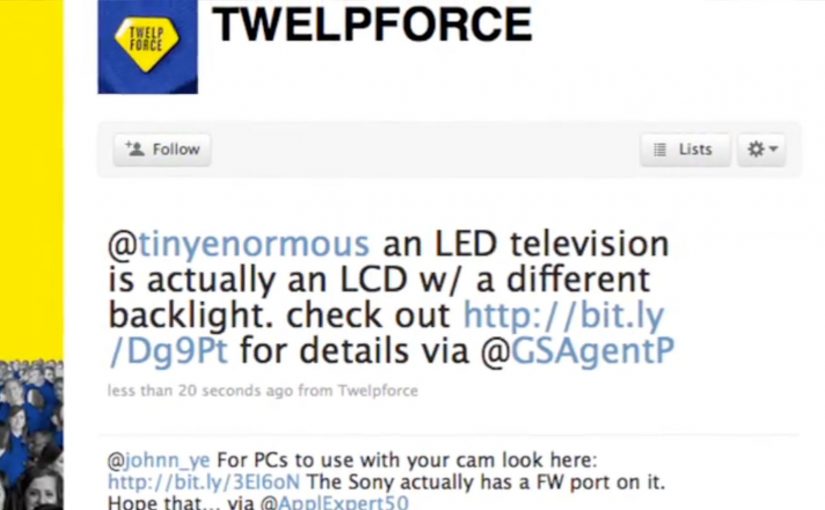
Here is a truly new-age way of addressing customer needs in real time by harnessing Twitter. Instead of pushing promotions, Best Buy puts help in the timeline and lets customers pull value when they actually need it.

A help desk that lives in public

Twelpforce is built on a simple premise. Twelpforce is Best Buy’s Twitter-based customer support program, built to connect customer questions with employees who can answer them. The people who know the answers are already inside the company. Put them on Twitter, let them respond directly, and make the answers visible to everyone else with the same question.

It turns customer service into a living knowledge base. Every reply is both a resolution for one person and reassurance for the next hundred who are watching.

How Twelpforce works

The mechanic is straightforward:

  • Customer asks a question on Twitter.
  • Trained employees respond in real time from within their area of expertise.
  • The conversation stays public, so answers become searchable and shareable.
  • Trust compounds, because the brand is seen helping, not just selling.

In consumer electronics retail, service is often the fastest signal of trust and competence.

The real question is whether public, real-time help can build more trust than another stream of promotional posts.

Why it lands: help is a stronger hook than hype

Most brand communication tries to create desire. Twelpforce starts with a different human truth. When something breaks or confuses you, you want a competent person, quickly. The campaign meets that moment and makes the brand useful on demand. This is a stronger brand move than another promotional burst, because visible help makes expertise tangible at the exact moment of need.

Extractable takeaway: If your category creates frequent questions, treat support as a scalable content engine. Public answers reduce repeat effort, improve perceived expertise, and create credibility that paid media struggles to buy.

That publicness is the multiplier because one useful answer reduces uncertainty for the asker and for everyone else who sees it. A private call solves one case. A public answer signals, repeatedly, that the brand shows up when it matters.

Recognition that follows the idea

The campaign is credited to Crispin Porter + Bogusky for Best Buy. It goes on to win a Gold Clio Award in Interactive, under the “Innovative Use of Technology” category.

What to steal for your own social support play

  • Design for repeat questions: build templates and escalation paths so answers stay fast without becoming robotic.
  • Make expertise discoverable: route topics to specialists, not a generic handle that slows everything down.
  • Write for the invisible audience: every reply should help the original asker and anyone who finds it later.
  • Set clear guardrails: define what can be solved publicly and what must move to private channels.
  • Measure more than volume: track time-to-first-response, resolution rate, sentiment shift, and deflection of repeat issues.

A few fast answers before you act

What is Twelpforce in one sentence?

It is a Twitter-based customer help program where employees answer questions publicly in real time, turning support into a visible brand asset.

Why does public support change the marketing equation?

Because every answered question doubles as proof. People trust what they see a brand do for others, especially when the moment is unscripted and timely.

What makes this “interactive” rather than just social posting?

The customer initiates the experience with a question, and the brand responds in a two-way exchange that creates a usable outcome, not just awareness.

What is the biggest operational risk?

Inconsistency. If response times, tone, or accuracy vary widely, the same public visibility that builds trust can also expose gaps.

How do you know if a program like this is working?

Look for faster response times, high resolution rates, fewer repeated questions, improved sentiment, and a growing perception that the brand is genuinely helpful.

Chang Soda: Fizzy Billboard

Chang Soda: Fizzy Billboard

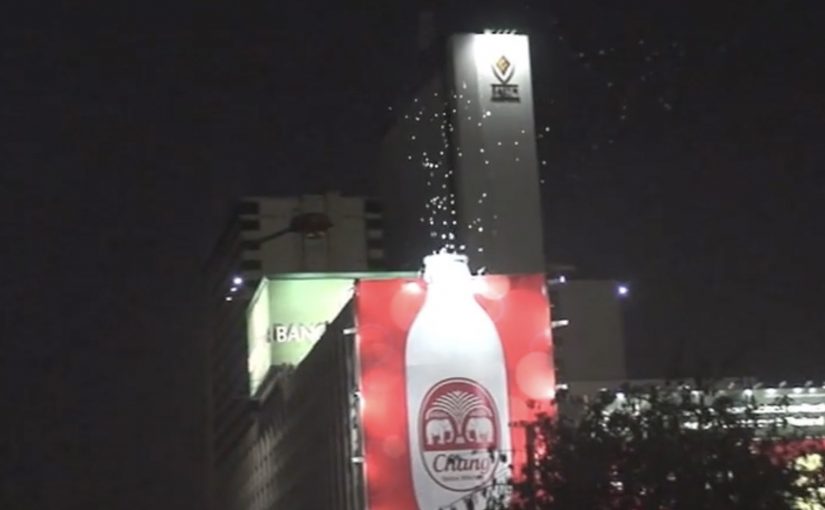
A giant Chang Soda bottle towers over a busy Bangkok shopping area. At the right moment, the cap “pops” and a burst of white balloons shoots out like carbonation escaping from a freshly opened drink.

Seeking new ways to create an impact in today’s sea of daily ad bombardment while taking into account shrinking budgets is quite a challenge. Chang’s Fizzy Billboard did just that, described as a reminder of how effective a great billboard idea can be when it turns a product truth, a single attribute the product can credibly own, into a public spectacle.

This is an outdoor activation that uses a physical effect, balloons released from the bottle, to dramatize “fizz” in a way that can be understood in a single glance.

The mechanism that makes it memorable

The creative leap is not the billboard. It is the “fizz”. Balloons are cheap, visible from far away, and they behave like bubbles in motion. Because of that, the claim becomes tangible even for people who only catch the moment in passing.

In FMCG categories where products are hard to differentiate at shelf, a single unmistakable physical metaphor in public space can outperform a week of polite messaging.

Why it lands as a shareable street moment

The payoff is time-based. People hear that “something happens” and they wait. When the burst comes, it reads instantly and creates a crowd reaction that becomes part of the communication. The effect also photographs well, which helps the idea travel beyond the street.

Extractable takeaway: If you want OOH to earn sharing, build a visible cause-and-effect that people can describe in one sentence, then make the payoff repeatable enough to be worth waiting for.

What the brand is really buying

This is a salience play. The goal is to make “Chang equals fizzy” stick through a short, repeatable spectacle, and to borrow the credibility of a real-world stunt rather than relying on a purely filmed illusion. The real question is whether you can turn one attribute into a repeatable moment people will stop for and retell. If you have to choose, back one literal, repeatable effect instead of spreading budget across polite static placements.

Steal-worthy rules for spectacle OOH

  • Make one product truth physical. Choose the one attribute you want remembered and build the effect around it.
  • Design for distance. If it does not read from across the street, it will not earn attention.
  • Use a predictable moment. A scheduled payoff creates anticipation and word of mouth.
  • Keep the metaphor literal. People should get it before they think about it.

A few fast answers before you act

What is Chang’s “Fizzy Billboard”?

An outdoor activation for Chang Soda where a giant bottle billboard appears to “pop” and release balloons like fizz, turning carbonation into a public spectacle.

Why use balloons for a soda message?

Balloons are inexpensive, highly visible, and they move like bubbles. That makes “fizzy” readable in one second from a distance.

What makes this kind of billboard more effective than a standard print-only OOH?

It creates a moment, not just an image. A time-based spectacle earns attention, crowd reaction, and secondary sharing that static posters rarely trigger.

What business outcome is this designed to influence?

Brand salience and attribute ownership. It aims to make the brand strongly associated with “fizz” versus competitors.

What is the biggest execution risk with spectacle billboards?

If the payoff is unclear or inconsistent, people feel tricked. The effect must be obvious, repeatable, and easy to explain in one sentence.