
KLM: Suitcase Art Project

KLM: Suitcase Art Project

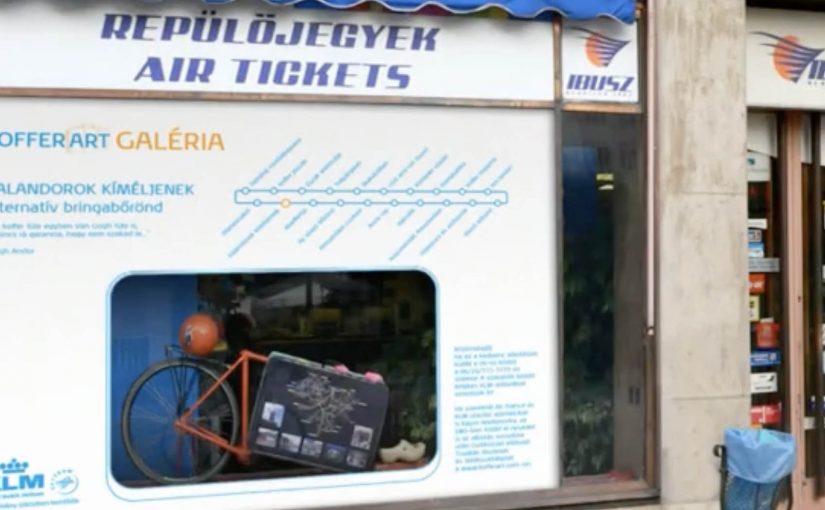
How do you communicate attractive prices when people are bored of tactical campaigns and ignore yet another “deal” message? KLM answers that by making the price story behave like culture instead of advertising.

Turning fares into a city-wide art moment

KLM and Leo Burnett Budapest invite Hungary’s most talented young artists to create artworks inspired by KLM destinations, then place those works around the city so the environment itself becomes an urban gallery. The result is described as a tactical campaign that people treat like an event.

The mechanism: destination inspiration, public display, social talk value

Mechanically, the work shifts “price communication” into a set of visual anchors that are easier to notice, photograph, and discuss than conventional fare banners. Instead of asking audiences to care about numbers first, it earns attention through craft, then lets the brand and destinations ride that attention. Because the visual anchors are built to be noticed and shared, the offer benefits from social talk value instead of competing for banner attention.

In European travel marketing, reframing a tactical offer as a public experience can restore attention without changing the offer itself.

Why it breaks through when tactical work gets ignored

Most price-led creative competes in the same visual language: small type, disclaimers, urgency cues. Art flips the hierarchy. It gives people a reason to stop that is not the price, then makes the price message feel like a discovery rather than an interruption. This is a stronger play than trying to out-urgency every other fare banner.

Extractable takeaway: When your message is tactical by nature, earn the first second with something people would choose to notice, then let the offer land as the payoff.

What KLM is really buying

The business intent is not only incremental ticket consideration. It is mental availability. By mental availability, I mean being the brand that comes to mind in a destination or booking moment without needing a hard sell. KLM shows up as a brand that puts something into the city, not just a brand that takes attention out of it. That association can make the next tactical message feel less disposable.

The real question is whether your next “deal” message can earn attention before it asks for action.

Steal this when deal messages get ignored

  • Wrap the tactical truth in a non-tactical container. Put the deal inside a format people would choose to engage with.
  • Design for public visibility. If it looks good in the street, it travels further online with less paid support.
  • Use craft to earn the first second. Attention is the gate. Price can come second.
  • Make the brand additive. The activation should feel like it contributes to the audience’s day, not like it interrupts it.

A few fast answers before you act

What is the Suitcase Art Project in one line?

A fare communication idea that uses destination-inspired artworks displayed across the city, turning a tactical message into a cultural moment people want to notice and share.

What problem is it solving for KLM?

Banner blindness and fatigue around price-led messaging. It creates attention through art first, then lets the offer benefit from that attention.

Why does “art in public space” help price communication?

Because it changes the viewer’s mindset from “being sold to” into “discovering something”. That shift makes the message more memorable and less ignorable.

What is the most transferable principle?

If your message is inherently tactical, change the format and context so people approach it with curiosity instead of resistance.

What can you do if you cannot run a city-wide activation?

Use the same pattern at a smaller scale. Create one distinctive artifact people would still choose to photograph or share, then let the offer ride the attention that artifact earns.

James Ready: Billboard coupon savings

James Ready: Billboard coupon savings

James Ready beer and Leo Burnett Toronto are back with another campaign built around the same consumer truth. People want to afford more beer.

To help, James Ready introduced “billboard coupons,” a way to save money on life necessities like food, dry cleaning, and grooming. The idea is simple. If you save money elsewhere, you have more money left for beer.

By partnering with local retailers, the program lets people take a picture of a billboard and show the photo at the corresponding retailer to receive savings on selected products and services.

A billboard that behaves like a coupon book

This flips the billboard role. Instead of being pure awareness, it becomes a utility object you can “carry” with you via a phone photo. That change matters because it extends the life of the message beyond the moment you drive past it.

Extractable takeaway: The best OOH-led promotions create a portable proof-of-value, meaning a saved artifact the customer can show later to claim the benefit. If the audience can store it in their camera roll, the media becomes a tool, not just a reminder.

The mechanism: proof without printing

Traditionally, coupon programs rely on physical handouts or codes people forget. This uses a behaviour people already do without thinking. Photograph something. The photo becomes the redemption token.

The real question is whether your promotion can turn a photo into proof without adding steps.

The retailer partnership layer is what turns it from gimmick to program. It gives the billboard a reason to exist in specific neighbourhoods and creates a story local businesses can also talk about.

In promotion-heavy categories, photo-as-proof mechanics scale because they turn an everyday phone habit into redemption.

Why it works for a beer brand

James Ready positions itself around everyday value and a slightly cheeky, practical tone. Saving on dry cleaning and food is not glamorous, but that is the point. It makes the brand feel like it is on the consumer’s side.

There is also a subtle psychological move here. The “more beer money” framing makes saving feel like a win, not a sacrifice.

Mechanics to copy from billboard coupons

  • Use a universal behaviour as the trigger. Photos, texts, taps. Avoid anything that needs training.
  • Make redemption low-friction. “Show the photo” is simpler than entering codes or printing.
  • Partner for legitimacy. Retail partners turn a brand stunt into a usable savings program.
  • Design for memory. A billboard must communicate the entire mechanic in seconds.
  • Keep the value proposition honest. Small, real savings beat big, unbelievable promises.

A few fast answers before you act

What are “billboard coupons” in this James Ready campaign?

They are offers displayed on billboards that people photograph on their phones and then redeem by showing the photo at participating local retailers.

Why use photos instead of QR codes or SMS?

Because it reduces friction and works with basic phones and habits. Taking a photo is fast, familiar, and the image becomes a simple proof token.

What makes this more than a one-off stunt?

The retailer partnership network. When multiple local businesses honour the offers, the campaign becomes an ongoing utility rather than a single execution.

What is the biggest risk operationally?

Inconsistent redemption. If staff are not trained or offers are unclear, customers feel embarrassed and the brand takes the blame. Execution discipline matters.

How could a brand adapt this pattern today?

Keep the “portable proof” principle, but use a clearer redemption mechanism where appropriate. A scannable image or an in-wallet pass can preserve simplicity while improving tracking.

Hi-Tec: Liquid Mountaineering

Hi-Tec: Liquid Mountaineering

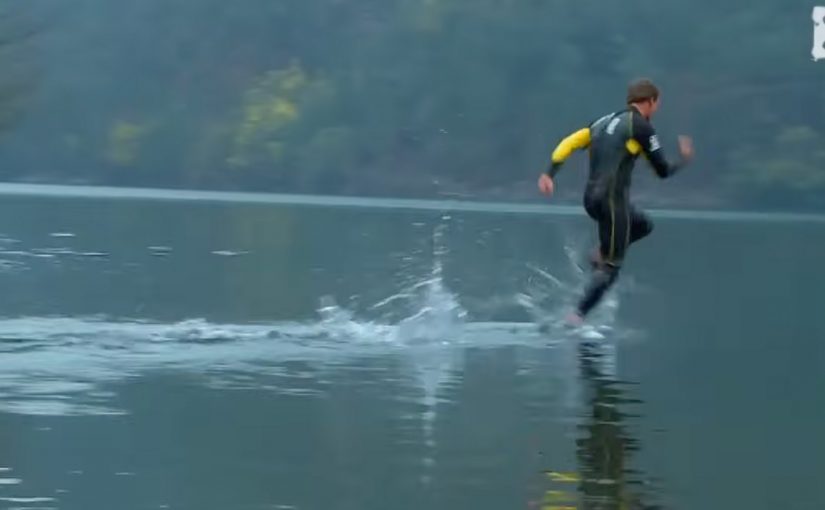
Liquid Mountaineering is a “new sport” attempting to achieve what man has tried to do for centuries: walk on water. To be more precise: run on water.

In the video, the guys claim that with the right water-repellent equipment one can run across bodies of water, like a stone skimming the surface. It is staged as a breakthrough you could learn with practice and the right kit.

How the trick is framed

The mechanism is classic pseudo-documentary: a new “discipline”, a simple sounding explanation, and footage that feels handheld enough to be believable. By pseudo-documentary, I mean it borrows documentary cues so fiction feels observed rather than advertised. The promise is deliberately literal. Not “waterproof”. “Run on water”.

In consumer sportswear marketing, a product story spreads faster when it is packaged as a spectator-proof (easy to describe in one line) “did you see that?” moment rather than a feature list.

The real question is whether viewers still associate the brand with repellency after they learn the stunt was staged.

Why it lands

It uses an impossible goal to make a real benefit memorable. You might not remember the technical claim, but you will remember the visual metaphor for repellency.

Extractable takeaway: Viral product films travel when they dramatize a benefit as an “impossible” demonstration, then let audience debate do the media buying. The trick is to make the metaphor sticky even after the reveal.

It invites disbelief and debate. The campaign gains reach because viewers argue about whether it could be real. That conversation is the distribution.

It turns product performance into myth. Hydrophobic gear becomes a superpower. The exaggeration is the hook. The brand benefit is the association with extreme performance.

Borrowable moves

  • Lead with a single outrageous claim. One sharp premise beats three sensible points.
  • Wrap the story in familiar documentary cues. “New sport” framing makes viewers do the work of believing.
  • Make the benefit visual. If the viewer can describe it instantly, they will share it.
  • Plan the reveal timing. If it is a hoax, decide when you want the truth to surface and what you want people to remember afterward.

This definitely makes a really cool viral video promoting a waterproof line of clothing, shoes and accessories that are supposedly so water repellent that you can literally run on water with them. After some training of course.

PS: The video is fake. It is a viral ad for Hi-Tec water-resistant running shoes.


A few fast answers before you act

What is “Liquid Mountaineering”?

It is presented as a new extreme sport where people can run on water with special water-repellent gear.

Is the video real?

No. The clip is a staged viral advertisement, as stated in the post’s PS.

Why make it a hoax instead of a normal product demo?

Because the “is this even possible?” question creates conversation and sharing. The debate becomes the distribution channel.

What is the product message underneath the stunt?

That the brand’s footwear and gear are highly water resistant. The film uses an exaggerated metaphor to make repellency feel dramatic.

What is the main risk of this approach?

If audiences feel deceived, the emotional swing can flip from delight to annoyance. The campaign has to make the reveal feel playful, not manipulative.