
Chrome: Super Sync Sports

Chrome: Super Sync Sports

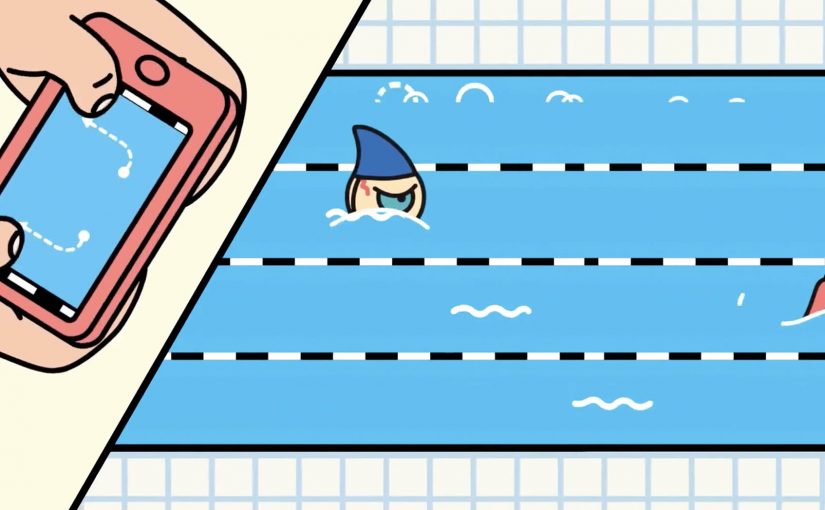
Google has recently released their latest Chrome Experiment called “Super Sync Sports” which allows players to convert their mobile phones and tablets into a remote control for their desktop browser.

To give it a spin visit www.chrome.com/supersyncsports/, choose a game i.e. running, swimming or cycling and then follow the instructions to sync your mobile phone. Once the sync is complete you can then play your way to victory, while the game plays out on your desktop.

What “super sync” really means in practice

The core mechanic is simple. Your desktop browser becomes the shared “big screen” for the race, while each phone or tablet becomes a personal input surface. Instead of mirroring the desktop, the mobile device acts like a controller and streams gestures to the browser in real time.

This is a classic second-screen pattern. A shared display for feedback, plus personal devices for control. It is a small idea with a lot of leverage when the onboarding is frictionless.

In digital marketing and product teams, multi-device web interactions are a repeatable way to turn passive screens into participatory experiences.

Why it lands (even when it is “just a game”)

It also makes a quiet point about distribution. The browser is the platform, so the “controller” is something people already have in-hand. That matters if you are designing for living rooms, events, retail floors, or any moment where downloads and logins kill momentum.

Extractable takeaway: When you want participation, put the rich visual feedback on a shared screen and keep input on personal devices. This lowers setup friction, supports groups naturally, and makes interaction feel immediate without specialized hardware.

The tech stack is the message

What will be interesting to see is how this type of interaction and technology is finally leveraged. The experience is described as being built on HTML5-era capabilities such as WebSockets for live synchronization, plus Canvas and CSS3 for rendering and motion. For brands, the value here is the interaction model, not the sports theme. The real lesson is not the specific APIs. It is the end-to-end pattern of low-latency input, shared feedback, and lightweight pairing.

The real question is whether you are building a one-off demo or a repeatable interaction model that people can join with the device already in their hand.

What to steal for brand experiences

  • Pairing flow: Use a short, forgiving pairing step (code on the big screen, quick join on the phone) and get to interaction fast.
  • Shared spectacle, private control: Keep the crowd watching one shared output, while each participant has a private “control lane” on their device.
  • Competition as UI: A leaderboard (even a lightweight one) can turn a demo into a repeatable loop.
  • Design for latency: Prefer simple, discrete gestures that still “feel” athletic even with imperfect connectivity.
  • Make it modular: The same controller concept can drive product configurators, quizzes, sampling stations, or event installations.

A few fast answers before you act

What is Super Sync Sports?

It is a Chrome Experiment that lets you run a sports game on a desktop browser while using a phone or tablet as the controller.

Why use a phone as the controller instead of the desktop keyboard?

It reduces the learning curve, supports multiplayer easily, and makes the interaction feel more physical. Touch gestures can map naturally to “run”, “swim”, and “cycle” without extra hardware.

What makes this pattern useful beyond games?

The same multi-device approach can turn any shared screen into a participatory surface. Think demos, audience voting, retail activations, guided experiences, or interactive storytelling where people control outcomes from their own device.

Which technologies are doing the heavy lifting?

The experience is described as using WebSockets for real-time synchronization, and Canvas and CSS3 for visuals and animation, all running in the browser.

What is the biggest risk if a brand tries this pattern?

Onboarding and latency. If pairing takes too long or input feels delayed, the magic disappears. The best executions keep the join flow short and the interaction vocabulary simple.
TAC: How to Plan a Funeral

TAC: How to Plan a Funeral

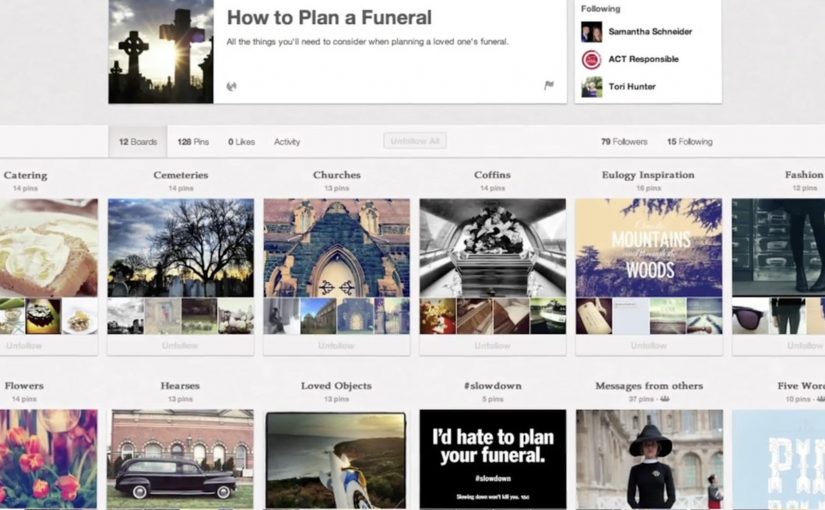
In September 2012, the Transport Accident Commission (TAC) in Australia runs a Pinterest campaign with a line that lands like a punch: How to plan a funeral.

The idea is aimed at girlfriends and mothers of young men. The case frames the problem bluntly. Young men are far more likely to die in a crash than young women, and speeding is positioned as a primary contributor to those fatalities.

How Pinterest becomes a road-safety channel

The mechanism uses Pinterest boards that look like practical inspiration for funerals. Images and pins map to real funeral-planning themes, then steer toward the campaign’s message: “I’d hate to plan your funeral. Slowing down won’t kill you.” That works because the planning format lowers resistance before the safety message lands.

In road-safety behavior change, the most effective interventions often come from trusted relationships rather than institutional authority.

Why it lands

It shifts the emotional weight. Instead of telling a driver what TAC wants, it lets a partner or parent express what they fear. Pinterest is a deliberate platform choice because the boards feel like a real place someone would browse for “ideas”, which makes the moment of recognition more personal and more unsettling.

Extractable takeaway: If you need behavior change, route the message through the person with social permission to say it, meaning someone whose concern will be heard as care rather than control. Then build the media experience so it feels like everyday browsing, not an “ad break”.

What the campaign is really optimizing for

This is not trying to win an argument about enforcement. It is trying to trigger a conversation at home. The work uses a shareable, repeatable line that people can copy in their own words, because a close person saying it carries more force than a government body broadcasting it.

The real question is how to make the warning come from someone the driver will actually hear before the risky behavior happens.

The stronger strategic move here is to design for the relationship, not for the institution.

What to steal for your own safety or health campaign

  • Design for the messenger. Decide who the audience will actually listen to, then craft the creative for that relationship.
  • Choose a platform that matches the behavior. If the message is “planning” and “ideas”, a board format can feel native.
  • Use one line people can borrow. If supporters cannot repeat it verbatim or paraphrase it easily, it will not travel.
  • Make the consequence concrete. “Funeral planning” is an action. It forces imagination to do the work.

A few fast answers before you act

What is the core idea of How to Plan a Funeral?

A TAC Pinterest presence that looks like funeral-planning inspiration, designed to help girlfriends and mothers deliver a more impactful “slow down” message to young men.

Why use Pinterest instead of a typical road-safety ad format?

Because the browsing context feels personal and practical. That makes the emotional message land as something a loved one would stumble into and share, not something an authority announces.

What is the key insight behind the campaign line?

A close relationship can say what an institution cannot. “I’d hate to plan your funeral” is a social message first, and a safety message second.

Who is the message really meant to activate?

Girlfriends and mothers of young men. The campaign is built for the people whose concern is more likely to be heard as care than control.

What is the biggest risk in copying this approach?

If the platform context feels forced or exploitative, people disengage. The creative must feel native to the behavior on that platform, and the tone must stay respectful.

Friskis&Svettis Stockholm: #friskissthlm

Friskis&Svettis Stockholm: #friskissthlm

January in Sweden is when gyms and health clubs go loud, chasing everyone who made the classic New Year’s resolution to start exercising. Stockholm-based health club Friskis&Svettis is no exception.

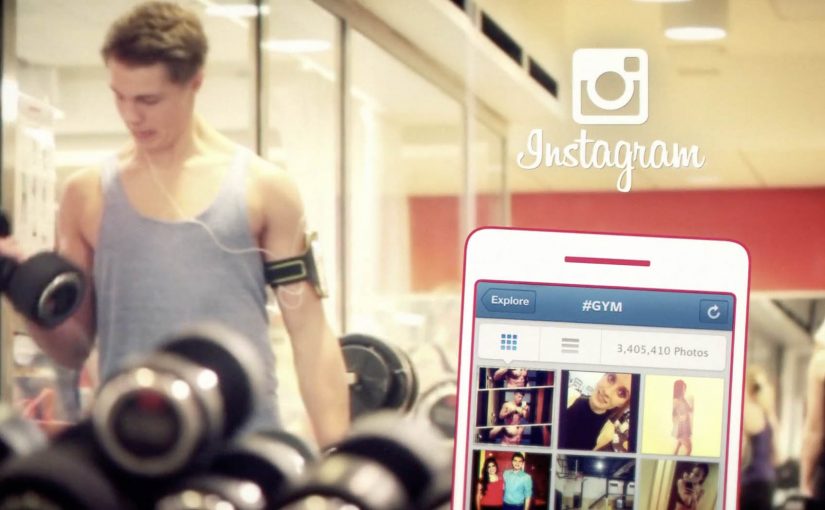
Because Friskis&Svettis is a non-profit association owned by its members, they and their agency Volt build a campaign where members inspire the wider community. A hashtag, #friskissthlm, invites people to work out, photograph the moment, and tag their pictures, so the members themselves become the creative running “around Stockholm”.

How the member-driven mechanic scales

The mechanism is participation as media: member actions create the content and also help distribute it. Instead of producing a single hero ad, the brand defines one simple behavior: train, post, tag. The hashtag becomes the aggregation layer, a single place where the posts collect and stay discoverable, and every new image becomes both proof and invitation. The campaign’s distribution is powered by the same thing gyms want more of in January: visible momentum.

In member-owned fitness communities, letting real members supply the proof tends to land harder than brand-led messaging, because the social permission comes from peers rather than from advertising.

The real question is not how to make a louder January gym ad, but how to make visible member momentum easier to join. The stronger move here is to make member behavior the campaign, not to outshout every other club in January.

Why it lands

It turns the most fragile moment in fitness, starting, into something public and shareable without making it complicated. The posts do two jobs at once. They show variety (different workouts, different people, different branches) and they reduce intimidation, because the “campaign face” is not a model, it is your neighbor.

Extractable takeaway: If you want community growth, choose one repeatable participation unit and one clear tag, then let volume and variety do the persuasion. Your members become the credibility layer.

What to borrow for your own January push

  • Make the ask behavioral. “Work out, post, tag” is easier to follow than “join our movement”.
  • Let variety do the selling. Many small proofs beat one polished claim, especially in fitness.
  • Turn members into the creative. It is cheaper, more credible, and naturally localized.
  • Design for aggregation. One hashtag, one place to browse, one loop that keeps filling itself.

A few fast answers before you act

What is #friskissthlm in one sentence?

A member-powered Instagram hashtag campaign where workouts posted and tagged by members become the campaign content for Friskis&Svettis Stockholm.

Why is this stronger than a typical January gym ad?

Because the proof is peer-generated. People trust “someone like me did this” more than they trust a brand saying “you should”.

What is the key design decision?

Keeping the participation unit tiny and repeatable, so the barrier to contributing stays low while the content volume stays high.

What is the main risk with hashtag-led campaigns?

If the tag is not actively adopted, the feed looks empty and the idea collapses. You need early seeding from members and staff so momentum is visible from day one.

How would you adapt this outside fitness?

Keep the pattern, not the category. Pick one repeatable action people are already willing to do, give it one clear tag or container, and make the resulting proof easy for others to browse and copy.