URA.RU: Make the Politicians Work

URA.RU: Make the Politicians Work

The quality of roads is an eternal problem in Yekaterinburg, described as one of Russia’s largest cities. A local news website, URA.RU, decided to pressure local politicians to do something about it.

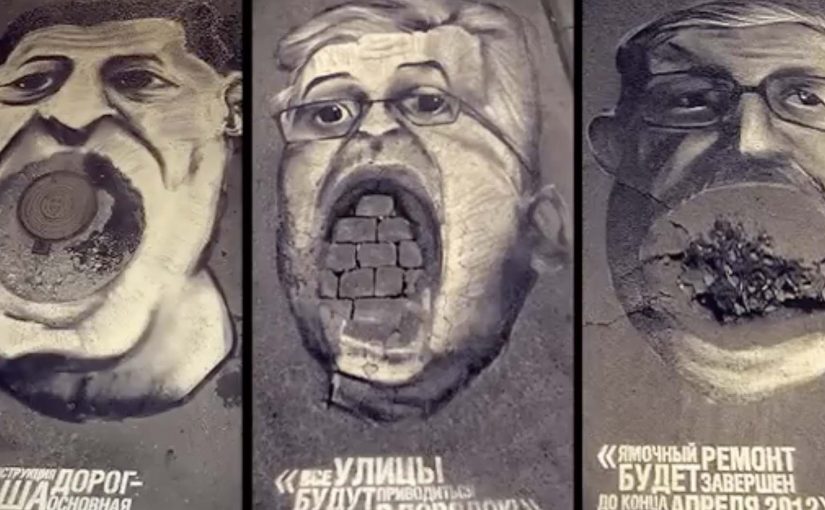
One night, with the help of ad agency Voskhod, they drew the faces of the governor, the mayor and the vice-mayor on three potholes in the city center. The next day the caricatures became a sensation, and with the intense PR around them the politicians could no longer sit idle.

Potholes as portraits

This is a brutally simple flip. If a pothole is “nobody’s problem”, make it somebody’s face. The street becomes a front page, and the damage becomes personal, visual, and impossible to ignore once it is photographed and shared.

How the mechanism creates pressure

The mechanism is pure ambient PR. Here, that means using the street itself as the media surface and public attention as the distribution layer. Pick a small number of highly visible road holes. Paint recognizable leaders onto them overnight. Let morning traffic and pedestrians do the distribution by taking photos and talking. Once the story is moving, officials are forced to respond because the issue now has a daily reminder and a public symbol.

In local accountability campaigns, reframing infrastructure neglect as a public symbol is often the fastest way to turn complaints into action.

Why it lands

It lands because it is legible in one glance and sticky in memory. The portraits convert an abstract civic problem into a shareable image with a clear target, without needing a long argument. It also escalates pressure without escalating cost. The “media buy” is the city itself, and the amplification is the public’s instinct to photograph the outrageous.

Extractable takeaway: If you can turn a slow-burn community frustration into a single, repeatable visual metaphor, you give press and citizens an easy story to carry. That story becomes the lever that forces a response.

What URA.RU is really doing

This is not art for art’s sake. It is agenda-setting. The real question is not how to complain louder, but how to give the complaint a symbol the city cannot stop seeing. URA.RU uses a small physical intervention to manufacture a news moment that keeps the road problem in the spotlight until something changes. The painted potholes are the trigger. The sustained coverage is the engine.

How to turn civic neglect into a pressure symbol

  • Make the issue visual. If it cannot be photographed, it will not travel.
  • Choose a small number of high-impact placements. Concentration beats spread for PR.
  • Use a metaphor that explains itself. The best ambient ideas need no captions.
  • Design for morning discovery. Overnight installs maximize surprise and coverage.
  • Plan the follow-up story. The goal is not attention. The goal is a visible response.

A few fast answers before you act

What is “Make the Politicians Work”?

An ambient PR action where a news site and an agency painted leaders’ faces onto potholes so the road problem became a public symbol and a media story.

Why is this more effective than a petition or complaint thread?

Because it produces a visual headline that spreads fast, keeps pressure on officials, and is difficult to ignore once it becomes widely photographed.

Is this activism or advertising?

It behaves like both. The tactic uses advertising craft to create civic pressure, with PR distribution doing most of the work.

What is the biggest risk with a “shame-based” stunt?

Backlash. If it is perceived as defamatory, unfair, or unsafe, the story can flip against the organizers instead of against the problem.

How can a city issue campaign copy the approach safely?

Keep the metaphor clear, avoid personal attacks beyond what is necessary, and anchor the action to a solvable request so the pressure has a practical endpoint.
Jameson Irish Whiskey: Blippar Space Invaders

Jameson Irish Whiskey: Blippar Space Invaders

Outdoor ads that turn into a game

Jameson Irish Whiskey recently launched a huge outdoor campaign, teaming up with augmented reality specialist Blippar for image recognition technology. Here, “image recognition” means the app matches what the camera sees to known Jameson creative and then triggers the experience.

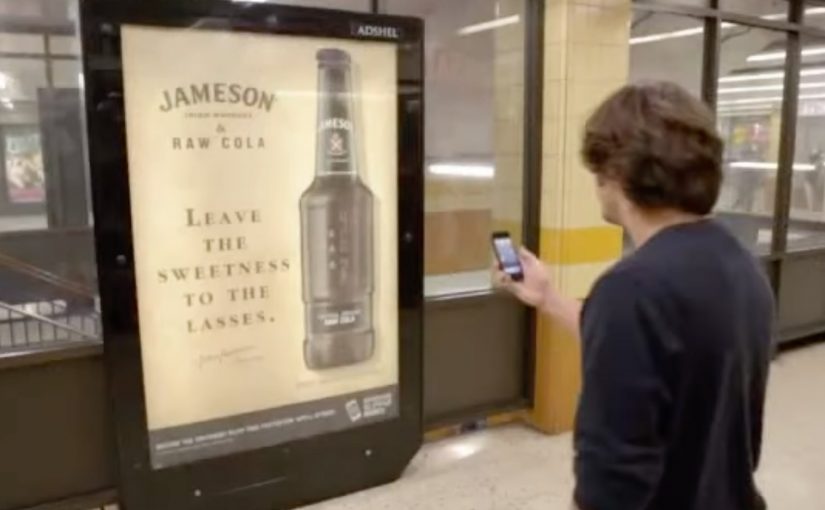
People with the Blippar app could scan any Jameson Irish Whiskey ad or bottle and immediately get immersed in a Jameson Irish Whiskey version of Space Invaders.

How the Blippar scan-to-play mechanic worked

The mechanism was straightforward. A phone camera scan triggered Blippar’s image recognition. That recognition launched an interactive AR experience on the device.

In practice, the physical media became the “portal”. The ad or bottle was the entry point. The phone was the display and controller. The game was the reward.

In spirits and FMCG outdoor campaigns, scan-to-play AR works best when the payoff is immediate and the controls feel natural in a standing, on-the-street context.

Why it landed, and where the interaction could be smoother

The win is immediacy. Scan and you are inside the brand world without a long setup. Because recognition launches the game instantly, it converts a fleeting poster glance into play time.

Extractable takeaway: If you turn physical media into a “scan to reward” portal, deliver the reward within seconds and design controls that match the real-world posture of the moment.

After playing the game myself, I found it would have been a better experience if they had allowed viewer control through tilting the phone around, instead of non-stop tapping at the screen. However, it is still good to see more brands innovating like this.

What the brand was really buying

This was not just about novelty. It was about extending an outdoor campaign into a personal, interactive moment that people could not get from a standard print execution.

The real question is whether your outdoor media can earn voluntary attention, not just reach.

The intent was clear. Increase attention time. Add talk value. Create a reason to engage with the bottle and the ads beyond the first glance.

This pattern is worth copying when you can reward immediately and keep interaction comfortable enough to sustain play.

What to steal for your next AR activation

  • Make the entry point universal. “Scan any ad or bottle” reduces friction and increases participation.
  • Reward immediately. If the scan does not pay off fast, the experience loses the environment it depends on.
  • Design the controls for comfort. Favor natural motion and simple gestures over repetitive tapping when sessions run longer than a few seconds.
  • Use AR to earn time, not impressions. The value is the extra seconds of focused attention, not the novelty headline.

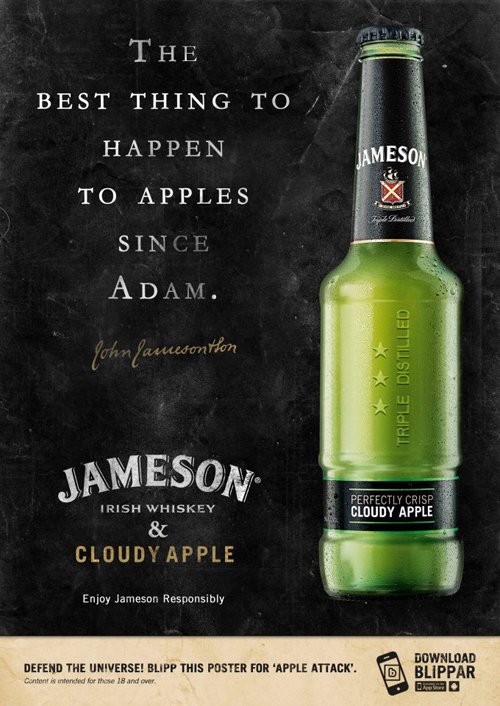
If you would like to give it a try, download the Blippar app on your smartphone and scan the below bottle to start playing.

Jameson Irish Whiskey


A few fast answers before you act

What was Jameson doing with Blippar?

They used Blippar’s image recognition so people could scan Jameson ads or bottles and launch an interactive AR game experience on a smartphone.

What was the core mechanic?

Scan the physical creative with the Blippar app. The scan triggers recognition. The phone immediately launches the game.

Why does scan-to-play work well for outdoor advertising?

It turns a passive glance into an active moment. The ad becomes a portal to content that holds attention longer than print.

What interaction improvement could make this smoother?

More natural viewer control, such as tilting the phone, can reduce fatigue compared to continuous tapping during gameplay.

What is the main takeaway for brands?

Use AR to earn time and engagement by delivering an immediate reward, and make the control scheme comfortable enough to sustain play.

Touch the Sound: 3D printed radio history

Touch the Sound: 3D printed radio history

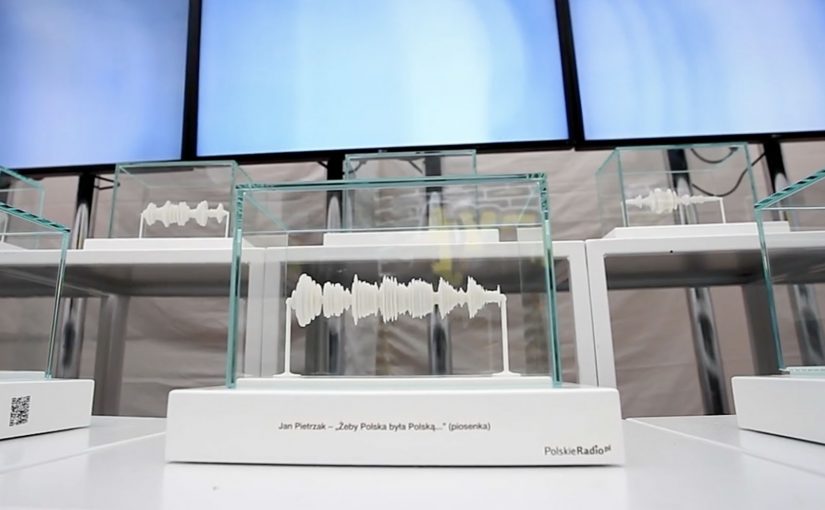
PolskieRadio.pl is described as a news portal with the largest radio recordings database in Poland. To promote it at Science Picnic in Warsaw, Hypermedia Isobar creates a special event built around one simple idea: make sound physically touchable.

Using 3D printing technology, they print out some of the most famous historical radio recordings, turning audio into tangible objects that visitors can hold and explore as “important sounds” of the 20th century.

How “sound you can touch” is staged

The experience works because it is instantly legible on a crowded show floor. You see unusual 3D printed forms, you learn they represent famous recordings, and you understand the invitation without needing a demo or instruction manual.

Instead of asking people to browse a deep archive, the activation turns the archive into a physical exhibit. That shift changes the audience mindset from “searching content” to “discovering artifacts”.

The real question is whether your archive can become something people discover in the room before they ever search it online.

In European public media and culture marketing, giving people a hands-on way to experience an intangible archive can outperform any “come visit our site” message.

Why this fits Science Picnic

Science Picnic is positioned as a hands-on, experiment-first environment. A 3D printed sound object belongs there because it feels like a real scientific trick: invisible data becomes a thing you can touch, compare, and talk about with strangers.

Extractable takeaway: When your asset is intangible, design the first touchpoint as a hands-on reveal that people can explain to each other in a sentence.

How to make an archive feel physical

  • Materialize the invisible. If your product is digital, give people a physical handle on the idea.
  • Start with curiosity, then explain. A strange object earns attention before any copy does.
  • Turn an archive into a highlight reel. People engage faster when you curate “the famous 10” rather than expose “the full 10,000”.
  • Design for conversation. Installations that provoke “what is that?” get shared on the spot.

Last year tourists visiting the La Rambla neighborhood in Barcelona also experienced 3D printing technology. But at that time they were able to pose and create their very own three-dimensional statues.


A few fast answers before you act

What is “Touch the Sound” for PolskieRadio.pl?

It is a live event concept where famous historical radio recordings are turned into 3D printed objects, so visitors can literally touch “sounds” as physical artifacts.

Why use 3D printing for a radio archive?

Because it converts an intangible asset into a tangible experience. People understand the idea instantly and remember it because it feels like a scientific reveal.

Why does this kind of activation work at a science fair?

Science fairs reward hands-on discovery. A physical “sound object” matches the environment, so visitors treat it like an exhibit rather than an ad.

What is the key strategic benefit for the brand?

It reframes a large digital archive as cultural heritage worth exploring, and it creates a memorable story people can retell in one sentence.

What is the most transferable lesson?

If your brand owns data, recordings, or digital history, curate the best pieces and give people a tactile, participatory way to encounter them.