
Australia Post: Video Stamps

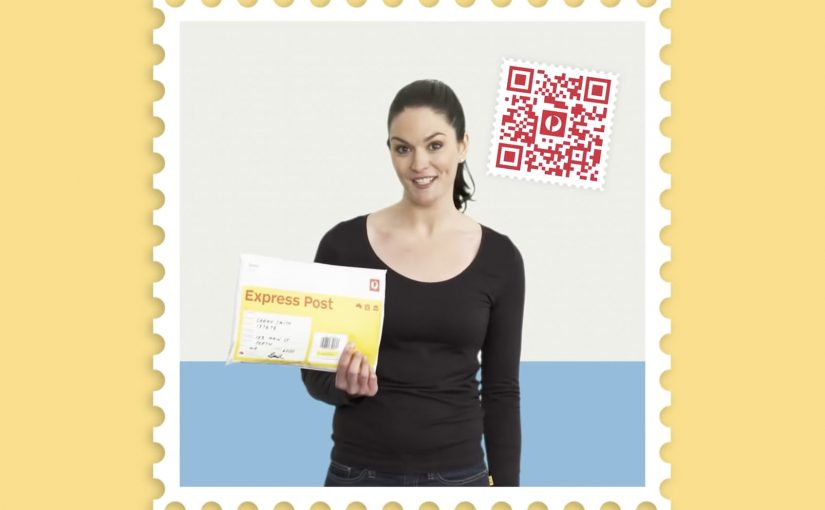
Unpacking a parcel can feel a bit like unpacking a gift. Australia Post builds on that instinct with a “video stamp” that lets senders add a personal message to a package.

The mechanic is straightforward. A QR code stamp is linked to a custom video message, so the recipient scans the stamp and watches a personal clip as part of the unboxing moment.

How the video stamp works

The value sits in the linkage between physical and digital. The parcel carries a QR stamp, the QR routes to a hosted video message, and the message becomes part of the delivery experience without changing the logistics underneath.

In holiday postal services and gifting moments, a simple personalization layer can increase perceived value without changing the core delivery product.

Why this lands

This works because it upgrades a utilitarian service into an emotional ritual. The postal service delivers the object, but the sender delivers the moment. The QR stamp is also a clean trigger because it is familiar, fast, and naturally placed where attention already goes during unboxing.

Extractable takeaway: If your product is operational by nature, add a lightweight digital layer that attaches to a physical touchpoint, so the experience gains meaning without adding friction to the core process.

The idea in context

Linking codes to personal messages is a proven pattern. J.C. Penney linked QR codes to voice messages in their Santa Tags sticker campaign in 2011. There was also a concept video circulating about a similar DHL-style Christmas video packet service. The notable part here is the step from concept and retail experiments into a postal service implementation.

The real question is not whether a QR code can play a video, but whether a postal service can make a routine delivery feel personal without complicating the service.

This is a smart service-layer idea because it adds emotion without asking the postal operation to become something else.

What postal and gifting teams can reuse

  • Attach meaning to a routine moment. Unboxing is already emotional. Add a trigger there.
  • Use a familiar bridge. QR is low-explaining and low-friction.
  • Let the sender create the content. Personalization scales when users do the work willingly.
  • Keep it additive. The digital layer should not interfere with delivery, tracking, or operations.

A few fast answers before you act

What is an Australia Post video stamp?

It is a QR code stamp on a parcel that links to a custom video message, so the recipient can scan and watch a personal clip.

Why does this work especially well at Christmas?

Because parcels are already treated like gifts. A video message makes the delivery feel more personal and intentional.

Is this a new idea or a new implementation?

The underlying concept has existed in other forms, but the notable move is a postal service implementing it as a practical consumer feature.

What’s the main UX requirement for this to succeed?

Instant playback with minimal steps. If scanning leads to friction, the emotional moment disappears.

What’s the easiest way to copy the pattern?

Identify a physical touchpoint people already look at, then attach a scannable trigger that opens a personal message or content layer immediately.
Macy’s iBeacon: Retail Enters Micro-Location

iBeacon moves from concept to real retail

Apple is working to bring iBeacon technology into retail stores. But the first real-world deployment lands fast.

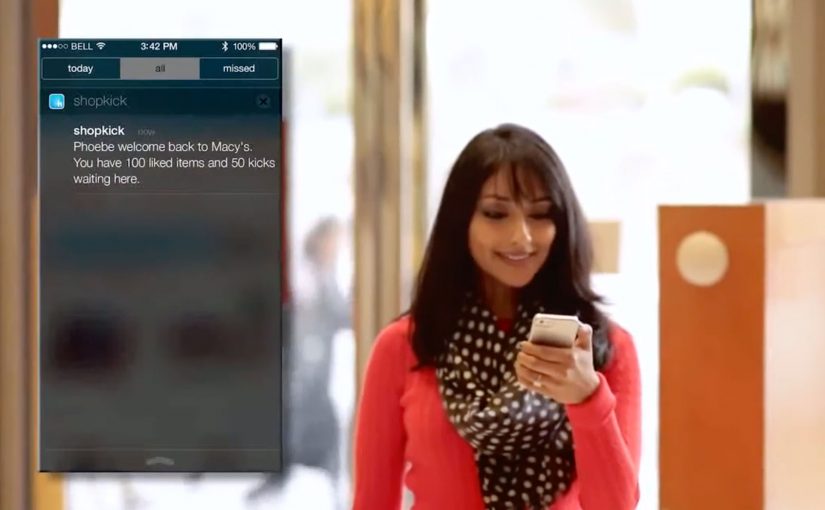
On November 20, Shopkick deploys an iBeacon system at Macy’s, effectively bringing beacon-driven retail experiences live before Apple’s own retail rollout becomes mainstream.

At Macy’s, the implementation is branded as shopBeacon, an iBeacon-based in-store experience.

What iBeacon makes possible in-store

iBeacon, introduced with iOS 7, uses Bluetooth Low Energy (BLE) signaling to enable micro-location services inside stores, meaning aisle-level positioning rather than GPS-level proximity.

That matters because it changes what mobile in-store experiences can do. Because the signal is precise inside the environment, experiences can trigger at the moment of intent, reducing the need for shoppers to search.

Stores can deliver information and value based on a shopper’s precise location inside the environment, not just on GPS-level proximity.

Micro-location enables location-specific deals and discounts, product recommendations by aisle or department, loyalty rewards triggered by presence, and contextual content that enhances the shopping journey.

The promise is simple. The store becomes a responsive, context-aware interface.

In brick-and-mortar retail, micro-location only matters when it is permissioned, useful, and tied to measurable in-store behavior change.

What makes Macy’s deployment noteworthy

This is not a lab demo. It is a live retail environment.

The shopBeacon trial runs as a closed beta at Macy’s Herald Square in New York and Macy’s Union Square in San Francisco.

This marks the shift from talking about beacons to operationally testing them in flagship stores, where footfall, density, and shopper intent are real.

The strategic signal for retailers and brands

Beacon technology is not another channel. It is an in-store intelligence layer that links a shopper’s physical context to digital triggers and measurement.

Extractable takeaway: Micro-location only becomes strategic when it turns permissioned context into real utility that changes behavior, not just into more messages.

The real question is whether you can turn aisle-level context into permissioned help that measurably changes in-store behavior.

If executed with permission and relevance, it can reduce friction in discovery and decision-making, increase the utility of mobile without forcing shoppers to search, and bridge physical browsing with digital personalization.

If executed poorly, it becomes noise. The win condition is not proximity. It is context plus permission plus usefulness.

What to borrow for your beacon pilot

  • Win permission first. Treat opt-in and relevance as the product, not an afterthought.
  • Design for usefulness at the moment of intent. Use aisle-level context to reduce discovery and decision friction, not to spam offers.
  • Make measurement non-negotiable. Track opt-in rates, perceived usefulness, and impact on dwell and conversion to prove behavior change.

A few fast answers before you act

What does “micro-location” mean in a store context?

It means detecting a shopper’s location at aisle or department level, not just “near the store”, enabling experiences that change based on where the shopper is standing.

Why is BLE central to iBeacon-style deployments?

Bluetooth Low Energy enables persistent, low-power proximity signals that make in-aisle triggers and experiences feasible without draining devices.

Is the main value just pushing offers?

No. Offers are one use case. The stronger value is contextual service, guidance, and relevance when it reduces shopping friction.

What should retailers measure in early pilots?

Opt-in rates, perceived usefulness, impact on dwell and conversion, and whether the experience feels helpful rather than intrusive.

What is the quickest way for this to fail?

When it becomes noisy, repetitive, or unpermissioned. Proximity alone is not value. Context and usefulness are the win condition.

Absolut: Unique Access via WhatsApp

In October, Klik (a chocolate snack) was billed here as the first brand to use WhatsApp to increase brand engagement amongst its teen audience.

Now a month later, ABSOLUT Vodka in Argentina uses WhatsApp as well, this time to invite people to an exclusive launch party. To build awareness and engagement in Buenos Aires, Absolut creates “Sven the doorman”. Interested people have to contact Sven via WhatsApp and convince him to grant access. Since he is not easy to convince, people get creative fast.

Sven is the mechanic

The mechanism is conversational gating. Conversational gating means access is unlocked only through a back-and-forth chat, not a form or link. A single contact on WhatsApp becomes a bouncer, and the brand turns the usual “enter to win” pattern into a negotiation. You are not filling a form. You are performing for a personality, in the channel where you already talk to friends.

In mobile-first urban markets, messaging apps like WhatsApp are a natural place for brands to run direct, high-attention interactions without building a separate destination.

Why this format spreads

It packages exclusivity into a simple game loop. The real question is whether you want people to feel like they earned access, or like they completed a funnel step. Ask. Get rejected. Try again. Escalate creativity. That loop is inherently shareable because it produces artifacts people can screenshot, forward, and remix. This format is a better bet when you want depth of participation and talk value, not maximum reach. Reported campaign write-ups describe hundreds of participants and a flood of user-made messages, which is exactly what you want when the goal is buzz rather than reach alone.

Extractable takeaway: If you want engagement that feels earned, design a human-scale gate with a clear personality and a strict rule. Then let people “pay” with creativity, not clicks.

What to steal for your own messaging plays

  • Make scarcity real. The smaller the prize pool, the more believable the doorman becomes.
  • Turn the brand into a character. Sven is not a hotline. He is a role people can play against.
  • Reward effort, not volume. You want fewer, better attempts, not spammy persistence.
  • Design the rejection lines. The “no” is half the entertainment. Script it so it invites a better next try.
  • Build for screenshots. Assume the conversation will leave WhatsApp. Make it legible outside the app.

A few fast answers before you act

What is the core idea behind “Sven the doorman”?

A brand persona acts as a gatekeeper on WhatsApp. People must persuade him to unlock access to an exclusive event, which converts invitations into a creative challenge.

Why use WhatsApp instead of a landing page?

Because it removes friction. The interaction starts inside an everyday messaging habit, and the conversational format makes participation feel personal rather than transactional.

What makes this approach risky?

It can backfire if the “doorman” feels unfair, creepy, or inconsistent. The rules must be clear, and the tone must fit the audience.

What is the simplest version a brand can run today?

Use one WhatsApp contact, one character, and one strict rule to unlock a limited reward. Keep the conversation short, and make the “no” entertaining enough that people want to try again.

How do you keep the “doorman” from becoming spammy or exhausting?

Set a tight interaction window, cap repeated attempts, and use rejection lines that steer people toward better next tries instead of inviting endless back-and-forth.