
Oscar Mayer: Wake Up and Smell the Bacon

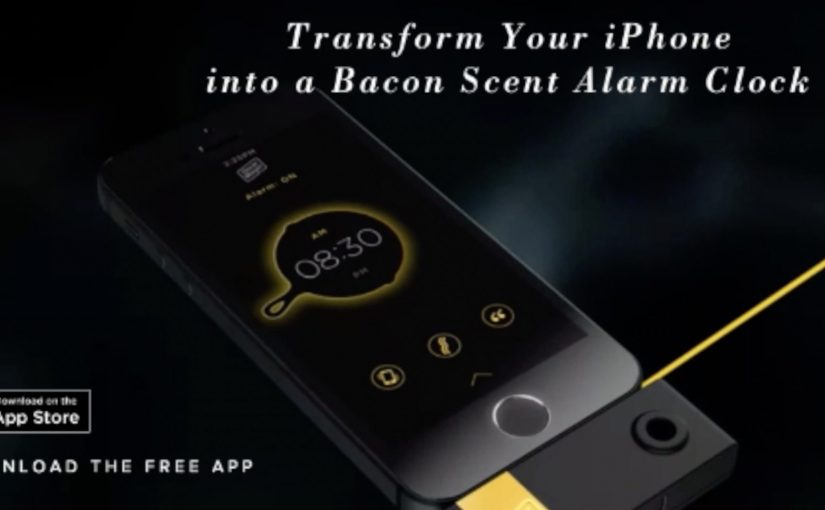
If you would like to wake up to the sound of sizzling bacon on the stove and its aroma drawing you out of bed, then head over to www.wakeupandsmellthebacon.com and answer three questions for a chance to win the special bacon-scented iPhone attachment.

The contest is being run by Oscar Mayer, and they are giving away 4700 bacon-scented iPhone attachments over the next month. Winners can then use a custom Oscar Mayer alarm app to automatically activate the iPhone attachment every morning.

How the stunt is engineered

The mechanism is a neat combination of utility and theatre: a giveaway device plus a dedicated alarm app. The theatre is the story-worthy prop that makes the idea easy to retell.

In FMCG marketing, a physical add-on that turns a brand promise into a daily ritual can outperform a one-off ad because it creates repetition without feeling like repetition.

The real question is whether you can turn a product cue into a repeatable moment people choose to replay.

This is a strong stunt because it earns replay inside an existing morning routine, not just in a one-time impression.

Why it lands

This works because the alarm app and scent attachment turn Oscar Mayer’s core cue into a repeatable, at-home sensory demo.

Extractable takeaway: Scent and sound work as marketing when they are attached to an existing habit. If the brand can own a repeatable moment in the day, the campaign shifts from impression to ritual.

It turns a product truth into a sensory demo. Oscar Mayer does not need to persuade you that bacon is appealing. It just recreates the cue that already does the persuading.

It makes the call-to-action playful. “Enter to win” is normally forgettable. Here it is a gateway to a story-worthy object, so the contest itself becomes shareable.

It upgrades branded content into branded utility. Branded utility here means a tool people use for their own sake. The alarm is not only entertainment. It is a behavior change, because the phone becomes part of a new wake-up routine.

Borrowable moves from the bacon alarm

  • Pair a simple app with a tangible artifact. Physical wins feel rarer than digital, which increases talk value, meaning how likely people are to mention it unprompted.
  • Design for daily replay. The strongest “stunts” are the ones that can be re-experienced without needing a second ad.
  • Make the entry mechanic frictionless. Fewer questions, faster entry, and the prize does the marketing.

A few fast answers before you act

What is being promoted here?

A contest for a bacon-scented iPhone attachment, supported by an alarm app that triggers the attachment in the morning.

Why does this qualify as more than a gimmick?

Because it converts a brand promise into a repeatable experience. The “demo” happens in the user’s real life, not just on screen.

What is the main behavior change the campaign creates?

It pulls the brand into a daily wake-up habit, which creates repeated exposure without needing repeated media placements.

What makes it shareable?

The object is inherently story-worthy. People can describe it instantly, and the idea is unusual enough to travel as a headline.

What is the key risk?

Link rot and platform change. If the app link, device compatibility, or contest site stops working, the core mechanic collapses.
Polar Beer: Cell Phone Nullifier

There is a specific kind of modern annoyance. You go out with friends, and ten minutes later the table is lit by phone screens instead of conversation.

Polar, a regional Brazilian beer brand, decides to treat that as a solvable problem. If phones steal the night, then the beer should give it back.

A beer cooler that changes the rules of the table

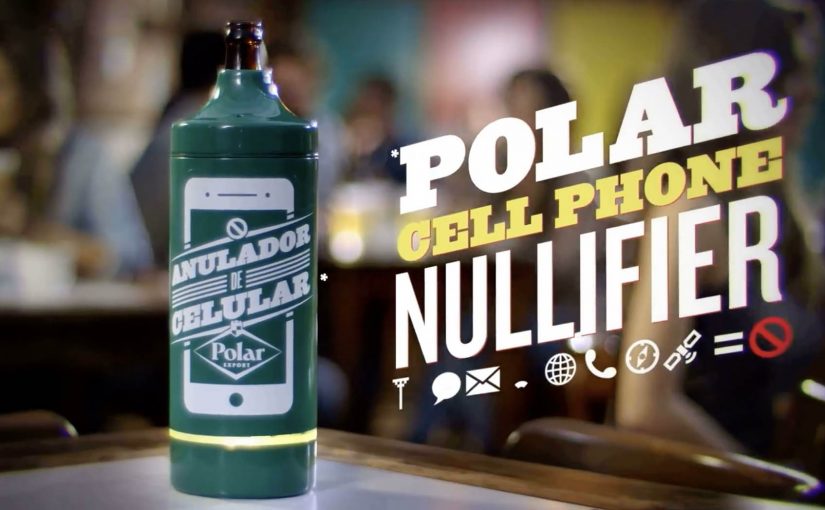
The mechanism is a physical prop with a blunt promise. A special Polar cooler is described as blocking 3G, 4G, Wi Fi, and GSM signals for devices within roughly a five-foot radius. Order Polar. Get served in the cooler. Watch the room look up.

In bar and nightlife settings, the strongest behavior-change ideas work when they attach to an existing ritual and alter it with minimal effort from the audience.

Because the cooler makes the phone temporarily useless at the table, conversation becomes the path of least resistance.

Why it lands, even if people hate it for a minute

This plays with a familiar tension. Everyone complains about “phubbing,” the habit of snubbing people in front of you by focusing on your phone, but nobody wants to be the first person to say “can we put phones away.” The cooler does the awkward social work on behalf of the group.

Extractable takeaway: If a social norm is breaking down, redesign the environment so the better behavior becomes the default. Remove the need for a lecture, and replace it with a small constraint that everyone experiences equally.

The brand benefit is also clean. Polar is not asking for attention. It is buying it back for you, then sitting at the center of the moment it created.

What the stunt is really selling

On the surface it is a gadget. Underneath it is a positioning move. Polar equates itself with real-world connection and the kind of night people say they want, even when their hands keep reaching for the screen.

The real question is whether you can earn attention by subtracting distraction, not by adding more stimulation.

This is a smart positioning move because it delivers the promise through the ritual, not through a slogan.

It is also a reminder that “anti-tech” can be a tech story. The cooler is not anti phone as an identity. It is pro conversation as an outcome.

Steal this for phone-free nights

  • Target the moment, not the attitude. Fix the table behavior, not the entire relationship with smartphones.
  • Use a prop that belongs in the setting. A cooler at a bar feels natural. A lecture does not.
  • Make it equal. The constraint applies to everyone in range, so it feels like a shared game, not a personal attack.
  • Build a story people retell in one sentence. “The beer that makes your phone stop” spreads fast.

A few fast answers before you act

What is Polar’s “Cell Phone Nullifier”?

It is a branded beer cooler concept described as cutting off nearby phone connectivity, so people ordering Polar are nudged into talking to each other instead of scrolling.

Why does blocking the signal work as a behavior-change tactic?

It removes the temptation rather than arguing with it. By changing the environment, it turns “I should put my phone away” into “my phone is not part of the table right now.”

What is the core creative mechanism here?

A familiar bar object is redesigned to enforce a social norm. The product ritual, ordering beer and receiving it in a cooler, becomes the delivery system for the idea.

How can brands adapt this without feeling preachy?

Focus on shared benefits and shared participation. Make the intervention playful and collective, and keep the user action simple and voluntary.

What is the biggest risk if you copy this idea?

If the constraint feels forced or punitive, it becomes the story instead of the conversation it was meant to protect. Keep it lightweight, contextual, and easy to opt into.

Build with Chrome: LEGO Chrome Experiment

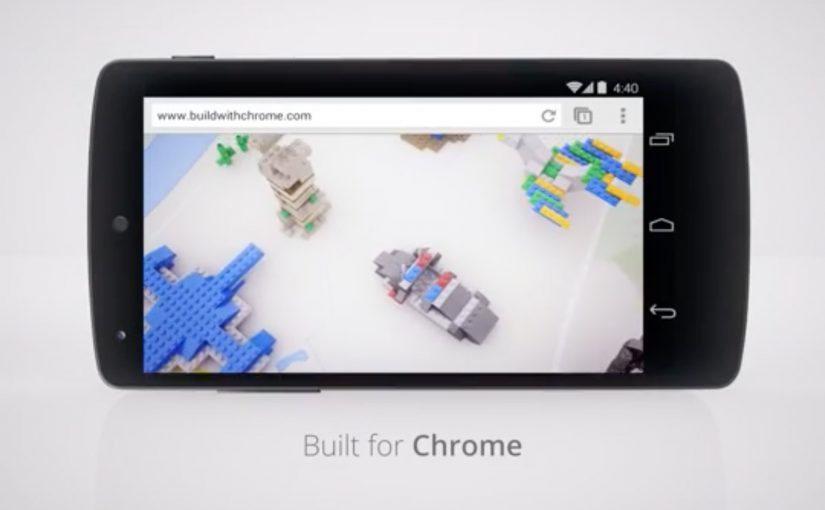
Google earlier this week released their latest Chrome Experiment in partnership with LEGO called “Build with Chrome”. In this case, a Chrome Experiment is a browser-based interactive demo built to show what Chrome can do.

Now anybody who visits www.buildwithchrome.com via their Chrome browser can use their mouse or touchscreen to build something out of the virtual LEGO bricks and share them directly on Google+.

Why this is a smart Chrome Experiment

This is a simple product demonstration disguised as play. It shows off what the browser can do by putting it in service of something people already understand. Building with LEGO.

Extractable takeaway: when you want people to remember a platform capability, attach it to a familiar action so the technology explains itself through use.

The real question is whether the experience makes the browser capability memorable by turning it into something people instantly know how to do.

  • Low learning curve. If you can drag and drop, you can participate.
  • Touch-ready by design. Mouse and touchscreen both make sense for “building”.
  • Social distribution baked in. Sharing is part of the experience, not an afterthought.

For digital teams building interactive brand work, the useful pattern is to turn a technical capability into a familiar act people want to repeat and share.

What Google is really demonstrating here

The business intent is bigger than a playful LEGO build. Google is using a familiar creative act to position Chrome as a browser that feels interactive, responsive, and socially connected without needing to make that case through technical claims.

That matters because people rarely remember feature lists, but they do remember the tool that let them make something quickly and show it to others. The mechanism works because the act of building becomes the proof of the platform.

What to take from this if you are building interactive brand work

This is worth stealing because the experience stays focused on one clear behavior, then lets that behavior carry the product story.

  1. Make the capability tangible. Don’t explain performance. Let people feel it.
  2. Choose a familiar metaphor. Familiar mechanics reduce friction and increase time spent.
  3. Design sharing as a natural next step. If the output is personal, people want to show it.
  4. Keep the experience single-purpose. One clear activity beats a feature kitchen sink.

A few fast answers before you act

What is “Build with Chrome”?

It is a Google Chrome Experiment built with LEGO that lets people create virtual LEGO models in the browser using a mouse or touchscreen, then share them online.

Why partner with LEGO?

Because LEGO is an instantly understood building system. It makes the digital interaction feel intuitive, playful, and worth sharing.

What is the core marketing mechanic here?

Hands-on participation. The experience turns a browser capability into a personal creation that people can publish socially.

What makes a Chrome Experiment effective?

It demonstrates a technology through an interaction people enjoy, without requiring explanation, and it encourages sharing through an output people feel ownership of.

What is the transferable lesson for digital teams?

If you want people to remember a platform capability, wrap it in a simple activity that creates something personal and shareable.