
Apple: 12 Days of Christmas

Is it just me or is Christmas this year turning out to be very Apple.

Here is Apple making Christmas news again. This time with their new TV ad.

The ad reworks the standard Christmas carol of the same name to feature twelve iPhone applications related in some way to the holiday season.

  • 12 cookies cooking: The Betty Crocker Mobile Cookbook (Free)
  • 11 cards a’ sending: Postman ($2.99)
  • 10 gifts for giving: My Christmas Gift List ($0.99)
  • 9 songs for singing: TabToolkit ($9.99)
  • 8 bells for ringing: Holiday Bells ($0.99)
  • 7 slopes a’ skiing: Snow Reports ($1.99)
  • 6 games for playing: Christmas Fever ($0.99)
  • 5 gold rings: Anna Sheffield Jewelry (Free)
  • 4 hot lattes: myStarbucks (Free)
  • 3 flights home: Flight Search (Free)
  • 2 feet of snow: Weather Pro ($3.99)
  • And an app that can light up the tree: Schlage LiNK (Free but hardware required)

What the spot is really doing

The mechanism is a catalog disguised as a carol. Each lyric is a micro use case, and each use case quietly argues that “apps” are the reason the device feels personal in December, not just powerful on paper.

In consumer technology categories where feature lists blur quickly, showing everyday use cases beats claiming capability.

The real question is how to make an ecosystem feel instantly useful without falling back on a feature list.

Why it lands

It is lightweight, instantly recognisable, and structured for memory. You already know the song, so the ad can spend its time on the parade of utility and novelty instead of on explanation.

Extractable takeaway: If you want to sell a platform, turn your ecosystem into a familiar format people can hum, then make each beat a concrete “I can use that” moment.

What platform marketers can borrow

  • Use a cultural template. Borrow structure from something the audience already carries.
  • Keep each benefit bite-sized. One line per use case is enough when the rhythm does the glue work.
  • Let variety do the persuasion. A spread of small moments can outperform one big claim.

A few fast answers before you act

What is this Apple “12 Days of Christmas” ad?

A holiday TV spot that rewrites the classic carol to showcase twelve iPhone apps tied to seasonal moments.

What is the core mechanism?

A familiar song structure becomes a rapid-fire list of app use cases, turning the App Store into the product story.

Why does the format work so well for apps?

Because apps are easiest to understand as situations, not specs. The carol format delivers situations at speed while staying coherent.

What is Apple really selling here?

The ad sells the iPhone as an entry point to a seasonal ecosystem of useful apps, not just as a piece of hardware.

What should I copy if I am marketing a platform?

Package the ecosystem as a set of quick, concrete jobs-to-be-done, then anchor them in a structure the audience already recognises.
Google Goggles: Rise of Visual Search

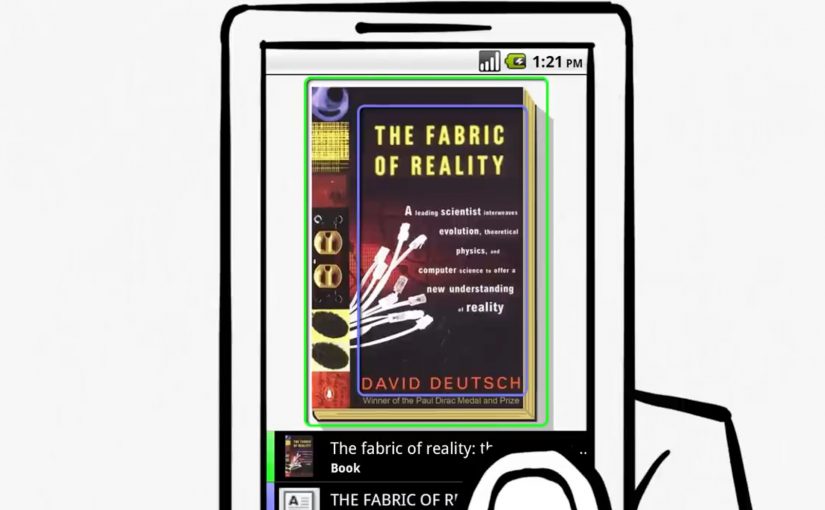
You take an Android phone, snap a photo, tap a button, and Google treats the image as your search query. It analyses both imagery and any readable text inside the photo, then returns results based on what it recognises.

This is visual search, meaning search where a captured image becomes the input instead of typed words. The point is not a clever camera trick. The point is that “point and shoot” can replace “type and search” in moments where you cannot name what you are looking at.

Before this, the iPhone already has an app that lets users run visual searches for price and store details by photographing CD covers and books. Google now pushes the same behaviour to a broader, more general-purpose level.

From typing to pointing

Google Goggles changes the input model. The photo becomes the query, and the system works across two parallel signals:

  • What the image contains, via visual recognition.
  • What the image says, via text recognition.

Because the system can extract both shape and text from the same frame, it removes the translation step between seeing something and turning it into keywords. That translation step is where most friction lives on a small mobile keyboard.

Why “internet-scale” recognition is the point

Google positions this as search at internet scale, not a small database lookup. The index described here includes 1 billion images, which signals the ambition to recognise the long tail of everyday objects, covers, signs, and printed surfaces.

In mobile, in-the-moment consumer and retail discovery, this matters because intent often starts with something you can see but cannot name.

Why it lands beyond “cool tech”

When the camera becomes a search interface, the web becomes more accessible in moments where typing is awkward or impossible. You can point, capture, and retrieve meaning in a single flow, using the environment as the starting point.

Extractable takeaway: The winning experiences are the ones that convert recognition into an immediate next step. Identify what I am looking at, then answer the implied question, such as “what is this?”, “where can I buy it?”, “what does it cost?”, “how do I use it?”.

When the camera becomes the keyboard, every physical surface becomes a potential search box. Brands that make their packaging, signage, and product imagery easy for humans and machines to read get discovered even when no one types their name.

The bet Google is making

This is a meaningful shift in input, but it will not replace typed search. It will win the moments where the user’s intent is anchored in the physical world and the fastest way to express that intent is to show the object.

What to steal if you build digital experiences

  • Design for machine-readable cues. High-contrast logos, consistent product shots, and legible typography increase the odds that recognition resolves to the right thing.
  • Assume zero-keyboard intent. Build journeys that start from what people see around them, not only from brand names and product model numbers.
  • Plan for ambiguity. Recognition will be probabilistic, so your assets should help disambiguate similar-looking items.
  • Treat demos as proof, not decoration. If your pitch is “this feels different,” show it working, as the original Goggles demo does.

A few fast answers before you act

What does Google Goggles do, in one sentence?

It lets you take a photo on an Android phone and uses the imagery and any readable text in that photo as your search query.

What is the comparison point mentioned here?

An iPhone app already enables visual searches for price and store details via photos of CD covers and books.

What signals does Goggles read from a photo?

It uses both visual recognition of what is in the image and text recognition of what is written in the image.

What is the scale of the image index described?

Google describes an index that includes 1 billion images.

What is included as supporting proof in the original post?

A demo video showing the visual search capability.

Vodafone NZ: 1000 phones, 53 ringtones, 1 song

When “viral” requires real engineering

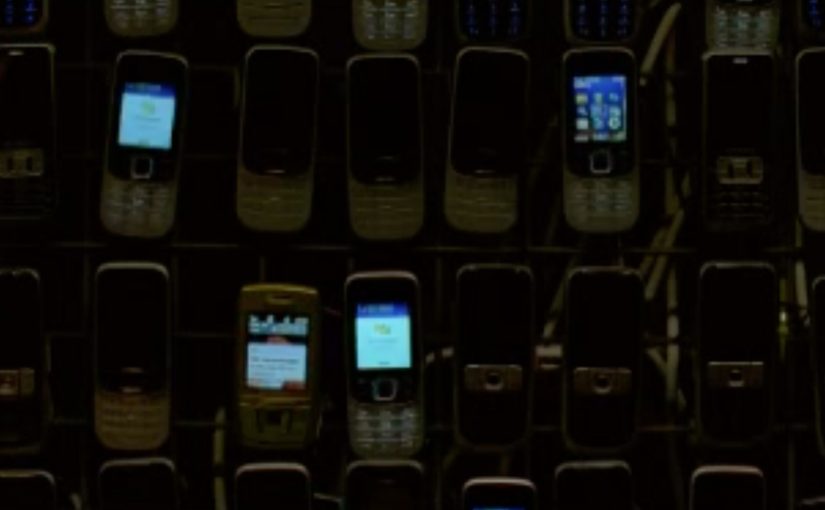
To create a viral video these days, you need to do something great and unique. Vodafone NZ hired a production team to orchestrate cellphones into “playing” Tchaikovsky’s 1812 Overture.

This was done using 1000 phones and 53 different ringtone alerts, synchronized to recreate the classical piece.

How 1000 phones became an orchestra

The mechanism was constraint-driven composition.

Instead of instruments, the “sound palette” was a fixed set of ringtone alerts. The team then arranged phones like sections in an orchestra and synchronized their playback so the combined output recreated the music.

What makes this work on camera is that you can see the system. Rows of devices. Repetition at scale. A human-built machine producing a familiar piece.

In global telecom marketing, the most shareable films often work because the effort is visible.

Why the idea lands with viewers

It lands because it is both absurd and precise, and the visible synchronization lets the viewer sense the complexity without needing the full production process.

Extractable takeaway: When the constraint is instantly legible and the build is visibly real, the craft becomes the hook that earns attention and sharing.

It also bridges cultures. Highbrow music meets everyday tech, creating an unexpected contrast that feels fresh instead of forced.

The business intent behind the ringtone orchestra

The intent was to associate Vodafone with coordination, scale, and modern connectivity, without having to say those words.

The real question is whether your “viral” idea would still be interesting if the camera had to capture a real system doing the work.

This is the right kind of brand film for a telco. It shows coordination and connectivity instead of claiming it.

Steal this pattern from the ringtone orchestra

  • Make effort visible. When the craft can be seen, viewers reward it with attention and sharing.
  • Use a constraint as the hook. “Only ringtones” creates a clear challenge people instantly understand.
  • Engineer a spectacle that reads in one frame. Scale should be obvious without explanation.
  • Let the metaphor do the branding. Show coordination and connectivity instead of claiming it.

If you like the resulting tune, you can download it to your computer, as well as the 53 ringtones used to create it, from www.vodafone.co.nz/symphonia.


A few fast answers before you act

What did Vodafone NZ create?

A film where 1000 mobile phones, using 53 different ringtone alerts, were synchronized to perform Tchaikovsky’s 1812 Overture.

What is the core mechanism?

Constraint-driven composition. A fixed set of ringtone sounds becomes the “instrument set”, and synchronization plus physical arrangement makes the system readable on camera.

Why does it work as shareable content?

The effort is visible. The scale reads instantly, and the contrast between classical music and ringtones creates a surprising but coherent hook.

What business goal does this support for a telco brand?

It turns “connectivity at scale” into a watchable metaphor. Many devices acting as one becomes an entertaining proof of coordination and network promise.

What is the most transferable takeaway?

If you can make the constraint and the craft legible in one frame, the build itself becomes the reason people share.