With the start of flu season, Theraflu in Poland wants to create a tool that lets passersby check if they have a fever without interrupting their daily commute.
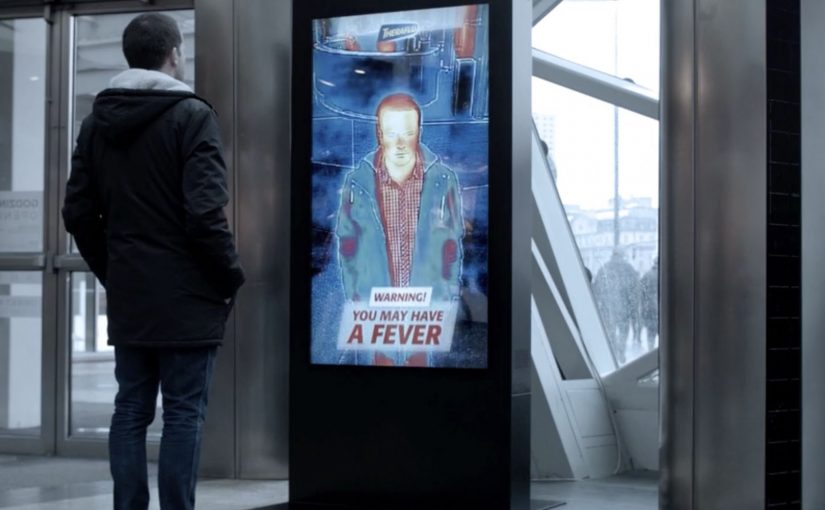
So Saatchi & Saatchi develops what is billed as the world’s first outdoor ad with a live thermo-scanner camera, able to check the body temperature of the person standing next to it in real time.
The thermo-ad also lets people take a thermo-selfie, which here means a thermal-style image of themselves, download it via a microsite or QR code, and share it using the hashtag #TherafluThermoscanner, or send it by email to their boss as an explanation for absence.
Turning a symptom into an instant public check
The mechanism is a simple swap. Thermal cameras are usually associated with controlled environments like airports or clinics. Here, that same visual language is put into a familiar citylight so the “should I worry?” moment can happen on the street, in seconds. That shift matters because it turns a clinical signal into a low-friction commuter interaction, which is why the idea feels immediately useful instead of purely theatrical.
In European commuter cities, out-of-home works best when it adds utility without forcing people to break stride.
Why it lands
This works because it respects the reality of flu season behavior. Many people keep moving even when they feel off. The installation meets them where they already are, makes the result legible at a glance, and gives them an immediately shareable artifact that doubles as social proof and practical communication.
Extractable takeaway: If your message is health-related and time-sensitive, design a public utility that produces a clear personal output. Then make that output easy to reuse in the next real decision the person has to make.
What Theraflu is really buying
Beyond awareness, the ad builds a reason to act early. It reframes “flu medicine” from a product you remember later into a category you prepare for now, while the viewer is still in the mindset of assessing symptoms and deciding what to do next. The real question is how to make symptom checking feel immediate enough to trigger action before people default to pushing through the day. The stronger play here is utility-led brand framing, not spectacle for its own sake.
What to steal from the Thermoscanner
- Embed the benefit inside the medium. If the media unit demonstrates the promise, the claim needs less persuasion.
- Make the result portable. A shareable scan turns one interaction into many impressions.
- Design for the commute. Fast, glanceable, and low-effort beats “immersive” when people are in motion.
- Give sharing a job. Social posting is optional. Emailing a boss is a real utility hook.
A few fast answers before you act
What is the Theraflu Thermoscanner?
It is an interactive outdoor ad that uses a live thermal camera to estimate body temperature in real time and indicate whether a passerby may have a fever.
Why put a thermo-scanner in an outdoor ad?
It makes fever detection feel instant and accessible during daily routines, and it turns a brand message into a practical tool.
What is a thermo-selfie here?
It is a thermal-style image generated from the scan that people can download and share, or send as a message to explain they may be unwell.
What makes this more than a gimmick?
It is tied to a real, time-sensitive decision. “Do I have a fever?” and it delivers an output that can be reused immediately.
How can other brands apply the pattern?
Find a high-friction question people avoid answering, then build a quick public utility that returns a clear personal result and a shareable artifact.