
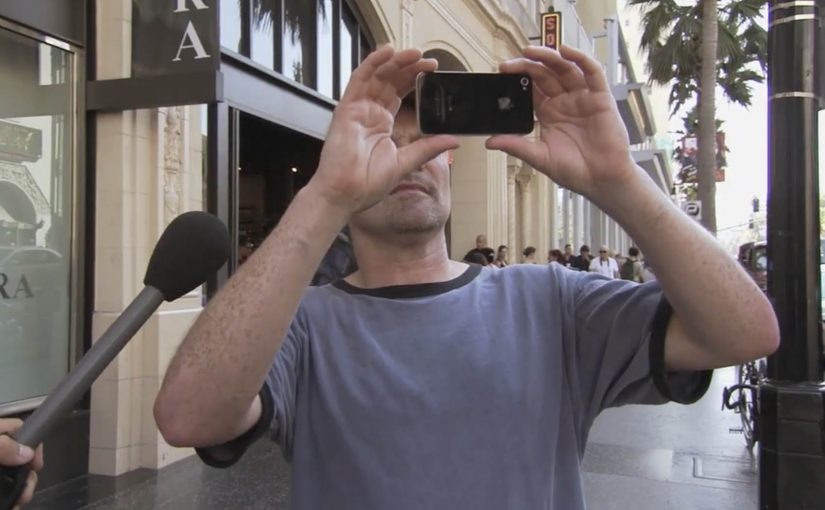
Jimmy Kimmel: First Look at iPhone 5

The iPhone 5 still has some weeks to go before it is officially available. That little detail did not stop talk show host Jimmy Kimmel from giving random people on the streets a chance to “test” the iPhone 5, which was actually just an iPhone 4S.

How the prank works

The mechanism is simple: present a familiar object as a new one, then ask for first impressions on the spot. The humor comes from watching people project “newness” onto something they are already holding, then confidently describe improvements that cannot be there because nothing changed.

In consumer tech launches, perceived novelty often shapes first impressions as much as real novelty does.

The real question is whether the launch story is shaping the feedback you think you are collecting.

Why it lands

The segment exposes expectation marketing in real time, meaning the expectation itself becomes part of the perceived product experience. It makes a point without preaching. It lets people’s own words demonstrate how branding, timing, and context can change what we think we are seeing.

Extractable takeaway: When audiences expect a breakthrough, they interpret ambiguous cues as improvements. Marketing and product teams should separate product experience from launch narrative when they need truth, because the narrative can become the experience.

It turns product hype into a social mirror. Viewers do not only laugh at the interviewees. They recognize the pattern, because everyone has “felt” an upgrade before they could name a feature.

It is edit-friendly proof. Quick street soundbites create a fast rhythm and a clear punchline. The format is built for sharing because each reaction is a self-contained beat.

Borrowable moves from the iPhone prank

  • Use a clean, repeatable setup. One premise, one question, many reactions. The simplicity is what creates volume and pace.
  • Build the contrast into the reveal. The punchline is strongest when viewers understand that the object never changed.
  • Let the audience diagnose the insight. Showing beats telling. The segment works because the viewer reaches the conclusion themselves.

A few fast answers before you act

What is the core joke of the segment?

People are asked to review a “new” iPhone, but they are actually holding an older model, and many still describe it as better.

What does this say about consumer perception?

That context and expectation can shape what people think they notice, especially when differences are subtle or undefined.

Is this a critique of Apple or of people?

It plays more like a critique of hype mechanics and social pressure in “first impression” moments than a critique of one brand.

Why is the street-interview format effective here?

It creates instant, unscripted soundbites, and the variety of reactions keeps the piece moving.

What is the practical lesson for marketers and product teams?

If you need truth, test products in neutral conditions. If you want buzz, understand that the story around a product can amplify perceived value, sometimes beyond what the product alone delivers.
Billboard Brasil: On Hold Jam Session

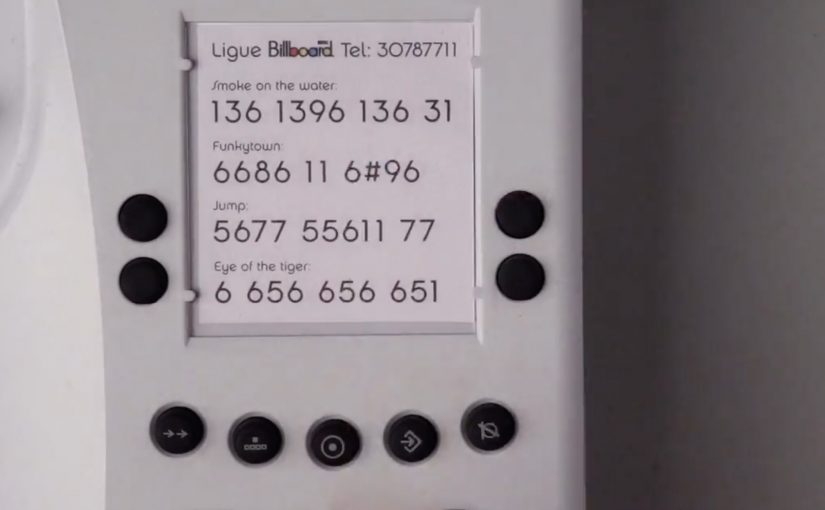
You call a magazine subscription line and get put on hold. Instead of elevator music, you get a prompt that turns your phone keypad into an instrument, so you can jam along while you wait.

Turning hold time into play time

Billboard Magazine features the best of pop music and entertainment in Brazil and, as they frame it, waiting on hold is one of the most boring music moments ever. So their ad agency AlmapBBDO creates the “On Hold Jam Session”, which makes the moment into a fun interactive experience and reflects the magazine’s concept of music and entertainment.

To make the magazine subscribers aware of this new on-hold feature, they send direct mail explaining how one could jam along with their phone buttons when they are put on hold at Billboard Magazine.

Why the mechanic is so effective

The mechanism is simple. Use the tones behind the phone keypad to trigger musical parts, so every button press feels like progress. It replaces passive waiting with viewer control, meaning the caller can shape what they hear in real time. That changes the emotional quality of the same time slice.

Extractable takeaway: If you cannot remove a wait, give people one simple action that produces immediate feedback, so the time feels shorter and more personal.

Definition-tightening: this works because phone buttons generate distinct audio tones that can be mapped to beats, riffs, or samples. The caller does not need instructions beyond “press keys to play”.

In subscription media and entertainment brands, turning unavoidable waiting into a participatory moment is a direct way to make the brand feel lived, not just consumed.

What Billboard is really buying

This is not a content campaign in the usual sense. It is a brand behavior demonstration. If Billboard is about music culture, the brand should show up even in the most unmusical moment, customer service hold time. The real question is whether your brand shows up when the customer is stuck, not only when the customer is browsing.

It also reframes a service weakness into a memorable touchpoint. The caller is more likely to tolerate the wait, and more likely to talk about the experience afterward.

Patterns for turning dead time into play

  • Target dead time. Waiting, queuing, loading, and holding are underused attention windows.
  • Make the first interaction obvious. One prompt, one action, instant feedback.
  • Turn friction into a feature. If the wait cannot be removed, redesign what the wait feels like.
  • Promote it with a physical cue. Direct mail works here because it sets expectation before the call happens.

A few fast answers before you act

What is the “On Hold Jam Session” idea?

It turns phone hold time into a playable music moment by letting callers create beats or melodies using their keypad while they wait.

Why does interactivity matter when someone is on hold?

Because it converts passive waiting into active participation, which reduces boredom and makes the time feel shorter.

How do phone buttons become a music controller?

Each keypad press produces a distinct tone that can be mapped to sounds. The system listens for the tones and triggers matching audio parts.

What is the business benefit beyond “fun”?

A better service experience, higher memorability, and a stronger brand association, plus increased word of mouth because the moment is easy to describe.

What is the main execution risk?

If the audio feedback is delayed or confusing, callers will abandon the interaction and it becomes just another frustrating hold.

Audi: Urban Future at Design Miami 2011

A 190m² LED city surface that reacts to people

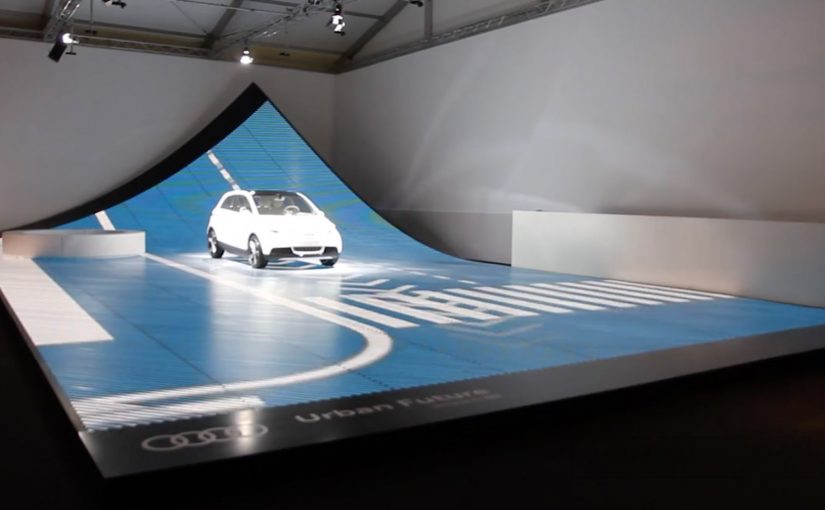
Audi, to showcase its A2 concept at Design Miami 2011, created a 190 m2 three-dimensional LED surface that provided a glimpse of the future of our cities where infrastructure and public space is shared between pedestrians and driverless cars. The installation demonstrated how the city surface would continuously gather information about people’s movements and allow vehicles to interact with the environment.

The installation used a real-time graphics engine and tracking software that received live inputs from 11 Xbox Kinect cameras mounted above the visitors’ heads. Through the cameras, the movement of the visitors was processed into patterns of movement displayed on the LED surface.

In global mobility and smart-city work, embodied demos beat decks when you need belief fast.

The punchline: the street becomes an interface

This is a future-city story told through interaction, not a render. You do not watch a concept. You walk on it. The floor responds, and suddenly “data-driven public space” is something you can feel in your body. Here, “data-driven public space” means a shared surface that senses movement and responds with immediate feedback.

In smart city and mobility innovation, the fastest way to make future infrastructure feel believable is to turn sensing and responsiveness into a physical interaction people can experience in seconds.

Why it holds your attention

Because it turns an abstract topic, infrastructure sharing, sensing, autonomous behavior, into a single, legible experience. Your movement creates immediate visual feedback, and that feedback makes the bigger idea believable for a moment.

Extractable takeaway: If a future system is hard to explain, compress it into one cause-and-effect loop a person can control, then let the feedback do the convincing.

What Audi is signaling here

The real question is whether a smart-city vision can be made legible through a single, shared interaction.

A vision of cities where surfaces sense movement continuously and systems adapt in real time. Not just cars that navigate, but environments that respond.

Moves to borrow for experiential design

  • Make the future physical: Translate complex futures into one physical interaction people can understand instantly.
  • Show the feedback loop: Use real-time input, processing, output, so the concept feels alive.
  • Let visitors generate the proof: Make the visitor the driver of the demo so their movement generates the proof.

A few fast answers before you act

What did Audi build for Design Miami 2011?

A 190 m2 three-dimensional LED surface installation showcasing an “urban future” concept tied to the Audi A2 concept.

What was the installation demonstrating?

A future city surface that continuously gathers information about people’s movements and enables vehicles to interact with the environment.

How was visitor movement captured?

Visitor movement was captured via 11 Xbox Kinect cameras mounted above visitors’ heads, feeding live inputs to tracking software.

What was the core mechanic?

Real-time tracking of visitor movement was translated into dynamic patterns displayed on the LED surface.

Why did this format make the idea feel believable fast?

Because visitors could trigger immediate feedback with their own movement, turning an abstract “responsive city” claim into a felt experience.