Nike SPARQ: Immersive Digital Training

When training becomes the differentiator. Nike SPARQ goes digital

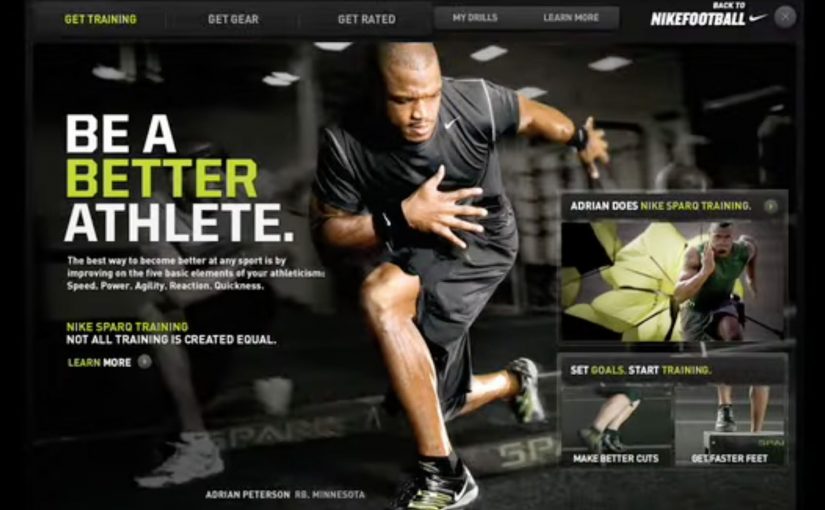
Not too long ago, talent determined greatness. Today, talent is a given, but training is what separates the exceptional from the merely promising. So to help athletes everywhere reach their true potential through better training, Nike along with ad agency R/GA New York created an immersive digital experience for the SPARQ program (Speed, Power, Agility, Reaction, and Quickness).

Athletes could now follow the same training regimens as professional athletes through detailed, customized video demonstrations delivered via iPods or handheld video players that made it accessible anywhere. The SPARQ website also let athletes set goals, track progress, find Nike SPARQ Trainers across the country, get an official SPARQ rating, and purchase gear.

The smart move: make elite training portable and personal

The experience does two things at once. It brings pro-level drills to anyone with a device, and it makes training feel individualized through customization and video guidance. That combination shifts SPARQ from “program” to “daily habit.”

In sports-performance brands and youth training programs, the winners make instruction portable enough to survive real life.

Why this feels bigger than content

The real question is whether your digital experience builds a habit-forming training loop, or just publishes drills. Because it is not just inspiration. It is infrastructure. Video demonstrations give you the “how,” goal setting and tracking give you the “keep going,” the rating gives you a yardstick, and trainers plus gear connect the digital loop to the real world. Here, the digital loop is the cycle of instruction, goals, tracking, and feedback that pulls you into the next session. Treat training as infrastructure, not content, if you want durable engagement.

Extractable takeaway: Pair instruction with goals, tracking, and feedback loops so progress is visible and practice becomes a habit.

The business intent hiding in plain sight

Build a performance ecosystem that increases commitment over time. The more you train, track, and compare, the more SPARQ becomes the platform you return to. And the more natural gear purchase becomes inside that flow.

Steal the habit loop, not just the videos

  • Ship a loop, not content. Guidance, goals, tracking, and a measurable score.
  • Design for anywhere use. Portability turns intention into repetition.
  • Connect digital motivation to real-world touchpoints. Trainers, ratings, and commerce.

A few fast answers before you act

What does SPARQ stand for?

Speed, Power, Agility, Reaction, and Quickness.

What did Nike and R/GA New York build?

An immersive digital experience for SPARQ that delivered customized training video demonstrations and a supporting website for goals, tracking, trainers, ratings, and gear.

How did athletes access the training content?

Through detailed video demonstrations delivered via iPods or handheld video players, making the training accessible anywhere.

Why did this feel bigger than training videos?

Because it combined instruction with goal setting, tracking, a rating, and connections to trainers and gear, creating a repeatable training loop.

What made the SPARQ website useful beyond videos?

It let athletes set goals, track progress, find SPARQ trainers, get an official SPARQ rating, and purchase gear.

What is the simplest principle to copy from SPARQ?

Pair guidance with goals and feedback so people can see progress and have a reason to return.

Dali Museum iPhone App

To build awareness for “The Dali Museum’s” fantastical new building, ad agency Goodby Silverstein & Partners developed a customized picture-editing app that created dreamy surrealist overlays over photos.

With zero budget, they turned to Hipstamatic to help bring the smartphone app to life. The team at Hipstamatic liked the idea so much that they waived their fees and pledged to donate the proceeds from the app to the museum. Plus, their 1.2 million loyal followers provided the critical mass needed to reach the general public.

In the first couple days after the release, the Hipstamatic site crashed due to extremely high traffic. The blogosphere bubbled with over 19,000 mentions and in the first month alone 50,000 people purchased the app.

Why the “zero budget” part mattered

Most museum awareness efforts struggle with the same constraint. Great content, limited reach. This solved it by building the campaign inside an existing distribution engine. Here, a distribution engine means a platform with a large active audience and a built-in habit of sharing. Because Hipstamatic already had the audience, the use case, and the sharing behavior, the museum could turn a niche cultural launch into something that traveled through everyday iPhone photography. The business intent was simple: make the new building culturally visible far beyond the museum’s owned audience.

Extractable takeaway: When budgets are thin, do not start by buying reach. Start by embedding the idea in a tool, platform, or habit that already has distribution.

For museums, destinations, and other cultural institutions, the scalable challenge is usually not creating content but accessing a behavior people already repeat.

The real question is not how to advertise the building, but how to turn public participation into distribution.

The smarter move is to build the awareness mechanic inside a behavior people already want to perform and share.

What to borrow if you are marketing a place or institution

  • Turn the subject into a tool. A museum became a creator utility, not a brochure.
  • Partner for distribution, not just production. Hipstamatic brought the audience and the habit.
  • Make sharing the default output. Every edited photo is a piece of media that carries the idea forward.

A few fast answers before you act

What was the Dali Museum iPhone app?

A customized picture-editing app that applied surrealist, dream-like overlays to users’ photos to build awareness for The Dali Museum’s new building.

Who created it?

Goodby Silverstein & Partners developed the app concept and execution.

How did they launch it with zero budget?

They partnered with Hipstamatic, which waived fees and pledged to donate app proceeds to the museum.

What did Hipstamatic contribute beyond technology?

Distribution. Their 1.2 million followers provided the critical mass to reach beyond the museum’s natural audience.

What were the early results?

Hipstamatic’s site crashed from high traffic, the campaign generated over 19,000 mentions, and 50,000 people purchased the app in the first month.

Lexus GS: NFC-Enabled Print Ad in WIRED

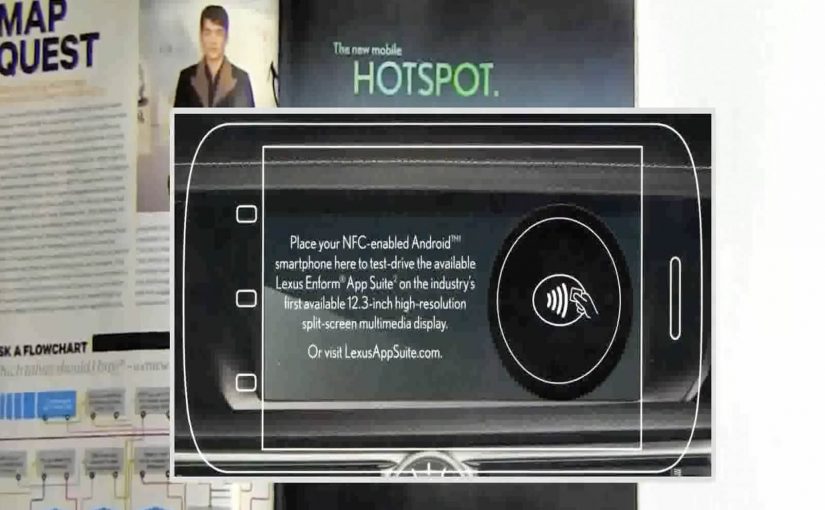
A print ad sits inside WIRED, but it behaves like a link. Hold an NFC-enabled phone (NFC is short for near-field communication) to the page and a Lexus GS demo opens on your device, without scanning a code or typing a URL.

Brands like Mercedes Benz, Reporters Without Borders, Volkswagen etc have all been working hard to create clutter breaking and engaging print ads.

In this latest example of an interactive print ad, WIRED magazine and Lexus have teamed up to create what they describe as the first mass-produced print ad embedded with an NFC tag. The ad, reported as appearing in 500,000 subscriber copies of WIRED’s April issue, lets readers with NFC-enabled phones access a demo of the Lexus GS 2013’s Enform App Suite simply by holding their phone up to the ad.

A tap replaces the scan

The mechanism is straightforward. An NFC tag is embedded into the page, and the phone reads it when placed close to the printed area. That single “tap” launches a mobile experience that can demonstrate features and apps without requiring camera alignment or extra steps. Because the tap collapses multiple steps into one, the handoff feels effortless.

In global publishing and automotive marketing, bridging print to mobile works best when the handoff is faster than habit, and simple enough to do without thinking.

Why this matters for print innovation

Most interactive print relies on behavior people already associate with effort, like scanning codes or typing. NFC flips that. The interaction feels like “just place phone here”, which is closer to natural curiosity than task completion.

Extractable takeaway: NFC works in print when it replaces effort with instinct. Design the handoff as a single tap that proves value immediately.

Definition-tightening: NFC tags in print are typically passive. The page is not powered. The phone provides the energy and reads a short payload that triggers a destination on the device.

What Lexus is really buying

This is a modern product story told through a legacy medium. The GS positioning leans into connected experiences, so demonstrating an app suite through a connected print interaction reinforces the message at the exact moment of discovery.

The real question is whether the tap reinforces the product promise at the moment of discovery.

Steal this pattern for interactive print

  • Design for one gesture. If it takes more than a tap, many readers will not try.
  • Reward instantly. The first screen after the tap should feel like a payoff, not a loading screen.
  • Make the print do real work. Print should provide context and desire. Mobile should provide depth and demonstration.
  • Plan for non-NFC readers. If the print idea relies on a capability not everyone has, ensure there is still a clear alternate path.

A few fast answers before you act

What makes this WIRED ad “interactive”?

The page contains an embedded NFC tag. Tapping an NFC-enabled phone to the ad launches a Lexus GS mobile demo experience.

Why use NFC instead of a QR code?

NFC removes the camera step. A tap is faster and tends to feel easier than scanning, which can increase participation.

Do you need a special app to use an NFC print ad?

Typically no. If NFC is enabled, the phone reads the tag and opens the linked mobile experience using standard system behavior.

What is the key benefit for the advertiser?

A lower-friction bridge from print attention to a measurable digital demo, without breaking the reading flow as aggressively as “go type this URL”.

What is the biggest execution risk?

Compatibility and clarity. If readers do not have NFC, or do not understand where to tap, the interaction collapses back into a normal print ad.