
LivingSocial: Roll the Dice Taxi

LivingSocial: Roll the Dice Taxi

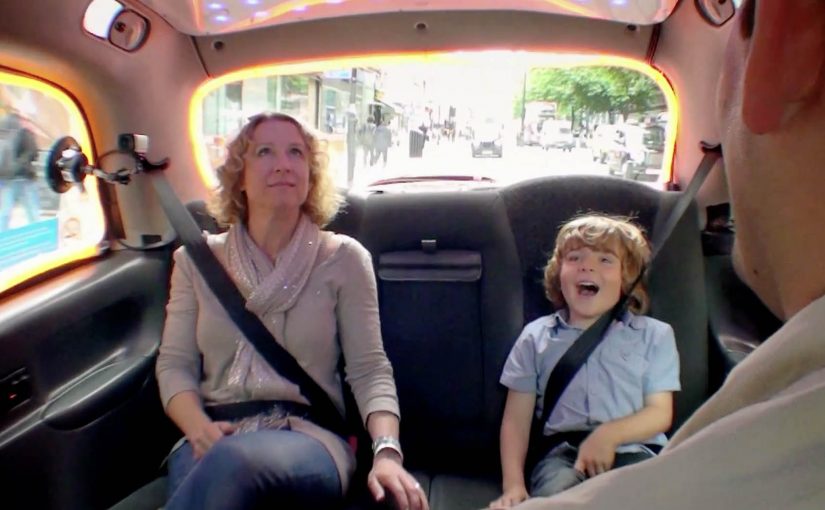
Taxis are becoming a great media for unexpected advertising. In London, LivingSocial takes over an everyday cab and turns it into a surprising, delightful experience.

The objective is simple. Create buzz around the LivingSocial website and showcase the variety of discounts in a way that feels like a story, not a sales pitch.

A taxi ride with a fork in the road

When unsuspecting passengers hail this special taxi and get inside, they are offered a choice. Carry on to their original destination, or “roll the dice” and go for an experience instead.

The decision is the hook. The passenger stays in control, but the brand turns that control into a game, and the game turns a normal ride into a memorable narrative.

In urban commuter cities, a taxi ride is one of the few time-boxed moments where a brand can own the environment end-to-end.

Why the gamble is more persuasive than the pitch

This works because it reframes discount discovery as adventure. The “roll the dice” option creates a moment of suspense, and suspense buys attention better than any list of offers ever will.

Extractable takeaway: If you sell a broad catalogue of offers, do not lead with the catalogue. Lead with a simple, voluntary choice that creates emotional momentum, then let the catalogue appear as the natural payoff for choosing to play.

While the ride plays out, the experience is described as feeding contestants a long stream of sales information. The trick is that the information arrives while the passenger is already invested in what happens next, so it feels like part of the ride rather than an interruption.

The real business intent behind the stunt

At the surface, this is “surprise and delight.” The real question is whether you can turn an everyday ride into a voluntary choice people want to retell. Underneath, it is a conversion engine. It demonstrates the breadth of deals, pushes people into trying something they would not normally consider, and gives them a story they want to retell.

Steal this pattern for city-scale activations

  • Offer two paths. A safe default and a bold option. The contrast makes the bold option irresistible.
  • Make the choice voluntary. Consent turns skepticism into curiosity.
  • Let the content ride shotgun. Teach benefits during the experience, not before it.
  • Design for retellability. Make the twist easy to repeat in one sentence, like “a taxi that lets you roll the dice for a surprise destination.”

A few fast answers before you act

What is the LivingSocial Taxi Experiment?

It is a branded taxi experience where passengers can either continue to their original destination or roll the dice and be taken to a surprise experience that showcases LivingSocial deals.

Why does the “roll the dice” mechanic work?

It creates suspense and a sense of ownership. The passenger chooses the gamble, which makes the experience feel like their story, not the brand’s stunt.

What is the key mechanism that makes this shareable?

A clear, explainable twist on a familiar behavior. Taking a taxi becomes a game with a surprising payoff, which people naturally want to describe to friends.

How do you adapt this pattern without a taxi fleet?

Find a time-boxed environment you can fully control, introduce a simple forked choice, and make the “bold” path deliver a visible, memorable payoff that naturally carries your product story.

What is the simplest way to judge if it worked?

If people can retell the twist in one sentence and explain why they chose the bold path, you built something that travels beyond the ride.
World’s Biggest Hug: Christ the Redeemer PSA

World’s Biggest Hug: Christ the Redeemer PSA

A monument-sized gesture

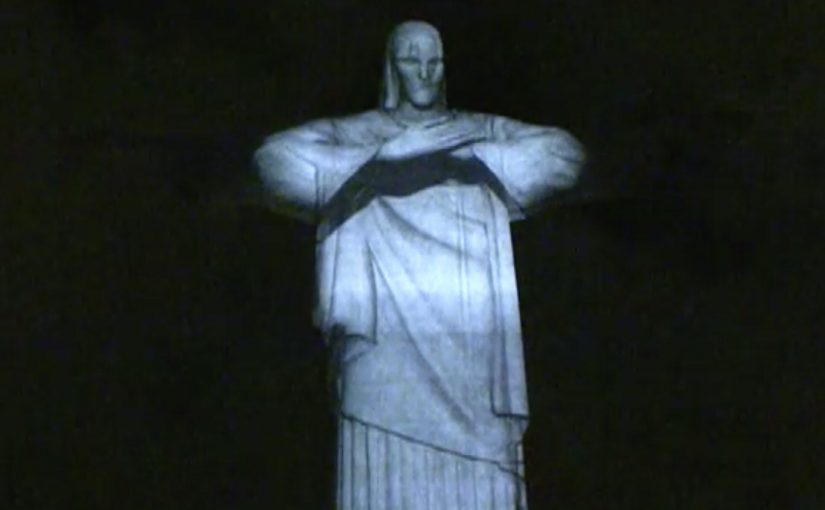
In October 2010, Conselho Nacional do SESI ran a campaign described as the “world’s biggest hug” by using the Christ the Redeemer statue in Rio de Janeiro as the canvas.

Across two nights, the statue’s spotlights were switched off and replaced with projections and 3D imagery that made it look like Christ was closing his arms around the city. The moment linked back to the Carinho de Verdade (“True Affection”) campaign, built to raise awareness of sexual abuse affecting children and teenagers and to promote healthier relationships of trust.

Visualfarm Brazil created the projection using Coolux Germany’s Pandoras Box technology. Below is the recorded footage of the projection itself.

How the illusion works. A quick mechanics recap

The execution combines three things: a landmark people already read as a symbol of protection, a temporary “blackout” that resets attention, and projection mapping that makes a static surface feel alive.

Projection mapping is the practice of aligning video to the exact geometry of a 3D surface so the object appears to change shape, gain depth, or move, even though nothing physical moves.

In global public-awareness communications, landmark-scale stunts work best when the symbolism is instantly legible and the path from emotion to action is frictionless.

Why it lands when it could have been “just a stunt”

The hug is a universal gesture with a clear meaning. It does not need translation, and it carries warmth without feeling like a lecture. Using the Christ the Redeemer silhouette makes that meaning immediate at city scale, then the darkness-to-light reveal gives it a shared “you had to be there” quality that naturally travels by word of mouth and video.

Extractable takeaway: If your message is difficult, start with a human gesture everyone understands, then let the medium amplify it, and only then introduce the cause and the action you want people to take.

The intent behind the hug

This is cause communication that uses emotional clarity as a bridge into a harder conversation. The strongest public-awareness work starts with an emotionally legible act before it asks people to absorb the harder message. The real question is how to turn a monument-scale emotional moment into a cause message people can approach instead of avoid. The job is not only awareness. It is to make the topic speakable, reduce avoidance, and give the public a simple next step that feels aligned with the warmth of the symbol.

What to steal from this for your next public-facing campaign

  • Pick one unmistakable symbol. Use a form people recognize in under a second, then change it in a way that supports the message.
  • Engineer a “collective moment.” Limited time windows create urgency and social proof, especially when the result is visibly shareable.
  • Design for cameras, not just crowds. If it does not read clearly on a phone video, it will not scale beyond the live audience.
  • Keep the CTA emotionally consistent. If you lead with care, the action should feel like care too, not like a hard switch to bureaucracy.

A few fast answers before you act

What was “The World’s Biggest Hug” campaign?

It was a Carinho de Verdade campaign moment in Rio where projections on Christ the Redeemer created the illusion of the statue hugging the city, used to draw attention to child and teen sexual abuse and encourage healthier trust-based relationships.

How did the projection create a “hug” effect?

The statue’s normal lighting was turned off, then mapped visuals were precisely aligned to the statue’s 3D surface so the arms and body appeared to move and close around the city.

Why use a monument instead of a standard ad placement?

A monument compresses meaning. People already attach emotion and identity to it, so the message is understood faster and shared more willingly than a conventional placement.

What role did the campaign site play?

It provided the action path. The public moment created attention and emotion, and the site anchored the message, participation, and follow-through.

What is “projection mapping” in one sentence?

Projection mapping is video projected onto a real-world object with the visuals warped and timed to the object’s geometry so it appears to transform or move.

What is the main transferable principle?

Use a simple, human symbol to earn attention, then make the next step feel effortless and consistent with the emotion you created.

McDonald’s: Dollar Drink Days Ice Sculpture

McDonald’s: Dollar Drink Days Ice Sculpture

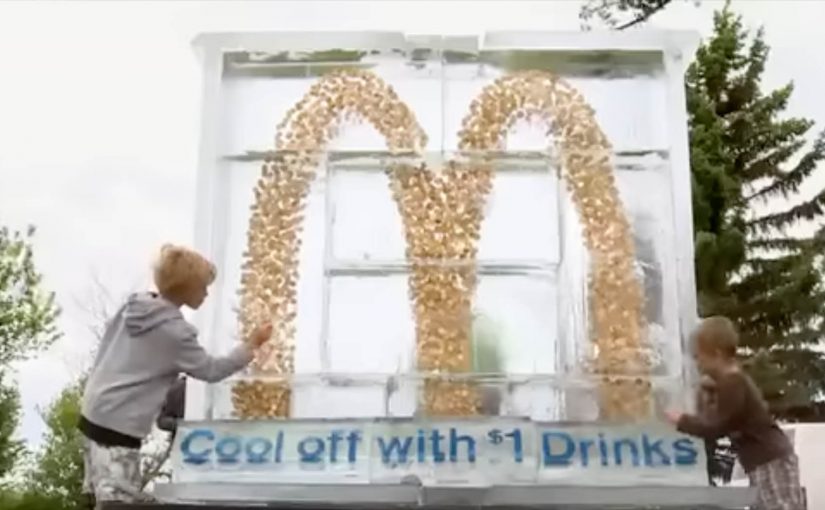
McDonald’s Canada and Cossette Vancouver brought to life one of the first interactive ice sculptures this summer on behalf of McDonald’s Restaurants in Alberta. The objective was to drive consumer interest in the company’s Dollar Drink Days campaign. Here, “interactive” means people can physically engage with the installation and change it in real time.

Hosted in the town of Sylvan Lake, the stunt saw 8,000 pounds of ice moulded into a seven-foot tall installation containing over 4,000 sparkling loonies, shaped into McDonald’s famous Golden Arches. The ice melted on a summer Saturday, and consumers chipped away at the sculpture to collect their bounty.

To attract high levels of interaction, the sculpture was strategically placed near the Sylvan Lake Pier, an area frequented by young adults and families. The day also featured a DJ, street promotional teams, hula hooping, limbo contests and giveaways.

In quick-service promotions, especially in seasonal, high-footfall leisure locations, the hard part is converting “cheap” into “must-see”.

The real question is how you turn a simple price offer into a moment people choose to chase.

Price promotions are forgettable until you give people a physical action that earns a visible payoff.

Why this activation pulls people in

The reward is visible and the deadline is unavoidable. Because the coins sit inside melting ice, the mechanism turns curiosity into action and keeps people moving from watching to participating.

Extractable takeaway: If you want a price promo to travel, make the payoff visible, put it behind one simple action, and bake in a deadline people can feel.

  • A clear, physical payoff. The value is visible and tangible, and the “win” is earned through participation.
  • Built-in urgency. Melting ice creates a natural time limit, which pushes people to act now rather than “later”.
  • Placement does the heavy lifting. Putting it at a high-traffic summer spot turns curiosity into crowds.

Reusing the melting-deadline mechanic

This is a strong example of turning a price promotion into a real-world spectacle. Instead of telling people “Dollar Drink Days is on”, the brand created a moment people wanted to be part of, and then made participation the mechanism for reward.

  • Make the payoff obvious. Put the value where people can see it before they commit.
  • Use a deadline that enforces itself. A physical countdown beats a marketing one, because it changes what people do right now.
  • Let the location supply the audience. Choose a place that already has the right crowd, then make the moment easy to join.

A few fast answers before you act

What was the Dollar Drink Days ice sculpture?

It was a seven-foot interactive ice installation in Sylvan Lake, Alberta, shaped like the Golden Arches and packed with thousands of loonies for visitors to collect as it melted.

How did people interact with it?

As the sculpture melted during the day, people physically chipped away at the ice to reach the coins inside.

Why stage it near Sylvan Lake Pier?

The location is naturally busy with young adults and families in summer, which increases footfall and keeps participation high.

What is the core pattern worth reusing?

Give people one simple action that unlocks a tangible reward. Add a natural deadline, and stage it where the right crowd already gathers.