
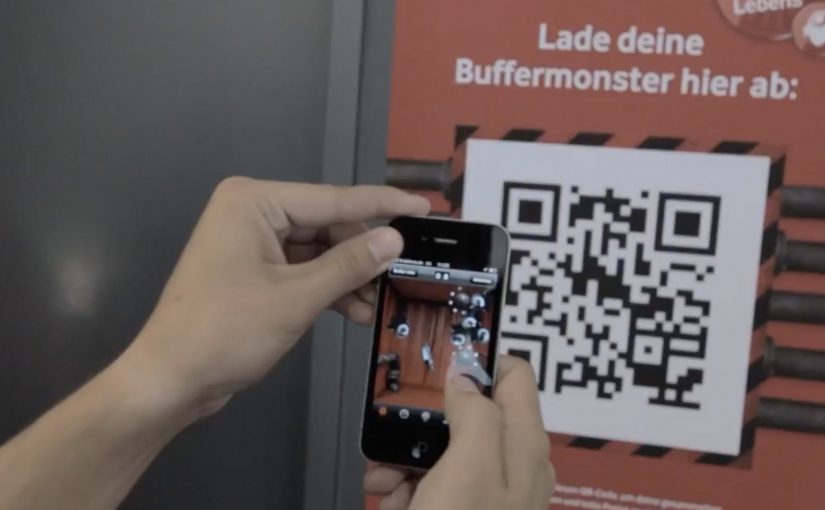
Vodafone: Buffer Busters AR Monster Hunt

The pitch is familiar: “fastest network.” The execution is not. Vodafone Germany turns the claim into a street-level AR game where your city becomes the arena and “Buffer Monsters” become the enemy.

You walk around with an iPhone or Android smartphone, spot the monsters through the camera view, and capture them. Once you’ve banked 50, you take them to a nearby Vodafone store to “dump” them and keep playing. Top performers compete for a lifetime plan.

Gamified AR is a neat way to convert an abstract network promise into something people can experience with their own movement and time.

Turning buffering into a villain you can catch

The smartest move here is the metaphor. “Buffering” is a universal pain, so the campaign gives it a face, then gives you a job: remove slowness from the streets.

That story does two things at once. It makes the “fast network” positioning emotionally legible. It also creates a reason to keep playing beyond novelty, because the monsters represent a real frustration.

The mechanic: capture loop, then a store-based reset

The gameplay loop is intentionally simple:

  • Discover: find monsters while moving through real locations.
  • Capture: use the phone view to trap them.
  • Capacity cap: collect up to 50 before you hit the limit.
  • Reset in retail: visit a Vodafone store to unload the bank and continue.

The cap is not just game balance. It is the bridge to the business goal: repeat footfall into stores without making the experience feel like a coupon hunt.

In German consumer telecom marketing, a speed claim becomes believable when people can test it with their own time and movement.

The real question is whether you can turn an abstract promise into a repeatable challenge people want to complete and retell.

Why it lands: it makes speed social and competitive

This works because it turns “my network is fast” into a contest people can prove with their own time and movement. Players are not only consuming a message. They are choosing when to play, where to hunt, and how hard to push the leaderboard, which makes the brand message feel earned rather than delivered.

Extractable takeaway: When your promise is hard to verify, build a simple loop that lets people demonstrate it, then let competition and viewer control do the persuasion.

What Vodafone is really optimizing for

On the surface, it is an AR advergame, meaning a branded game built to carry a marketing message through play. Underneath, it is a store traffic engine plus a positioning reinforcer. The store visit is framed as part of the fantasy, so retail becomes a checkpoint, not an interruption.

It is also a clean way to recruit advocates. The people who do best are the ones most likely to talk about it, because the game gives them a score they can brag about.

Steal this capture loop for your next launch

  • Personify the pain point so the product promise has an enemy to defeat.
  • Add a capacity cap to create natural “reset moments” that map to business actions.
  • Make the brand touchpoint a checkpoint, store, event, or partner location, not a forced detour.
  • Design for retell, “I caught 50 monsters and had to dump them at a store” is a complete story.

The TVC supporting the initiative is also well done, and helps explain the mythology quickly for people who never touch the app.


A few fast answers before you act

What is Buffer Busters, in one line?

An AR street game from Vodafone Germany where you hunt “Buffer Monsters” with your phone, then reset your collection by unloading them at Vodafone stores.

Why does the “50 monsters” limit matter?

It creates a loop. Players hit a cap, then have a reason to visit a store to continue, which turns gameplay momentum into retail footfall.

What business problem does this solve beyond awareness?

It converts a network claim into participation, drives repeat store visits, and builds competitive motivation through leaderboards and prizes.

What makes the story-device strong here?

Buffering is a universal frustration. Turning it into a villain gives the “speed” promise a concrete, memorable meaning.

What is the biggest failure mode for AR hunts like this?

Friction. If discovery is unreliable, capture feels inconsistent, or permissions and setup are confusing, people drop before the loop becomes rewarding.
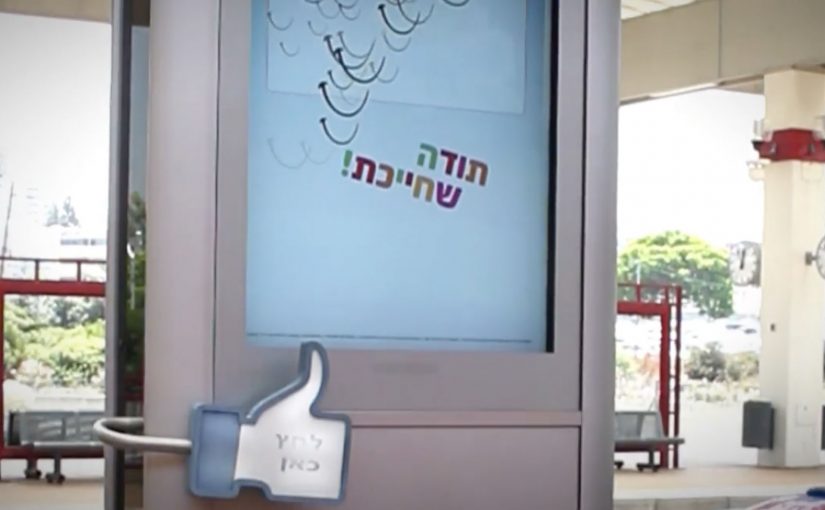

Prigat: Smile Stations

Publicis Israel and e-dologic are back with a new campaign for Prigat, a leading company in the Israeli fruit juice market.

This time they use innovative digital billboards called “Smile Stations” to send real-time messages at various train stations. The aim is to get passers-by to smile, and “like” the moment.

The mechanic: turn a Facebook message into a station moment

It starts on the Prigat Facebook Page. People send messages that are pushed to screens at train stations. Commuters walking by can approach the screen and press a physical “Like” button.

That button press triggers a simple payoff. The billboard captures the moment, then broadcasts the video back to the person who sent the message. Users who generate the most smiles win a prize.

In busy public transit environments, interactive out-of-home works best when the action is obvious, the feedback is immediate, and the reward is shareable.

Why it lands: it makes public emotion measurable

Most out-of-home asks for attention. Smile Stations asks for a reaction, then turns that reaction into proof you can send back to the originator.

Extractable takeaway: If you want participation at scale, close the loop. Let a remote user trigger a real-world moment, let a passer-by respond with one physical action, then send that response back as a personal artifact the originator can keep and share.

Reported figures put this at over 10,000 messages sent to station screens, with thousands of people responding by hitting the Like button.

What the brand gets from this

The real question is whether a public display can turn a remote social prompt into a personal moment worth sharing.

This is stronger than passive digital out-of-home because the physical Like button reduces effort and the returned video turns a fleeting reaction into a personal memory both sides can own.

The campaign does not just generate impressions. It creates a two-sided interaction where both parties feel like they caused something to happen. That is a stronger memory structure than “I saw an ad”, especially in a context as repetitive as commuting.

What to steal for your own social-plus-out-of-home activation

  • Design a one-step physical interaction: one big button beats a complicated interface in public space.
  • Make the response visible: the passer-by should understand instantly that their action “counts”.
  • Return a personal artifact: sending the video back is what turns participation into sharing.
  • Gamify without friction: “most smiles wins” is a clean mechanic with no explanation overhead.
  • Pick locations with dwell time: stations work because people pause, look up, and wait.

A few fast answers before you act

What is a “Smile Station”?

It is an interactive digital billboard at a train station that displays user-submitted messages and invites passers-by to respond by smiling and pressing a physical Like button.

What makes this different from a normal digital billboard?

It is two-way. Remote users trigger messages, commuters respond physically, and the response is captured and sent back as video, creating a closed feedback loop.

Why include a physical Like button?

Because it removes friction. A single, tangible action is faster and more intuitive than asking people to pull out a phone, scan, or type.

How do you measure success for an activation like this?

Message volume, unique senders, Like-button presses, response rate per message, video shares by originators, and dwell time around the screen locations.

What is the main execution risk?

Latency and unclear feedback. If the system feels slow or people are unsure what their button press did, participation drops quickly in a commuter setting.

Durex: Xerud, The Lover’s Fortune Teller

Durex Taiwan’s sales were in decline, but reminding a young audience about the risks of unprotected sex came with a local constraint. Sampling works well in many markets, yet in Taiwan the category carries enough taboo that street promoters struggled to start conversations and hit daily contact targets.

OgilvyAction’s answer is a low-budget distribution idea disguised as something people already seek out. An unbranded fortune-teller machine called “Xerud”, placed in bars, nightclubs and karaoke venues.

The machine prints playful “predictions” about relationships and sex, then dispenses a discreet sample condom pack matched to the forecast and the product benefit. The pack also includes simple educational tips about safer sex.

A sampling machine that earns permission first

The core mechanic is not the giveaway. It is the cover story, meaning the socially acceptable reason to approach the machine. People approach “Xerud” for curiosity, not for condoms, which changes the emotional posture from embarrassment to play. The venue context does the rest. Lower inhibition, higher openness, and a built-in reason to talk about love.

In mainstream consumer marketing, the most efficient way to handle taboo topics is to place them inside a familiar cultural ritual, then let that ritual create permission to engage.

Why it lands

This works because it swaps confrontation for self-service. Nobody is being “sold” to in public. The user opts in privately, receives a personalized message, and gets a product sample that feels relevant rather than generic. The experience also makes the first sentence easier. It gives people a prompt to laugh about, which is often the fastest route into a serious subject.

Extractable takeaway: When your category is socially sensitive, design distribution that people can initiate themselves, inside a context that already legitimizes the topic. That one design choice can triple throughput versus direct promotion.

What the numbers are really saying

The case write-up reports that an average street promoter hands out about 23 samples per hour, while “Xerud” dispenses about 77. The real question is whether the framing removes enough shame to make self-initiated sampling scale better than promoter-led outreach. The headline is not “a clever machine”. It is that the right framing can outperform manpower when the bottleneck is shame, not reach.

What taboo-category marketers can steal

  • Use an unbranded entry point. Let the experience earn consent before the logo arrives.
  • Match the venue to the conversation. Nightlife lowers barriers for relationship and intimacy topics.
  • Personalize the “why this sample”. Relevance reduces awkwardness and increases retention.
  • Make education feel like a bonus. Tips land better when they arrive inside a playful ritual.
  • Measure throughput honestly. Compare against the real baseline, not a best-case scenario.

A few fast answers before you act

What is Xerud, in one sentence?

An unbranded fortune-teller machine placed in nightlife venues that prints love predictions and discreetly dispenses matched condom samples with safer sex tips.

Why does the “fortune teller” disguise matter?

It gives people a culturally familiar reason to approach, which reduces embarrassment and makes the first interaction feel voluntary rather than confrontational.

What is the main marketing objective?

Increase trial and restart conversation in a category where social taboo blocks normal sampling and awareness tactics.

What is the biggest execution risk?

If the machine feels too obviously “a condom stunt”, the protective disguise collapses and usage drops. The socially acceptable reason to approach has to feel legitimate in the venue.

How can other taboo categories borrow this approach?

Pick a trusted ritual or interface people already opt into, then embed sampling and education as an unobtrusive “extra” that follows the ritual’s logic.