
BI Norwegian Business School: Strip

BI Norwegian Business School: Strip

A Norwegian business school ad that wins with humor

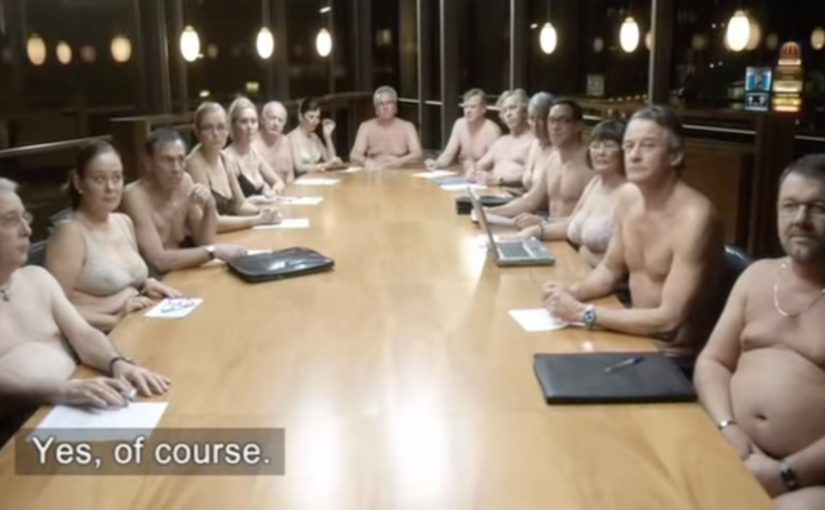
Norwegian ad agency Try has created this humorous TV Commercial for BI Norwegian Business School in Norway.

What the “Strip” format is doing

This film is built like a short, punchy scenario where comedy does the explaining. The title “Strip” signals a reveal. Here, “Strip” means a quick reveal structure. Set up one situation, then strip it back to the point. The joke is the hook, and the point lands after you’ve already committed attention.

When recruitment advertising works, it makes the viewer feel the consequence of being unprepared or underestimated. Then it positions education as the fix.

In higher-education recruitment, attention is scarce and differentiation is hard, so a clear comic scenario can compress the message into something people remember.

The real question is whether your recruitment message can earn attention before it asks for belief.

Why a humorous recruitment ad can outperform “informative” messaging

A humorous scenario is often stronger than an information-led message when you need reach beyond paid media. People rarely share program facts. They share moments. A comedic execution creates that moment, and it travels because it is easy to retell.

Extractable takeaway: If you want your recruitment message repeated by people who owe you nothing, build a retellable moment first and attach the proof after.

It also flatters the audience. If the viewer gets the joke quickly, they feel clever. That positive emotion transfers to the brand.

Stealable moves for recruitment marketing

  • Lead with one simple situation. One scene. One tension. One payoff.
  • Make the title do work. A strong title sets expectation and primes the reveal.
  • Earn the brand message late. Let the scenario pull people in, then attach the takeaway.
  • Keep it culturally specific, but universally readable. Local tone helps, but the human moment should translate.

A few fast answers before you act

What is BI Norwegian Business School’s “Strip” ad?

It is a humorous TV commercial created for BI Norwegian Business School, designed as a short scenario that makes a recruitment point memorable through comedy.

Who created the ad?

The film is credited to Try Reklamebyrå for BI Norwegian Business School.

Why use humor for a business school recruitment message?

Humor increases attention and recall. It also makes the message easier to retell, which helps recruitment campaigns travel beyond paid media.

What is the main creative mechanism at work?

A single situation creates tension, then the reveal resolves it. That structure delivers a clear takeaway without feeling like a brochure.

What is the biggest risk with this approach?

If the joke is stronger than the takeaway, viewers remember the gag but not the school. The brand connection has to be unmistakable in the final beat.

Yellow Pages: Location Based Banner

Yellow Pages: Location Based Banner

Here is the next generation of interactive web banners. Tel Aviv agency Shalmor Avnon Amichay/Y&R promoted the Yellow Pages augmented reality location-based app by creating a banner that does the same thing. Here “location-based” means it surfaces nearby businesses based on where you are.

The banner opens your webcam and lets you see the businesses around you. Wave your hand to switch between businesses. Click a business to jump straight to its Yellow Pages listing.

A banner that behaves like the product

The clever part is that this is not “interactive” for decoration. It is a working demo of the core value proposition. If the app helps you find what is near you, the banner proves that promise immediately, inside the placement, without asking you to imagine anything. Utility products should be advertised by demonstrating usefulness, not by describing features.

The mechanic: webcam as context, hand wave as UI

The flow is intentionally simple. Turn on the camera. Overlay nearby business options. Use a wave to move through results. Use a click to convert curiosity into action via the listing page.

In local discovery experiences, the strongest persuasion is a live, context-matched preview of usefulness rather than a feature claim.

Why it lands: it removes the “so what” gap

Most directory and local-search advertising dies in the space between promise and proof. The real question is whether your ad can turn a promise into proof without leaving the page. This banner collapses that gap, because it starts with your own context, then shows results, then lets you act. The interaction is the explanation.

Extractable takeaway: The fastest way to make a utility app feel essential is to let people experience the “aha” moment before they ever leave the page they are on.

What Yellow Pages is really trying to achieve

The business intent is to reposition Yellow Pages as modern, digital, and situationally useful, not just a legacy directory brand. The banner also creates a clear performance path. Engagement inside the unit, then click-out to a listing that can drive calls, visits, or follow-on app consideration.

Steal the demo-first local discovery pattern

  • Mirror the product in the ad. If the product is a tool, make the ad behave like the tool.
  • Use one gesture people understand. A wave as “next” is instantly legible. No tutorial needed.
  • Keep the ladder of commitment short. Preview. Browse. Click through. No extra steps.
  • Make the experience readable for bystanders. Obvious motion plus clear on-screen change sells the mechanic in shared environments.
  • Watch privacy optics. If you turn on a camera, be explicit that it is for interaction and context, not identification.

A few fast answers before you act

What is a “location based banner”?

It is a banner ad that adapts its content to the user’s situation, typically location or environment cues, so the ad can show relevant nearby options instead of generic messaging.

How does this Yellow Pages banner work?

It opens a webcam view, overlays nearby business options, lets you wave to cycle through businesses, and lets you click a result to open the corresponding Yellow Pages listing.

Why use a webcam at all?

Because it makes the experience feel immediate and personal. The ad becomes a live “finder” interface rather than a static claim about finding things.

What makes gesture-controlled banners risky?

Friction and variability. If the gesture detection fails or is unclear, users assume the ad is broken. The interaction must be forgiving and the feedback must be instant.

What is the safest way to replicate the idea today?

Keep the mechanic to one simple input, provide clear on-screen feedback, and ensure the user can still get value even if they do not enable the camera.

McDonald’s: Everyone Saves for Something

McDonald’s: Everyone Saves for Something

When a low price becomes a citywide signal

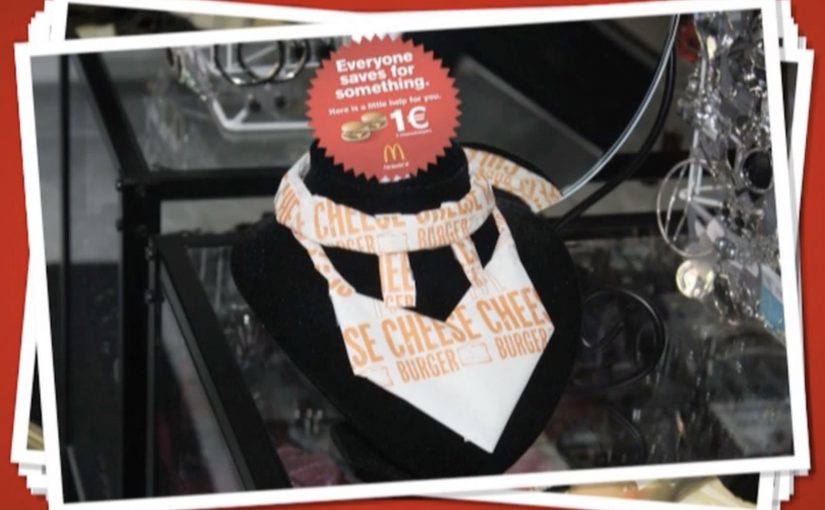
McDonald’s and ad agency DDB Budapest launched a campaign to promote an offer of two cheeseburgers for one Euro. The positioning is simple. A price so low it gives the target audience room to save for things they want.

The twist: turn wrapping paper into media

The challenge is standing out from the usual low-price playbook. Instead of shouting numbers louder, the campaign uses the most recognizable asset McDonald’s already owns. Its iconic cheeseburger wrapping paper.

They wrap “cool stuff” in the same paper, partner with different shops around the city, and turn those places into unusual touchpoints that visually encode the offer without needing to repeat the offer everywhere.

In European QSR value campaigns, price messaging sticks better when it is turned into a tangible object people encounter in everyday places.

The real question is how you make a low-price offer feel noticeable without turning it into just another louder discount ad.

Why it lands

This works because it makes value feel physical. The stronger move is to let a distinctive brand asset carry the value message instead of repeating the price claim more aggressively. People are trained to ignore price claims, but they notice an object that looks out of place. The wrapping paper acts like a visual shortcut. If you recognize it, you decode the brand instantly. If you do not, you still feel the oddness and look closer. The partner locations add credibility because the idea appears to have “escaped” the ad slot and entered the city.

Extractable takeaway: If your message is “cheap,” avoid saying “cheap” more often. Use a distinctive brand asset as a portable visual language, then place it where people already shop, browse, and compare.

What to steal from this value stunt

  • Make one brand asset do the heavy lifting. A recognizable wrapper can outperform another headline about price.
  • Build distributed touchpoints. Partner locations create repeated exposures that do not feel like repeated ads.
  • Let the audience complete the message. Recognition is satisfying. It increases memorability with less copy.
  • Keep the offer legible, but not loud. The stunt earns attention. The offer converts it.

A few fast answers before you act

What is “Everyone Saves for Something” for McDonald’s?

It is a value campaign that promotes an ultra-low cheeseburger deal by wrapping everyday objects in McDonald’s iconic cheeseburger paper and placing them across partner shops as unusual city touchpoints.

What is the core mechanic?

Use distinctive packaging as a portable visual language, then deploy it outside the restaurant to make the offer feel present across the city.

Why does wrapping objects work better than another price poster?

Because it turns a price message into a curiosity trigger. People notice the anomaly first, then decode the brand and offer.

What’s the transferable principle for other brands?

If your message is functional and easy to ignore, embed it inside a recognizable asset and place it where people already make choices.

What is the main risk with this approach?

If the asset is not instantly recognizable, or the placements feel random, the idea becomes decoration instead of a decodable message.