
Macedonia Education: Religion Is Knowledge Too

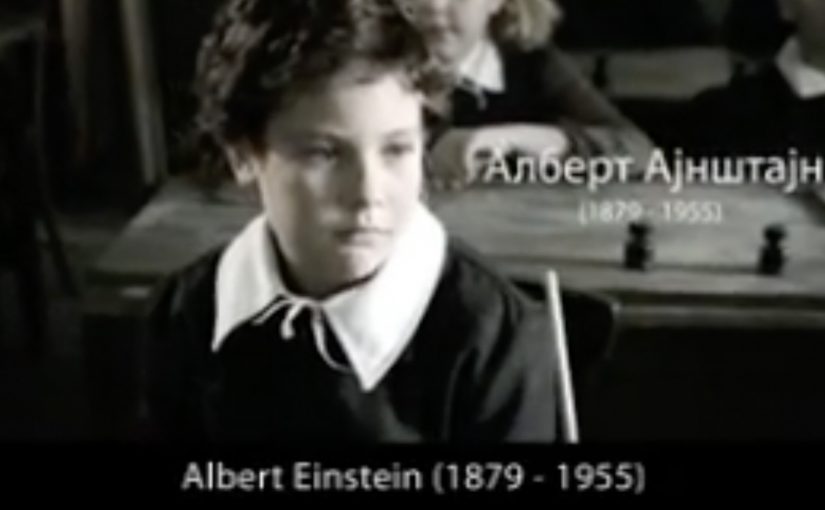
Here is a social campaign aimed at promoting education, created by New Moment New Ideas Company as a TV commercial for the Government of the Republic of Macedonia, Ministry of Education and Science.

The mechanism behind the message

The execution leans on a deliberately provocative framing. It takes a policy-adjacent topic, religion in school, and places it inside a broader “education equals empowerment” argument, using a short, declarative headline structure that is designed to be debated as much as it is watched.

In public-sector education communication, provocation is often used to force attention onto curriculum choices that would otherwise be discussed only in administrative language.

The real question is whether a campaign can use provocation to drive education attention without turning the message into a referendum on belief.

Why it lands

It turns a policy topic into a binary statement. You may agree or disagree, but you are unlikely to ignore it, which is typically the point of a social campaign trying to break through apathy.

Extractable takeaway: Public-interest campaigns win attention by making a curriculum or behavior choice feel like a values choice, but credibility depends on details like accurate attribution, because authority shortcuts can backfire when audiences fact-check.

It borrows authority cues. The line “Knowledge is power” is familiar and often associated with big-name attribution. If the spot leans on an Einstein association, note that this attribution is widely disputed, and misattributed quotes can weaken credibility even when the intent is strong.

It collapses values and education into one frame. By calling religion “knowledge”, it reframes the topic away from belief and toward curriculum, which is a strategic shift even if it remains contentious. Because the framing is blunt and declarative, it triggers instant agreement-or-rebuttal, which expands discussion beyond passive viewing. Provocation can be a valid attention tactic, but only when every credibility cue is defensible.

Borrowable moves for education PSAs

  • Use short headline architecture. A campaign line plus a spot line gives people two levels of meaning to repeat and argue about.
  • Engineer “talk value” intentionally. By “talk value,” mean a message that people can repeat, argue about, and share in one breath.
  • Stress-test credibility signals. Quotes, attributions, and “famous authority” cues should be defensible, or they become the story instead of the issue.

A few fast answers before you act

Who is this commercial for?

It is framed as a public campaign tied to the Government of the Republic of Macedonia, Ministry of Education and Science.

What is the central claim of the spot?

That religion should be treated as a form of knowledge and positioned as part of schooling, under a broader “knowledge equals empowerment” campaign idea.

Why does the campaign use such blunt language?

Because blunt claims create attention and debate quickly, which is often the goal in social messaging where indifference is the main competitor.

What is the main risk with this style of PSA?

Polarization and credibility challenges. If the audience argues about the quote, the messenger, or the framing, the educational intent can get diluted.

What is the transferable lesson for communication leaders?

If you choose provocation as the hook, protect the trust layer. Every supporting detail has to be clean enough to survive scrutiny.
JetBlue: Nothing to Hide

JetBlue’s ground rule for the sky

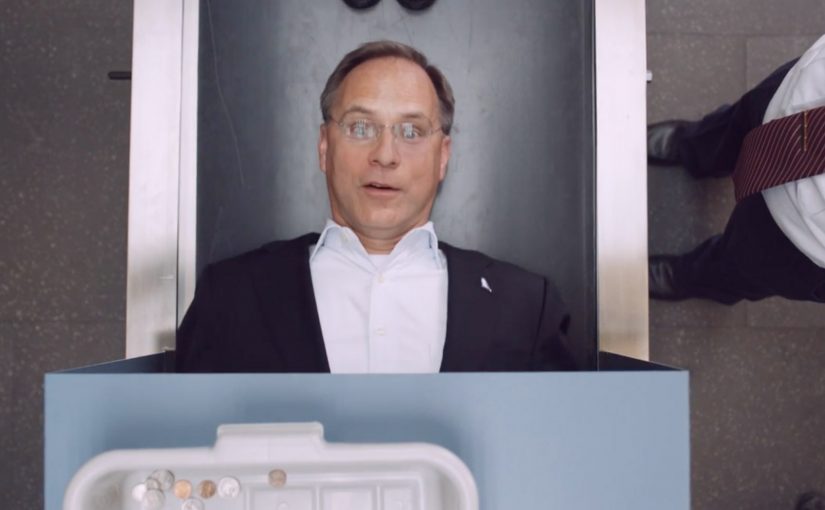
JetBlue has a new credo: “If you wouldn’t take it on the ground, don’t take it in the air.” The carrier’s first ads from Mullen were described at the time as using hidden cameras in Manhattan to illustrate the point. The clip that’s still available is the CEO version. JetBlue’s CEO, Dave Barger, has a lot to say and nothing to hide.

What this execution is really selling: transparency as a brand behavior

This is not a product demo. It is a credibility play. By “credibility play,” I mean a trust-building move where behavior and voice do the convincing, not feature claims. Putting the CEO front and center makes the promise feel like an internal standard, not just a campaign line. Because leadership voice is hard to outsource, the claim reads as accountable, not decorative.

When a service brand uses leadership voice in a short spot, it is trying to compress distance: less “corporate statement,” more “here’s what we stand for.”

In service categories where trust is fragile, a simple fairness test plus a human spokesperson can communicate differentiation faster than feature claims.

In high-frequency service categories, transparency only lands when it is expressed as a behavioral rule customers can reuse without you in the room.

Why the credo works

The line is a mental model. It creates a “ground test”: if a behavior feels unacceptable in a taxi, store, or restaurant, it should feel unacceptable in an airplane cabin too. That reframing lets people judge the category with everyday rules they already believe in.

Extractable takeaway: If you can turn your promise into a simple test people apply to new situations, you get a platform that travels faster than feature claims.

The business intent hiding in plain sight

This is competitive positioning disguised as common sense. The brand is implicitly calling out industry behaviors customers resent, then claiming the moral high ground by promising not to play those games.

The real question is whether you can name a rule customers can repeat and use to judge you.

Even if you never remember the details of the ad, you remember the test. That is the goal.

Moves behind a repeatable promise

  • Make the line a test, not a slogan. If people can apply it to new situations, it travels.
  • Put a real human behind the promise. A credible spokesperson turns positioning into accountability.
  • Keep the claim grounded in everyday fairness. “Would you accept this here?” is easier than explaining features.
  • Leave room for multiple executions. A platform is only useful if it can produce many spots without getting weird.

A few fast answers before you act

What is JetBlue’s “Nothing to Hide” spot about?

It uses a simple fairness credo. If you would not accept something on the ground, you should not accept it in the air. In this clip, CEO Dave Barger delivers that message directly.

Why use a CEO in an airline ad?

It signals accountability and reduces corporate distance. The promise feels like a leadership standard, not just a marketing claim.

What does “If you wouldn’t take it on the ground” actually do for the brand?

It gives customers a fast rule to judge airline behavior. That reframes category annoyances as unacceptable, and positions JetBlue as the alternative.

Is this a campaign line you can extend?

Yes. The “ground test” can be applied to many service irritations, which makes it a reusable platform rather than a one-off message.

What is the biggest execution risk?

If real experience does not match the fairness promise, the line becomes a liability. The clearer the credo, the higher the expectation it creates.

Skoda Fabia RS: Augmented Reality Test Drive

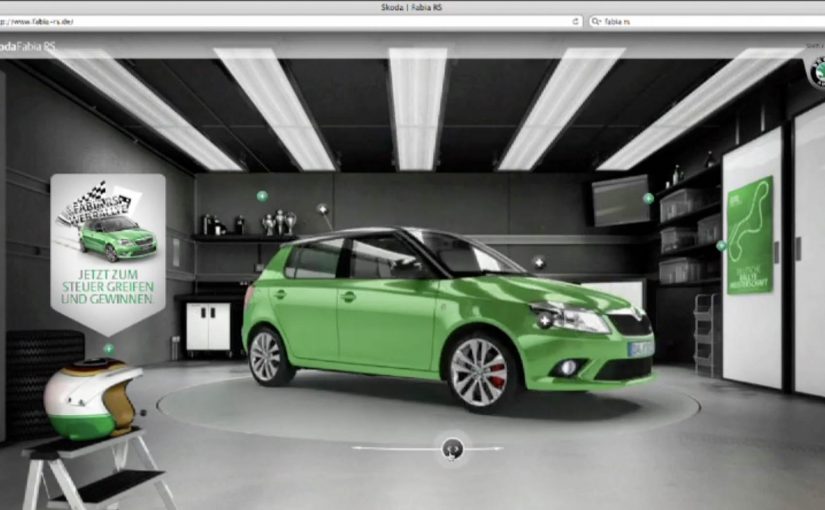
Skoda has just released a rally-based, augmented reality test drive for the Fabia RS. Here, “augmented reality test drive” means an AR overlay combined with a live webcam feed so you appear inside the cockpit view. The hook is simple and instantly personal: you become the driver, right down to a helmet view that pulls your face in via the webcam.

A rally fantasy built on a very real webcam

The execution borrows the language of motorsport. Helmet cam framing, tight cockpit perspective, and the feeling that you are inside the run rather than watching an ad.

Mechanically, the idea is an AR layer plus a live camera feed. The interface does not just show the car. It places you into the experience so the “test drive” feels like a game you are starring in.

In European automotive launch teams, webcam-first interactivity can differentiate faster than another spec-led asset.

In automotive launches where feature parity is high, interactive test drives create faster differentiation than another spec sheet or beauty film.

Why the helmet view is the smartest detail

Most virtual test drives keep the viewer outside the car. This one pulls the viewer into the cockpit, which changes the emotional contract. You are no longer evaluating. You are participating.

Extractable takeaway: Move the viewer from evaluator to participant, and the demo becomes something they remember and share without being asked.

That participation is what makes the concept naturally shareable, even without shouting for shares. People want to show the version where their own face is in the helmet view, because it is proof they “did the thing.”

What the brand is really reinforcing

The real question is whether the experience makes performance identity feel personal, not just visible.

On the surface, it is a playful rally twist. Underneath, it signals performance identity. The Fabia RS is framed as a car with motorsport DNA, not just a faster trim level.

The AR wrapper also makes an implicit promise: this is a modern car for people who like modern interfaces. The experience becomes a proxy for the product personality.

How to borrow the webcam POV trick

  • Make the viewer the protagonist, not just the audience. Webcam and POV tricks do more than cinematic polish.
  • Choose one unmistakable motif that communicates the category story fast, here it is rally and helmet cam.
  • Turn “try” into “play” so the time spent feels like entertainment, not evaluation.
  • Design a single talkable detail people can retell in one sentence, for example “it pulls your face into the helmet view.”

A few fast answers before you act

Is this more ad or more game?

It sits in the middle. The structure behaves like a lightweight game, while every element points back to a single product identity, rally performance.

What is the core mechanism that makes it work?

Personalization through webcam plus a strong point-of-view frame. The experience feels like it is happening to you, not in front of you.

Why does AR help here, instead of just a normal virtual drive?

AR adds “presence.” It creates the feeling of being inside the moment, which is harder to achieve with a standard video or configurator flow.

What is the biggest execution risk with webcam-based experiences?

Friction and permission. If setup is clunky or people feel uncertain about using the camera, completion drops fast. The first 10 seconds must feel safe and effortless.

What is the transferable lesson for other categories?

Put a real person into the proof. When the viewer’s face, voice, or choices become part of the demo, the demo becomes content people want to share.