
Crafted By My Heart

A ring becomes more than a ring when the pattern is literally yours.

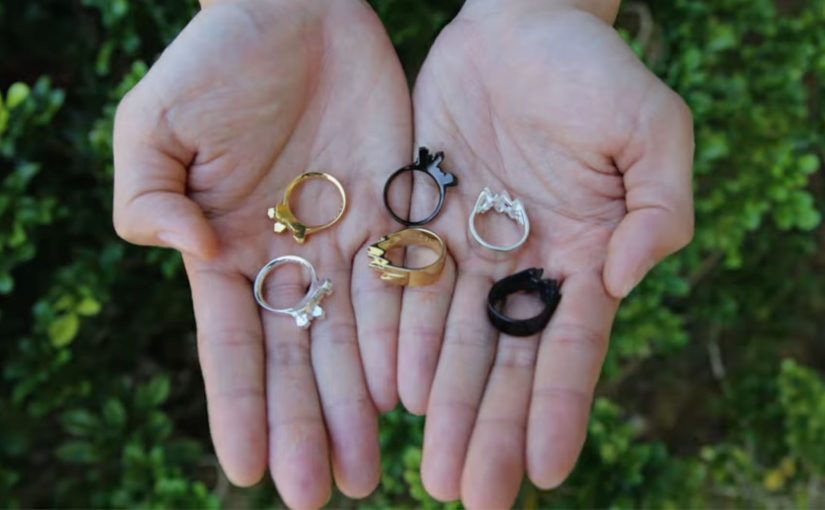
“Crafted By My Heart” is an app launched by DDB Group Hong Kong that lets you customize jewelry with your own heartbeat. You place a finger over the smartphone’s camera and flash. The app detects subtle changes in finger coloration, measures your heartbeat, then translates its intensity and rhythm into a unique digital rendering. That rendering becomes the basis for a one-of-a-kind ring.

From pulse to pattern

Turn a biometric signal into a personal design language, then manufacture it as a physical object. By “biometric signal,” I mean a measurable body output, like heart rhythm, captured directly from the user.

How the experience works

The flow is intentionally simple. The mechanism matters because it converts an invisible, emotional idea (“this is us”) into visible proof that feels undeniably personal.

  1. Capture
    You use the phone’s flash and camera to read your heartbeat through small changes in skin coloration.
  2. Translate
    The heartbeat becomes a digital rendering that is unique to your rhythm.
  3. Craft
    That rendering is used to create a ring. It is not a generic engraving. It is a form generated by your own signal.

In premium gifting categories, the story attached to the object often matters as much as the object itself.

The product choices are clear and bounded

The app offers two base designs, Surge and Sierra, with three finishes: gold, silver, or black silver. Rings cost between HK$1,198 and HK$1,588 (listed as US$155 to US$205), and take around 15 to 20 working days to complete.

Why a heartbeat beats engraving

Most “personalization” is decorative choice. This is structural personalization, where the customer input generates the form, which raises perceived meaning and makes the purchase easier to justify.

Extractable takeaway: If the customer’s input does not change the form of the product, you are offering decoration, not personalization, and it will be competed away by more options and lower price.

Personalization is structural, not cosmetic

A lot of customization is color, text, or surface. Here, the customer input generates the form. That feels materially more personal.

Technology removes the intimidation barrier

Biometrics and jewelry-making sound complex. The interaction is not. One finger. One phone. A result you can explain in one sentence.

The story is built-in

The product carries a narrative you can repeat instantly. It is your heartbeat, turned into a physical object. That makes it inherently giftable.

The deeper point

The real question is: how do you turn personalization from “more choices” into emotional proof people will pay for?

Meaningful personalization rarely comes from expanding menus. It comes from finding a signal that matters emotionally, translating it into a design system, and making the creation process easy enough that people actually do it.

What to steal

  • Start with a signal, not a style. Pick an input customers already value emotionally (not just data you happen to have).
  • Translate the signal into form. Make the input change geometry or structure, not just surface decoration.
  • Keep choices bounded. Offer a small set of base options so the “unique” part stays legible.
  • Design for retellability. If the owner cannot explain it in one sentence, it will not travel socially.

A few fast answers before you act

What is the core mechanic behind Crafted By My Heart?

The phone’s camera and flash detect heartbeat via subtle changes in finger coloration, then translate the rhythm into a digital rendering used to craft a ring.

What does the customer actually customize?

They select a base design and finish. The unique part is the heartbeat-generated rendering that drives the final piece.

What are the available designs and finishes?

Two base designs, Surge and Sierra. Three finishes, gold, silver, and black silver.

What are the price and production timelines?

HK$1,198 to HK$1,588 (US$155 to US$205). Around 15 to 20 working days.

What is the transferable lesson for other categories?

If you can capture a personal signal that people care about and make it visibly change the product’s form, you turn “customization” into meaning, not configuration.
BMW Films: The Escape

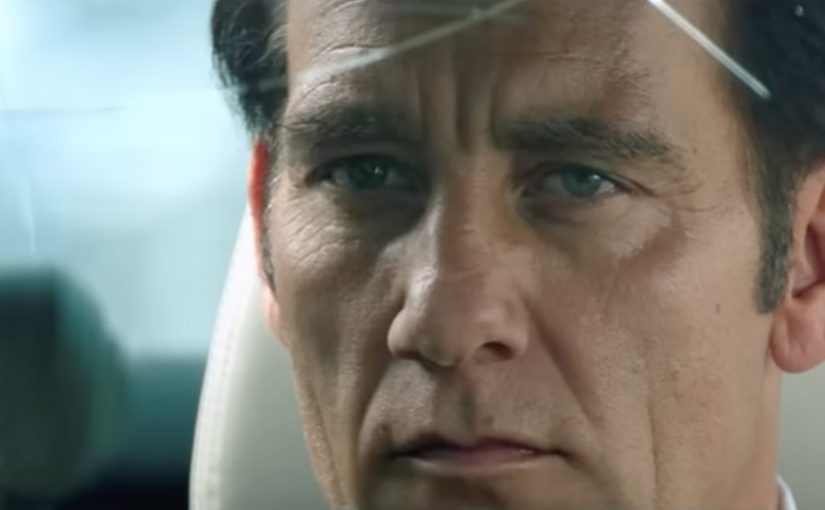
BMW Films has teamed up with Academy Award nominated director Neill Blomkamp (“District 9,” “Elysium”) to create an action-packed short film to promote the new upcoming 2017 BMW 5 Series.

The story centers around a young girl simply named “Five”, played by Dakota Fanning, who is the subject of seemingly illegal experiments.

With the FBI cracking down on the company responsible for such experiments, Oscar nominated actor Clive Owen plays the nameless transporter who is hired to get Five out of there. The action ensues.

Why BMW Films still works as a launch format

This is not a product demo dressed up as content. It is content where the product belongs naturally. The car is not the “message”. It is the tool that makes the story credible.

Extractable takeaway: Branded entertainment only pays off when the product is structurally necessary to the story, because that necessity makes the brand presence feel earned.

Here, “branded entertainment” means a film that works as entertainment even if you are not shopping, with the brand woven into the premise instead of appended as a pitch. Because the car drives the plot, the attention feels earned and people share it as a short film, not a launch asset.

  • Talent creates attention. Director and cast set a quality bar that feels like entertainment, not advertising.
  • The vehicle role is functional. Driving, control, and decision-making are essential to the plot.
  • Shareability comes from story. People pass it on because it is a short film worth watching, even without shopping intent.

In global high-consideration launches, long-form story formats work when they make the product feel necessary before anyone compares specs.

The brand job: make the new 5 Series feel inevitable

When a film like this lands, it does two things at once. It signals confidence and it frames the new model in an emotional territory that spec sheets cannot reach. Capability, composure, speed, control.

The real question is whether your launch format makes the product feel inevitable, not merely visible.

The benefit is not that viewers remember a feature. The benefit is that they remember a feeling, and they connect that feeling to the 5 Series before they ever step into a showroom.

What to take from this if you are launching something complex

  • Earn attention with craft. If you want people to choose long-form, it needs to deserve their time.
  • Give the product a role, not a cameo. If it does not matter to the plot, it will feel bolted on.
  • Let story carry the distribution. The strongest paid media is the one you do not need because people share it anyway.
  • Build a universe, not a one-off. Formats like BMW Films work best when audiences expect the next chapter.

A few fast answers before you act

What is “BMW Films: The Escape”?

It is a branded short action film created to promote the upcoming 2017 BMW 5 Series, directed by Neill Blomkamp and starring Clive Owen and Dakota Fanning.

Why use a short film instead of a classic launch ad?

Because story earns time and attention. It creates emotional association and premium perception that traditional product messaging often cannot deliver on its own.

What is the product role of the BMW 5 Series in this format?

The car functions as an essential tool in the narrative. It supports the transporter premise and makes the action feel credible, rather than serving as a standalone showcase.

What makes branded entertainment feel “credible”?

High production quality, real creative talent, and a story where the brand presence is natural and necessary, not forced.

What is the practical takeaway for launch teams?

If you want to use long-form content, design it as entertainment first, then embed the product so it belongs, and the attention will travel further.

Microsoft HoloLens: Elevator Maintenance

Augmented reality leaves the demo room

Microsoft HoloLens is not only about futuristic consumer experiences. Its real power emerges in enterprise environments.

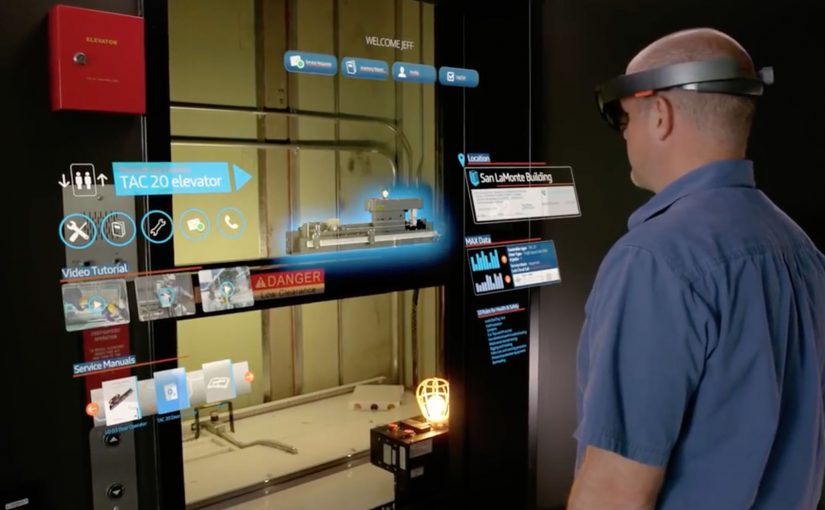
A strong example is ThyssenKrupp, which uses HoloLens to redefine how elevator maintenance is performed in the field.

Instead of relying on manuals, phone calls, or trial and error, technicians receive contextual, real-time information directly in their line of sight.

How HoloLens changes elevator servicing

With HoloLens, elevator technicians see what they need while keeping their hands free.

Technical documentation, schematics, and checklists appear as holograms overlaid onto the physical elevator system.

Remote experts can see exactly what the technician sees and guide them step by step.

This turns maintenance into a guided, collaborative process rather than an isolated task.

In industrial field service teams, the constraint is getting expert judgement to the point of work fast enough to prevent rework and downtime.

Why this matters for industrial operations

The impact goes beyond convenience. Because guidance is delivered in-context and hands-free, technicians can complete complex steps with fewer avoidable mistakes.

Extractable takeaway: When you embed expert guidance into the job itself, you turn specialist knowledge into a repeatable operating system for the frontline.

The real question is whether you can make frontline expertise repeatable inside the workflow, not whether you can ship an AR pilot.

Enterprise AR is worth doing when it removes friction from real maintenance workflows, not when it adds another screen.

  • Reduced downtime
  • Shorter training cycles
  • Improved first-time fix rates

Most importantly, expertise becomes scalable.

Knowledge is no longer locked in the heads of a few specialists. It becomes part of the workflow.

A glimpse of the future of work

This use case shows what augmented reality does best.

It does not replace workers. It augments them.

Complex tasks become easier. Errors decrease. Confidence increases. Work becomes safer and more efficient.

This is where mixed reality stops being a novelty and starts being infrastructure. By mixed reality here, I mean digital guidance and remote expertise anchored onto the physical job, not a virtual-world detour.

What to copy from this AR service pattern

  • Instrument the moment of work. Put the next step where the technician is looking, not in a manual that forces context switching.
  • Make escalation visual. Let remote experts share the same view so guidance is specific and actionable.
  • Scale expertise as workflow. Capture checks, sequences, and decision points so outcomes do not depend on a few specialists.

A few fast answers before you act

What is the Microsoft HoloLens elevator maintenance use case?

ThyssenKrupp uses Microsoft HoloLens so field technicians can see schematics, checklists, and contextual guidance overlaid onto the elevator system while working hands-free.

How does HoloLens change the maintenance workflow?

It puts documentation and step-by-step instructions into the technician’s line of sight, and enables remote experts to see what the technician sees so they can guide the job in real time.

Is this only relevant for elevators?

No. The same pattern applies to any field service or industrial maintenance scenario where hands-free guidance, fast troubleshooting, and expert escalation reduce downtime and errors.

What is the measurable value driver in enterprise AR like this?

Reduced downtime, faster training, and higher first-time fix rates. The key is that expertise becomes repeatable and scalable inside the workflow instead of remaining locked in a few specialists.

Where does this pattern break down?

It breaks down when the underlying documentation is outdated, connectivity is unreliable, or remote support is not operationalized. The hardware alone does not change outcomes.