
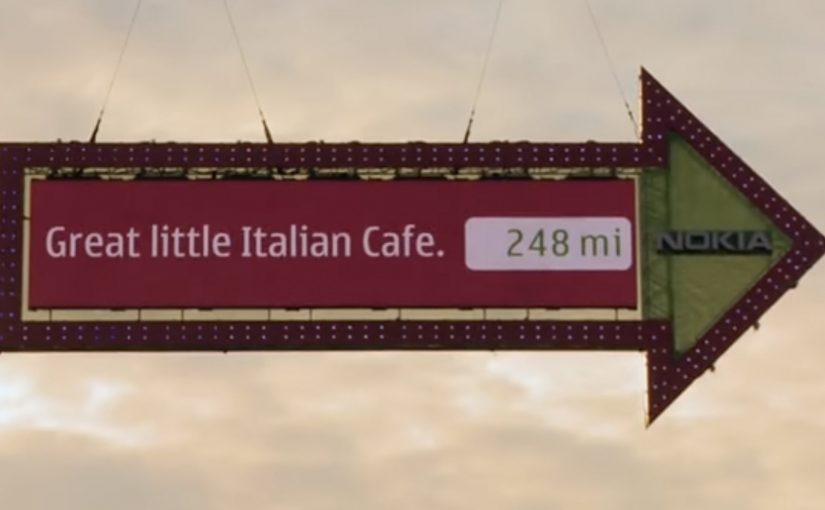
Nokia: The World’s Biggest Signpost

Nokia: The World’s Biggest Signpost

When navigation stops being private

Making navigation social is the new big idea by Swedish agency FarFar for Nokia.

What the “big signpost” actually does

The idea is simple at street level. Put a colossal digital signpost in a place with constant foot traffic, then let the public control it. People submit a location from their phone or via the web, and the sign turns to point toward that place while displaying the direction and distance.

Instead of selling navigation as a spec on a phone, the campaign turns it into a shared public utility and a social recommendation engine. Your place becomes part of the experience, and everyone nearby gets a live demonstration of what the service can do.

In global consumer tech marketing, “useful features” often stay invisible until you give them a public stage and a participatory hook.

Why it lands

It takes something normally solitary, finding your way, and makes it performative. Watching the sign react in real time creates instant credibility, and seeing other people’s “good things” transforms navigation from point-to-point directions into discovery. The spectacle draws a crowd, but the viewer control keeps the crowd engaged because the output is never the same twice.

Extractable takeaway: If you are marketing a capability people underestimate, externalize it in a physical demonstration, then let the audience drive the input so the proof feels self-generated.

What Nokia is really buying with this stunt

The visible job is attention. The deeper job is adoption.

The real question is whether a public demonstration can turn navigation from a private utility into a behavior people want to repeat and share.

This is a stronger way to sell navigation than listing features in isolation because the product benefit becomes visible, social, and easy to try.

Done well, the “map of good things” becomes more than a campaign artifact. Here, “map of good things” means a navigation layer shaped by public recommendations, not just static directions. It becomes a product behavior.

What brands can steal from the signpost

  • Turn an invisible feature into a visible ritual. Make the value legible in under five seconds, even with no sound.
  • Design for participation, not just impressions. Let people submit inputs, then reward them with a public output.
  • Make the crowd the content engine. Recommendations from real people do the persuasion work for you.
  • Build a clean bridge to “try it now.” If the demo is the billboard, the next step must be immediate on the device in someone’s pocket.

A few fast answers before you act

What is “The World’s Biggest Signpost” for Nokia?

It is a large interactive signpost installation that lets the public submit locations and then shows the direction and distance to those places, used to promote Nokia’s navigation services as social and shareable.

How does the experience make navigation “social”?

It shifts navigation from personal utility to public discovery by letting anyone contribute places and letting everyone nearby see the recommendations and results live.

What is the core mechanic that makes it work?

Real-time viewer control. People submit a destination and immediately see the sign respond with a physical, public proof of the service.

Why use a large physical installation instead of a regular ad?

A physical demo creates instant trust. It shows the capability in the real world, not as a claim, and it attracts attention through spectacle while keeping engagement through interaction.

What’s the key transferable lesson for brands?

If you want people to value a capability, stage it as a shared experience where the audience supplies the inputs and the product supplies undeniable outputs.
Logorama: 2,500 Logos

Logorama: 2,500 Logos

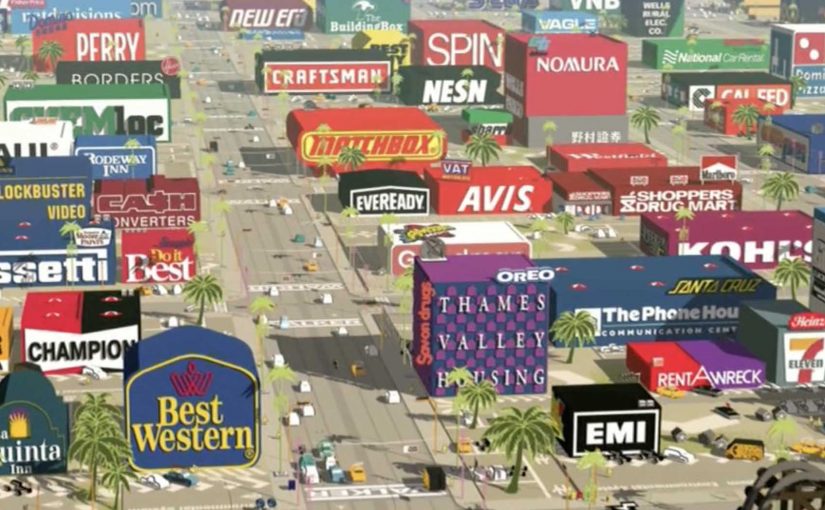
A seventeen-minute Hollywood-style tale where the city, the props, and even the characters are built from brand marks. The film is described as using more than 2,500 logos.

Logorama turns a familiar crime-thriller structure into something stranger. A world that looks like Los Angeles, but everything is signage. Every surface is a trademark. Every background detail is a corporate symbol you already know.

A thriller built out of trademarks

The mechanism is extreme constraint. Here, that means one hard rule: the filmmakers construct the entire environment out of existing brand identities, then animate it with blockbuster pacing, chase energy, and escalating chaos. That constraint works because instant logo recognition lets the film establish character, tone, and hierarchy without slowing down for explanation.

In brand-saturated consumer cultures, the fastest way to make people feel the weight of logos is to stop treating them as background and make them the physical world.

Why it lands, even if it feels wrong

The film works because it makes recognition do the work. You do not need exposition to understand who is powerful, who is ridiculous, and what kind of world you are in. Your brain fills in associations at speed, and the pace keeps you laughing before you have time to get comfortable. The satire lands not through speeches, but through accumulation. If everything is a logo, nothing is neutral.

Extractable takeaway: If your message is about cultural saturation, build a system where the audience cannot escape the stimulus, and let their own pattern-matching create the critique.

What the film is really demonstrating

Logorama is both craft flex and commentary. It shows how deeply brand codes have entered shared visual language, and it proves that you can tell a coherent, high-tempo story while replacing conventional production design with a library of corporate symbols.

This is not a logo stunt. It is a disciplined storytelling system that turns brand recognition into narrative force. The real question is how far a single visual rule can carry both entertainment and critique without collapsing into gimmick.

What to borrow from Logorama

  • Use constraint as a headline. One clear rule can make a piece feel instantly different.
  • Let recognition drive meaning. Familiar symbols carry narrative shortcuts, use them deliberately.
  • Keep the story engine simple. High concept needs a readable spine, chase, pursuit, escalation.
  • Make the critique experiential. People remember what they felt while watching, not what they were told.

A few fast answers before you act

What is Logorama?

An animated short that builds a Hollywood-style thriller world entirely out of brand logos and mascots, using recognition as both storytelling fuel and satire.

Why does the “all logos” rule matter?

It turns branding from decoration into environment. That shift makes consumer culture feel unavoidable, which is the point the film is pressing on.

How many logos are in the film?

The film is commonly described as featuring more than 2,500 logos.

What is the main creative risk of this approach?

If the narrative spine is weak, the piece becomes a spot-the-logo gimmick. The story has to keep moving, so the constraint serves meaning rather than replacing it.

What can marketers learn from it?

High constraint plus simple story structure can produce work that is both memorable and interpretable. The audience does the decoding, which increases engagement.

PG Tips: Monkey Mimics Meg Ryan

PG Tips: Monkey Mimics Meg Ryan

Borrowing a famous scene to earn instant recognition

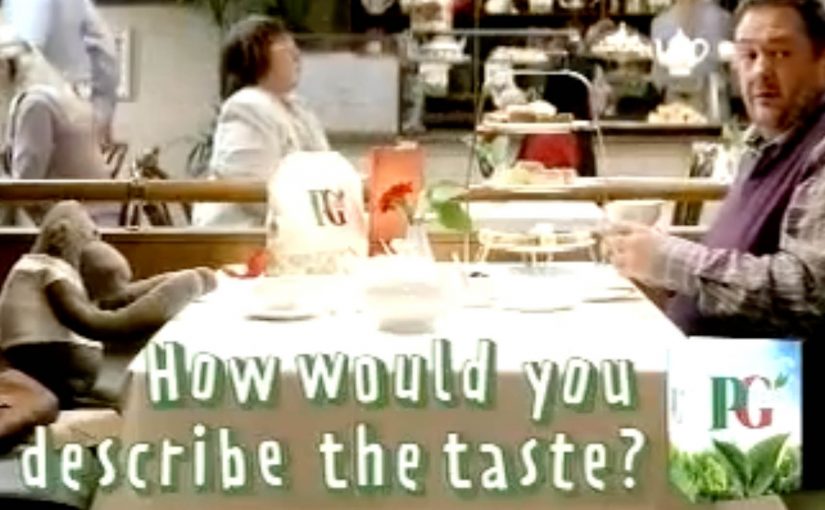
Johnny Vegas and Monkey recreate the famous “fake orgasm” scene from When Harry Met Sally, in the latest spot for PG Tips teabags.

How the idea works: pop-culture as a shortcut

The mechanism is simple. Pick a scene the audience already knows, then swap in your characters so the viewer does the pattern matching for you. Recognition arrives fast, and the ad gets a free head start on attention.

In UK FMCG advertising, parody can be a high-efficiency device because it compresses setup time. The viewer brings the context, the brand supplies the twist.

Why it lands: shared memory plus character chemistry

It works because the reference is collective. People enjoy being “in on it”, and the PG Tips Monkey plus Johnny Vegas dynamic makes the imitation feel playful rather than forced.

Extractable takeaway: If the audience supplies the context, your job is to make the brand-owned twist the reason the scene is worth remembering.

The business intent: make a commodity feel culturally present

Teabags are not a high-involvement product. So the job is distinctiveness. This approach uses humour and familiar cultural material to make the brand easier to remember and easier to talk about.

The real question is whether the reference makes the brand more distinctive, or just more familiar for a moment.

If you cannot make the twist brand-owned. Meaning it only works with your brand’s characters or point of view. Do not run the parody.

How to use parody without becoming a copycat

  • Choose a reference your audience actually shares. If recognition fails, the ad becomes confusing.
  • Make the twist brand-owned. Do not just recreate. Add a character or behaviour only your brand can deliver.
  • Keep the pacing tight. Parody works best when the “aha” arrives quickly.
  • Use comedy to increase recall, not distract from it. The laugh should point back to the brand.

A few fast answers before you act

What is this PG Tips ad doing?

It parodies a famous scene from “When Harry Met Sally” by recreating it with the PG Tips Monkey and Johnny Vegas to earn instant recognition and humour.

What is the core mechanism?

Pop-culture as a shortcut. The viewer brings the context, and the brand supplies the twist, so attention arrives faster than a fresh setup would allow.

Why does parody help memory when it is done well?

Recognition creates a quick “I know this” moment, and the shared reference makes the ad feel culturally present rather than purely commercial.

What is the risk to manage with parody?

If the reference overwhelms the brand, the audience remembers the scene but forgets the advertiser. The twist must be brand-owned.

What is the most transferable takeaway?

Choose a reference your audience truly shares, deliver the “aha” quickly, and make the brand-specific twist the reason the parody exists.