

Porsche 911: Birthday Song

Porsche 911: Birthday Song

A birthday song plays. But the “instruments” are Porsche 911s. The film stitches together sounds from seven generations of the 911 and turns them into a celebratory tune that feels like performance heritage you can hear.

For the 50th anniversary of the Porsche 911, Fred & Farid Shanghai recorded the sound signatures across the model’s generations, then made them playable online via a musical keyboard. Fans can log in, tap keys, and compose their own tracks using real 911 audio samples.

A branded “sound keyboard” is a web interface that maps recorded product sounds to notes or keys, so people can create short compositions. It turns passive listening into viewer control, and that extra participation time is what drives recall and sharing.

Reported results vary by source. One case write-up reports roughly 2.84 million video views over two months, and the keyboard being played about 1.86 million times worldwide.

Why this lands with Porsche fans

It does not explain the 911. It lets you “play” it. That is the emotional trick. The interaction makes the heritage feel accessible, and the sound makes it feel authentic. You are not learning history. You are using it. Because the keyboard makes the sound playable, the heritage stops being abstract and starts feeling personal.

Extractable takeaway: If you want heritage to feel current, turn the proof into a simple tool people can use, not a story they only watch.

In luxury automotive brand building, sound and craft cues often communicate performance credibility faster than specification copy ever can.

What the campaign is really aiming to shift

In China, the anniversary becomes a brand-image move. It reinforces Porsche as a sports-car maker by leaning on the one asset competitors cannot copy easily. The 911’s recognisable sound character across generations.

The real question is whether your brand has a defensible cue you can turn into something people can play with.

If you have an asset competitors cannot copy easily, you should design the interaction first and then use film to give it a default story.

What to steal for your own heritage-led activation

  • Turn heritage into a tool. Give people something they can do, not only something they can watch.
  • Use sensory proof. Sound is hard to fake and easy to remember.
  • Anchor interaction with a hero asset. The film gives the idea a “default” story, then the keyboard lets fans personalise it.
  • Make sharing inherent. Compositions are naturally shareable outputs. That is stronger than asking for shares.

A few fast answers before you act

What is the Porsche 911 Birthday Song campaign?

It is a 50th anniversary activation that records sounds from multiple 911 generations and turns them into two outputs. A hero “Birthday Song” film and an interactive web keyboard where fans can compose their own tunes.

Why use sound instead of visuals or specs?

Because sound carries performance identity instantly. It communicates emotional credibility and heritage without requiring technical explanation.

What makes the interactive keyboard more than a gimmick?

It creates participation time and personal output. When people make something themselves, they stay longer and are more likely to share. That improves memorability.

What business goal does this serve in China?

Strengthening Porsche’s sports-car credentials by making the 911’s heritage feel distinctive, modern, and culturally shareable.

What is the biggest execution risk with sound-led interactivity?

If the interface is slow or the sounds feel too similar, the “play” loop collapses. The experience needs immediate feedback and clearly different audio notes to feel satisfying.
Jung von Matt/Alster: The Trojan Font

Jung von Matt/Alster: The Trojan Font

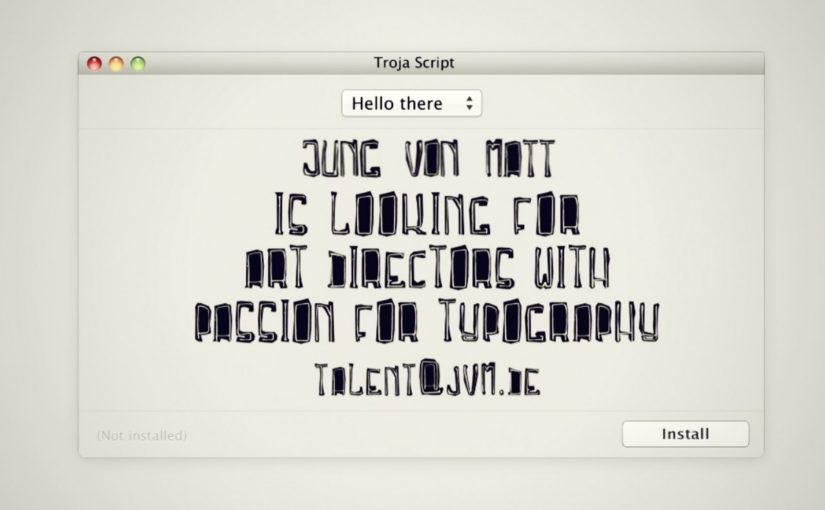
To reach designers with a passion for typography, Jung von Matt/Alster created a font of their own. Dubbed “Troja Script,” the typeface hides a recruitment ad where you’d normally expect the standard font preview.

Uploaded to free font websites, the font turned the download flow into a hiring funnel. Instead of “Aa Bb Cc,” the preview text itself carried the job pitch, so the first interaction with the product was the message.

Why the font format is the perfect carrier

Fonts are one of the few “free resources” designers actively seek out and evaluate with intent. That evaluation moment is intimate. You’re zooming in, testing, imagining usage. Replacing the preview with a recruitment message means the ad arrives when attention is already high and the audience is self-selected.

In creative industry hiring, embedding the application hook directly into a designer’s natural workflow can outperform broad employer-brand messaging.

Why this lands

This works because the medium is the filter. If you’re downloading free fonts, you’re likely the exact kind of person the agency wants to talk to. The message also feels earned rather than intrusive, because it appears inside a utility the user chose to access.

Extractable takeaway: If you’re recruiting for a specialist craft, place the pitch inside a tool or asset that specialists already pull into their process, so the channel itself does the targeting.

The business intent underneath

The stronger move is not to promote the vacancy more loudly, but to place it inside a behaviour that already signals fit.

The real question is how to turn a specialist asset into a self-qualifying hiring channel.

The campaign turns three steps into one. Discovery, qualification, and application. The reported outcome is a high ratio of signal to noise, because downloads come from the right community, and applications come from people who actually noticed and understood the move.

What this teaches about workflow-native recruiting

  • Make the artefact do the targeting. Put your message inside something only the right audience will seek out.
  • Embed the pitch in the default interaction. Use the “preview” moment, not an extra landing page.
  • Keep the twist legible. If the audience needs explanation, the hack loses momentum.
  • Measure the whole funnel. Track not just reach, but qualified actions (downloads) and outcomes (applications).

A few fast answers before you act

What is the “Trojan Font” idea?

It’s a font distributed through free font sites where the preview text is replaced with a recruitment message, turning a download into a hiring touchpoint.

Why target designers through free font websites?

Because that’s where typography-minded designers actively browse and evaluate resources, so attention and relevance are naturally high.

What makes this more effective than a normal job ad?

The audience is self-selected, and the message arrives inside a workflow moment, so it feels like discovery rather than interruption.

What result did the campaign report?

It was reported to generate around 14,000 downloads and 23 job applications for the open role.

How can other companies adapt the pattern?

Create a useful specialist asset, distribute it where specialists already look, and embed the hiring hook in the default usage or evaluation step.

World’s Toughest Job: The Fake Interview Reveal

World’s Toughest Job: The Fake Interview Reveal

A job listing almost nobody wanted

Do you have what it takes to handle the World’s Toughest Job? Mullen, an advertising agency in Boston, posted a fake “Director of Operations” job for one of their clients online and in newspapers. The paid placement reportedly generated over 2.7 million impressions, but only 24 people applied.

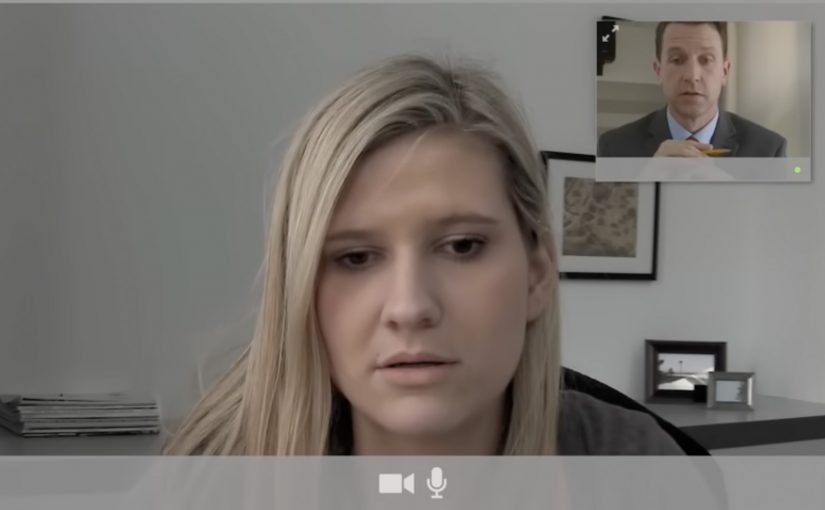
Those applicants were invited to a video conference where the role was explained in blunt terms: more than 135 hours per week, constant mobility, tight coordination, and nonstop communication. There are no breaks, no holidays, and no pay.

The mechanic: recruiting theatre as storytelling

Here, “recruiting theatre” means using the rituals and pressure of a job interview as the storytelling device. The film uses a familiar structure, a job interview, then pushes the requirements until the audience’s common sense kicks in. Because the “candidate” reactions are captured live on webcam, the escalating demands feel real, not scripted, and the viewer keeps watching to resolve the tension.

At the end, the campaign reveals what this “Director of Operations” role is actually describing, and the entire job spec snaps into focus.

In mass-market brand storytelling, the faux-recruitment format is a fast way to make hidden work visible and comparable.

Why it lands

It borrows credibility from the hiring process. When you hear “job requirements,” you naturally evaluate fairness, compensation, and sustainability. By deliberately breaking those expectations, the spot forces a reassessment of what society normalizes and undervalues, then uses the reveal to turn discomfort into appreciation.

Extractable takeaway: If your message is about undervalued effort, put it into a framework people already use to judge value, then let the contrast do the persuasion instead of a lecture.

What the client is buying

This is not just a feel-good twist. It is a reframing device designed to change how people talk about a role, and to prompt a concrete action immediately after the emotional peak. The “job interview” wrapper also makes it highly shareable because viewers can describe it in one sentence without spoiling the whole experience.

The real question is whether your audience needs more information, or a sharper frame that makes overlooked value impossible to ignore.

How to Reframe Invisible Work

  • Start with a believable premise. Familiar formats reduce skepticism and earn attention fast.
  • Escalate with specificity. Numbers, constraints, and tradeoffs make the situation feel tangible.
  • Use real-time reactions as proof. Authentic surprise is a stronger asset than polished dialogue.
  • Time the reveal after tension peaks. The moment of resolution is where people decide to share and act.

A few fast answers before you act

What is the “World’s Toughest Job” campaign format?

A fake job listing leads to webcam interviews where the role is described as extremely demanding with no pay. The film then reveals what the role is actually referring to.

Why does the job interview structure work so well?

Viewers already know how to judge jobs. When the requirements become unreasonable, it triggers an instinctive fairness check, which makes the reveal feel earned.

What is the key mechanic in one line?

Use a credible real-world frame, escalate expectations, capture real reactions, then deliver a reveal that reframes the entire premise.

What makes this shareable beyond the initial audience?

The premise is easy to summarize, the tension holds attention, and the payoff feels emotionally decisive, which motivates sharing.

What should a brand borrow from this without copying it?

Translate an abstract truth into a familiar evaluation framework, then let the audience reach the conclusion themselves.