Homecenter is a large retail chain in Latin America that deals in goods related to home improvement and construction.
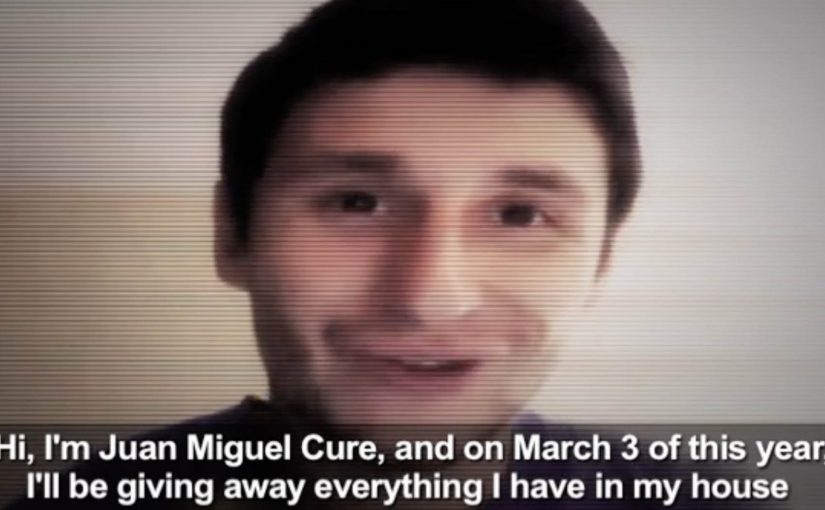
To create buzz for the opening of their new store (in March), Young & Rubicam Colombia got Juan Miguel Cure to give away everything from his house.
A launch story built on real sacrifice
Most store openings lean on discounts, flyers, and a ribbon-cut photo. This one flips the script by making the “offer” feel personal and public. One person gives up his stuff, and the opening becomes a story people want to repeat.
How the mechanic works
The mechanic is simple. Here, “mechanic” means the branded action that makes the story travel. Pick a relatable figure. Strip his home of its belongings. Turn that act into a public event and a piece of film that people can share. The brand is not trying to outshout competitors. It is trying to earn attention through a narrative that feels larger than retail.
In retail marketing for big-box home improvement brands, openings are won through local word-of-mouth and press amplification as much as through paid media.
Why it lands
Giving everything away is an extreme signal. It creates instant curiosity and a moral tension. Why would someone do this. That tension keeps people watching, and it makes the brand’s opening feel like something happening in the community, not something happening to the community. The generosity angle also changes the default posture toward promotion. Instead of “come buy”, it reads as “come witness”. Because the giveaway turns a retail opening into a witnessed act of sacrifice, people process it as a story worth passing on, not just a promotion to ignore.
Extractable takeaway: If you can attach your launch to a human-scale story with a clear sacrifice, you convert opening-day marketing from “announcement” into “news”, and news travels further than ads.
The business intent behind the generosity
The real question is whether the stunt can convert local attention into store traffic and brand memory. This is a smart launch idea because the stunt gives the store opening a memory structure, not just a promotional wrapper. This is a classic buzz play. It creates a shareable film asset, it seeds conversation locally, and it frames the new store as culturally present before the doors even open. The giveaway is the hook, but the real objective is simple. Get people to show up, talk about it, and remember the brand when they need home improvement goods.
What to steal for launch marketing
- Choose one bold proof point. Extreme beats complicated. One clear act is easier to retell.
- Build a narrative people can summarize in one sentence. If the story cannot be repeated quickly, it will not travel.
- Make the brand role legible without forcing it. The brand can frame the moment, but the human story must stay in front.
- Design for local amplification. Openings benefit from community sharing and local media interest more than global cleverness.
- Plan the follow-through. When attention spikes, the store experience must be ready to convert curiosity into habit.
A few fast answers before you act
What is the core idea behind “The Man Who Gave Everything Away”?
Turn a store opening into a human story. A real giveaway becomes the headline, and the opening becomes the payoff.
Why does this work better than a normal “grand opening” campaign?
Because it behaves like news. A surprising, emotional act is more likely to be shared, discussed, and covered than a standard promotional announcement.
What is the biggest execution risk?
If it feels staged, manipulative, or unclear why the brand is involved, the audience will reject it. The motive must read as coherent, not exploitative.
How can a retailer adapt this without copying the stunt?
Use the same structure. One decisive act, one human lead, one simple story that points to the opening. The act does not have to be “everything away”, it just has to be unmistakable.
How do you measure whether the buzz actually helped?
Track opening-period footfall uplift, local share-of-voice, earned mentions, branded search lift, and conversion into repeat visits in the weeks after launch.