
Pepsi Max: Test Drive

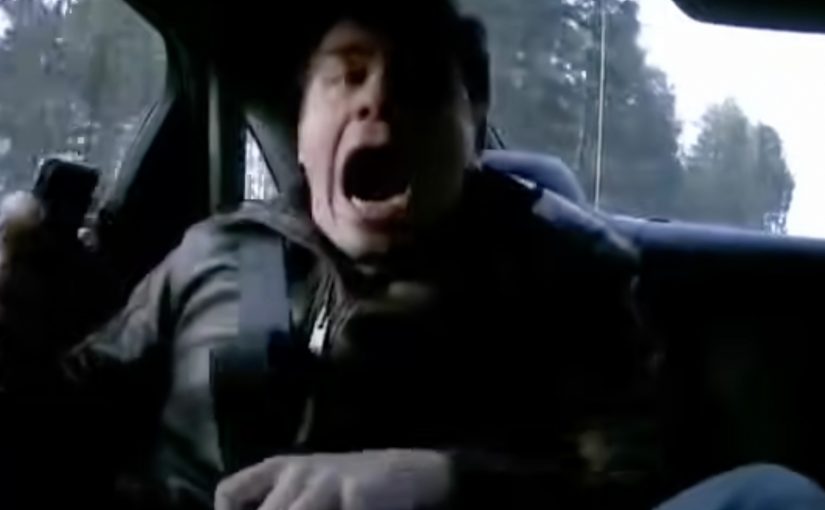
Last year in March, Pepsi Max along with professional stock car racing driver Jeff Gordon performed a prank on an unsuspecting car salesman by taking him on a test drive of his life. Here, a “prank” is a designed real-world setup filmed to capture reactions, not a fully scripted spot.

The video since then got over 41 Million views on YouTube. Despite its viral success, automotive journalist Travis Okulski was not impressed and was pretty vocal in pointing out inconsistencies in the viral ad and calling it a fake.

So Jeff Gordon teamed up again with Pepsi Max to pull a similar prank on unsuspecting Travis Okulski, just to prove the authenticity of the original test drive video…

But even after all of that Travis Okulski is still not convinced and the video since its release last week has already gotten over 13 Million views on YouTube.

The real question is what you do when a viral stunt becomes a public authenticity debate.

Why this became a two-part story

The first video worked because the premise is simple, the escalation feels real, and the payoff is pure reaction. But the moment it went viral, it also invited scrutiny. Because the setup looks “too good to be true”, it triggers a verification instinct, which is why people rewatch, share, and interrogate the details. That is what makes the follow-up so interesting. The brand turned criticism into content by making the skeptic part of the narrative.

Extractable takeaway: When your entertainment idea can be framed as “real or staged”, plan a proof-driven sequel path up front, so the debate extends the platform instead of draining trust.

  • Viral hook. A familiar setting, then a sudden reveal of unexpected capability.
  • Credibility challenge. A public critique that reframed the conversation as “real or staged”.
  • Response as sequel. A second execution aimed at the critic to re-earn belief.

In mass-reach consumer campaigns, “real or staged” scrutiny is part of distribution, so the sequel has to protect credibility without changing the core promise.

What to learn from the backlash

If doubt becomes the headline, leaning in with credible proof beats going quiet. When stunts travel, authenticity becomes part of the product. If the audience starts debating “is it real”, the brand can either go silent or lean in. Pepsi Max leaned in and used the debate as fuel, which extended the lifecycle and kept attention anchored to the same brand platform.

  • Design for verification. Build in moments that can withstand frame-by-frame scrutiny.
  • Turn skeptics into structure. If a credible critic challenges you, make the response the next chapter, not a defensive footnote.
  • Keep the platform constant. Address doubts without drifting into a different promise or tone.

A few fast answers before you act

What is Pepsi Max “Test Drive” with Jeff Gordon?

It is a prank-style stunt video where Jeff Gordon takes an unsuspecting car salesman on an extreme test drive, created as part of Pepsi Max’s viral entertainment approach.

Why was there controversy around the first video?

An automotive journalist publicly pointed out inconsistencies and argued it was staged, which sparked debate about authenticity.

Why did Pepsi Max do a second video?

To address the credibility debate directly by repeating a similar stunt and making the outspoken critic part of the execution.

What is the transferable pattern for viral campaigns?

Expect scrutiny, especially when the content looks “too good”. If doubt becomes the story, design a credible sequel that engages the criticism rather than ignoring it.
Pepsi Max: Human Loop

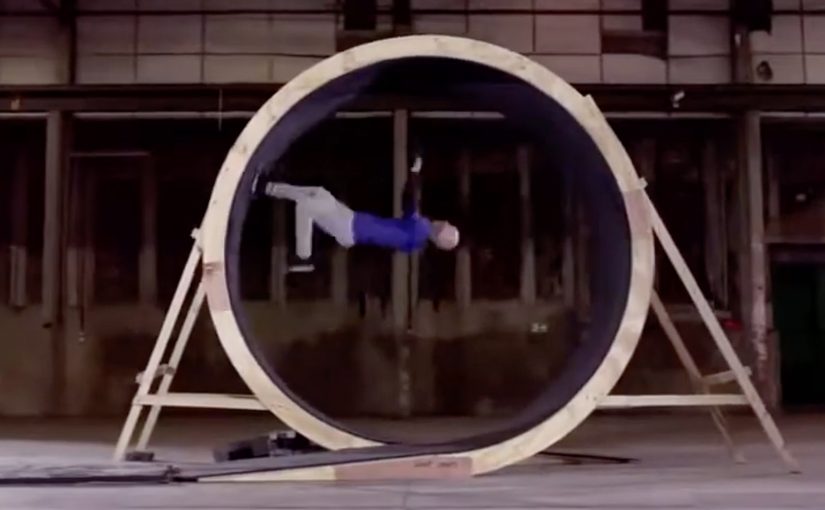
Last year, Pepsi Max for its ongoing #LiveForNow campaign created an unbelievable bus levitation stunt. Now continuing this “unbelievable feats and experiences” brand positioning, they challenged daredevil stuntman, Damien Walters to do another unbelievable stunt for them. Here, positioning means the single promise the brand wants people to remember and retell.

Pepsi Max provided Damien with a human-sized loop-the-loop in an abandoned warehouse and then got him to defy gravity for them…

In global FMCG marketing, stunts like this earn value when they reinforce an existing brand platform, not when they try to create one from scratch.

Why this stunt fits the brand

The mechanism is simple. A clearly defined physical challenge, executed by credible talent, makes the “unbelievable” promise feel real because the payoff is visible without narration.

Extractable takeaway: If your positioning is a claim, design one repeatable moment that functions as proof, then film it so the viewer can verify it without explanation.

  • It commits to the promise. “Unbelievable” is not a line here. It is the product.
  • It is instantly legible. You understand the challenge in one second, then you watch to see if it is possible.
  • It is built for replay. Stunts invite rewatching, pausing, and sharing because people want to verify what they saw.

How to make the stunt behave like proof

The real question is whether your brand promise can be proven in one obvious moment on camera.

This kind of spectacle earns its keep only when it is a direct proof point for an ongoing platform, not a disconnected attempt at “random viral”.

If your positioning is about experiences, you need executions that behave like proof. This kind of spectacle works when the idea is simple, the talent is credible, and the payoff is visible without explanation.

  • Make the promise behave like proof. If positioning is about experiences, the execution should demonstrate it, not describe it.
  • Keep the idea simple and the payoff visible. The viewer should understand the challenge instantly and see the outcome without explanation.
  • Use credible talent, then shoot for replay. Stunts invite rewatching, pausing, and sharing when people want to verify what they saw.

A few fast answers before you act

What is Pepsi Max “Human Loop”?

It is a Pepsi Max #LiveForNow stunt featuring Damien Walters attempting a human-sized loop-the-loop setup inside an abandoned warehouse.

Why does a loop-the-loop stunt perform so well in video?

The challenge is obvious, the risk feels real, and the outcome is visually conclusive, which makes it highly shareable.

What is the core pattern behind this kind of campaign?

Make the brand promise measurable in one moment, then capture it cleanly so the viewer does not need context to understand it.

How do you keep stunts from feeling like “random viral”?

Anchor them to an ongoing brand platform, use consistent talent and tone, and make each execution feel like a credible next chapter.

When should you avoid a stunt-led proof moment?

Avoid it when the idea cannot be understood instantly, the talent is not credible, or the execution does not ladder up to an ongoing brand platform.

Toyota: Try My Hybrid

Toyota in Norway is doing really well on loyalty and customer satisfaction, but it is struggling to recruit new customers.

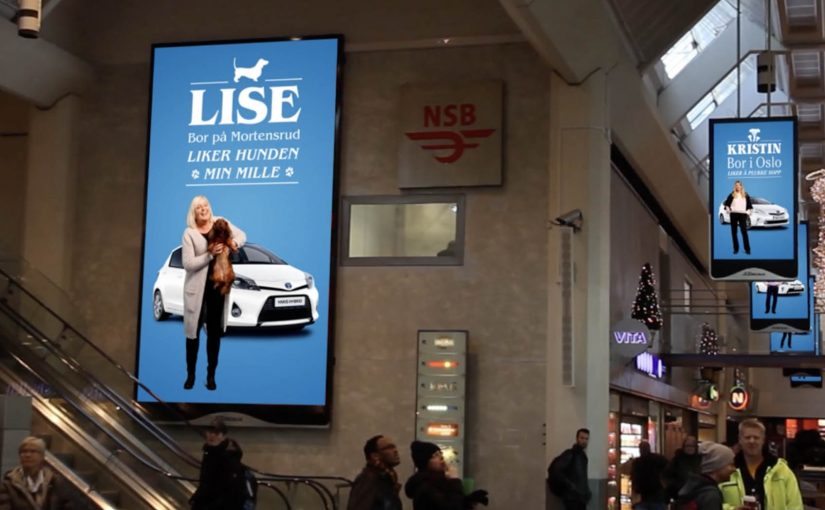
So instead of having salespeople persuading new buyers, Toyota lets satisfied Hybrid owners offer test drives to prospects. A web and mobile service makes it easy for owners. For no money. To let strangers, neighbours and friends, and friends of friends via Facebook test drive their Hybrid.

Turning owners into the dealership

The mechanic is simple and trust-led. That means the trust comes from the owner-host relationship rather than from Toyota’s sales script. Prospects find nearby Hybrid owners and request a test drive. Owners opt in, schedule, and host the drive. The conversation is the product, because it is grounded in lived experience rather than sales script.

In automotive marketing where trust is the bottleneck, peer-to-peer test drives can outperform sales-led persuasion.

Why it lands

It removes the two biggest barriers to a first drive. Social friction and credibility. The prospect gets a low-pressure introduction, and the owner gets to play the proud expert. That dynamic changes what the test drive feels like. It becomes a neighbourly recommendation, not a pitch. The social graph component also matters, because “friend of a friend” is often the sweet spot where curiosity meets safety.

Extractable takeaway: If your current customers are genuinely satisfied, build a structured way for them to host the first experience. Let trust carry the conversion, and let technology simply remove coordination friction.

What Toyota is really solving

This is an acquisition problem disguised as a community service. Toyota already has strong satisfaction. The real question is how that satisfaction becomes low-friction acquisition before a prospect ever enters a showroom. Toyota is right to treat owner advocacy as the front end of acquisition, not as a soft loyalty add-on. The challenge is that satisfaction does not automatically translate into new buyers at scale. This service turns satisfaction into a repeatable, measurable funnel step. Discovery, booking, drive, and then consideration. Without needing more showroom persuasion.

What brands can steal from Try My Hybrid

  • Make the first experience owner-led. Use real users as the proof layer.
  • Design for “near me”. Proximity is the simplest trust signal after reputation.
  • Use social adjacency carefully. Friends of friends can unlock trial without feeling like a cold lead.
  • Keep incentives optional. Pride and helpfulness can outperform cash when satisfaction is real.
  • Instrument the pipeline. Treat hosted trials as a trackable acquisition channel, not PR.

A few fast answers before you act

What is “Try My Hybrid” in one sentence?

A web and mobile service that lets prospective buyers book test drives with real Toyota Hybrid owners instead of salespeople.

Why does the owner-led test drive feel more persuasive?

Because it is grounded in lived experience. The host can answer questions with real usage context, which increases credibility and reduces sales resistance.

What makes the social layer important?

It helps prospects find a trustworthy host through proximity and social adjacency, which lowers hesitation versus a fully anonymous test drive.

What is the biggest operational risk?

Reliability and safety. If scheduling fails, hosts no-show, or the process feels risky, trust breaks and the program collapses.

How can a non-automotive brand apply the same model?

Turn your happiest customers into opt-in hosts for the first experience, then build a lightweight system to match prospects to hosts and remove coordination friction.