
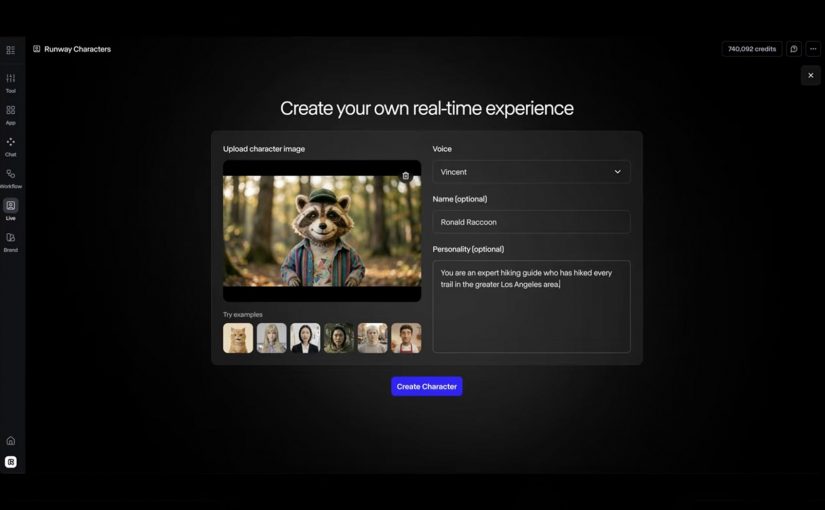
Runway Characters: Real-time AI avatars

A real-time AI avatar is a video-based conversational agent that can listen, respond, and show synchronized facial movement during a live interaction.

Runway Characters is not just another image-to-video feature. It points to a bigger shift: interfaces that talk back, maintain expression, and sit inside websites, apps, support journeys and training environments as an interactive layer.

From chatbot box to embodied interface

For years, the consumer web has treated conversation as a text box. Runway Characters pushes the interaction into a more human-shaped format: a visual character with a voice, a defined personality, domain knowledge and live responsiveness.

The enterprise value is not the avatar; it is the controlled interaction layer around the avatar.

A controlled interaction layer is the set of rules, knowledge sources, permissions, actions, escalation paths and measurement signals that determine what the avatar can say and do.

This is why the product is more interesting for operators than for novelty-watchers. A branded face is easy to demo; turning it into a trusted, scalable and measurable service interface is the hard part.

The mechanism: image, voice, knowledge and action

The mechanism is straightforward: a single reference image defines the character, voice and personality shape the interaction, a knowledge base keeps the response inside a domain, and API actions allow the character to do work rather than just talk.

For enterprise teams, this turns the avatar from a creative asset into a governed service surface that sits between consumers, content, data and workflow.

A governed service surface is a customer-facing interface whose content, permissions, actions, analytics and escalation rules are deliberately controlled.

Because the avatar can combine expression, domain knowledge and actions in the same interaction, the experience can move from navigation to guided execution.

That is the commercial hinge. The avatar is not valuable because it smiles; it is valuable when it helps someone finish a task faster, with less confusion and fewer handoffs.

Where Runway Characters could create real utility

The obvious use cases are the ones Runway highlights: tutoring and education, customer support, training simulations, and interactive entertainment or gaming. Those are credible because the value depends on response, patience, expression and repetition.

The stronger enterprise use case is guided commerce and product selection. A character that understands a product range, asks clarifying questions, checks fit, explains trade-offs and hands off to the right next step could reduce decision friction in categories where consumers need guidance.

Brand and marketing experiences are another useful path, but only if they avoid becoming mascot theatre. A brand character should answer, guide, qualify, educate or convert; otherwise it is just a high-cost animation layer with weak business intent.

The real question is not whether the avatar looks impressive; it is whether the interaction reduces effort, shortens a service path, or improves a decision.

The operating model matters more than the character

The failure mode is predictable: teams launch a polished avatar before defining ownership, content governance, privacy boundaries, escalation logic and measurement. That creates a visible interface with unclear accountability.

For consumer experience platforms, the hard work sits behind the face. The avatar needs approved knowledge, consent-aware data access, clear action limits, analytics events, brand controls, QA scripts and a fallback path when confidence is low.

This also changes the content model. Product information, policy content, service scripts and training material need to be structured enough for a live character to use safely, not just published as static pages for humans to browse.

Runway Characters takeaway for enterprise teams

Runway Characters should be evaluated less like a creative tool and more like a new front-end pattern for service, learning, commerce and brand interaction. The adoption question is not “can we make a character?” but “which consumer or employee journey deserves a live conversational interface, and can we govern it?”

Takeaway: Treat real-time AI avatars as governed service surfaces, not animated brand assets. The winning teams will connect character design to knowledge governance, journey ownership, action permissions, measurement and fallback logic before scaling the experience.


A few fast answers before you act

What is Runway AI?

Runway is an AI company building generative media tools and world-simulation research systems. Runway describes its mission as building AI to simulate the world through the merging of art and science.

What is Runway Characters?

Runway Characters is Runway’s real-time avatar product for creating conversational video characters with customizable appearance, voice, personality, knowledge and actions.

Why does it matter for brands?

It matters because it can turn static content, support flows and training material into live guided interactions that feel more natural than a chatbot.

What are the best first use cases?

The best first use cases are narrow, repeatable journeys where guidance reduces effort: product advice, customer support triage, onboarding, training practice and education.

What is the main enterprise risk?

The main enterprise risk is launching a convincing avatar without clear governance over what it knows, what it can say, what it can do and when it must escalate.

How should teams measure success?

Teams should measure task completion, deflection quality, conversion support, time saved, escalation rate, user satisfaction and the cost of maintaining the knowledge base.
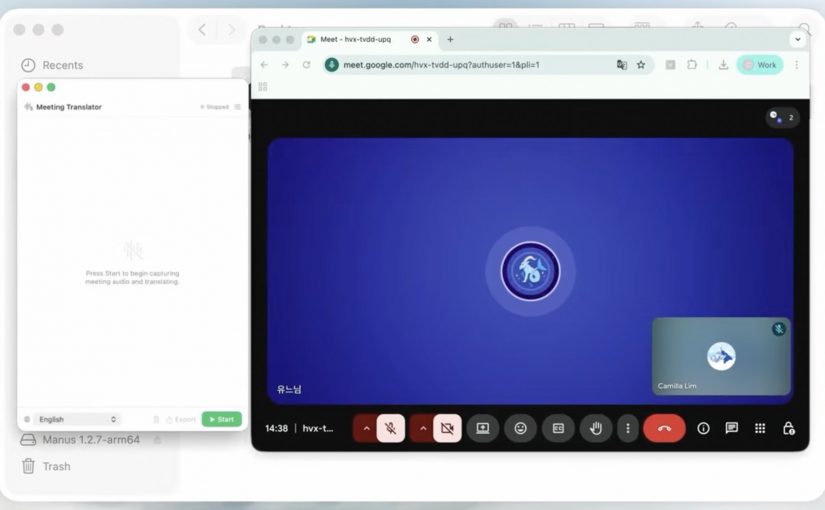
Manus AI: Action Engine for Marketing

Manus AI is interesting because it changes the unit of AI adoption in marketing. The useful question is no longer whether AI can write better copy, but whether it can safely execute repeatable marketing work across tools, accounts and output formats.

Vaibhav Sisinty, founder of GrowthSchool, frames the hype in the video, but the useful part is the work pattern: browser shopping, download cleanup, Meta ads analysis, Slack triage, influencer research, prototype building and Telegram-based task handoff.

These are not glamorous use cases. They are the small operational gaps that make marketing teams slower than they should be: extracting data, checking dashboards, comparing options, building lists, scanning messages, formatting outputs and turning loose requests into usable artefacts.

The operating shift: from answer to action

Most marketing teams still use AI as an answer layer. They ask for ideas, summaries, drafts, research angles, prompt variants or campaign copy, and then people still move the work manually through browsers, spreadsheets, CMS workflows, ad platforms, project tools and approval chains.

Manus describes itself as an action engine. An action engine is an AI layer that can plan, execute and package work across tools, rather than only generate recommendations.

The mechanism is straightforward: Manus combines planning, browser operation, connectors, file access, code generation and output packaging, so a marketing request can move from prompt to finished artefact without being manually rebuilt in five separate tools.

For marketing teams, that puts the pressure point on operating model design, not on prompt novelty.

This mechanism matters because execution creates real business value only when the system can reach the right tools, use the right data, follow the right rules and hand back something a team can trust.

The marketing question: control before scale

The real question is whether a marketing organization can give any agent safe enough access, clear enough tasks and strong enough controls to make the output usable.

The stance here is clear: treat Manus as a workbench for bounded execution, not as a replacement for marketing judgment.

In a real marketing stack, that distinction matters because the work crosses content systems, asset libraries, product data, CRM, analytics, ad platforms, consent, identity and approval workflows.

The Meta angle matters, but not as gossip

Manus still presents itself as part of Meta, while recent reporting says China has blocked the acquisition or ordered the transaction unwound. That tension deserves a brief mention, but it should not dominate the argument.

The business signal is not the takeover drama. It is that the market is moving from AI tools that advise marketers to AI systems that can sit closer to actual work.

That is why the Meta connection is relevant: ads, creators, messaging and business pages are workflow surfaces, not just media surfaces.

If an execution agent can sit near those surfaces, the commercial value is not another content generator. The value is shorter distance between insight, action, packaging and follow-up.

Governance decides whether this scales

An agent that can open browsers, read accounts, analyze campaigns, create files, draft replies and ship prototypes is useful only when access rights, approval steps and logs are explicit. Before scaling it, marketing teams need to define which accounts can be touched, which actions are read-only, which outputs require human approval, which data is excluded and which records prove what happened.

Without this, the failure mode is obvious. The agent becomes another shadow workflow, fast enough to bypass controls and persuasive enough to hide weak evidence.

That is also where adoption gets decided. People will not use an agent because it is magical; they will use it because it removes low-value work without making them responsible for invisible risk.

What marketing teams should operationalize

The practical move is not to connect everything at once. Start with bounded, reversible work: campaign monitoring, reporting summaries, initial lists of potential creators and influencers, content calendars, competitive scans, meeting follow-ups, prototype briefs and internal workflow cleanup. These jobs have enough friction to matter, enough structure to test, and low enough downside if a human reviewer stays in the loop.

Takeaway: Offerings like Manus AI are useful for marketing when they are treated as execution layers for controlled workflows, with clear access rules, human approval points, source checks, output QA and measurable time saved.


A few fast answers before you act

What is Manus AI?

Manus AI is a general-purpose AI agent designed to execute tasks, not just answer prompts. In marketing, that means it can support research, reporting, campaign analysis, workflow automation and prototype creation when access and review are controlled.

How is Manus different from ChatGPT or Claude?

ChatGPT and Claude are usually used as reasoning and drafting interfaces. Manus is positioned closer to an execution environment because it can use browser operation, connectors and output generation to turn a request into a finished artefact.

Should marketing teams connect Manus to real accounts?

Not without data governance and security review. Start with read-only access where possible, confirm what data leaves your environment, exclude sensitive customer or employee data, require human approval before external actions, and keep logs for every workflow that affects campaigns, customers or brand assets.

Does the Meta acquisition story change the marketing argument?

Only slightly. The ownership story is unstable, but the operating lesson is stable: AI agents are moving closer to ads, creators, messaging, commerce and business workflows.

What is the best first use case for Manus in marketing?

Start with recurring analysis and packaging work. Weekly campaign summaries, potential creator and influencer lists, competitor scans and meeting-to-action-plan workflows are easier to govern than live publishing or customer-facing execution.

InVideo AI: Future of Ads, or Slop at Scale?

InVideo just dropped a campaign that matters less for whether you like the ad, and more for what it signals about how content production is changing.

Not because the ad itself is “good” or “bad.” But because of what it demonstrates.

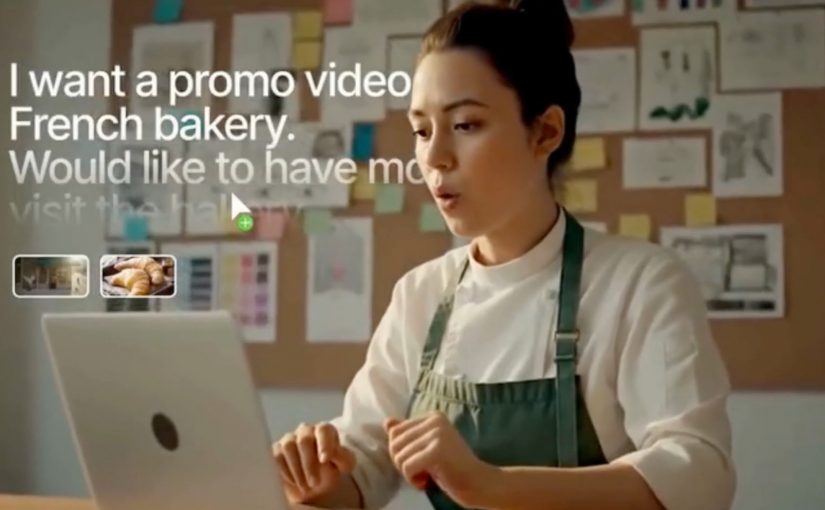
The premise is simple. A local business wants awareness and local footfall. A single prompt arrives. Then a “creative team” appears on screen. A writer, director, producer, and sound designer. They brainstorm, storyboard, pull assets, debate tone, change direction midstream, swap narrators, land a punchline, and ship a finished promo.

The twist is that the “team” is not human. It is AI agents collaborating in real time. Here, “AI agents” means role-based AI workers that each own part of the task and iterate toward a shared output.

What matters here is not whether the ad is good or bad, but that agentic production is starting to compress the path from brief to channel-ready asset.

So let’s unpack what’s actually happening here. The shift.

What this campaign is really showing

On the surface, it’s a product story.

Under the surface, it’s a proof-of-concept for a new production model. Prompt-to-video (turning a single intent into a finished video in one workflow), orchestrated by role-based agents, pulling from your assets, and iterating like a team would.

That matters because we are crossing a line:

  • Yesterday: AI helped you edit.
  • Today: AI can generate components.
  • Now: AI attempts to run the full production loop. Brief to concept to execution to polish.

If that sounds incremental, it isn’t. The bottleneck in content has never been “ideas.” It has been translation. Turning intent into something shippable, on brand, on time, and fit for a channel.

This is what changes. The translation cost collapses.

Because the work is split into roles that can iterate through decisions, the system can converge on a shippable cut faster than a single prompt that produces one draft.

The “agents” idea. Why it clicks so hard

Most AI video tooling gets described as features: text-to-video, voiceover, stock replacement, templates.

Agents are a different mental model. They mimic how work gets done.

Instead of one tool trying to be everything, you have multiple role-based systems that divide the labor:

  • Writer: Hook, script, narrative beats
  • Director: Framing, pacing, scene intent
  • Producer: Assets, structure, feasibility, assembly
  • Sound designer: Voice, music cues, timing, emphasis

The output is not just “a video.” It’s a workflow that looks like collaboration.

And that’s why the campaign is sticky. It doesn’t just show a capability. It shows an operating model.

Fast definition. What “AI agents” means in this context

AI agents are role-based AI workers that take responsibility for a portion of the task, coordinate with other roles, and iteratively refine toward a shared goal.

In practical terms, this is orchestration. Task decomposition. Decision loops. And multi-step iteration that feels closer to a real production process than a single prompt and a single output.

In enterprise marketing teams, agentic video tools compress production time while making governance, briefing quality, and brand standards the real constraints.

In enterprise environments, the real unlock is not generation alone, but connecting agentic creation to brand systems, DAM, approval workflows, localization, and performance measurement.

Why the bakery storyline matters. It’s not about video

The reason this lands is the bakery.

Extractable takeaway: When production becomes cheap and fast, advantage shifts from making assets to owning the constraints. Brief clarity, brand standards, and POV become the bottleneck.

A small business is a stand-in for every team that has historically been excluded from “premium” creative production. Not because they lacked ideas, but because they lacked:

  • Budget
  • Time
  • Specialist talent
  • Access to production infrastructure

If AI production becomes cheap and fast, a new baseline emerges.

For large organizations, the implication is different. Once production access is commoditized, content operations and control architecture become the source of advantage.

Customer expectations tend to move in one direction. Up.

We’ve seen this pattern repeatedly elsewhere:

  • Shipping went from weeks to days. Then days to “why isn’t it here tomorrow?”
  • Support went from office hours to 24/7 chat.
  • Information went from gatekept to instant.

Content is heading the same way.

When a local business can generate credible, channel-ready creative quickly, the competitive advantage shifts away from “who can produce” and toward “who can differentiate.”

So is this the future of content. Or a shortcut that kills creativity?

Both outcomes are plausible, because the tool is not the strategy.

Here are the three trajectories I think matter.

1) Creativity gets unlocked for more people

AI reduces the friction between an idea and a first draft. That can empower founders, small teams, educators, non-profits, internal comms teams, and marketers who have always had the brief but not the bandwidth.

If you’ve ever had a good concept die in a doc because production was too heavy, you know how big this is.

The upside version of the future looks like:

  • More experimentation
  • More niche creativity
  • More localized storytelling
  • Faster learning cycles

2) The internet floods with “content wallpaper”

When production becomes cheap, volume spikes. When volume spikes, attention gets harder. When attention gets harder, teams chase what performs. When teams chase what performs, sameness creeps in.

The downside version of the future looks like:

  • Infinite mediocre ads
  • Homogenized pacing and tone
  • Interchangeable visual language
  • “Good enough” content dominating feeds

That’s the fear behind “slop at scale.” Not that content exists. That it becomes meaningless.

3) Premium creative becomes more premium

There is a third outcome that’s often missed.

When baseline production becomes abundant, true differentiation becomes rarer.

Human advantages do not disappear. They concentrate around the things AI struggles with reliably:

  • Strategy and intent. What are we trying to change in the market?
  • Cultural nuance. What does this mean here, with these people?
  • Original point of view. What do we stand for that others don’t?
  • Brand taste. What is “on brand” beyond templates?
  • Ethical judgment. What should we not do even if we can?
  • Lived insight. What’s the human truth behind the message?

In that world, AI does not replace creative leaders. It raises the bar on them.

The practical question every marketing leader needs to answer

People debate whether AI can “replace creatives.” That’s not the operational question.

The real question is: Where do you want humans to be irreplaceable, and where do you want machines to be fast?

Because if AI handles production, your competitive edge moves to:

  • The quality of your briefs
  • The clarity of your brand system
  • The strength of your POV
  • The governance of your outputs
  • The measurement of creative impact
  • The speed of iteration without brand drift
  • How cleanly the workflow plugs into your content supply chain, approval model, and channel measurement

A simple maturity test you can run this week

If AI can produce at scale, the risk is not “bad videos.” It’s unmanaged systems.

Ask this:

Who owns the continuous loop of prompting, testing, learning, scaling, and deprecating AI-driven creative workflows in your organization?

If the answer is “no one,” you don’t have an AI capability. You have scattered experiments.

My take

Production is getting cheaper. Differentiation is getting harder.

So the real decision is not whether you can generate more content. It’s whether you can scale output without losing taste, brand truth, and accountability.

Is this the future of content. Or a shortcut that kills creativity? It depends on who owns the brief, who owns the guardrails, and who is willing to say no.

Operating rules for agentic video ads

  • Make ownership explicit. Assign a named owner for the prompting, testing, scaling, and deprecating loop.
  • Brief before volume. Treat brief quality as the lever, not output quantity.
  • Lock the brand system first. Define templates, tone rules, and claim constraints before you automate.
  • Measure drift, not just speed. Track time saved alongside brand drift and performance deltas.
  • Use “no” as a control. Write down what should not ship, and enforce it with review gates.

A few fast answers before you act

Can AI agents replace a creative team?

They can replicate parts of the production workflow and speed up iteration. They do not replace strategy, taste, accountability, and cultural judgment, which still need named human owners.

What does “prompt-to-video” actually mean?

It’s the ability to turn a single intent into a finished video. Script, scenes, voice, music, edit, and formatting produced in one workflow without traditional filming or manual timeline work.

Does this inevitably create “slop at scale”?

It can if teams optimize for speed and volume over differentiation. The practical antidote is stronger briefs, sharper constraints, and explicit review gates for brand and claims.

Where should humans stay irreplaceable?

Brief quality, brand standards, and the decision-making layer. What to say, what not to say, what is true, what is appropriate, and what is distinctive.

What is the first governance step before scaling AI video?

Assign ownership for the continuous loop. Prompting, testing, learning, scaling, and deprecating workflows, plus a clear approval policy for what can ship.

What is a safe pilot to run in the next 2 weeks?

Pick one repetitive internal format, lock a brand template, and run A to B tests with human review. Measure time saved, brand drift, and performance deltas before expanding to paid ads.