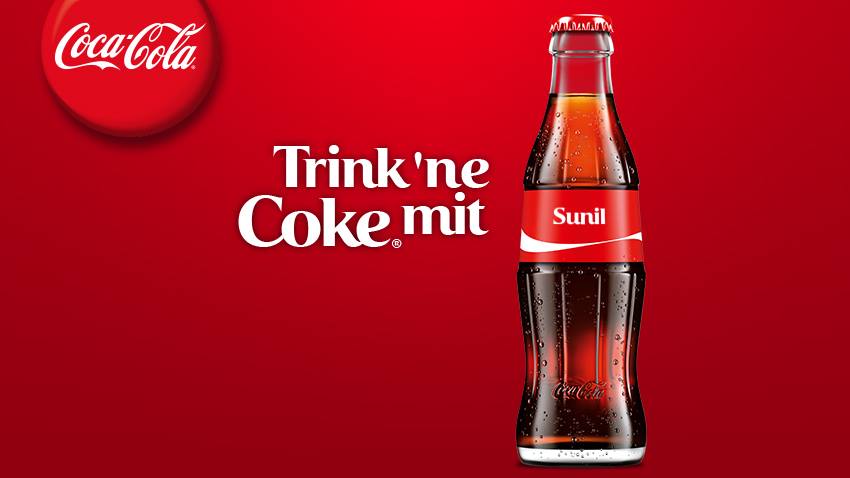
Coca-Cola has an ongoing global campaign that allows consumers to personalise bottles and cans…
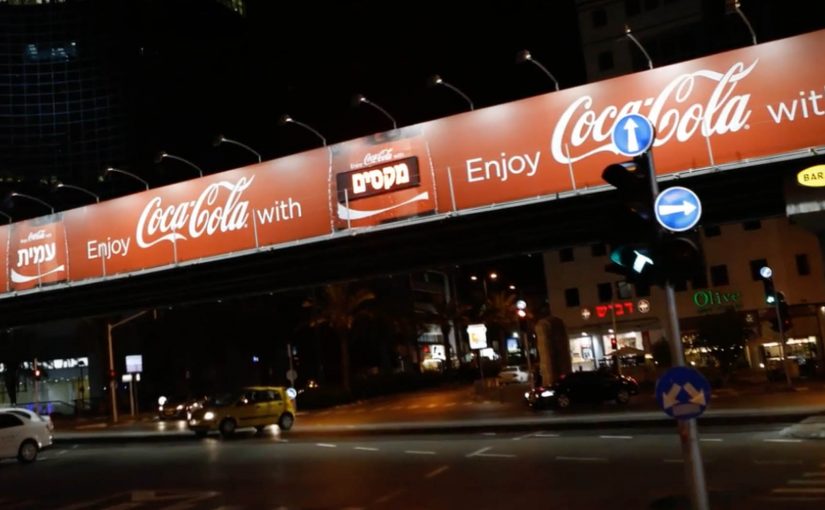
Building on the success of this campaign Coca-Cola Israel decided to take the idea further with personalised billboards.
A mobile app was developed where consumers could enter their name. Then using geo-fence technology, the Coca-Cola billboard displayed the name when it was approached. The consumer at the same moment also received a message on their smartphone notifying them that their name was up there.
Since its launch the app has reached 100,000 downloads and is currently ranked #1 in Israel’s app store.
Why this extension makes sense
- It keeps the personalization promise. The name is not only on the package. It shows up in the world around you.
- Location makes it feel “for me”. The moment you approach the billboard, the experience becomes uniquely yours.
- Mobile closes the loop. The phone notification confirms the moment and turns it into something you can share.
The reusable pattern
Start with a personalization mechanic people already understand. Then add a single “surprise and confirm” moment in the real world, powered by location and a simple mobile action.
A few fast answers before you act
What is Coca-Cola “Personal Road”?
It is a Coca-Cola Israel extension of the personalised-name campaign that uses a mobile app and geofencing so a billboard displays your name as you approach, and your phone notifies you.
How does the billboard know when to show a name?
The app uses geo-fence technology to detect proximity, then triggers the personalised billboard moment when the user approaches.
Why pair the billboard moment with a smartphone message?
The message confirms what just happened and makes it easy for the consumer to capture and share the experience.
What is the key takeaway for location-based campaigns?
Make the rule simple and the payoff instant: one input from the consumer, one visible personalised output, and one mobile confirmation that seals the memory.