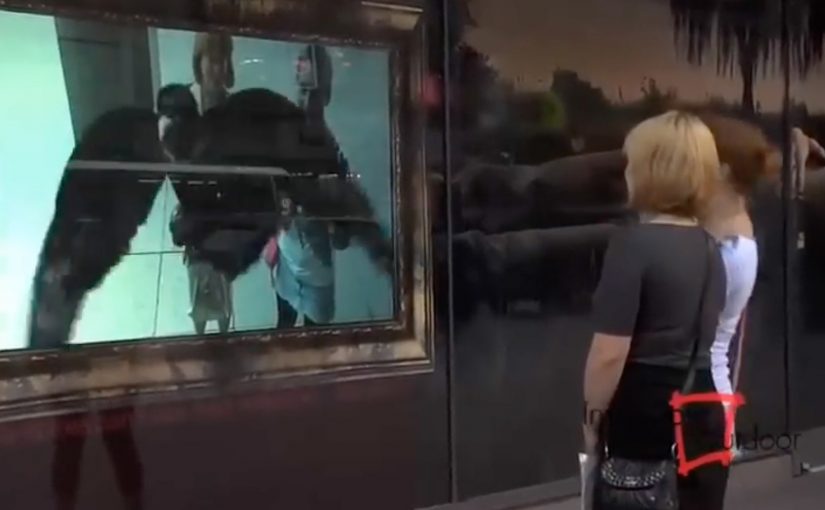
You open a print issue of Esquire and the pages do not stop at ink. You point a webcam or phone at a marked page and the magazine layer expands. Video clips play, 3D objects appear, and extra content sits directly on top of the printed layout. The issue behaves like a portal, not a publication.
The move. Extending print with augmented reality
Esquire experiments with an augmented reality-enabled issue that connects physical pages to digital experiences. The print product becomes the trigger, and the digital layer becomes the reward for curiosity.
How it works. Markers plus a camera
- Selected pages include visual markers designed to be recognized by software.
- The reader opens the AR experience on a computer webcam or mobile device.
- When the camera recognizes the page, digital content overlays the magazine.
- The overlays can include video, interactive elements, and 3D objects tied to the editorial content.
In publishing and brand media, augmented reality works best when the page itself becomes the interface rather than a detour to a separate destination.
Why it matters. A magazine that behaves like a medium
This is not a banner ad placed on paper. It is a format shift. The reader keeps control, but the magazine now has depth. Print becomes interface, and “extra content” becomes spatial and contextual rather than hidden behind a URL.
What to take from it. Designing for the moment of discovery
- Use print as the entry point. A physical artifact can still be the strongest trigger for attention.
- Reward curiosity quickly. The first overlay has to land fast to justify the setup.
- Keep the experience editorial. AR works best when it extends the story, not when it interrupts it.
- Plan for repeatable templates. Once the pipeline exists, AR pages become a scalable content format.
A few fast answers before you act
What is Esquire’s augmented reality issue?
A print magazine issue that unlocks digital overlays like video, interactive elements, and 3D objects when a camera recognizes marked pages.
What do readers need to experience it?
A webcam or phone camera, plus the AR experience that recognizes the markers in the issue.
What kind of content can appear?
Video clips, interactive elements, and 3D overlays tied to the editorial pages.
Why is this different from typical digital add-ons?
The print page becomes the interface, so the digital layer is contextual and anchored to the physical layout.
What is the transferable lesson?
Treat physical media as an activation surface, then design a fast, editorially relevant reveal that makes the extra layer feel earned.