
The future of Augmented Reality

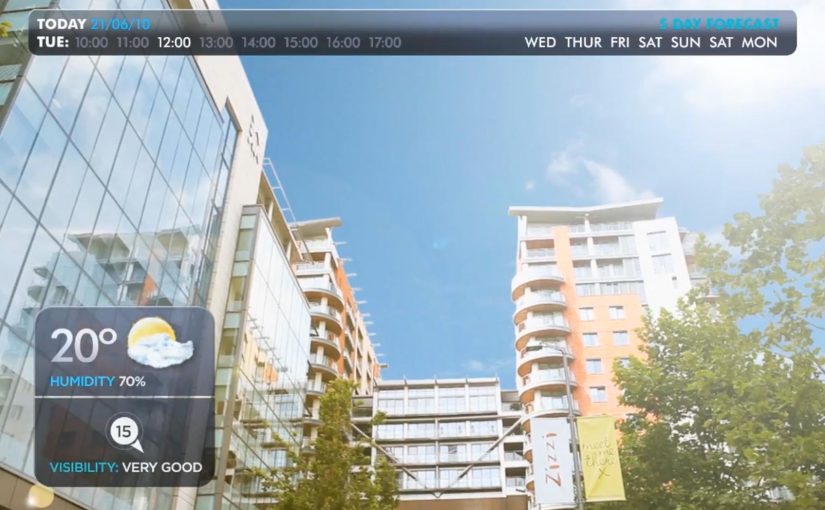
You point your phone at the world and it answers back. In Hidden Creative’s video, a mobile device scans what’s around you and returns live, on-the-spot information. The same AR layer lets you preview change before you commit to it, by virtually rearranging furniture or trying colours in a real space.

What this future looks like in practice

The value is not “wow.” It is utility. The device behaves like a real-time lens:

  • Scan surroundings and get contextual information immediately.
  • Overlay objects into physical space to plan renovations or layout changes.
  • Configure colours virtually before making real-world changes.

Why AR still feels like a campaign tool

Augmented Reality is already active in brand campaigns around the world, mainly because it creates high engagement and talk value. Yet it still does not play an everyday role in most people’s lives.

The missing layer. A standard AR experience

Before daily-life AR becomes normal, platform owners and developers need to standardise the experience across their ecosystems. Apple, Google, and Microsoft/Nokia each move in their own direction, and the result is fragmentation.

One master app vs. an app store full of one-offs

Right now the app stores are cluttered with many Augmented Reality apps, each doing a slice of the job. One cross-platform “master app,” or at least a consistent base layer, is a plausible starting point for making AR feel like an always-available capability instead of a novelty download.


A few fast answers before you act

What does the Hidden Creative video demonstrate?
Using a phone or digital device to scan surroundings, pull live information, and overlay objects into real-life space for tasks like renovation planning.

Why is AR not yet an everyday behaviour?
Even with strong campaign usage, the ecosystem is still fragmented and the experience is not standardised across platforms.

What needs to happen at the platform level?
Apple, Google, and Microsoft/Nokia plus their developer ecosystems need to standardise how AR works on their platforms.

What problem do app stores create for AR adoption?
Too many single-purpose AR apps creates clutter and inconsistency, which makes AR feel like isolated experiments instead of a reliable capability.

What’s the simplest adoption lever suggested here?
A more consistent base layer. For example a “master app” concept that reduces fragmentation across platforms.
Augmented Reality Calendar by Audi

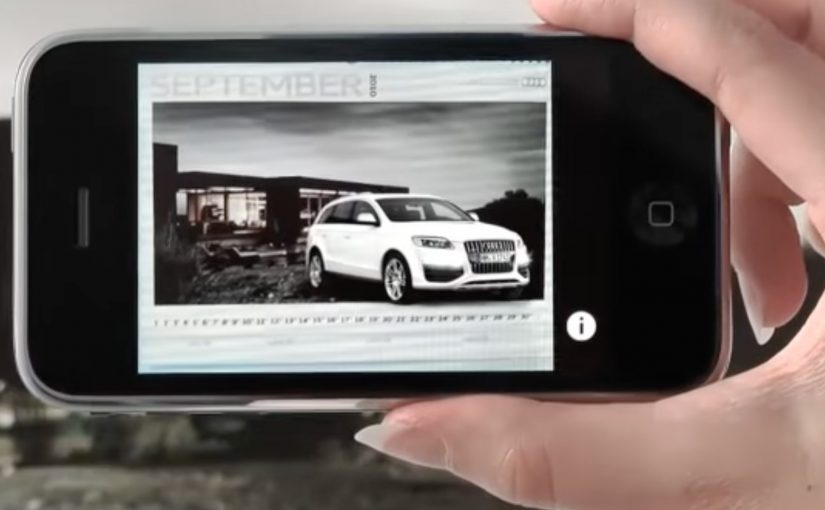
An Audi calendar arrives and it looks almost wrong. Each month is a beautiful landscape, with a deliberate empty space and no car in sight. You open Audi’s iPhone app, point the camera at the page, and the missing piece appears. An Audi A1 fills the blank area in augmented reality, sitting inside the printed scene as if it belongs there.

The idea. A car calendar without cars

Audi takes a familiar format. The premium calendar. Then it removes the expected hero asset. The car. The calendar becomes an invitation to discover, not a static brand object.

How it works. Print as trigger, iPhone as lens

  • The printed calendar pages feature landscapes and intentional negative space.
  • People download and open the dedicated Audi iPhone app.
  • They point the phone’s camera at the calendar page.
  • The app overlays a car into the empty area, turning the page into a live scene.

The interaction is simple, but the effect is surprising because it uses a physical artifact as the interface. The calendar is not just content. It is the marker that activates the experience.

Why this works. A tangible product that earns a second look

This is not augmented reality for the sake of augmented reality. It is a clean integration of print and mobile that rewards curiosity. The calendar builds anticipation with absence, and the app completes the story in the moment you engage.

What to take from it. Designing the reveal

  • Use restraint to create intrigue. Removing the obvious element can be more powerful than showcasing it.
  • Make the physical object the trigger. When the real-world asset is the interface, the digital layer feels earned.
  • Keep the action obvious. Point camera. See result. Low friction beats complex onboarding.
  • Build around a single wow moment. One crisp reveal is often enough to make the experience memorable.

This idea is developed by Neue Digitale / Razorfish Berlin and executed for Audi.


A few fast answers before you act

What is Audi’s augmented reality calendar?
A printed Audi calendar designed to work with an iPhone app, where pointing the phone camera at a page reveals a car in augmented reality.

What is the core creative twist?
It is a car calendar without cars. The car appears only when you view the page through the app.

What role does the calendar page play?
It acts as the trigger. The printed layout and empty space are intentionally designed to be “completed” by the AR overlay.

What makes it effective as a brand experience?
It turns a passive object into an interactive reveal, linking print, mobile, and product desire in one simple action.

What is the transferable pattern for other brands?
Design a physical artifact that creates curiosity, then use mobile to deliver a single high-impact reveal with minimal friction.