
Skittles: Telekinize the Rainbow

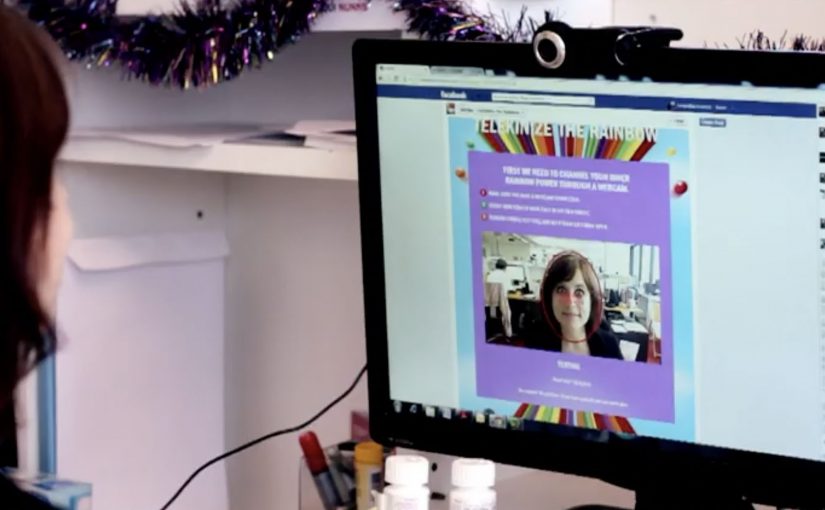
You look at a single Skittle on a white surface, and it starts to move. The moment plays like telekinesis, the illusion that your mind can move an object. It is not a visual trick on a screen. It is a live feed of real Skittles being nudged around in the real world.

Skittles Australia and Clemenger BBDO build this as a Facebook experience because, as the case frames it, only a small minority of fans engage with a brand’s page after liking it. The goal is to make “like” feel like a superpower, not a dead end.

The trick is not mind control. It is eye control

The mechanism is webcam tracking plus a physical rig. Your eye movements, captured via webcam, are translated into commands sent to Wi-Fi-controlled robots attached to Skittles, so the candy moves in response to where you look.

In global consumer brands on social platforms, “engagement” only scales when interaction feels immediate and personal.

The real question is whether your activation turns a passive like into an active loop in under ten seconds.

In social platforms, turning passive likes into active participation usually comes down to one thing. Give people an interaction loop that feels immediate, personal, and worth showing to someone else.

Why it lands

It creates a clean “I need to try this” reaction in seconds. The live camera feed removes skepticism, and the physical motion makes the experience feel bigger than a typical Facebook app. It also bakes in a share-worthy narrative: the fan is not consuming content. The fan is controlling a real object.

Extractable takeaway: If you want engagement rather than reach, stop asking for attention and start granting control. A tiny moment of viewer control, tied to a brand asset, can outperform bigger content drops because the audience feels like the protagonist.

Campaign write-ups report that users spent an average of around four minutes interacting with the experience, and that page growth and app ranking spiked during the run.

What to steal for your next social activation

  • Make the mechanic visible. Live proof beats claims. If the audience can see it is real, they trust it faster.
  • Turn the brand into the interface. Here the “UI” is literally the product. That keeps the experience on-brand without extra messaging.
  • Design for one-person amazement and second-person sharing. The first user is impressed. The second user wants to replicate it.
  • Keep the loop short. Look. Move. React. Repeat. The faster the feedback, the longer people stay.

A few fast answers before you act

What is Telekinize the Rainbow?

A Facebook experience that lets people move real Skittles through eye movements captured by a webcam, with the motion executed by Wi-Fi-controlled robotics.

Is it actually mind control?

No. The “telekinesis” framing is the story. The control signal is eye movement, translated by software into physical movement.

Why is the live webcam feed important?

It proves the effect is happening in real space, which makes the experience feel more magical and more credible than a purely on-screen interaction.

Do you need eye tracking to borrow the pattern?

No. The transferable pattern is a tight input-to-output loop where the audience action clearly changes what they see, fast enough to feel like “power,” not a UI.

What is the main risk in copying this approach?

If setup friction is high or latency is noticeable, the illusion collapses. Experiences built on “power” need instant response to feel real.

Metro Trains Melbourne: Dumb Ways to Die

Accident rates on the Melbourne Metro were rising due to an increase in risky behavior around trains, and a rail safety message was the last thing people wanted to hear.

So McCann Melbourne turned the message people needed to hear into a message people wanted to hear, by embedding it into a song and an accompanying music video. Dumb Ways to Die.

Entertainment-first safety communication

The mechanism is a deliberate format swap. Replace shock tactics and lecturing with an original song, a playful animated world, and a chorus that makes the safety points memorable enough to repeat.

In large urban public-transport systems, the most effective safety communication often feels like entertainment first, with the message carried by repetition and recall rather than warning language.

Why it lands

It works because it respects audience resistance instead of fighting it. The real question is how you make a safety message travel when the audience does not want to hear a safety message at all. For resistant audiences, entertainment-first is the stronger safety strategy because it earns voluntary attention before it asks for behavior change. People who tune out safety ads will still watch and share a catchy video, and the refrain makes the cautionary points stick through rhythm and humor. The legacy write-up reports that the campaign quickly moved beyond advertising into social currency, with very high sharing in its first month.

Extractable takeaway: When your audience actively avoids the topic, make the format shareable enough that people choose to spread it for the entertainment value, then let repetition do the behavior-change work.

The proof of spread

By using entertainment rather than shock tactics, the message is described as transcending advertising to become something people shared. Here is the case video.

What safety communicators can borrow

  • Start with a format people opt into. If attention is the barrier, do not begin with a PSA tone.
  • Write for recall. A chorus and simple phrasing can outperform “important information” copy.
  • Build a visual system. Distinct characters and repeatable scenes make the idea remixable and memorable.
  • Package the case story separately. A dedicated case video helps the idea travel in marketing circles without diluting the original film.

A few fast answers before you act

What is Dumb Ways to Die?

A rail-safety campaign for Metro Trains Melbourne that delivers the safety message through a catchy song and animated music video instead of traditional PSA warnings.

Why use humor for a serious safety topic?

Because the target audience resists conventional safety messaging. A humorous, musical format earns voluntary attention and repeat viewing, which increases recall.

What made it spread so widely?

A simple hook, a memorable chorus, and highly shareable animation that people could pass along as entertainment, with the safety message embedded inside.

What is the case video for?

It explains the strategy and rollout behind the campaign, and it packages results and rationale for marketers and stakeholders.

What is the main risk with “entertainment-first” safety work?

If the humor overwhelms the behavioral point, the audience remembers the joke but not the safety action you want them to change.

Durex Fundawear

If t-shirts can be digitised, then why can’t underwear. Durex Australia has unveiled “Fundawear”, billed as a first-of-its-kind wearable electronic underwear concept that allows touch to be transferred over the internet while maintaining comfort, sexiness and flexibility. The idea is simple. People in long-distance relationships can tease, tickle and tantalise even when apart.

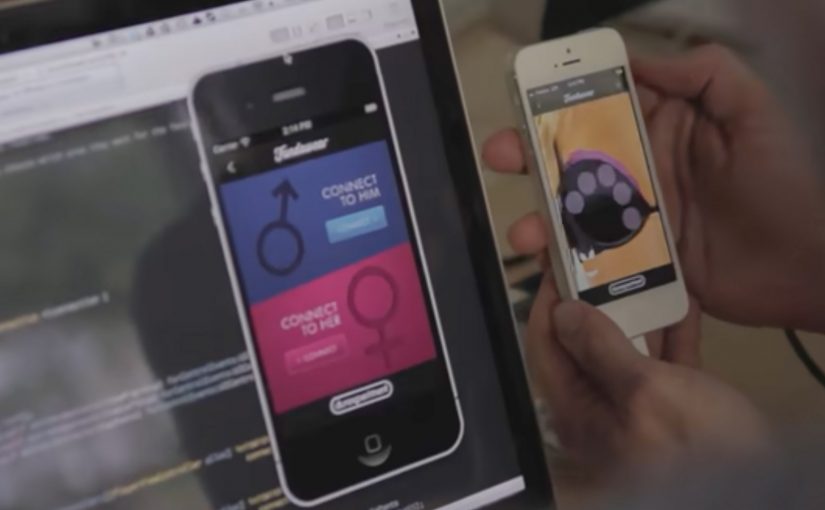
To replicate the nuances of touch, each garment houses touch technology that connects with a real-time server to communicate between touchscreen devices and the garments. Interaction happens through a smartphone interface, translating inputs into sensation on the connected wearable.

A prototype that behaves like a campaign

What makes this work stand out is the choice to launch as an experiment, not a finished product. Fundawear is framed as a prototype, which gives the brand permission to be bold, invite participation, and trigger debate, without pretending the tech is already mainstream.

Extractable takeaway: When a product concept is unfamiliar, framing it as a prototype lowers disbelief and lets curiosity do the distribution work.

The real question is whether people can understand the use case quickly enough to talk about it.

It also shifts the job of the communications. Instead of persuading people that “remote touch” is a good idea, it makes people imagine use cases. That imagination is the marketing engine.

How the technology story earns attention

The campaign leans on a clear mechanism. Touch input on a phone maps to specific zones, then the garment responds, creating a feedback loop, meaning the phone input and garment response feel connected in the same moment rather than as a delayed message.

When wearable technology is explained this clearly, it stops sounding like science fiction and starts sounding like an interface decision. That is when people share it.

In consumer innovation marketing, the leap from novelty to adoption happens when a physical interface makes a digital promise feel immediate, controllable, and consent-led.

Distribution strategy: invite the internet to co-author the idea

Fundawear is described as still in the experimental stage, with no confirmed release date at the time. But Durex uses that uncertainty as a hook. If you provide a creative reply to “How would you use Fundawear with your partner?” at the Durex Facebook page, you might win a free prototype.

That is a smart move. It turns the public into contributors, and it generates word of mouth that carries the concept further than a conventional product launch could.

What to steal if you are launching an unfamiliar product concept

  • Prototype publicly. Experiments can travel faster than “finished” products because people argue, imagine, and remix.
  • Explain the mechanism in one breath. If the audience cannot repeat how it works, they will not share it.
  • Design for participation. A prompt like “how would you use it?” converts curiosity into content.
  • Keep the tone playful, not clinical. For intimate categories, playfulness lowers the barrier to talk about it.

A few fast answers before you act

What is Fundawear, in plain terms?

Fundawear is an experimental wearable concept from Durex Australia. It pairs smart underwear with a smartphone interface so a partner can send touch inputs over the internet in real time.

What kind of technology does it rely on?

It relies on wearable haptics, meaning small actuators in the garment respond to signals from an app. A server connection synchronises inputs between two partners’ devices and garments.

Why launch a prototype instead of waiting for a finished product?

Because a prototype creates permission to experiment, earn press, and test cultural appetite. It also turns uncertainty into participation, which can generate more talk than a polished launch.

What is the biggest brand risk with intimate wearable tech?

Trust. The concept has to feel safe and consent-led, and the communication has to avoid any hint of surveillance or misuse. If trust breaks, the idea becomes a cautionary tale.

What is the core marketing lesson from Fundawear?

When the product is unfamiliar, the first job is not persuasion. It is making the mechanism and the imagined benefit instantly understandable, so people do the distribution for you.