NAB: The Honesty Experiments

NAB: The Honesty Experiments

Australian bank NAB positions Australians as an honest lot, and argues they deserve honest credit cards to match. To bring that promise to life, they conducted a series of “honesty experiments” and published the results on YouTube.

Incorrect Change

Lost Wallet

Leaky Pockets

From a product claim to a public proof loop

The mechanism is a classic credibility builder. A “public proof loop” means turning a claim into a repeatable test, then publishing the outcome so the audience can judge it. Run simple real-world tests where people can choose honesty, film the outcome, then let the audience do the judging rather than the brand doing the telling.

In retail banking categories, trust is built faster through observable behaviour than through promises and price claims.

The real question is whether a trust claim can be converted into something people can judge for themselves.

For trust-starved categories, this is a stronger play than another round of product-feature messaging.

Why it lands

These films work because they invite a low-friction emotional conclusion. People want to believe the best of others, and the experiments are structured to deliver that relief, then attach it to the brand stance. The content is also inherently shareable because it is about character, not about banking mechanics.

Extractable takeaway: If you want to own “trust,” do not describe it. Show a behaviour that audiences can recognise as trust in action, then connect it back to the product promise in one simple line.

Then NAB escalates to “thank you” in real time

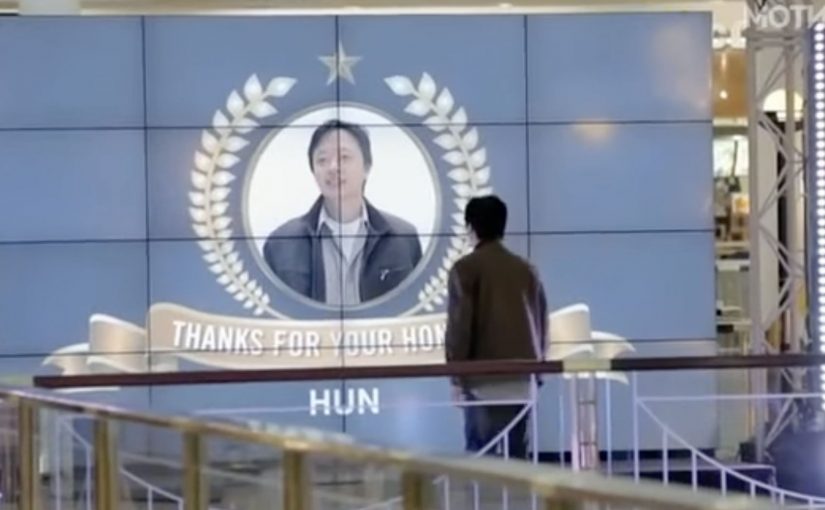
To say thanks in the biggest possible way, NAB followed the experiments with a real-time stunt that thanked honest passers-by immediately after they returned lost objects.

What the second phase adds that video alone cannot

  • Immediate reciprocity. Honesty is met with an instant reward, not abstract praise.
  • A bigger emotional beat. Surprise gratitude creates a stronger memory than “you did the right thing.”
  • Proof at street level. The brand shows up in the moment of integrity, not after the fact.

What to replicate from NAB’s honesty experiments

  • Pick one human truth. “Most people are honest” is clearer than a bundle of values.
  • Design the choice point. The story lives in a single decision. Keep it simple and legible.
  • Let people self-identify. The viewer should be able to imagine themselves in the situation.
  • Add a second act. If phase one proves the belief, phase two can reward it and deepen the brand role.
  • Protect credibility. Be transparent about rules and ensure the reward does not feel staged or selective.

A few fast answers before you act

What are the “honesty experiments” in one sentence?

A set of filmed, real-world tests where strangers can choose to act honestly, used to support NAB’s “honest credit cards” positioning.

Why do social experiments work for trust-based brands?

They replace claims with observable behaviour. Viewers decide what the outcome means, which feels more credible than advertising language.

What does the real-time thank-you stunt add?

It turns the brand from narrator into participant, rewarding honesty immediately and creating a stronger emotional memory.

What is the biggest risk with this format?

Credibility erosion. If viewers suspect manipulation, selective editing, or unclear rules, the trust message can backfire.

What should you measure beyond views?

Brand trust lift, message association with the product, sentiment, share rate, and whether the work changes consideration versus competitors in the same period.
Lynx: Invisible Ad with polarized glasses

Lynx: Invisible Ad with polarized glasses

Last month, McDonald’s in Canada created a billboard that could only be seen in the night with car headlights.

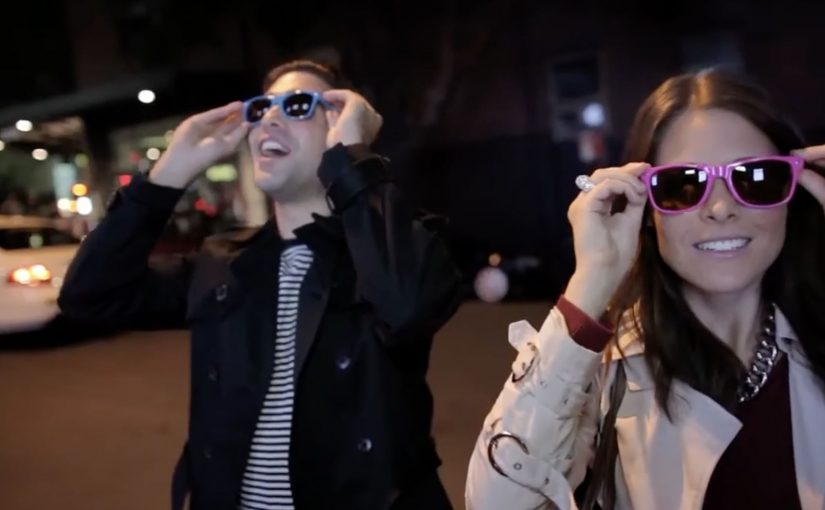
Now Lynx, for its “Unleash the chaos” campaign in Australia, replaces the windows of a house in Sydney with special LCD screens. Sexy hostesses stationed outside hand out polarized sunglasses to passersby, and the glasses suddenly unveil the chaos going on inside the house.

What makes this an “invisible ad”

An invisible ad is a message that is intentionally hidden in plain sight, then revealed only when the audience meets a condition. Here, the condition is wearing polarized lenses, which gate what the screens are able to show.

The result is a street-level experience that looks ordinary to everyone, but becomes explicit and chaotic for the people who opt in by putting on the glasses.

The mechanism: selective visibility creates instant intrigue

The setup is simple and bold. Take an everyday terrace house. Swap its windows for LCD panels. Hand out sunglasses that make the content readable. Suddenly the street becomes a live demo, with viewer control over whether they see it.

Because only people wearing the glasses can see the content, the contrast between “ordinary” and “chaotic” creates instant intrigue and pulls passersby into the demo.

Coverage of the activation describes it as part of the Lynx Anarchy launch, produced as a filmed stunt to capture reactions and extend reach beyond the street.

In consumer marketing, hidden-in-plain-sight stunts work best when the reveal feels like a reward you discovered, not a message delivered at you.

Why it lands: it feels like a secret you earned

Outdoor advertising usually broadcasts. This flips the script. The street stays “clean” until you choose to participate, and that choice makes the reveal feel more personal, more exclusive, and more share-worthy. It also borrows a familiar human impulse. If someone hands you “special glasses”, you want to know what you’re missing without them.

Extractable takeaway: If the audience has to take one small action to unlock the message, the reveal feels earned and sticks longer than a broadcast impression.

The real question is whether your reveal earns attention or merely feels like a trick.

What the brand is buying with this kind of stunt

  • Permissioned attention. People self-select into the experience rather than being interrupted.
  • A built-in talk trigger. The format is easy to explain and retell, even without showing the content.
  • Proof of product personality. The medium embodies the message. Chaos is not only said, it is staged.

Design rules for your next hidden reveal

  • Make the reveal binary. Either you see nothing, or you see everything. Half-reveals feel like malfunctions.
  • Let the audience choose. The opt-in moment (taking the glasses) is what creates commitment.
  • Design for spectators too. Even people who do not opt in should understand that something is happening, and feel curious.
  • Film reactions as a second asset. The live moment is local. The reaction video travels.

A few fast answers before you act

What is a brand “invisible ad”?

It is an ad designed to look blank or ordinary until a specific condition reveals it, such as headlights at night or special glasses in daylight.

What is Lynx doing in the Invisible Ad stunt?

Lynx replaces a house’s windows with screens and hands out polarized sunglasses that reveal hidden content, turning an ordinary street view into a private, chaotic reveal.

Why use polarized sunglasses as the trigger?

Because it creates an opt-in moment. People decide to participate, and that choice makes the reveal feel earned and more memorable.

What is the strategic benefit of hiding the message?

Hiding the message creates curiosity, controls who sees the explicit content, and makes the experience feel like a secret worth sharing.

How do you scale a one-street activation?

By designing it to be filmed, then distributing the reaction footage as the wider campaign asset.

Share a Coke

Share a Coke

Despite healthy brand tracking data, 50% of the teens and young adults in Australia hadn’t enjoyed ‘Coke’ in the previous month alone. Here, “brand tracking” refers to awareness and preference metrics that can look healthy even when recent consumption is slipping.

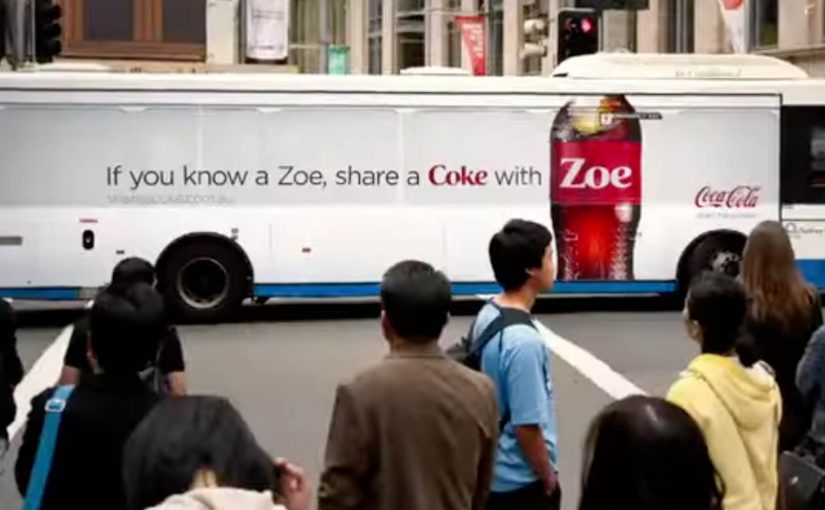
After 125 years of putting the same name on every bottle of ‘Coke’, they decided to do the unthinkable. They printed 150 of the most popular Australian first names on their bottles and then invited all Australians to ‘Share a Coke’ with one another.

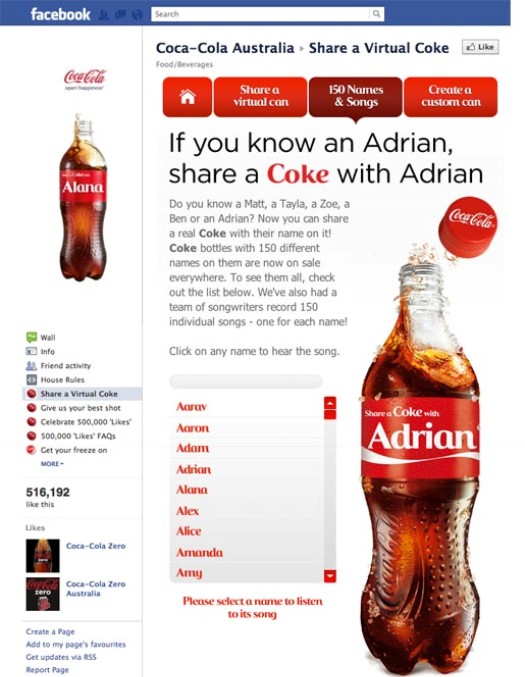
Facebook image showing Coca-Cola promoting the Share a Coke campaign.

The result…

Packaging becomes the conversation

What stands out here is the simplicity. A bottle stops being just a product and becomes a prompt. A name makes it personal. Personal makes it talkable. Talkable makes it shareable.

Because the name turns the pack into a prompt, it triggers talk and sharing without requiring people to learn a new action.

In consumer brands with mass distribution and fragmented media, the pack is one of the most consistent touchpoints, so a pack-level prompt can carry an integrated campaign.

In a world where brands are fighting for attention across channels, this is a reminder that the pack itself can be the media, if it gives people a reason to participate.

Why it works (and why it is more than a label change)

It works because it makes personal relevance visible at the exact moment of choice, and that relevance is what people naturally want to point out and pass along.

Extractable takeaway: If you can make the product itself the trigger for a social action, you reduce friction and get sharing that feels like a natural behaviour, not a forced message.

  • It lowers the barrier to engagement. You don’t need a new behaviour. You just need to spot your name, or someone else’s.
  • It turns purchase into a social act. The “share” is built into the product, not bolted on as a message.
  • It scales personal relevance. The idea is big, but the execution is local. It lives in the names people recognise.
  • It links offline and online naturally. When something feels personal in-store, people are more likely to talk about it beyond the store.

The real question is whether your product can create a social reason to talk at the moment of choice, instead of asking media to do all the persuasion.

When you can bake the “share” into the product experience, packaging-led participation is a more reliable lever than a channel-first campaign plan.

What to take from this for integrated campaigns

  1. Start with a human trigger. A real reason for someone to say: “This is for me”, or “This is for you”.
  2. Make the product do the work. If the core idea is physically present, the campaign holds together across channels.
  3. Design for sharing as a behaviour. Not as a slogan. The easiest shares are the ones that feel natural and immediate.
  4. Keep it legible in one glance. The best integrated ideas can be understood instantly, without explanation.

A few fast answers before you act

What is the “Share a Coke” idea?

It is a packaging-led campaign where Coca-Cola printed popular first names on bottles, then invited people to “Share a Coke” with someone else.

What problem was Coca-Cola trying to solve in Australia?

Despite healthy brand tracking data, 50% of teens and young adults in Australia hadn’t enjoyed ‘Coke’ in the previous month, so the brand aimed to reignite consumption and relevance through conversation.

Why is printing names on bottles strategically interesting?

It makes the product feel personally relevant at the moment of choice. That personal relevance can trigger attention, talk, and sharing without needing complex mechanics.

Is this a “digital campaign” or a “packaging campaign”?

It is both, but it starts with the pack. The packaging is the trigger that can naturally extend into social sharing and broader integrated storytelling.

What is the transferable lesson for other brands?

If you can embed participation into the product experience itself, you reduce friction and increase the odds that people will carry your message across channels for you.