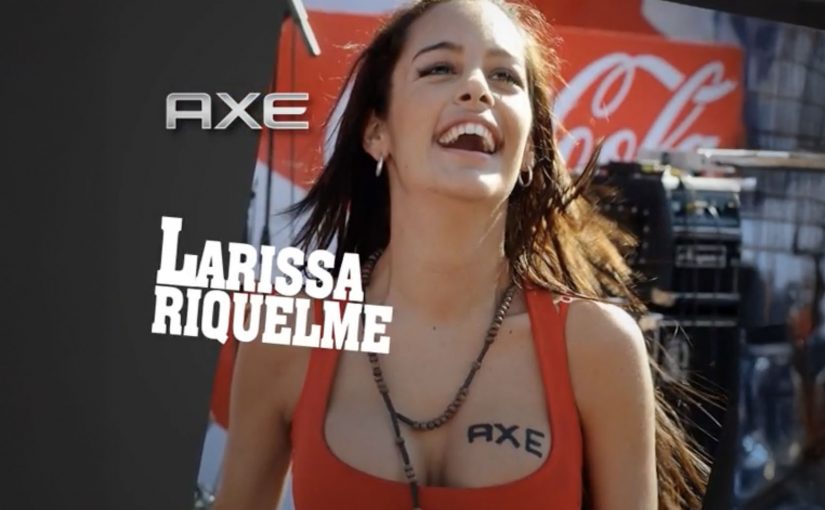
A billboard goes up during the World Cup season and instantly hijacks attention. Not because it is bigger or brighter, but because it deliberately fuses football energy with a provocative visual that people cannot ignore.
During the 2010 Football World Cup, Axe Paraguay faced the challenge of standing out from other brands with a very low budget. Their objective was to create free press about their brand and at the same time get everybody’s attention.
So their agency Biedermann McCann fused what men love the most, soccer and women. They created the “sexiest billboard” which got everybody’s attention and, as described at the time, generated millions of dollars worth of free press.
Why a single billboard can punch above budget
The mechanism is straightforward. Use a culturally overloaded moment, the World Cup, then pick a creative trigger that travels beyond the street. The billboard is not only media. It is a press object designed to be talked about, photographed, and repeated. Because it is built to be photographed and repeated, it turns one paid placement into many retellings.
Extractable takeaway: When budget is tight, design the idea so it leaves the street on its own. Anchor it to a high-attention moment and make the trigger legible enough that people can retell it without extra context.
In event-driven, low-budget marketing, a highly legible outdoor stunt can earn disproportionate coverage when it turns a public moment into a sharable story.
The real question is whether your creative is designed to travel beyond the placement.
What the campaign is really optimizing for
This is not built for persuasion-by-argument. It is built for attention and retellability. By retellability, I mean how easily someone can describe the idea in one sentence without seeing it. The billboard creates a reaction first, then lets the brand hitch a ride on the reaction through earned media and conversation.
Stealable patterns for low-budget breakouts
- Pick one cultural accelerant. Major sports events compress attention. Use that compression.
- Design for “tell a friend”. If people can describe the idea in one sentence, it spreads.
- Build for cameras, not just eyes. If it photographs clearly, it leaves the street faster.
- Separate provocation from confusion. Shock without clarity becomes noise. The idea still needs one obvious link back to the brand.
A few fast answers before you act
What is Axe Paraguay’s “Sexiest Billboard”?
A World Cup-season outdoor stunt designed to stand out on a small budget by combining football culture with a provocative visual so it earns attention and press coverage.
Why is the World Cup context important here?
Because attention is already concentrated. A strong trigger in that window is more likely to be noticed, shared, and picked up by media.
What is the main success metric for this kind of idea?
Earned media and conversation. The billboard is designed to generate coverage and sharing beyond its paid placement.
What is the core creative risk?
Provocation can overshadow the brand. If people remember the stunt but not who did it, the attention is wasted.
How do you adapt the approach without copying the tactic?
Keep the structure. Attach to a cultural moment, build a simple, legible trigger, and design the output so it is easy to photograph and retell.