
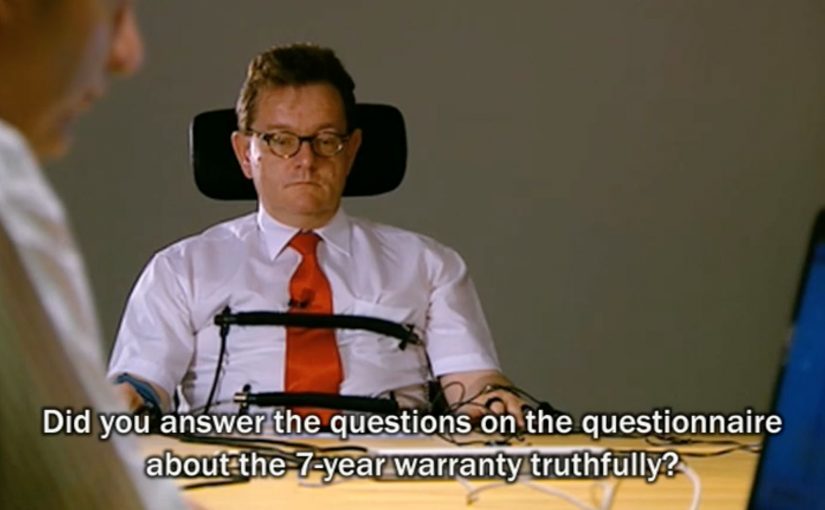
Kia Lie Detector

Kia Lie Detector

Most people in Belgium know that Kia gives a 7-year warranty on all its models. That is a good thing. But a lot of them also think 7 years sounds too good to be true, and that there must be a catch. That is a problem. If people do not believe your advertising message, regular advertising is insufficient.

So LDV United built a campaign designed to prove one simple point. Although it sounds unbelievable, the 7-year warranty is described as 100% true, with no catch.

Proof beats repetition

To prove the warranty was genuine, the campaign used a lie detector. Legal Connections, described as an official lie detector company, hooked up the CEO of Kia Motors to a polygraph. Consumers then asked him questions about the 7-year warranty during a live online session.

In European automotive markets, long warranties are a major purchase heuristic, and credibility becomes the real bottleneck when the claim feels “too good”.

The real question is whether the proof feels harder to fake than the doubt it is meant to kill.

Why the proof lands and spreads

The lie detector was not the whole campaign. It was the anchor. The stunt was communicated through newspaper ads, banners and a press release announcing that an actual CEO would undergo a live lie detector test. That structure is what turns a proof moment into earned media and word of mouth, meaning peer-to-peer sharing both online and offline. Because a polygraph is a culturally understood symbol of truth-testing, it reframed the warranty from “marketing claim” into “something we are willing to be challenged on, live”.

Extractable takeaway: When your promise is extraordinary, use a proof ritual. A proof ritual is a public, simple demonstration that invites challenge and feels hard to fake.

Recognition and reported impact

The work later picked up Cannes Lions recognition, listed as a Direct Bronze Lion for “Lie Detector”.

The campaign’s impact was reported via independent media company Scripta as:

  • Brand recognition: 42% (instead of 32% sector average)
  • Attribution: 73% (instead of 62% sector average)
  • Resulting in an Effectiveness Rating of 31% (instead of 20% sector average)
  • And last but not least: An impressive credibility of 80%

Steal this proof pattern for credibility gaps

A credibility gap claim is a promise people want to believe but suspect has a catch.

  • Identify the credibility gap early. If the promise sounds implausible, spend on proof, not frequency.
  • Choose a proof mechanic people already understand. Polygraph. Lab test. Public demo. Anything that signals “hard to fake”.
  • Make the proof interactive. Live questions beat scripted endorsements when trust is the objective.
  • Package the moment for pickup. Announce it like an event, so press and blogs have a clean story to carry.

A few fast answers before you act

What problem does the Kia lie detector idea solve?

It solves a credibility problem. When a benefit sounds too good to be true, people assume a hidden condition. The campaign is designed to remove that doubt by staging proof in public.

Why use a lie detector in advertising?

A polygraph is a widely understood truth ritual. Even if people do not treat it as perfect science, it signals confidence and willingness to be challenged in front of an audience.

What makes this more than a stunt?

The stunt is structured as a live, interactive Q&A, and it is distributed through paid announcements and PR. That combination turns a single moment into a story that can travel.

When should brands avoid “proof theatre” like this?

Proof theatre is staged proof that looks convincing but does not materially verify the claim. If the claim cannot withstand scrutiny, or if the proof method is likely to be seen as misleading or unsafe, the stunt will backfire. Proof mechanics only work when the underlying promise is clean.

What are better success metrics than views for credibility campaigns?

Measure belief and consideration shifts. Brand trust, message credibility, attribution to the correct benefit, and downstream intent signals are usually more meaningful than raw reach.
Reporters Without Borders: QR Codes That Speak

Reporters Without Borders: QR Codes That Speak

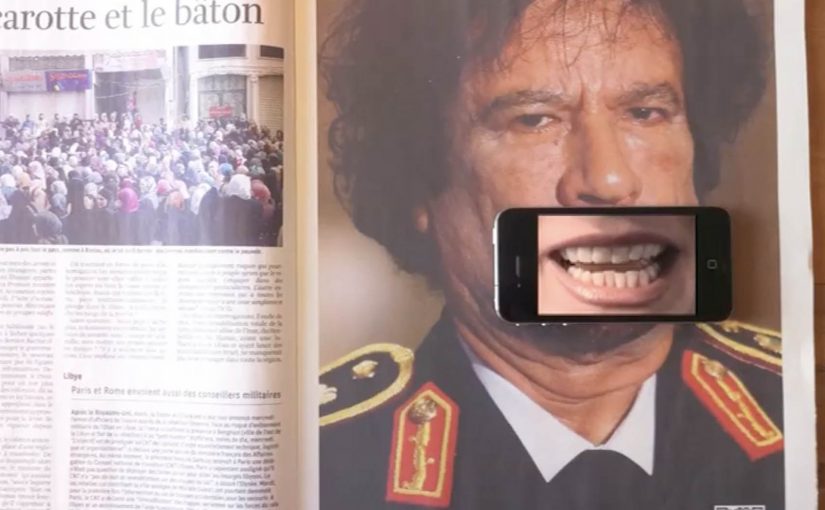
You scan a QR code in a magazine ad, then hold your iPhone over a leader’s mouth. A QR code, short for Quick Response code, is a printed shortcut that opens a mobile destination. The mouth starts talking. But it is not the leader’s voice. It is a journalist explaining what censorship looks like in that country.

Print ads are hitting above their weight lately. Recently, you could test-drive a Volkswagen right inside a print ad, thanks to a special app. Now, QR codes are used to get dictators talking in a set of print ads created by Publicis Brussels for the free-press advocacy group Reporters Without Borders (RWB).

In the ads for RWB you scan the QR code with your iPhone and then place the phone over the leader’s mouth. The mouth starts talking, but it turns out to be the voice of a journalist discussing media censorship in that particular country.

Currently there are Gaddafi, Ahmadinejad and Putin versions.

In public-interest and advocacy communication, this kind of print-to-phone interaction works because it turns a static message into a lived moment of contradiction. The “authoritarian voice” is visually present, but the truth comes from someone who is usually silenced.

How the ad “speaks”

The mechanism is a simple overlay. The printed QR code launches a mobile experience, and the phone screen becomes the animated mouth layer when you align it with the face in the ad.

QR codes act as a bridge from paper to a mobile destination. The ad uses that bridge to deliver audio and motion, without needing the page itself to be electronic.

In advocacy and public-interest communication, print-to-phone interactivity works best when it creates a moment of moral contrast, not a tech demo.

The real question is whether the interaction changes what the message means, or just adds motion.

Why this lands harder than a normal poster

The interaction forces you to participate in the message. You physically place your device over the mouth, so you are complicit in “giving a voice”. Then the reveal flips expectations and reframes the act as a statement about censorship. Because the phone screen becomes the moving mouth layer, the reveal is immediate and hard to dismiss. This is a strong pattern for interactive print: make the overlay carry meaning, not novelty.

Extractable takeaway: If the mobile layer can be removed without changing the message, the interaction is optional. Design the overlay so the meaning only exists when the viewer lines it up and activates it.

What to steal for interactive print

  • Make the overlay do meaning work. The phone is not a gimmick. It is the message delivery device.
  • Engineer a single, clear reveal. The twist needs to land in seconds.
  • Design for alignment and clarity. If the user cannot line it up easily, they quit.
  • Keep the outcome unmistakable. Audio plus a visible mouth movement makes the payoff obvious.

A few fast answers before you act

What is the core idea of these Reporters Without Borders print ads?

They use a QR code and a phone overlay to make a leader’s mouth appear to speak, then reveal a journalist’s voice explaining censorship in that country.

Why use QR codes in a print campaign like this?

QR codes create a fast bridge from paper to mobile audio and motion, which lets print deliver a message that feels alive rather than static.

What makes this more than a tech trick?

The interaction supports the meaning. You “activate” speech, then hear the voice of journalism instead of power, which reinforces the theme of suppressed information.

What are the main execution risks?

Poor alignment, slow loading, or unclear instructions. Any friction can break the moment before the reveal lands.

How can brands apply the pattern without copying the politics?

Use print as the stage and mobile as the moving layer. Make the overlay essential to the message, and build toward one clean, immediate reveal.

Nutricia: Baby Connection

Nutricia: Baby Connection

Young parents all over Belgium rely on Nutricia babyfoods every day. To support mums even before their baby is born, Duval Guillaume helped Nutricia create Baby Connection, an iPhone app designed to get dads more involved in the pregnancy.

Baby Connection works best when you use it as a couple. There is a mum version and a dad version, and everything each parent adds is automatically synced with their partner’s phone. The app can even transform two iPhones into one big screen.

A couples app that turns involvement into habit

The mechanism is simple and deliberate. Split the experience into two roles, then keep both roles in lockstep through syncing. Add a playful physical trick, two phones acting like one screen, to make “doing this together” feel tangible, not just promised.

In Belgian consumer brand building, support tools land best when they reduce friction for both parents and make the dad’s role practical, not symbolic.

Why it lands

This works because it shifts the conversation from “be more involved” to “here is exactly how”. Shared inputs, shared visibility, shared moments. The app design quietly nudges the couple into repeated check-ins, which is where involvement stops being intention and becomes routine.

Extractable takeaway: If you want two people to share responsibility, design the product so both can contribute in small ways, see each other’s contributions instantly, and feel like a team without extra coordination effort.

Launching an app with an experience, not a banner

The real question is how to make shared participation feel real before the baby arrives, not how to advertise another pregnancy app.

To launch Baby Connection, Duval Guillaume backed the app with a campaign designed to be as distinctive as the product itself, and to pull the idea into public conversation beyond the app store listing.

The stronger move is to market the shared behaviour the product enables, not just the app itself.

What pregnancy-support brands can borrow

  • Design for the couple, not the individual. Two roles, one shared narrative.
  • Make syncing the default. Shared visibility is the involvement mechanic.
  • Add one physical “together” moment. A simple device interaction can signal partnership better than copy.
  • Launch the product idea, not only the product. If the behaviour change is the point, market the behaviour.

A few fast answers before you act

What is Nutricia Baby Connection?

A paired iPhone app for expectant couples, with separate mum and dad versions that sync pregnancy updates and activities between both phones.

What is the core mechanism?

Two-role design plus automatic syncing, so both parents can add and see information without manual coordination.

Why does the “two iPhones as one screen” idea matter?

It turns a digital feature into a physical couple moment, reinforcing that pregnancy planning is shared, not solo.

What is the business intent behind this kind of app?

To support and deepen trust with parents before birth, by providing a practical tool that keeps the brand present in daily routines.

What is the most reusable lesson here?

If you want involvement from a second person, make contribution easy, feedback immediate, and shared progress visible.