
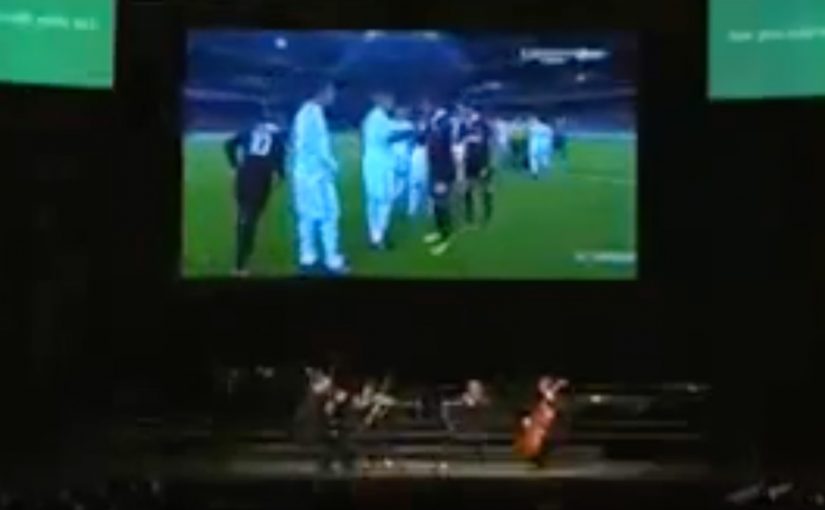
Heineken Italy Activation

One of the most sacred moments for a lot of guys is watching football with friends. But as time goes by, that moment is increasingly at risk. So Heineken, with the help of ad agency JWT Italy, decided to remind their audience of what is at stake, right on the evening of a UEFA Champions League match: Real Madrid vs AC Milan.

A prank built around a real tension

The craft here is that Heineken does not try to “own football” with another sponsor message. It stages a situation that dramatizes the threat to the ritual, then resolves it in a way that feels like a reward for fans.

How the activation works

In simple terms, this is an activation. That is an in-person experience designed to trigger conversation, participation, and earned sharing, not just impressions.

The setup plays on a familiar dynamic. Partners and friends pull football fans away from the match with an alternative plan, then the brand flips the evening by revealing the game and turning the “loss” into a surprise watch party moment.

In European football culture, match nights are one of the last reliably shared rituals. Brands that win here do it by protecting the ritual, not interrupting it.

Why it lands

This works because it is built on empathy. It starts with a truth about modern life and competing plans, then turns the brand into the friend who restores the moment. It is entertainment with a clear social payoff, not entertainment for its own sake. The real question is whether your brand can credibly protect the ritual instead of borrowing its attention.

Extractable takeaway: If you can turn a threatened shared moment into a felt relief, the brand earns a role people want to talk about, not just a logo people saw.

A useful way to phrase the mechanism is this. If you can make people feel you defended their time with their friends, they will remember you differently than a logo on a perimeter board.

Business intent: earn affinity, then earn retell

Heineken is not just chasing attention. It is buying a story that people want to retell the next day. That story carries the positioning in a way a standard spot cannot. Heineken. Made to entertain.

Steal this for ritual-protecting activations

  • Start with a threatened ritual. If the audience feels a real loss, the payoff lands harder.
  • Make the brand the rescuer, not the interrupter. The reveal should feel like relief, not a sales pitch.
  • Design for retelling. If a friend cannot explain it in 20 seconds, it will not travel.
  • Let the product stay in the background. The memory is the asset. The label is just the signature.

A few fast answers before you act

What is an “activation” in marketing terms?

An activation is a designed experience, often live or in the real world, that drives participation and sharing. Its output is conversation and earned media, not only paid reach.

Why do ritual-based activations work so well?

Because rituals are emotionally protected. If a brand can credibly defend a ritual, it earns affinity that is hard to replicate with standard advertising.

What is the core mechanism in this Heineken example?

Create a credible threat to a valued moment, then flip it into a surprise payoff where the brand is the enabler of the restored experience.

What needs to be true for a prank activation to feel positive?

The audience must feel safe and rewarded at the end. The reveal has to resolve the tension quickly, and the outcome must be better than what they expected.

How do you measure success for this kind of work?

Look for retell signals and intent signals. Retell signals are evidence people repeat the story to others. Intent signals are evidence people take a next step, like searching, visiting, or asking where to buy.
Puma: HardChorus for Valentine’s Match Day

When Valentine’s Day lands on match day

This year 14 February, Valentine’s Day, fell on a Sunday. For men everywhere this presented a dilemma. Love or football. Atletico Madrid vs Barcelona, Manchester City vs Liverpool, Napoli vs Inter, or romance with a loved one?

A love song delivered like a terrace chant

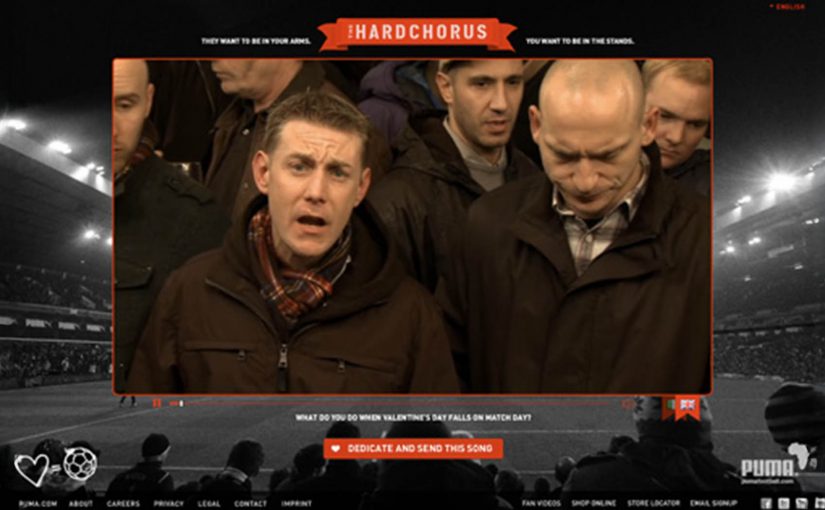
Puma recognized this dilemma as “They want to be in your arms. You want to be in the stands”, and so with Droga5 created the Puma HardChorus.

A crowd of football supporting men, assembled in a pub to sing Savage Garden’s Truly Madly Deeply, which then football fans could send to their loved ones while enjoying the game. An Italian version was also created where a similar group sang Umberto Tozzi’s 1977 hit Ti Amo.

Puma HardChorus English version:

Puma HardChorus Italian version:

In European football culture, match day is a ritual with its own language, loyalty, and emotion.

Why it works: it turns the conflict into a gesture

The genius is the tone swap. It takes the toughest-coded environment in the brief and makes it do something unexpectedly tender. That contrast creates surprise, and surprise creates shareability. It also gives the viewer control over the trade-off. You are not choosing between football and your partner. You are converting match-day energy into a message that says, “I’m here, I’m thinking of you, and yes, I’m still going to the game”.

Extractable takeaway: If a moment forces a binary choice, design a small, sendable action that turns the tension into a gesture, so the audience can keep what they love without neglecting who they love.

What Puma is really selling in the background

This is not about listing product benefits. It is about aligning the brand with a lived tension and resolving it in a way that feels culturally fluent. The real question is whether you can convert a culturally loaded trade-off into a message people are happy to send. This is a smart way to earn brand warmth without asking fans to abandon the game. Puma borrows the credibility of the stands, then uses it to deliver romance without embarrassment.

Steal the pattern: two audiences, one moment

  • Name the real conflict. This works because the tension is true, not manufactured.
  • Use a familiar cultural code. Stadium chanting is instantly recognisable and instantly readable.
  • Flip the code without mocking it. The humour is in the contrast, not in making fans look stupid.
  • Make it easy to pass along. If the output is meant to be sent, it needs to stand on its own.

A few fast answers before you act

What is Puma HardChorus?

A Valentine’s match-day idea where football supporters sing romantic songs like stadium chants, which fans can send to their loved ones while they watch the game.

What is the core mechanism in one line?

Turn terrace energy into a love message, then make it easy to share directly with the person who feels “second place” to football.

Why does the idea feel funny and effective?

Because it flips a tough-coded cultural setting into a tender gesture. The contrast creates surprise, and surprise creates shareability.

What is the audience “problem” it solves?

It resolves a real conflict between two priorities by converting match-day behaviour into a signal of care, rather than forcing a binary choice.

What is the most transferable takeaway?

If you have two audiences competing for the same moment, design a simple action that transforms the conflict into a gesture one person can send to the other.

Coca-Cola: Where Will Happiness Strike Next

A vending machine that behaved like a brand promise

The simplest activations often travel the farthest when the “idea” is visible in one glance. Coca-Cola’s Happiness Machine is a clean example of that kind of instantly understood storytelling.

A Coca-Cola vending machine was transformed into a happiness machine that delivered “doses” of happiness by dispensing more than people expected from a normal purchase.

How the Happiness Machine mechanism worked

The mechanism was a familiar object with an unexpected behavior.

A vending machine is supposed to be transactional. Insert money, get a product. By breaking that script and delivering more than expected, the machine turned an everyday moment into a surprise experience that people immediately wanted to share.

The physical interface did the heavy lifting. No explanation was required because the “before versus after” was obvious in real time.

In global FMCG organizations, activations scale faster when a bystander can understand the payoff in three seconds.

Why the surprise felt contagious

Surprise creates attention, but generosity creates warmth. The experience worked because it did not feel like a trick. It felt like a gift. That distinction matters.

Extractable takeaway: Brands should pair a surprise twist with generosity so sharing feels like celebrating people, not exposing them.

People are happy to share content when it makes them look human, not gullible.

And because the moment happened in public, reactions became social proof. Social proof here means other people’s visible reactions validating that the moment is worth paying attention to.

The business intent behind “doses” of happiness

The intent was to make Coca-Cola’s “happiness” positioning tangible in a way advertising rarely can.

The real question is whether your brand promise can be experienced in public without anyone needing a caption.

Instead of describing a feeling, the brand staged it. The vending machine became a repeatable format that produced real reactions. Those reactions became content, and that content extended the experience far beyond the original location.

Stealable moves from the Happiness Machine

  • Use a familiar object. If people understand the baseline instantly, the twist lands faster.
  • Break a script with generosity. “More than expected” creates goodwill and shareability.
  • Design for public reaction. The audience is not only the participant. It is everyone watching.
  • Make the brand promise physical. If your positioning is emotional, create a moment people can feel, not just read.

A few fast answers before you act

What is the Happiness Machine, in one sentence?

A normal Coca-Cola vending machine behaves unexpectedly by giving people more than they paid for, creating a gift moment instead of a transaction.

How does the mechanism work?

Use a familiar object. Break the expected script. Deliver an instant, legible payoff. Let public reactions create social proof and distribution.

Why does this kind of surprise travel so well?

Because the story structure is clean. Normal situation. Unexpected twist. Human reaction. That sequence is easy to capture and easy to share.

What business intent does this serve?

It makes the “happiness” positioning tangible. Instead of describing a feeling, the brand stages a moment people can experience and witness.

What can brands steal from this execution?

Keep the setup simple, make the payoff instantly understandable, and design for spectators as much as participants. The crowd is part of the creative.

What should you measure if you copy this pattern?

In-the-moment attention and dwell time, organic capture and shares, sentiment, and recall. Also track whether people retell the action, not just the logo.