
KLM: Economy Comfort

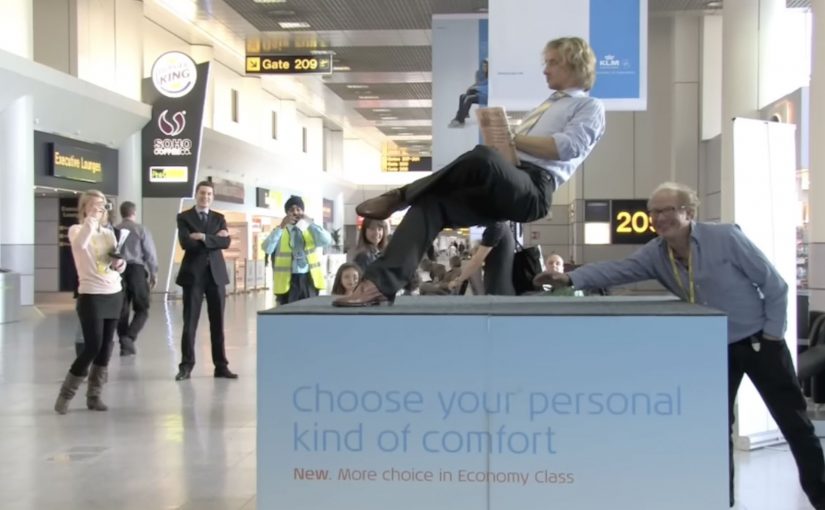
Dutch ad agency Rapp Amstelveen has magician Ramana appear in a European airport, performing his levitation trick to advertise KLM’s comfortable Economy Comfort seats.

A comfort claim made physical

The execution picks a familiar magic trope. Levitation. And places it in a high-friction environment where comfort actually matters. Airports. Waiting. Stress. The stunt is easy to understand even without copy, and the metaphor does the selling: this seat makes the journey feel lighter.

How the mechanism earns attention

Mechanically, it works because it is a live interruption, meaning a real-world moment people witness in person, that behaves like entertainment first and advertising second. People stop because something unusual is happening, then the brand message arrives as the explanation for the spectacle.

In travel and airline marketing, making an abstract benefit feel tangible is often more persuasive than repeating feature lists.

In European travel brands, context-led demonstrations often outperform abstract comfort claims.

Why it lands in an airport context

The location is the multiplier. In an airport, audiences are already thinking about space, fatigue, and the next few hours of their life. A “comfort” message is not a concept. It is an immediate desire. That makes the metaphor feel relevant rather than random.

Extractable takeaway: When the promise is comfort, place the proof where discomfort is already top of mind, so the message lands as a relief, not a claim.

What KLM is really buying with a stunt like this

Beyond awareness, the intent is memorability for a paid upgrade. Economy Comfort is the kind of product that can disappear into pricing tables. A public demonstration gives it a story. The real question is whether your upgrade has a story people will repeat after they leave the airport. And stories travel further than seat specs.

Steal this move for paid upgrades

  • Use a single, legible metaphor. If the audience can “get it” in one second, you win the next ten.
  • Stage it where the benefit is felt. Context turns a claim into a reminder of a real pain point.
  • Let entertainment open the door. Make the first moment about curiosity. Make the second moment about the brand.
  • Turn a feature into a story. Especially for upgrades and add-ons that otherwise live in fine print.

A few fast answers before you act

What is the core idea behind KLM Economy Comfort?

A live levitation stunt in an airport used as a physical metaphor for a more comfortable flight experience.

Why use a magician for a seat upgrade?

Because comfort is hard to “prove” in an ad. A simple spectacle makes the promise feel immediate and memorable.

What role does the airport setting play?

It is where people are already primed to care about comfort, waiting, and travel fatigue. The message meets them at peak relevance.

What is the transferable lesson?

When your benefit is abstract, demonstrate it with a single visual metaphor, in the environment where the benefit matters most.

How can you adapt this if you cannot do a live stunt?

Use a single visual metaphor you can demonstrate in the place where the benefit is felt, then let the brand message arrive as the explanation.
Andes Beer: The Teletransporter

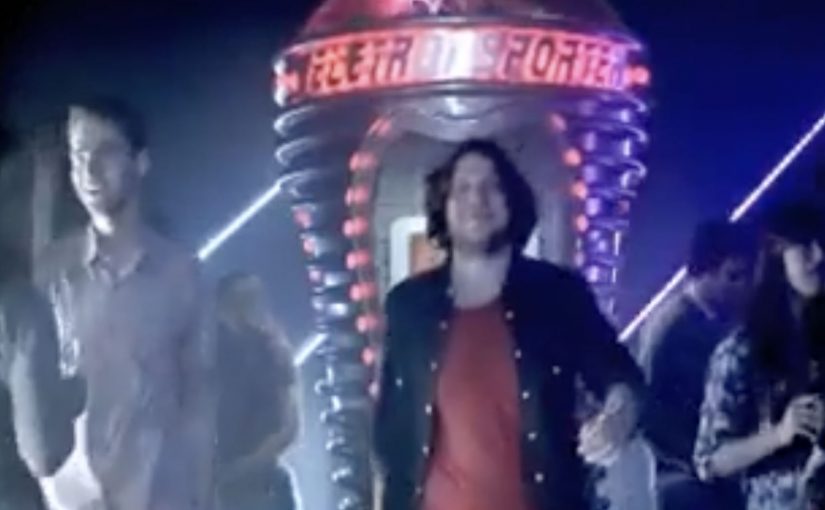
In order to get more men to the bars to drink beer, Andes, the leading beer in Mendoza, Argentina, goes ahead and creates the “Teletransporter”. It is a soundproof booth inside a bar that plays selectable ambient sound effects so a caller hears a believable environment.

The promise is cheeky. Men can stay out longer with friends without triggering the usual “where are you” friction at home.

A booth that lets you be “out” without leaving the bar

The mechanism is a soundproof booth placed inside bars. Step in when the phone rings, pick a believable background, and let the audio do the convincing. Traffic. Office ambience. Family situations. Anything that sounds like you are somewhere other than a bar.

In consumer beer marketing, the fastest path to more consumption is often removing a social friction that makes people leave early.

Why it lands, even with the obvious moral wobble

The idea works because it is built on a truth the audience recognizes instantly, and then turns that truth into a physical product-like solution. The “invention” format makes it feel playful rather than preachy, and the booth makes the benefit tangible.

Extractable takeaway: If your category depends on time spent in a context, design an intervention that reduces the one reason people exit early. Then turn that intervention into a visible, demo-able object so the story spreads without explanation.

The real question is whether you can turn a taboo insight into a playful, tangible demo without making the audience feel judged.

Brands should treat deception as the punchline, not the instruction, and walk away if the work cannot stay in obvious exaggeration.

That said, the premise depends on deception, and the tone matters. The execution frames it as a comic release valve rather than advice, which keeps the work in “bar joke” territory instead of “relationship handbook” territory.

How to borrow the Teletransporter move

The teletransporter is not only a film idea. It is a bar-side utility that creates a reason to stay for “one more,” and a reason to talk about Andes after the night ends.

  • Target the exit trigger. Identify the one social friction that makes people leave early, then design the smallest intervention that reduces it.
  • Make the benefit tangible. Turn the intervention into a visible, demo-able object in the venue so the story spreads without explanation.
  • Police the tone. Keep it firmly in playful exaggeration, or it can read as mean, misogynistic, or genuinely encouraging dishonesty.

A few fast answers before you act

What is the Andes Teletransporter?

It is a soundproof booth installed in bars that plays selectable ambient sound effects so callers hear a believable environment, making it easier for someone to take a call and claim they are not at the bar.

Why does this count as experiential marketing?

Because the core benefit is delivered through a real object in a real venue. The film is the amplification. The booth is the experience.

What is the key mechanism that makes it spread?

Instant retellability plus demonstration. People can explain it in one line, and the booth can be tried and recorded on the spot.

What makes the Teletransporter feel like a “product”?

It packages a familiar tension into a usable utility in the venue. A named object with a clear function is easier to try, film, and retell than a one-off joke.

What is the biggest brand risk in ideas like this?

Tone. If it feels mean, misogynistic, or genuinely encouraging dishonesty, it can backfire. The execution needs to stay firmly in playful exaggeration.