
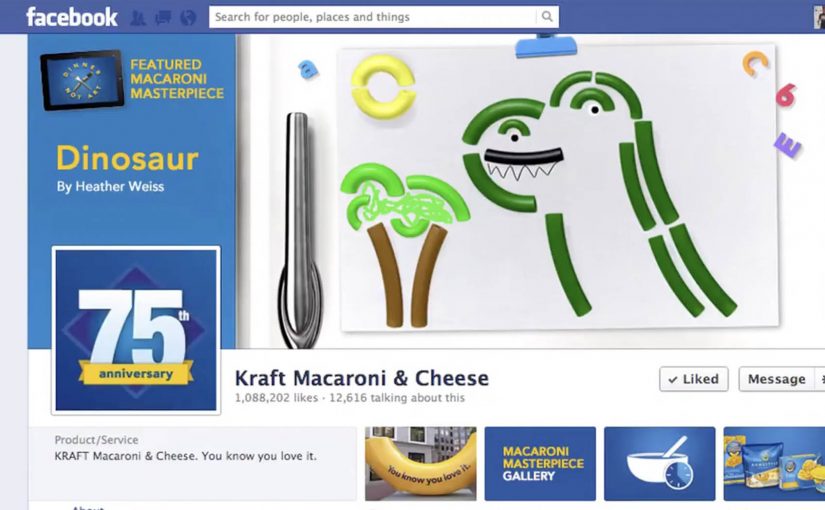
Kraft Mac & Cheese: Dinner, Not Art iPad App

Kids the world over use Kraft’s macaroni noodles to create macaroni art. To stop wastage of its noodles, Kraft along with ad agency CP+B came up with an iPad app that allowed kids to create digital macaroni art.

The special ‘Dinner, Not Art’ app also donated 10 noodles to ‘Feeding America’ for every noodle used in the kids digital art, capped at 110 million noodles. The donation program is said to run till 31.12.2012. So if you would like to participate then head over to www.DinnerNotArt.com.

When “waste” becomes a UI problem

The cultural truth is simple. Kids love gluing macaroni to paper, and the brand ends up underwriting a craft habit that has nothing to do with dinner. Dinner, Not Art flips that behavior into a digital substitute, while keeping the kid-driven creativity intact.

The mechanics behind Dinner, Not Art

The app recreates macaroni art as a touch-first canvas. Kids place noodles, shape the picture, and finish a piece without using a single real noodle.

That substitution works because it preserves the same make-and-place ritual for the child while removing the product waste that makes the original behavior frustrating for parents.

The participation loop is quantified. Each digital noodle used is described as triggering a real-noodle donation to Feeding America, with a stated cap of 110 million noodles, and a program end date described as 31.12.2012.

In global FMCG organizations, utility-style brand apps work best when the interaction directly expresses the brand’s point of view, and produces a measurable counter in the real world.

Why this lands with parents and kids

The line “Dinner, Not Art” works because it is a gentle reprimand wrapped in play. Kids still get to make something. Parents get a reason to say “yes” without the cleanup and the waste, and the brand gets to reframe its product as food, not craft material.

Extractable takeaway: If you are trying to stop a behavior, do not only scold it. Offer a substitute that preserves the fun, then attach a visible benefit to every use.

What Kraft is really buying with this

The real question is whether a food brand can redirect a familiar household behavior without stripping out the fun that made it popular in the first place.

This is brand positioning with a conversion path. It reinforces that the product belongs on the table, creates positive family-time association, and uses the donation mechanic to make engagement feel purposeful rather than promotional.

What brand teams can borrow from Dinner, Not Art

  • Replace the waste, not the impulse. Keep the same creative behavior, move it to a medium that does not consume product.
  • Make the counter tangible. Tie each action to a simple unit that people instantly understand, like noodles donated per noodle used.
  • Cap with intention. A cap can protect budgets while still sounding meaningful, as long as the unit story stays clear.
  • Use a line that can parent-proof the idea. If the tagline helps a parent justify participation, adoption gets easier.

A few fast answers before you act

What is the Dinner, Not Art app?

It is an iPad app from Kraft and CP+B that lets kids create digital macaroni art, positioned as a way to avoid wasting real macaroni noodles on crafts.

How does the donation mechanic work?

The campaign is described as donating 10 real noodles to Feeding America for every digital noodle used in a child’s artwork, with a stated cap of 110 million noodles.

Why does this tactic fit the Kraft Mac & Cheese category?

Because it tackles a real behavior linked to the product, while reinforcing the intended usage. The experience says “this belongs at dinner,” without killing the creativity kids want.

What makes this more than a donation promotion?

It changes a product-adjacent behavior, makes the benefit visible per action, and ties the brand message to how the experience actually works.

What should other brands copy from this pattern?

Pick one wasteful or off-brand usage behavior, create a satisfying digital substitute, and connect every interaction to a simple, counted real-world outcome.
Kalles Kaviar: Egg Timer iPhone App

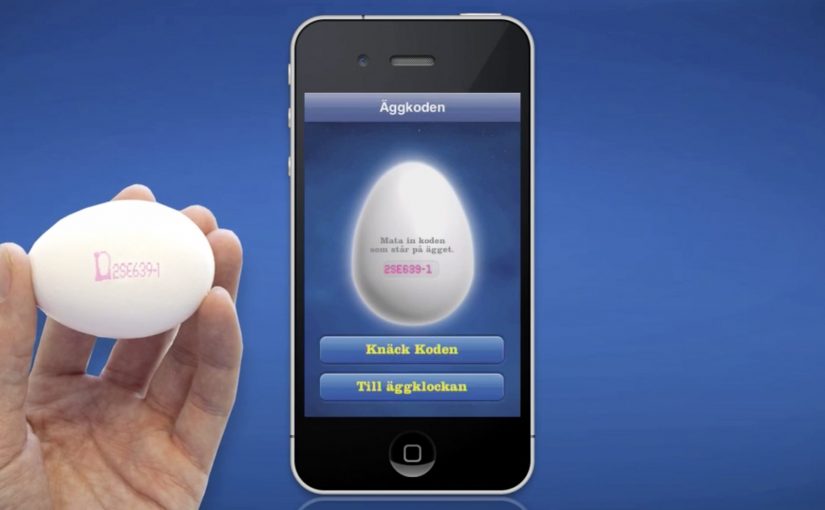
This egg timer iPhone app was created by CP+B for Swedish sandwich spread Kalles Kaviar.

The idea behind the app is to help users boil the perfect egg. It goes further than a simple countdown. It accounts for variables like egg size and how you like it cooked, and it even builds an iTunes playlist where the end of the music means your egg is ready.

The campaign is described as a hit with caviar and egg lovers. It reportedly passed 53,000 unique iPhone downloads and reached number three in Sweden’s iTunes list of the most downloaded free apps.

A breakfast brand that ships something useful

The clever move here is the product logic. Kalles is frequently eaten with sliced boiled egg, so the brand does not start by shouting about taste. It starts by making the egg outcome easier to get right, which makes the pairing more likely to happen again.

How the app turns boiling into a timed soundtrack

  • Input choices. The user selects preferences like softness, and the app adjusts timing accordingly.
  • Playlist as timer. Instead of watching the clock, you listen. When the playlist ends, the egg is done.
  • Extra detail for the obsessed. The experience is described as accounting for factors like altitude, and in some write-ups it is also credited with letting users enter the code printed on Swedish eggs to trace the farm.

In FMCG breakfast categories, small utility tools can turn a habitual pairing into a repeatable ritual and a sales lever.

Why it lands

It respects the moment. People boil eggs while distracted, usually in the morning, and they want confidence without effort. The playlist mechanic is memorable because it is a sensory shortcut, and it also turns waiting time into entertainment.

Extractable takeaway: If your product is most often consumed in a “pairing,” build utility around the pairing step, not around the product claim. Help the ritual succeed, and the product sells itself inside that ritual.

What it is really trying to grow

The real question is whether the utility increases the frequency of the Kalles-plus-egg pairing, not whether the app feels clever.

This is not primarily an “app idea.” It is a demand-shaping idea. By “demand-shaping,” I mean shifting how often the adjacent habit happens, not just which brand wins when it does. If more people boil eggs more often, Kalles has more occasions to be squeezed onto the table. Some coverage also credits the work with lifting egg sales in Sweden, which is a neat reminder that expanding the adjacent habit can be bigger than fighting for share in the core category.

Steal the pairing-first utility play

  • Attach utility to the highest-friction step. Fix the thing people get wrong or avoid.
  • Make the mechanic feel inevitable. A playlist that lasts exactly as long as boiling time is easy to explain and easy to trust.
  • Design for the real context. Morning routines reward hands-free, glance-free interaction.
  • Use delight as reinforcement, not distraction. The music is not decoration. It is the timer.

A few fast answers before you act

What is the Kalles Egg Timer app in one line?

A branded iPhone egg timer that uses your inputs to calculate boiling time and plays a music playlist that ends exactly when the egg is ready.

Why use a playlist instead of a normal countdown?

Because it reduces the need to watch the screen. The soundtrack becomes a passive, low-effort signal that fits cooking behaviour.

What brand problem does this solve?

It makes the product pairing easier to repeat. If the egg step becomes more reliable, the Kalles plus egg habit becomes more frequent.

What makes a branded utility app worth downloading?

It must do a real job better than a generic alternative, and it must fit naturally into a routine people already have.

What should you measure if you run a similar utility idea?

Downloads are not enough. Track repeat usage, time-to-task success, how often the utility is used per week, and whether it correlates with increased occasions for the core product.

Burger King: The Whopper Lust Challenge

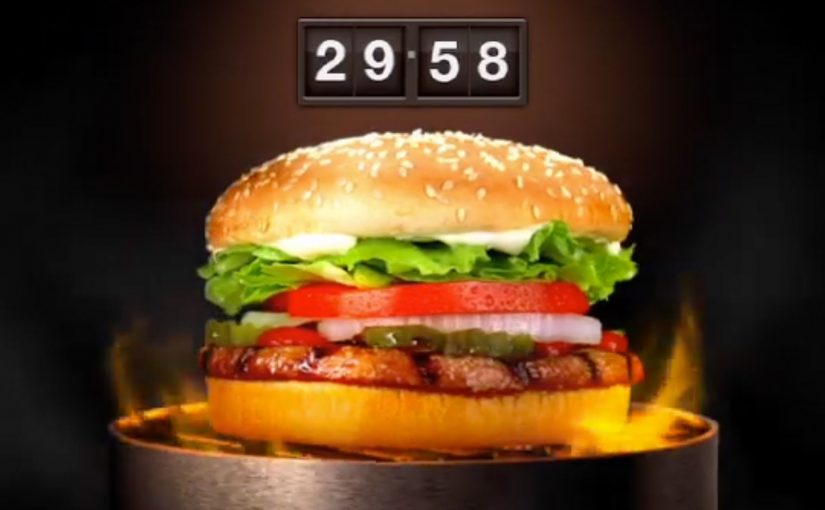
Stare at a picture of a Whopper long enough and you win one. That’s the premise of an interactive TV campaign from Burger King. What looks like a never-ending ad is actually a dedicated TV channel on DirecTV channel 111, built around a spinning flame-grilled burger and a timer.

To win, you tune in and activate the Whopper Lust challenge. A five-minute countdown starts, and you have to keep watching the rotating Whopper for the full duration. Make it to five minutes and you earn one free burger. Keep going for another ten and you earn two. Keep going and the rewards scale. The longer you last, the more you unlock.

The catch is that the channel occasionally prompts you to hit buttons on your remote. Miss one and the clock resets, so you lose the reward you were building toward. Complete the challenge and you can claim the free burger directly on the TV.

How the mechanic turns attention into currency

This is “watch time” treated like a loyalty program. Here, “watch time” means the viewer’s sustained, verified attention, not just a channel left on in the background. The spinning Whopper is deliberately hypnotic, the timer makes the commitment explicit, and the remote prompts prevent passive cheating. It is simple, but it forces real engagement rather than background viewing.

That works because the timer defines the commitment, the remote prompts verify attention, and the visible progress makes the reward feel earned rather than handed out.

In US quick-service marketing, converting a passive channel into a participation loop can buy disproportionate attention without buying proportional media.

Why this lands

It works because it is a dare, not a discount. The reward feels earned, and the friction is oddly satisfying because it creates tension. Will you slip and reset. The interaction also turns a solitary act. Watching TV. Into a game you can talk about immediately.

Extractable takeaway: If you want people to stay with a message, make the “cost” a clear, timed commitment and add periodic interaction checks, so attention becomes an active choice rather than a passive exposure.

What Burger King is really optimizing

This is not just a giveaway. It is a retention play. The real question is how to turn passive media time into a branded challenge people willingly stay with. The channel trains repeat viewing, creates a habit loop, and attaches the brand to a measurable “I lasted” story. Reported campaign figures describe large volumes of burgers given away and large volumes of watch minutes generated over the week.

What to steal from attention-for-reward mechanics

  • Make the rule instantly legible. “Watch X minutes. Win Y.” is frictionless to understand.
  • Prevent passive participation. Add simple interaction prompts to keep it honest.
  • Let rewards compound. Escalation keeps people in the loop longer than a single prize.
  • Turn viewing into a game. A timer and resets create stakes without complex tech.

A few fast answers before you act

What is the Whopper Lust Challenge?

It’s an interactive TV activation where viewers watch a dedicated Burger King channel and earn free Whoppers based on how long they stay engaged.

How do you win a free Whopper?

You activate the challenge, watch the spinning Whopper for five minutes, and respond correctly to occasional remote-control prompts so the timer does not reset.

Why add remote button prompts?

To ensure people are actually watching and interacting, not leaving the channel on in the background.

What makes this different from a normal TV ad?

The ad is the channel, and the viewer is part of the mechanic. Time and interaction directly determine the reward.

What’s the main risk with this format?

If the interaction prompts feel unfair, too frequent, or glitchy, frustration overwhelms the fun and people drop out.