
Air Canada: Gift of Home for the Holidays

It’s that time of the year again. This is my last and very Christmassy post for the year.

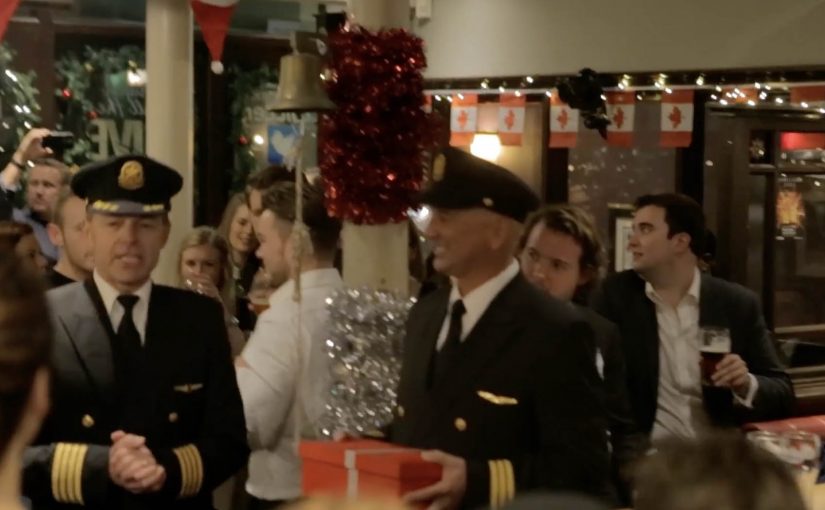
Since Christmas is the season of giving, Air Canada decided to spread a little love to unsuspecting Canadians at a local bar in London. Two Air Canada pilots talked to several Canadians about how they would not make it home this holiday season, and then announced they would be giving everyone in the bar a very special gift.

What happened next will make you wish you were there for this moment.

How the surprise is staged

The setup is intentionally low-key. Start with a real conversation in a normal place, then pivot to an unexpected announcement that turns empathy into action. The bar setting does the work of making it feel unproduced, and the pilots do the work of making it feel credible. That combination matters because low production cues reduce skepticism and make the reveal feel earned rather than engineered.

In travel brands, “getting home for the holidays” is one of the few emotional promises that translates across cultures without explanation.

Why this lands

This works because the tension is familiar and the payoff is immediate. You can feel the disappointment of not getting home, and you can feel the release when the gift arrives. The brand is not explaining values. It is demonstrating them through a human moment that people recognise as real. The real question is whether the emotion feels earned by the brand’s actual role. It does, because helping people get home is the airline promise in its most human form.

Extractable takeaway: If you want an emotional story to travel, start with a universally understood problem, keep the setup believable, and make the brand’s role an enabling action rather than a slogan.

What travel brands can borrow

  • Use a natural setting. Familiar environments lower skepticism fast.
  • Make the “turn” simple. Conversation, reveal, gift. No complicated mechanics.
  • Let real people carry the scene. Authentic reactions beat scripted lines.
  • Anchor to a seasonal truth. Holidays come with shared emotional stakes that do not need heavy copy.

Until 2015. Ramble over and out.


A few fast answers before you act

What is the core idea of this Air Canada holiday activation?

A surprise moment in a London bar where Air Canada pilots speak with Canadians about not making it home for the holidays, then reveal a special gift.

Why does the bar setting matter?

It makes the interaction feel everyday and believable, which strengthens the emotional payoff when the surprise lands.

What is the campaign really selling?

More than routes or fares, it sells reassurance. The feeling that the airline helps you get to the people that matter.

What is the transferable pattern for other brands?

Build a simple, credible setup around a universal tension, then resolve it with a concrete act that only your brand can enable.

What’s the biggest risk with “surprise and delight” campaigns?

If the setup feels staged or the brand role feels performative, the emotion collapses. Believability is the asset.
Red Stripe Musical Extravaganza

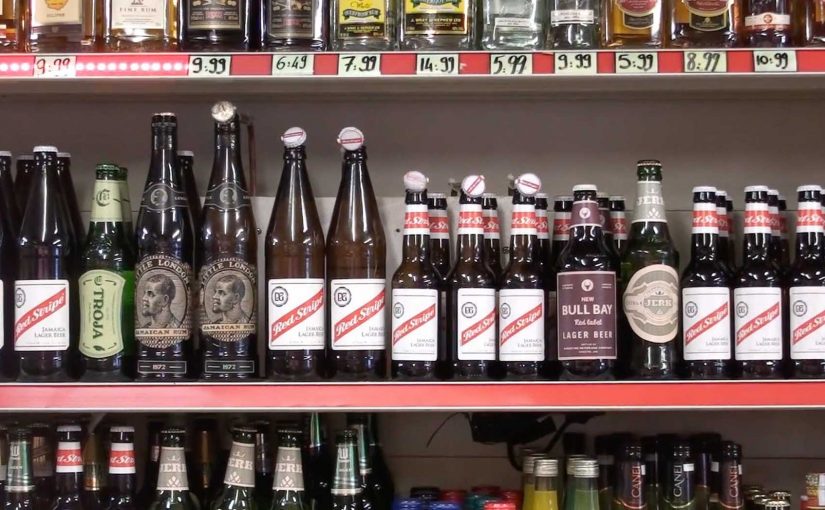
Red Stripe, a Jamaican lager brand, transforms an ordinary-looking East London corner shop into a singing, dancing musical extravaganza. Products across the shop turn into instruments that burst into a melody when a customer selects a Red Stripe. Noodle pots become maracas. Bottles turn into trumpets. Cans become xylophones.

To capture the surprise, 10 hidden cameras record customer reactions as the shop “comes alive.”

The real question is how you turn a routine purchase into a moment people want to retell and share.

This kind of retail theatre works best when the shopper triggers the show through a product choice, and the documentation is designed to scale the moment beyond the store.

The shop becomes the media

This is not a poster on a wall. It is the environment itself performing. The moment of selection triggers the show. The shelf becomes the stage.

That shift matters because it makes the brand moment inseparable from the act of buying. It is shopper marketing that feels like entertainment, not persuasion. Here, shopper marketing means designing the buying environment so the act of choosing the product creates the brand experience.

The trigger is the product choice

The smartest part is the mechanic. Nothing happens until the customer chooses the product. That makes the experience feel personalised, even though it is engineered. Because the trigger is the shopper’s own choice, the surprise reads as a reward, not a push.

It also makes the story instantly explainable. “When you pick up a Red Stripe, the shop turns into a band.”

If you can explain the trigger in one sentence and show real reactions, the activation comes with built-in distribution.

In retail and FMCG environments, the point-of-sale moment is where intent becomes action, and where a brand can earn attention without interrupting it.

Why hidden cameras make the idea travel

The in-store performance is powerful, but it is local. The video is what scales it. Real reactions signal authenticity, and the format becomes shareable proof that the stunt actually happens.

Extractable takeaway: If you want the idea to travel, design the filmed proof as part of the concept. Authentic reactions do the credibility work that polished edits cannot.

Steal the point-of-sale trigger

  • Trigger at the shelf. Make the point-of-sale moment the trigger, not the end of the journey.
  • Instrument the environment. Convert ordinary objects into a surprising behaviour, so the setting becomes memorable.
  • Film for scale. Capture genuine reactions, then let the video do the distribution work.

A few fast answers before you act

What happens in the Red Stripe Musical Extravaganza?

An East London corner shop turns into a musical performance. Shop items become instruments that play when a customer selects a Red Stripe.

What turns into instruments?

Noodle pots become maracas. Bottles become trumpets. Cans become xylophones.

How is it captured?

Ten hidden cameras record customer reactions.

What is the core mechanic that makes it work?

The product selection triggers the performance, so the “brand moment” happens at the exact point of purchase.

CuteCircuit x Ballantine’s: tshirtOS

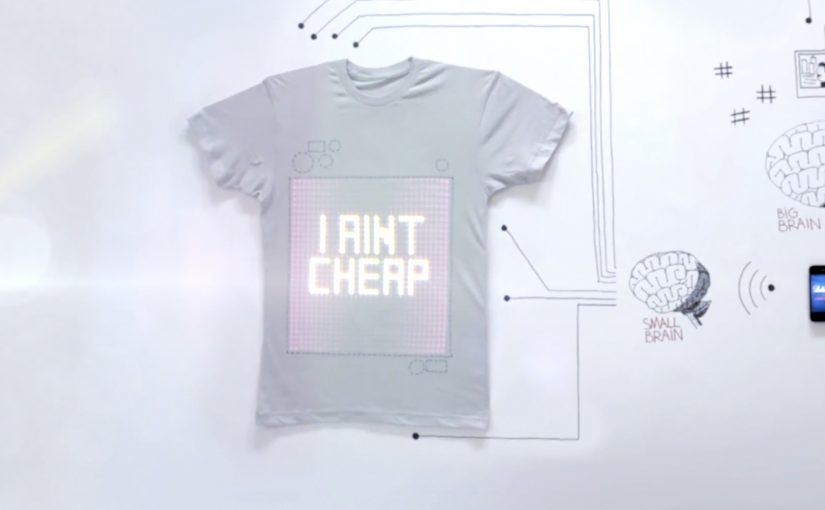
A grey T-shirt looks ordinary until it lights up and starts broadcasting whatever you choose. Text. Images. A status. A moving graphic. Your chest becomes a screen.

London fashion house CuteCircuit, in collaboration with whisky brand Ballantine’s, introduces tshirtOS, described as a wearable, shareable, programmable T-shirt built for digital creativity.

Here is a short making-of film, described as having received over 500,000 views.

What tshirtOS actually is

At the center is a 32 by 32 grid of 1,024 LEDs on the front of the shirt, controlled via an app on your phone. The concept is expanded with built-in components including a micro-camera, a microphone, an accelerometer, and speakers. The result is a garment that can display and capture content, then push it outward as a wearable broadcast. Here, that means the shirt itself becomes the display surface and the phone becomes the control layer.

In global consumer culture, where mobile is the primary tool for self-expression, programmable wearables turn identity signals into a personal channel that travels with the wearer.

Why it lands

Most “future of fashion” ideas die because they look like tech demos instead of culture. tshirtOS works as a story because it keeps a familiar object, the plain tee, then adds one new superpower that everyone understands immediately. You can show something. Right now. In public. Because the output appears on a familiar object people already understand, the technology reads as communication before it reads as hardware. That instant legibility makes the idea feel less like a gadget and more like a new medium.

Extractable takeaway: If you are launching a new interface, anchor it in a familiar form factor, then make the first benefit obvious in one glance so the audience explains it for you.

What the brands are really betting on

The ambition is bigger than a one-off prototype. It is a new creative canvas that sits between fashion, social content, and live communication. Ballantine’s gets cultural adjacency to creativity and experimentation, while CuteCircuit extends its interactive fashion narrative into something that looks commercially repeatable.

The real question is whether a programmable garment can move from prototype theater into a repeatable medium people instantly understand and want to use.

The second film, “T-shirt of the future,” puts tshirtOS into a night-out storyline. It is described as having already generated over 1.3 million views.

What to steal from tshirtOS

  • Prototype the medium, not the message. When the platform is new, the product itself is the headline.
  • Design for instant comprehension. If it cannot be understood in a second, it will not spread.
  • Show it in culture, not a lab. A night out beats a spec sheet for explaining why it matters.
  • Make it programmable. Viewer control creates infinite variations without infinite production.

A few fast answers before you act

What is tshirtOS in one line?

A programmable T-shirt concept that uses a 32 by 32 LED grid and a mobile app to display and share digital content in real time.

What hardware is described as being inside the shirt?

A 1,024 LED grid plus components including a micro-camera, microphone, accelerometer, and speakers.

Why does a programmable shirt matter for brands?

It turns the wearer into a moving, controllable surface for expression, which can connect live moments to digital content without relying on external screens.

What is the main adoption barrier?

Practicality and cost. Washability, comfort, battery life, and price all determine whether it becomes a product or stays a prototype.

What is the strongest creative use case?

Live, personal expression in social settings, where instant visual output is part of the experience and the wearer wants to change what is displayed on the fly.