
Ford: Noise-Cancelling Kennel

Ford: Noise-Cancelling Kennel

A dog hears the first firework bang and starts to panic. The family tries the usual fixes. Closing curtains. Turning up the TV. Comforting words. But the noise still cuts through, and the stress spreads to everyone in the room.

Ford’s noise-cancelling kennel concept takes a different angle. It treats fireworks like an engineering problem. The prototype uses microphones to detect sudden loud sounds, then a built-in audio system plays opposing frequencies to reduce the noise inside the kennel. Sound-deadening materials, including high-density cork, add a physical layer of insulation on top of the active cancellation.

In consumer innovation storytelling, especially when the tech is hard to “see,” the fastest way to earn belief is to show it solving a small, relatable problem.

The real question is whether your R&D can earn belief by solving a tiny, emotional problem in the real world.

The idea is inspired by the Active Noise Control Ford introduced in the Edge SUV to make journeys quieter. Inside the Edge SUV cabin, microphones pick up unwanted noise and the audio system counteracts it with opposing sound waves. Here, the same principle is applied to a safe space for dogs during fireworks.

Why this lands with people who do not care about car tech

Because the benefit is immediate and emotional. Fireworks anxiety is common, and the problem shows up at home, not in a showroom. The kennel reframes Ford’s engineering as something that protects a family moment, not just something that improves a drive.

Extractable takeaway: When your technology is invisible, translate it into a felt reduction of a specific stressor. Reducing the sharp peaks of fireworks noise inside a safe space lowers the trigger that starts panic, so calm becomes observable in seconds.

What Ford is really building with “Interventions” thinking

This is a brand-positioning move disguised as a pet story. By “Interventions” thinking, Ford is repurposing a familiar experience into a purposeful disruption that makes the benefit felt immediately. It signals that automotive R&D can be repurposed into everyday life solutions, and it does it without a hard sell. The prototype is the proof-of-intent.

What to steal if you want to translate R&D into culture

  • Start with a problem people already feel. Fireworks fear is instantly understood without explanation.
  • Use a single, credible technology transfer. One tech. One benefit. No feature soup.
  • Make the benefit visible in seconds. Calm is the KPI here, not product specs.
  • Let the prototype be the story. A working concept creates more belief than a manifesto.

A few fast answers before you act

What is Ford’s noise-cancelling kennel concept?

It is a prototype dog kennel designed to reduce fireworks noise using active noise control and sound-insulating materials, giving anxious dogs a calmer space.

How does the noise cancellation work in simple terms?

Microphones detect the loud sound, then speakers play an opposing sound wave to reduce it. Physical insulation also helps block and absorb noise.

Is this a product you can buy?

It is presented as a concept/prototype rather than a retail product, used to demonstrate how existing Ford technology could be applied to everyday problems.

Why connect this to the Ford Edge SUV?

Because the kennel borrows the same Active Noise Control principle used to reduce unwanted noise in the vehicle cabin, then applies it to a different environment.

What is the main risk with “tech repurposed for good” ideas?

If the link between the original technology and the new use case feels flimsy, it reads as a gimmick. The transfer has to be technically believable and emotionally relevant.
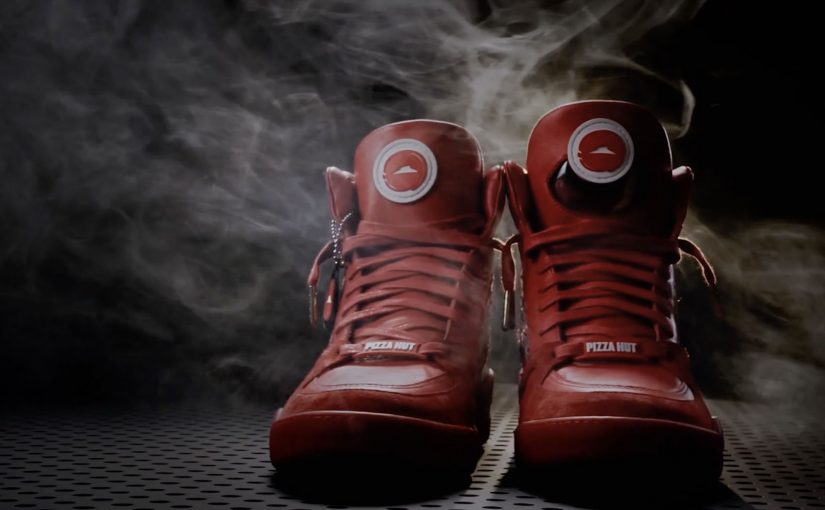
Pizza Hut: Pie Tops II

Pizza Hut: Pie Tops II

Pizza Hut is the official pizza of the NCAA, a men’s basketball tournament known informally as March Madness and played each spring in the United States.

For last year’s tournament, Pizza Hut created what was billed as the world’s first shoe that ordered a pizza. Now, to celebrate their second year as the official pizza of the NCAA, Pizza Hut, Droga5 and the Shoe Surgeon launched Pie Tops II. It is a limited-edition high top shoe that not only uses your geolocation to order the current Pizza Hut deal at the press of a button, but also allows users to pause the game while they receive their delivery.

A TV ad has also been released to highlight the new pause feature of these newly relaunched Pie Top shoes.

A sneaker button that behaves like a remote

The mechanism is deliberately simple. Put a single button on the shoe. Tie it to an app. Map the press to two jobs: order, then pause. The shoe becomes a physical shortcut for a very specific March Madness moment, when people want food but do not want to miss play. That works because it removes friction at the exact moment attention is highest.

In second-screen sports viewing, the strongest interactions reduce interruption while keeping attention on the live game.

Why it lands on game day

Pie Tops II works because it converts a familiar tension into a prop. Hunger versus attention. Convenience versus FOMO. The “pause” feature turns a delivery problem into a punchline, and the shoe format makes the whole thing instantly tellable.

Extractable takeaway: If you can turn a high-frequency habit into a one-action ritual, you make the brand feel like part of the event, not just an ad around it.

The real intent behind the novelty

This is not really about footwear. The real question is how Pizza Hut earns a place inside the live ritual instead of advertising around it. It is about owning a behavior loop during March Madness. By behavior loop here, I mean a repeatable sequence of trigger, action, and reward that keeps the brand attached to the moment. Pizza ordering, deal recall, and a reason to talk about Pizza Hut in the same breath as the game. The smart move here is not the gadget but the way it turns brand utility into event behavior. Limited-edition scarcity does the rest, because it makes the product itself a piece of shareable culture.

What brands can steal from Pie Tops II

  • Pick one moment to own: design for a specific tension that happens repeatedly during an event, not for “sports fans” in general.
  • One control, two outcomes: a single action that triggers both utility and delight is more memorable than a complex feature list.
  • Make the object do the storytelling: the product should explain the campaign in one sentence, even without a logo.
  • Build viewer control into the idea: letting people keep the game in their hands makes the brand feel helpful, not interruptive.
  • Scarcity as distribution: limited runs can function like media spend when the object is inherently talkable.

A few fast answers before you act

What are Pie Tops II?

They are limited-edition Pizza Hut sneakers designed for March Madness that let you order pizza via a button press and, as described, pause the game while you wait for delivery.

What problem is this campaign solving?

It dramatizes a familiar game-day problem. People want food without missing play. The stunt turns that tension into a memorable product feature and a shareable story.

Why does the “pause” feature matter more than the pizza-ordering feature?

Ordering is convenient. Pausing is emotionally resonant because it speaks directly to FOMO during live sports. It is the twist that makes the idea travel.

Is this wearable tech or brand entertainment?

It is primarily brand entertainment packaged as a functional shortcut. The utility makes it credible. The novelty makes it worth talking about.

What is the reusable pattern for other brands?

Create a physical or tactile shortcut for a high-frequency moment. Keep the interaction to one obvious action. Then tie it to an event where people already have strong emotions and repeat behaviors.

Dolce & Gabbana: Drones on the Catwalk

Dolce & Gabbana: Drones on the Catwalk

Marketing is one of the most creative and toughest industries in the world. Each day, companies are seeking new ways to attract attention and to mesmerize possible clients into becoming loyal customers. At Milan Fashion Week on Sunday, Dolce & Gabbana stunned the watching crowd with a memorable opener that replaced human fashion models with drones.

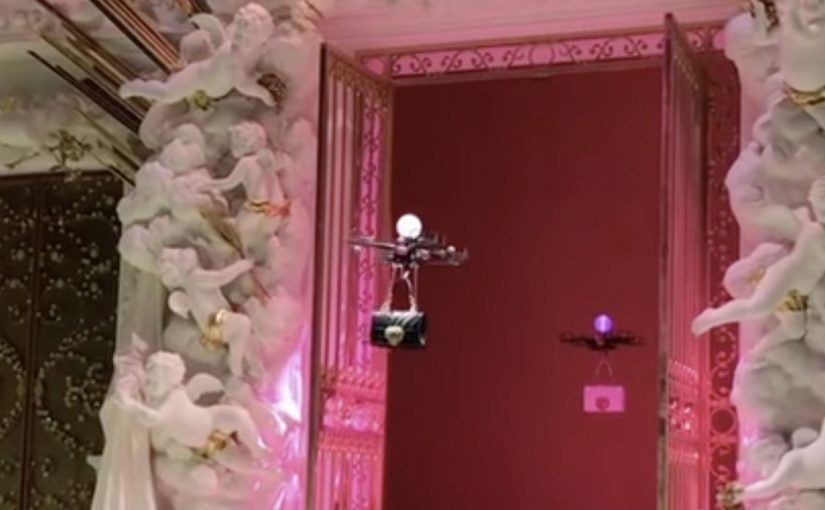
The drones were made to carry Dolce & Gabbana’s latest range of “Devotion” leather handbags as part of its fall and winter collection. Around seven copters hovered along the runway, each with a Dolce & Gabbana handbag dangling beneath it.

How the stunt works

The mechanism is pure stagecraft. Here, stagecraft means using the runway itself as the media device, not just as the place where the product appears. Take the product that matters. Put it in motion. Remove the expected human element. Then let the crowd do the amplification for you. The runway becomes the distribution channel, because every phone in the room turns into a broadcast rig.

In luxury and fashion marketing, runway moments often function as global media events rather than closed-room trade shows.

Why it lands

The drones are not there to “model” the bag better than a person. They are there to create a new mental category for the launch. Tech meets craft. Spectacle meets product detail. It is instantly legible, and that legibility is what makes it shareable. The real question is not whether drones are novel, but whether the launch gives people a visual they can describe and repost in one sentence.

Extractable takeaway: If you want a product launch to travel, engineer one clean, easily described visual rule that can be captured in a single clip and understood without context.

The business intent behind the spectacle

There is a practical strategy under the theatrics. A handbag line needs repetition to build recognition. An opener like this creates an excuse for editorial coverage that would not exist for a standard runway walk. It also frames the collection as a moment, not just merchandise. This is a smart luxury launch because it turns product display into earned-media design.

What luxury brands can steal from this opener

  • Lead with the product, not the brand story: put the object at the center of the visual idea, then let everything else support it.
  • Design for the camera lens: build an opener that looks good from the audience angle, because that is where the internet gets its footage.
  • One rule, repeated: a single, consistent gimmick (bags carried by drones) reads stronger than five different surprises.
  • Operational friction is part of the story: if a stunt has constraints, treat them as production discipline, not as an afterthought.
  • Make the opener do the PR work: the first 30 seconds should be enough for headlines, clips, and social captions.

A few fast answers before you act

What did Dolce & Gabbana do at Milan Fashion Week?

They opened a runway segment with drones carrying the brand’s Devotion handbags, replacing the expected human “bag parade” with flying copters.

Why use drones instead of models?

Because it creates an immediate, high-contrast visual. It signals novelty fast, it photographs well, and it makes the product launch feel like a cultural moment.

Is this a technology play or a PR play?

Primarily a PR play. The technology is the prop. The real value is attention, recall, and the shareable simplicity of the idea.

What is the transferable pattern for other brands?

Put your product into an unexpected but instantly understandable delivery mechanism. Keep the rule simple. Make it easy for a spectator to capture and repost.

What is the biggest risk with stunts like this?

Execution risk. If the tech introduces delays, safety concerns, or awkward staging, the narrative can flip from “innovative” to “gimmicky”. Production rigor matters as much as the idea.