
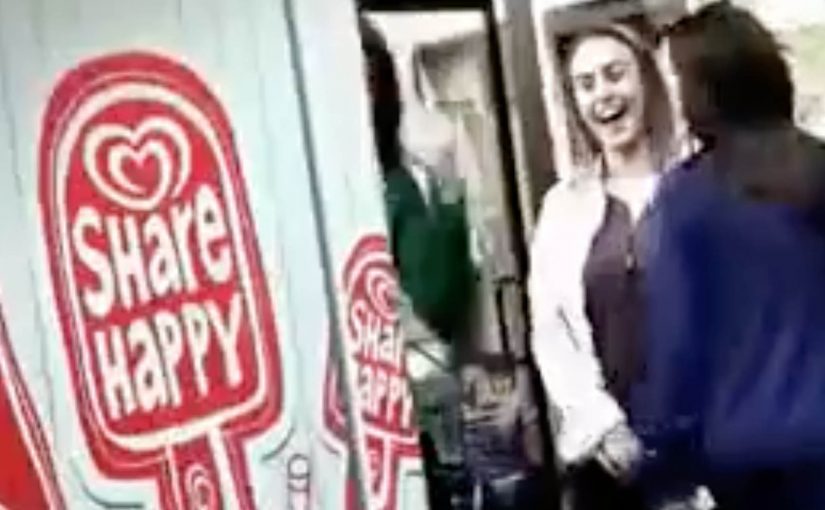
Share Happy Ice Cream Machine

Share Happy Ice Cream Machine

You approach an ice cream machine that refuses to work for a solo person. It only dispenses when two people participate together. The reward is simple. Free ice cream. The behaviour it creates is even simpler. Ask someone nearby to join you.

The idea. Turn a freebie into a shared ritual

Most giveaway machines are built for speed. Press, receive, leave. Share flips the script. The machine makes cooperation the trigger, so the brand message is performed in public rather than stated on a poster.

Why this mechanic works

It removes awkwardness. People have a reason to talk to strangers, and the machine becomes the icebreaker. The shared reward also creates a shared story, which is why these activations often travel well on social. Here, the mechanic is simply the rule people must follow to unlock the reward.

Extractable takeaway: When the reward depends on two people, the brand turns participation itself into proof of the idea.

Buy interaction, not just sampling

In crowded retail and event environments, the hard part is not handing out samples, but giving strangers a reason to interact in public.

The real question is not whether a free ice cream can attract attention. It is whether the brand can turn that attention into a memorable social behaviour.

Share gets that right, because the interaction is the media, not just the reward.

Steal this from the teamwork mechanic

  • Make the rule obvious before people arrive. People should understand from a distance that this only works together.
  • Keep the action physical and quick. The longer the interaction takes, the more the social energy drops.
  • Make the reward immediate. Fast payoff is what turns a small interaction into a satisfying public moment.
  • Judge success by interactions, not just giveaways. The stronger metric is how many micro-connections the brand creates between people.

A few fast answers before you act

What is the Happy Ice Cream Machine?

It is a vending-machine-style activation that dispenses free ice cream only when people participate together, so the reward is tied to cooperation.

Why require two people?

Because it forces a social moment. The brand message becomes a behaviour. Sharing is not a slogan. It is the unlock mechanism.

What makes this kind of activation spread?

It is easy to understand on video. Two strangers team up, the machine responds, and the payoff is instant. That simplicity travels.

Where does this work best?

It works best in places with natural foot traffic and a low barrier to joining in, such as retail zones, festivals, campuses, and public events.

What should you measure?

Participation pairs per hour, average dwell time, repeat attempts, and the share rate of user-generated clips during the activation window.
Volkswagen Polo GTI: Fast Lane

Volkswagen Polo GTI: Fast Lane

Fast Lane: turning routine into a shortcut you choose

Volkswagen is soon going to launch its new Polo GTI. To create awareness and generate buzz, it built a “Fast Lane” in subways, malls and elevators around Germany. In this campaign, “Fast Lane” means a playful, faster-feeling alternative route placed beside the normal one, dedicated to everyone who likes to go beyond the regular, who is curious for new stuff, and who enjoys speeding it all up a little.

How it works: add a faster option that feels like play

The mechanism is simple. Place an obvious “normal” route next to an unexpected alternative that is quicker and more fun. Then let people self-select into it. The viewer controls the switch by choosing the fast lane, and that choice becomes the story.

In German urban commuting environments, small design changes in high-footfall spaces can shift behaviour quickly because routine is strong and the contrast is instantly visible.

The real question is whether you can turn “fast” from a spec into a shortcut people choose in public.

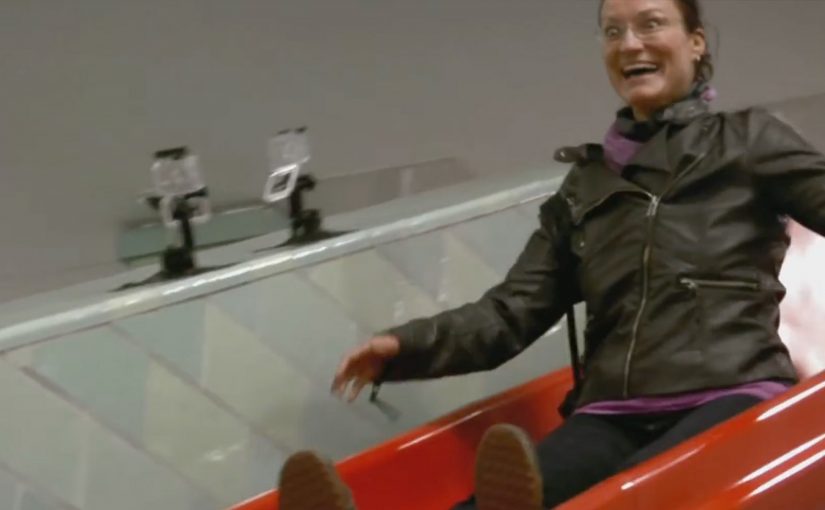
Fast Lane 1: The Slide

Long staircase. Next to it a slide. Which way would you go?

Fast Lane 2: The Shopping Carts

Some carts are pimped with a skateboard. Up for some extra shopping fun?

Fast Lane 3: The Elevator

A sound system turns the ride into a rocket take-off. Welcome on-board.

Why it lands: speed becomes a feeling, not a spec

The campaign does not explain performance. It lets people experience a mindset. Faster. Lighter. A little rebellious. Because the “fast” option is obvious and self-selected, it feels earned, which makes the idea stick without needing specs. Each execution creates a moment where the “fast” choice feels like a reward, not just efficiency.

Extractable takeaway: If you want people to believe a feature, design a situation where they can choose it and feel it, not just read about it.

The business intent: borrow everyday behaviour as proof

For a GTI launch, “fast” can easily become generic language. This is stronger than repeating performance adjectives. Fast Lane makes it concrete. It attaches the idea of speed to real-world micro-decisions, and turns the resulting participation into shareable proof that travels beyond the physical placements.

What to steal if you want to turn a feature into a behaviour

  • Build the contrast into the environment. Normal route next to the fun shortcut.
  • Make the faster choice self-evident. People should understand it in one glance.
  • Let viewer control do the persuasion. Choosing it is more convincing than being told.
  • Create a story per location. Each execution is a complete, watchable moment on its own.

A few fast answers before you act

What is Volkswagen’s “Fast Lane” for the Polo GTI?

A set of playful public-space installations (slide, skate carts, rocket-sound elevator) that let people choose a “faster” option, designed to build buzz for the Polo GTI.

What is the core mechanism?

Put a normal route next to an unexpected shortcut that is quicker and more fun. People self-select, and the choice becomes the story.

Why does this work better than talking about performance specs?

It turns “fast” into a felt experience. Participation makes the feature believable without needing explanation.

What business intent does it serve?

It makes the GTI’s positioning concrete and talkable, then relies on the resulting participation moments to travel beyond the physical placements.

What is the most transferable takeaway?

If you want people to believe a feature, design a situation where they can choose it and feel it, not just read about it.

Caixa and Benfica: Pitch Invasion

Caixa and Benfica: Pitch Invasion

A sponsorship story told on the pitch

The hardest part of football sponsorships is making a partnership feel like more than a logo. Caixa and Benfica used a live stadium moment to do exactly that.

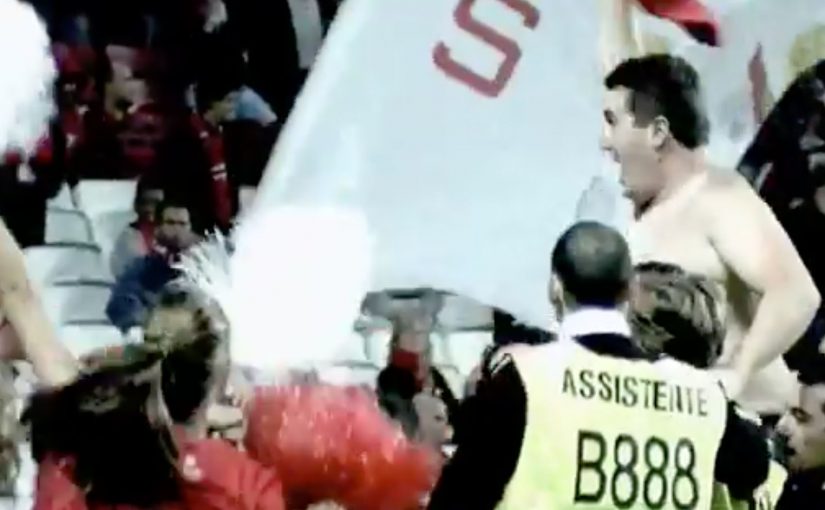
Here is a video case study of a first-of-its-kind football pitch invasion created to promote the partnership between the biggest Portuguese bank, Caixa, and Portugal’s biggest football club, Benfica.

The real question is how a sponsor earns emotional legitimacy inside a club culture.

How the pitch invasion became the activation

The mechanism was direct. Take something normally forbidden and tightly controlled. A pitch invasion. Then redesign it as a planned experience connected to the partnership.

Here, an “activation” is the on-site experience that turns a sponsorship into something fans can participate in.

That shift matters because it turns the “unthinkable” into a sanctioned moment. The pitch itself becomes the media channel, and the stadium becomes a stage the audience remembers.

In European football stadium culture, the pitch is the hardest boundary to cross, so sanctioned access reads as a rare privilege.

Why it lands in a football context

Football already runs on emotion, tribal identity, and the feeling of being part of something bigger than yourself. Letting people cross the boundary from stands to pitch collapses distance between fans and club. It creates belonging, and it produces a story worth retelling because it looks and feels like a once-in-a-lifetime exception.

Extractable takeaway: When a culture has a protected boundary, designing a safe, sanctioned way to cross it creates instant belonging and a story people repeat.

The business intent behind the spectacle

The intent was to make the Caixa and Benfica partnership feel lived, not announced.

Sponsorships stick when the brand is seen enabling something fans care about, not just buying visibility.

A bank does not naturally belong in the middle of football culture. This activation borrowed the club’s emotional intensity and translated sponsorship into an experience that fans would associate with the partnership itself.

A sponsor activation playbook to copy

  • Turn the asset into an experience. If you sponsor something, find a way to let people physically engage with it.
  • Use controlled rule-breaking. A “forbidden” behavior becomes powerful when it is safely redesigned and permitted.
  • Build a moment that photographs itself. Stadium-scale actions create natural documentation and sharing.
  • Make the brand the enabler. The partnership should feel like it unlocked access, not like it bought attention.

A few fast answers before you act

What was the Caixa and Benfica activation?

A planned football pitch invasion designed as a promotional moment to support the Caixa and Benfica partnership, documented in a video case study.

What was the core mechanism?

Reframe a normally prohibited act. Entering the pitch. As a controlled, brand-enabled experience tied to the partnership.

Why does this idea work particularly well in football?

Because football is built on belonging and emotion. Letting fans step onto the pitch creates a memorable boundary-crossing moment.

What sponsorship goal did this support?

Making the partnership feel culturally meaningful and fan-relevant, not just visually present through branding.

What is the main takeaway for sponsors?

Create access and participation that feels exceptional. If fans feel the partnership unlocked something real, the brand association sticks.