
5 World Cup 2026 Campaigns: Fan Rituals

As the 2026 World Cup approaches, the strongest May campaigns are not just using football. They are claiming the rituals around it.

When brands stop borrowing the game

May’s strongest campaigns share one pattern. They do not treat the World Cup as borrowed attention. They treat it as a map of fan behavior.

Fan rituals are the repeated behaviors before, during, and after a match that show where a brand can credibly enter the experience.

The mechanism is simple: when a brand chooses one specific fan ritual, the campaign has a clearer job to do because it can improve a behavior people already understand.

For brand teams, that is not a creative nuance but an operating advantage, because ritual-led campaigns are easier to brief, localize, activate, measure, and extend across content, commerce, retail, CRM, and social channels.

The strongest May World Cup work is the work that chooses one fan ritual and makes the brand useful inside it.

The real question is whether the brand can make a fan moment easier, more social, more rewarding, or more repeatable without feeling pasted onto the tournament.

Campaigns claiming the moments around the match

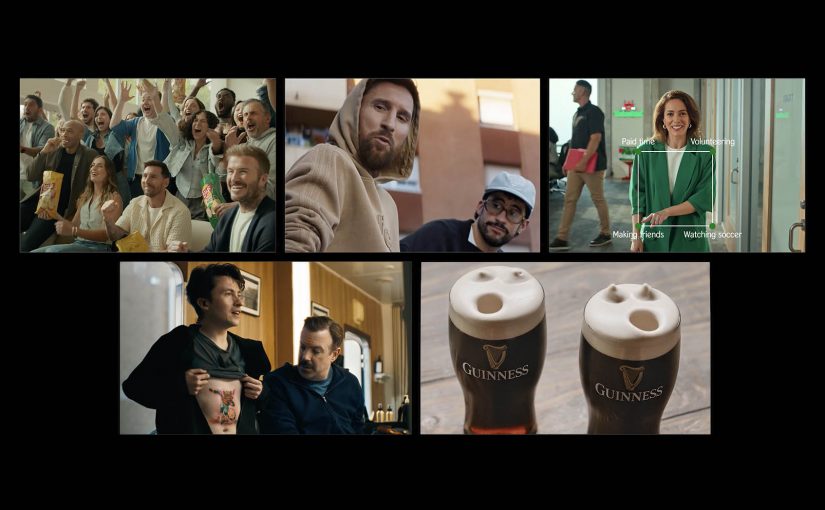
Lay’s: The Epic Watch Party

Lay’s owns the watch-party snack ritual. The campaign brings Lionel Messi, David Beckham, Thierry Henry, Alexia Putellas, and Steve Carell into the same fan-facing idea, but the smarter move is not the celebrity stack. It is the behavior choice. Lay’s does not try to own football skill, national pride, or tournament drama. It owns the moment when people gather, open snacks, and turn a match into a shared viewing occasion.

Adidas: Backyard Legends

Adidas owns football mythology and backyard origin stories. Backyard Legends works because it understands that football culture is not only built in stadiums. It is built in small courts, neighborhood pitches, borrowed spaces, impossible matchups, and exaggerated memories. By pulling football icons, music, film, and younger talent into one mythic backyard story, Adidas turns the World Cup into a reminder that global football still depends on local imagination.

Heineken: Fan Volunteers

Heineken owns the workday viewing conflict. Fan Volunteers is strategically sharp because it starts with a real friction: many World Cup matches happen when people are meant to be working. Instead of pretending that tension does not exist, Heineken builds a tongue-in-cheek participation mechanic around Volunteer Time Off (VTO), local nonprofit activity, and matchday viewing. The brand does not simply say “watch football.” It creates a socially acceptable route into the behavior.

Visa: Tap In

Visa owns participation, rewards, and payment utility. Tap In translates a simple football action into a commercial mechanism: one tap can unlock access, prizes, promotions, and fan participation. That gives Visa a better role than generic sponsorship visibility. The brand is closest to the transaction layer, so the campaign works when it connects match moments to frictionless payment, cardholder rewards, local business support, and real-time participation.

Guinness: The World’s Cup and Singing Pints

Guinness owns the pub gathering ritual. The World’s Cup works because it does not chase the match itself. It claims the place where the match becomes social: the pub, the pint, the bartender, the table, and the strangers who feel like teammates by the final whistle. The smart part is continuity. Guinness connects the World Cup work to the 2023 Singing Pints St. Patrick’s Day ad, showing how a familiar pint-based creative idea can be reworked into a football reaction.

NESCAFÉ also tried to claim the post-match conversation with “The Third Half,” but the campaign works better as a strategic territory than as a standout creative execution.

Why this May pattern matters

The useful shift is from tournament association to behavior ownership. That matters because a World Cup brief can easily become a list of borrowed symbols: famous players, flags, chants, stadiums, trophies, and generic excitement. The stronger campaigns are more disciplined. They identify a fan moment, then build the brand role around that moment.

That is why the May set feels commercially useful. Lay’s has the snack and gathering moment. Adidas has the origin-story and football-culture moment. Heineken has the weekday tension. Visa has the tap, reward, and access layer. Guinness has the pub ritual. NESCAFÉ has a valid territory in the post-match conversation, even if the execution is not as strong as the strategic claim.

What brand teams should take from World Cup ritual work

The shared move across the five strongest campaigns is not “use football.” It is sharper than that. Each campaign picks a fan behavior the brand can credibly improve, then turns that behavior into a repeatable activation system across film, social, retail, promotions, payments, hospitality, or experience.

Takeaway: Do not brief a World Cup campaign around attention. Brief it around the fan moment your brand can credibly improve, then make that moment easier to activate, easier to repeat, and easier to measure.


A few fast answers before you act

What makes a good World Cup campaign?

A good World Cup campaign chooses a specific fan behavior and gives the brand a credible role inside it. Fame helps, but the campaign is stronger when the brand improves a real moment around the match.

Which brands stood out before the 2026 World Cup?

Lay’s, Adidas, Heineken, Visa, and Guinness stood out because each brand claimed a different football ritual. Lay’s claimed the watch party, Adidas claimed backyard football mythology, Heineken claimed workday viewing tension, Visa claimed participation and payment utility, and Guinness claimed the pub gathering.

Why are brands focusing on fan rituals?

Brands are focusing on fan rituals because rituals create repeatable behavior. A campaign built around a repeatable behavior is easier to activate across channels than a campaign built only around tournament excitement.

What can marketers learn from these campaigns?

Marketers should start with the fan moment, not the sponsorship asset. The best campaign role is the one the brand can credibly support through product, service, channel, data, retail, or experience.

Which campaign is the most strategically useful?

Visa is the most structurally useful because Tap In connects the match moment to payment, rewards, access, and participation. Lay’s is the cleanest behavior fit because snacks already belong naturally inside the watch-party ritual.
Nike: República Popular do Corinthians

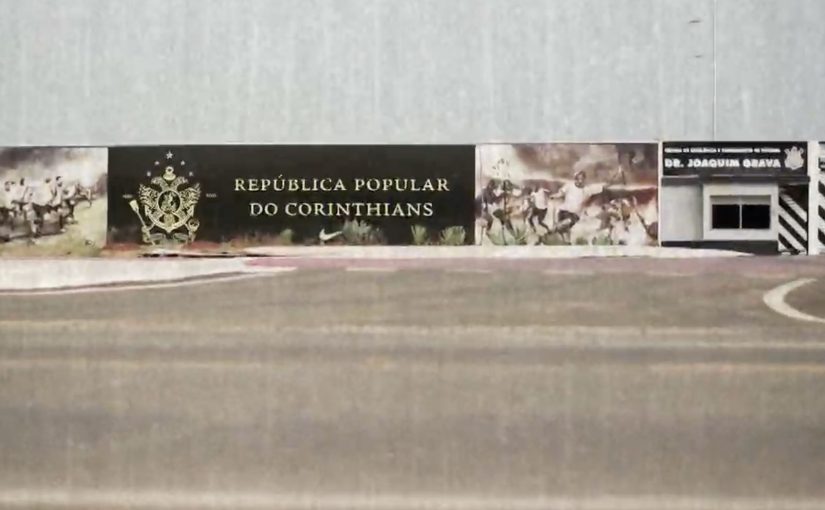
Corinthians celebrated its 100th anniversary in 2010. Nike’s response is not a one-off jersey drop or a polite tribute film. It is a whole new country.

“República Popular do Corinthians” reframes the club’s fanbase as a nation. With supporters reported in the tens of millions, the campaign leans into the idea that this “country” would outsize many real ones by population, and treats that as the brief.

Building a nation, not a slogan

The mechanism is full institutional cosplay. That is, a deliberately official-looking build-out of symbols, rules, and institutions, executed with enough detail that it feels official. F/Nazca Saatchi & Saatchi São Paulo designs the assets a nation “needs”. A coat of arms. A flag. Documents. Legislation. Currency. Heroes. An embassy. Even a president.

In fan-led sports cultures, identity symbols and rituals often travel further than product messages because supporters use them to perform belonging in public.

Why it lands with 30 million people watching

This is a campaign that gives fans something to do, not just something to admire. The “country” frame turns fandom into citizenship, and citizenship invites participation. Collect the documents. Fly the flag. Use the language. Carry the identity. The real question is whether you have a community identity people already perform, or just an audience that only consumes.

Extractable takeaway: When your audience already behaves like a community, stop treating them like a segment. Give them a shared “operating system”. Symbols, rules, roles, and artifacts that let them express membership without needing the brand in the room.

It also sidesteps the usual anniversary trap. Instead of nostalgia-first storytelling, it builds a living structure fans can inhabit, which makes the celebration feel ongoing rather than commemorative.

The commercial intent hiding inside the romance

The emotional story is belonging. The business outcome is demand. A nation needs uniforms, badges, and visible markers of identity, and the campaign makes those markers socially meaningful.

The legacy write-up around the work describes substantial earned attention, including a reported figure of $7,800,000 in free media coverage. Separate from that media value claim, the campaign is also publicly associated with industry recognition, including being named “Idea of the Year” by the Saatchi & Saatchi network’s Worldwide Creative Board.

Stealable moves from the Corinthians “nation”

  • Build an identity kit. Go beyond a logo. Create artifacts people can carry, collect, and display.
  • Make participation the message. If it only works when watched, it is fragile. If it works when used, it spreads.
  • Design for self-propagation. Fans should be able to recruit other fans without a brand explanation deck.
  • Let the world “recognize” it. Embassies, documents, and rituals create the feeling of legitimacy, which is what turns a joke into a movement.

A few fast answers before you act

What is “República Popular do Corinthians”?

It is a Nike campaign that frames Corinthians supporters as citizens of a fictional nation, complete with national symbols and official-seeming artifacts, created to celebrate the club’s centenary.

What is the key mechanism that makes it memorable?

Completeness. Instead of one hero asset, it builds an entire identity system. Flag, documents, currency, roles, and an “embassy” that makes the nation feel legitimate enough to participate in.

Why does the “nation” metaphor work so well for sports fans?

Because fandom already behaves like identity. The nation frame gives supporters a structured way to express belonging, recruit others, and turn private loyalty into public signals.

How can a non-sports brand use this pattern without forcing it?

Start with a real community behavior you can amplify, then design a small set of artifacts and rituals that make participation easy. If people will not use it without you promoting it, simplify the kit until they do.

What is the smallest version of this you can ship?

Make one role feel real, then give it one symbol and one usable artifact. If people can adopt it without instructions, you have something that can spread without constant brand narration.

Caixa and Benfica: Pitch Invasion

A sponsorship story told on the pitch

The hardest part of football sponsorships is making a partnership feel like more than a logo. Caixa and Benfica used a live stadium moment to do exactly that.

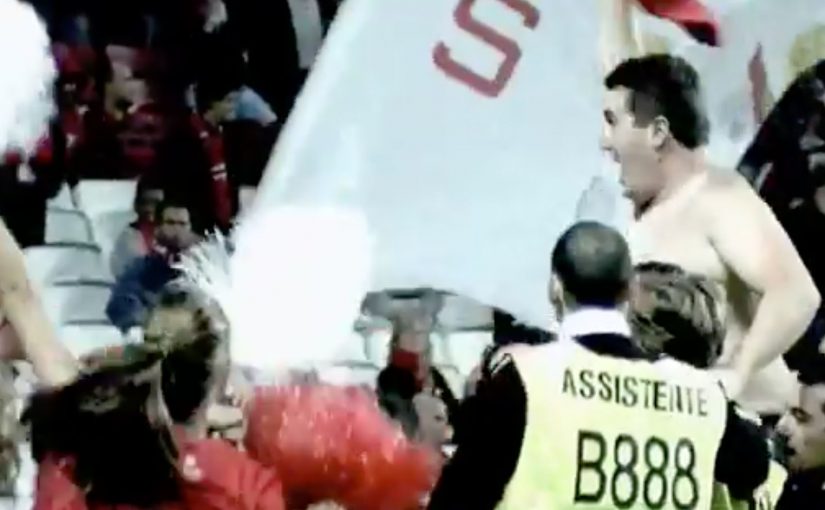
Here is a video case study of a first-of-its-kind football pitch invasion created to promote the partnership between the biggest Portuguese bank, Caixa, and Portugal’s biggest football club, Benfica.

The real question is how a sponsor earns emotional legitimacy inside a club culture.

How the pitch invasion became the activation

The mechanism was direct. Take something normally forbidden and tightly controlled. A pitch invasion. Then redesign it as a planned experience connected to the partnership.

Here, an “activation” is the on-site experience that turns a sponsorship into something fans can participate in.

That shift matters because it turns the “unthinkable” into a sanctioned moment. The pitch itself becomes the media channel, and the stadium becomes a stage the audience remembers.

In European football stadium culture, the pitch is the hardest boundary to cross, so sanctioned access reads as a rare privilege.

Why it lands in a football context

Football already runs on emotion, tribal identity, and the feeling of being part of something bigger than yourself. Letting people cross the boundary from stands to pitch collapses distance between fans and club. It creates belonging, and it produces a story worth retelling because it looks and feels like a once-in-a-lifetime exception.

Extractable takeaway: When a culture has a protected boundary, designing a safe, sanctioned way to cross it creates instant belonging and a story people repeat.

The business intent behind the spectacle

The intent was to make the Caixa and Benfica partnership feel lived, not announced.

Sponsorships stick when the brand is seen enabling something fans care about, not just buying visibility.

A bank does not naturally belong in the middle of football culture. This activation borrowed the club’s emotional intensity and translated sponsorship into an experience that fans would associate with the partnership itself.

A sponsor activation playbook to copy

  • Turn the asset into an experience. If you sponsor something, find a way to let people physically engage with it.
  • Use controlled rule-breaking. A “forbidden” behavior becomes powerful when it is safely redesigned and permitted.
  • Build a moment that photographs itself. Stadium-scale actions create natural documentation and sharing.
  • Make the brand the enabler. The partnership should feel like it unlocked access, not like it bought attention.

A few fast answers before you act

What was the Caixa and Benfica activation?

A planned football pitch invasion designed as a promotional moment to support the Caixa and Benfica partnership, documented in a video case study.

What was the core mechanism?

Reframe a normally prohibited act. Entering the pitch. As a controlled, brand-enabled experience tied to the partnership.

Why does this idea work particularly well in football?

Because football is built on belonging and emotion. Letting fans step onto the pitch creates a memorable boundary-crossing moment.

What sponsorship goal did this support?

Making the partnership feel culturally meaningful and fan-relevant, not just visually present through branding.

What is the main takeaway for sponsors?

Create access and participation that feels exceptional. If fans feel the partnership unlocked something real, the brand association sticks.