
Hellmann’s: Recitweet

In the past, Hellmann’s has used novel ways to encourage consumers to use their mayonnaise for more than just sandwiches. Now, for their latest campaign, they team up with Ogilvy Brazil to create Recitweet.

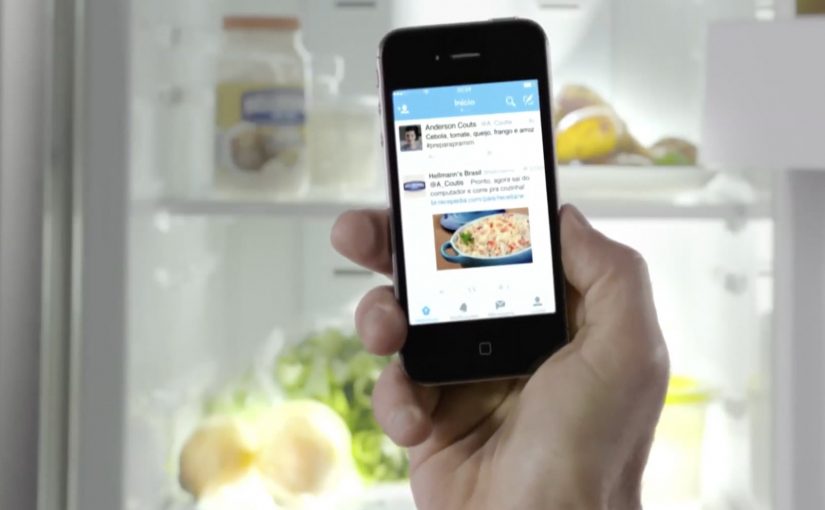
The use case is instantly familiar. You open the fridge, you see ingredients, and you still do not know what to cook. With Recitweet, consumers tweet their ingredients with the hashtag #PreparaPraMim (“prepare for me” in Portuguese). Hellmann’s replies with a recipe that is designed to use those exact ingredients.

A recipe engine built on a social reply

The mechanism is ingredient matching through a public tweet. The input is a short list of what you have at home. The output is a tailored recipe suggestion delivered back as a tweet reply, so the brand behaves like a lightweight cooking helper rather than a broadcaster.

In FMCG food brands, this utility-led social pattern turns content into a small service that appears at the exact moment the consumer is stuck.

The real question is: can a food brand reliably remove the “what should I cook” hurdle in the channel where people already ask for help. When you can answer fast and specifically, the helper role beats another round of broadcast recipes.

Why it lands

It respects the consumer’s real problem. “I have food, I lack an idea.” The campaign does not start with a product claim. It starts with a decision obstacle, then uses the brand to remove it. That makes the engagement feel earned, because the interaction produces something usable in the next 30 minutes.

Extractable takeaway: If your product is an ingredient, win by solving the “what do I do with what I already have” question. Make the brand the shortest path from inventory to action, using the channel where the consumer already asks for help.

Stealable moves for social utility

  • Constrain the input. A short list of ingredients forces clarity and makes the interaction easy to start.
  • Return a specific next step. A recipe beats a generic tip, because it includes implied quantities, sequence, and outcome.
  • Make the service feel personal, at scale. The reply is the moment of value. Treat it like customer service, not advertising copy.
  • Design for repeat behavior. The best activations are not one-off stunts. They create a habit loop people can use again the next time the fridge looks random.

A few fast answers before you act

What is Recitweet in one sentence?

Recitweet is a Twitter-based recipe helper that takes a list of tweeted ingredients and replies with a recipe designed to use them.

Why use a hashtag like #PreparaPraMim?

It standardizes the request so the brand can find, process, and respond to it consistently, while keeping participation friction low.

What makes this more effective than posting recipes on a website?

It is contextual and initiated by the consumer. The recipe arrives when the person is actively deciding what to cook, using what they say they have.

What is the minimum viable version of this idea?

A constrained ingredient input and a fast, specific reply that gives one clear next step, without forcing the consumer to leave the channel to “go search.”

What is the biggest operational risk?

Response quality and response time. If replies are slow, irrelevant, or repetitive, the “service” framing collapses and it starts to feel like a gimmick.
Gladiator: USB Can

A “USB” that is really packaging as a key

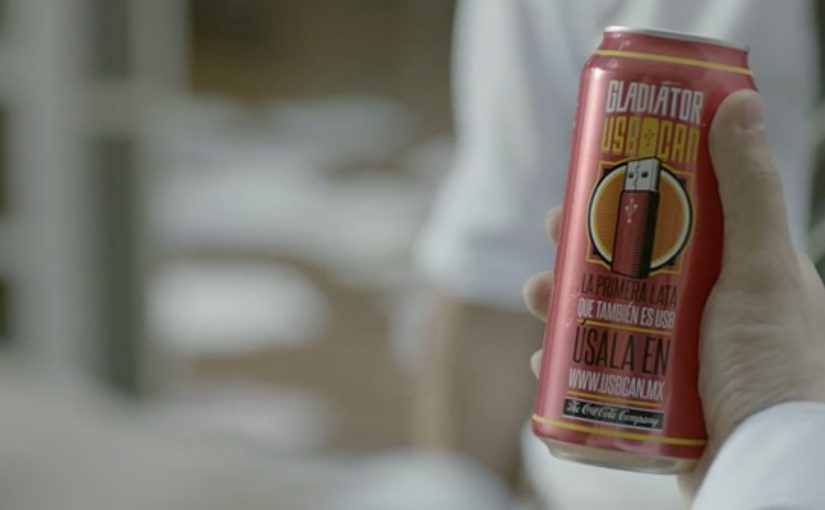
Mexican energy drink Gladiator created a “USB Can” which is not exactly a USB, but it features a packaging innovation that gives users storage when they need it.

Users who want to use the USB Can are directed to a website where they connect with Facebook and scan their can to upload files from their computer. Those uploaded files can then be unlocked on another computer by scanning the same USB Can.

The mechanic: one physical object, reused as authentication

The core move is simple. The can becomes the key. You do not carry a drive. You carry the proof that you own the can, and that proof unlocks your files. It is a packaging-as-authentication mechanic that turns a throwaway object into a repeatable login ritual.

By that, I mean the pack itself functions as the proof needed to unlock the digital benefit.

In FMCG promotions, utility mechanics work best when the physical object is the credential and the digital benefit is immediate.

The real question is whether a disposable pack can earn repeat use by acting like a credential instead of just carrying a logo.

Why it lands

It creates an easy story people can retell. “This can unlocks your files.” The idea also fits the energy drink mindset because it borrows tech culture cues without needing to become a real hardware product. You get the surprise of a “USB” promise, then the reveal that it is a smart access system rather than storage inside the can. Because the can itself becomes the credential, this is smarter than a standard promo-code promotion: it is easier to remember, explain, and reuse.

Extractable takeaway: When you want packaging to be more than a label, give it a repeatable job. Make the pack the key that unlocks a benefit people can use more than once.

What packaging-led utility brands can borrow

  • Make the object the credential. A physical key reduces friction and increases memorability.
  • Keep the ritual quick. Scan, unlock, done. If it takes too long, it stops feeling like a perk.
  • Use a benefit people can demo. “Unlock files on another computer” is easy to explain and easy to show.
  • Let the gimmick resolve into utility. The “USB” hook earns attention. The access mechanic earns credibility.

A few fast answers before you act

What is Gladiator’s “USB Can”?

It is a packaging-led activation where the can is scanned to unlock an online file upload and retrieval flow, so the can behaves like a reusable access key rather than a literal USB drive.

What is the core creative mechanic?

Packaging as authentication. The same physical can is scanned again to unlock access to the files later.

Why does this work better than a normal promo code?

Because the object is the code. It is harder to ignore, easier to remember, and it turns the pack into a functional part of the experience.

What is the transferable principle for other brands?

Give packaging an action people can repeat. If the pack becomes a key, token, or trigger, it can extend the campaign beyond first purchase.

What is the main risk of this kind of execution?

If scanning or login is unreliable, the “magic” collapses. The tech flow has to be faster than the novelty.

Opel Movano: File Mover banner

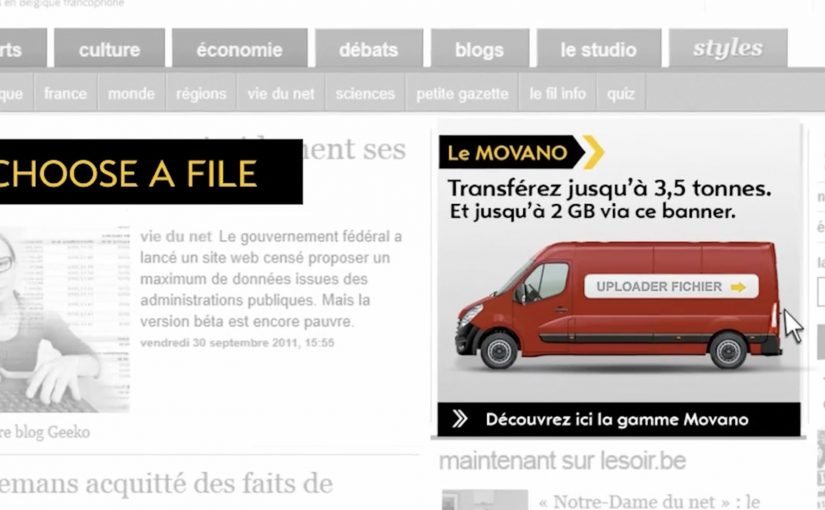
To promote the Opel Movano van range, McCannLowe created a banner that is both useful and innovative. Working like file transfer services such as YouSendIt or WeTransfer, the banner lets users upload up to 2GB of data “into the rear of the van” and send it to someone across the web.

The recipient then gets an email to download the file and learn about the Opel Movano. Simple, practical, and spot-on for the target audience. This is the right kind of B2B creativity because it turns “capacity” into something you can use.

In B2B and SME logistics markets, utility-based advertising wins when the ad itself performs a real job for the viewer. Here, “utility-based advertising” means the ad unit delivers a small, real service before it asks for attention.

When the ad behaves like a service

The smart move is that the interaction mirrors the product story. The Movano is built to carry stuff. So the banner becomes a carrying service for digital “stuff.” That alignment makes the message feel proved, not claimed. The real question is whether your creative can earn attention by doing a job your audience already needs done.

Extractable takeaway: If your product promise is functional, build a functional ad. A banner that does a real task can earn attention without needing a hard sell.

The mechanism: upload, send, deliver

The mechanic is easy to explain and easy to repeat. Choose a file. Upload it into the banner unit. Send it to a contact. The brand payload arrives as part of the delivery moment, which is when the recipient is most attentive. Here, “brand payload” is the branded context and message that rides along with the delivery. Because the brand arrives at the exact moment the task succeeds, the mechanism turns utility into positive brand proof.

In B2B commercial vehicle marketing, utility-first creative tends to work best when it removes friction inside an existing workflow.

Why this is a strong commercial vehicle play

Commercial vehicle advertising often struggles because capabilities blur together. This execution dramatizes “capacity” in a way people can feel immediately, and it does it in the same environment where business users already move files and coordinate work.

Service-first takeaways for B2B banners

  • Make the benefit experiential. If the product carries, let the ad carry.
  • Keep the flow obvious. One task, one outcome, no learning curve.
  • Use the recipient moment. Delivery creates a second touchpoint that feels useful, not intrusive.
  • Match the utility to the audience. File sending is naturally relevant for business users.
  • Keep branding inside the service. The brand should feel like the enabler, not the interruption.

A few fast answers before you act

What is the Opel Movano “File Mover” banner?

It is an interactive banner that works like a file transfer tool. Users upload a file into the banner, send it, and the recipient receives an email to download the file along with Opel Movano information.

Why is “utility” such a strong creative strategy in B2B?

Because it earns attention through usefulness. A business audience is more likely to engage when the ad helps them do something real, even briefly.

What makes this different from a standard lead-gen banner?

The value exchange is immediate. The user gets a working service, and the brand message is attached to the service delivery rather than gated behind a form.

What’s the biggest execution risk in a “service banner”?

Reliability and trust. If uploads fail, emails do not arrive, or the experience feels unsafe, users abandon quickly and the brand takes the blame.

How could a brand update this idea today?

Keep the same principle. Offer a real micro-service inside the ad unit. Then design the handoff so it is fast, secure, and clearly permission-based.