
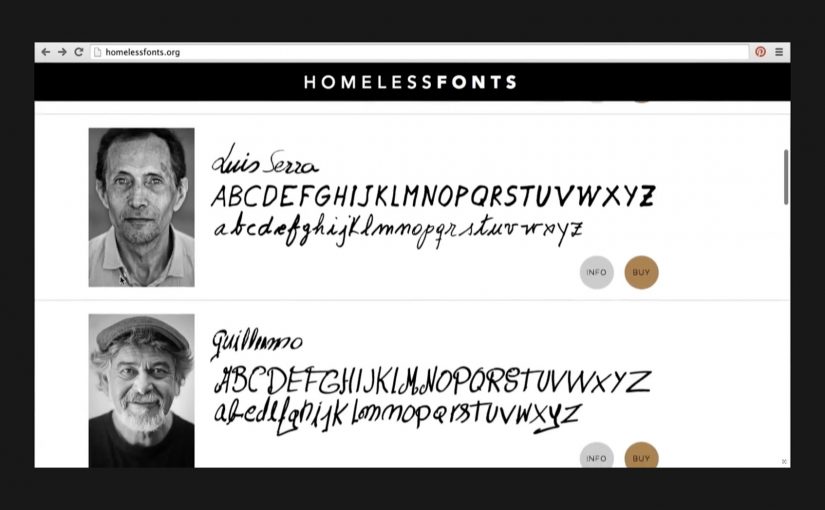
Homeless Fonts: Fonts from Cardboard Signs

When you walk by a homeless person holding a cardboard sign, you usually see an anonymous face struggling to survive. Homeless Fonts flips that moment. It turns the most visible part of street life. The handwriting. Into something people and brands can actually pay for.

From street sign to typeface

The Cyranos McCann teamed up with the Arrels Foundation in Barcelona to launch HomelessFonts.org. The site features fonts built from the real handwriting of local homeless people, available for purchase by marketers who want something more human than a default type library.

Here, a “font” is a downloadable typeface file that designers can license and use across ads, packaging, and digital interfaces, just like any other professional typeface.

In urban European cities, design-led micro-commerce can convert overlooked skills into dignified income streams.

Where the money goes

The money raised from the website is intended to support accommodation, food, social programs, and health care for people experiencing homelessness. For more information visit www.HomelessFonts.org.

Why this lands

It works because it asks brands to buy a useful asset instead of “donating to a cause.” You are not funding an abstract promise. You are paying for a tool that visibly changes the tone of your message, and the purchase itself carries a story your audience can recognize instantly.

Extractable takeaway: If you want purpose marketing to stick, attach the donation mechanic to a practical, reusable brand input (a font, a template, a dataset, a sound pack) so the act of funding also improves the work.

What it’s really trying to change

The real question is whether brands will pay for contribution instead of performative concern.

This is a stronger model than pure cause messaging because it gives people commercial value, not just visibility.

Beyond fundraising, the campaign reframes homeless people from passive recipients to contributors with identity and craft. The typefaces carry names and personality, and that shifts the conversation from pity to participation.

What to steal from Homeless Fonts

  • Sell a tool, not a feeling. Build the fundraising mechanic around something buyers genuinely need.
  • Make the proof visible. The output (handwriting) is instantly recognizable, which makes the story easy to retell.
  • Design for everyday reuse. The more places the asset can live (print, digital, packaging), the more sustainable the model becomes.
  • Keep the transaction simple. Clear product. Clear price. Clear destination for proceeds.

A few fast answers before you act

What is Homeless Fonts?

It’s a collection of purchasable fonts created from the handwriting of homeless people in Barcelona, sold via HomelessFonts.org.

Who created it?

The project was launched by the Arrels Foundation in partnership with Cyranos McCann.

How do brands actually use the fonts?

Like any licensed typeface. Designers can apply them in headlines, posters, packaging, social content, landing pages, and campaign visuals to add a distinctly human texture.

What does buying a font change versus asking for donations?

It turns support into a market exchange for a useful asset. That reduces “charity fatigue” and gives brands a concrete output that carries the story forward every time it’s used.

Where is the money intended to go?

The campaign describes proceeds being used for accommodation, food, social programs, and health care supporting people experiencing homelessness.
Plan: The Erasable Billboard for Girls’ Education

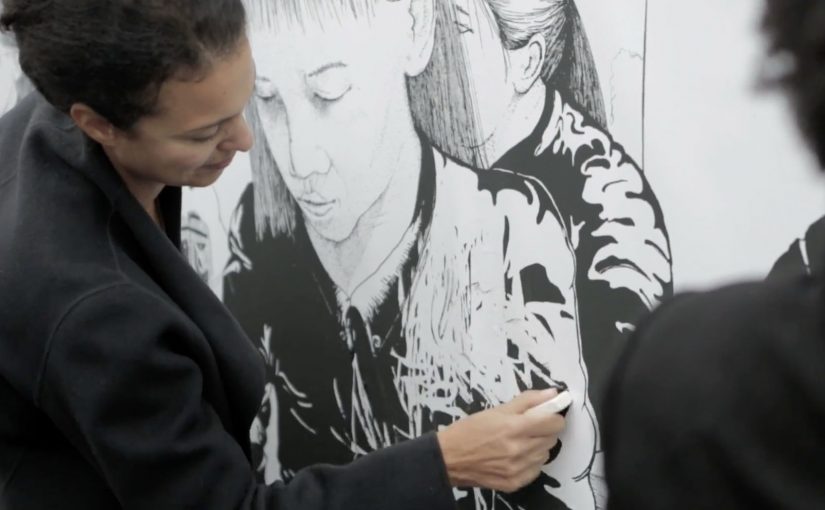
A large illustrated billboard appears in a busy city square. People donate, receive a simple eraser, and start rubbing away the artwork. As the top layer disappears, a second illustration is revealed underneath, shifting the story from girls working to girls going to school.

Plan has reported that tens of millions of girls worldwide are pushed into work instead of education, while in many less privileged countries boys are more likely to get access to schooling. To spark action, Plan and CLM BBDO created an erasable billboard with an illustration designed to be removed to reveal another illustration underneath. The billboard ran in central locations in Paris and Berlin. Passers-by were invited to donate in exchange for an eraser, then use it to change what the billboard showed.

Why the “erasable” mechanic is so strong

The mechanism does two jobs at once. It raises money, and it makes the issue understandable without explanation. The before-and-after is literal. Work disappears. School appears. The donor is not only informed. The donor performs the change. Cause-led campaigns should treat participation as the message, not a bonus layer.

Extractable takeaway: When the donor completes the transformation with their hands, the message becomes a memory and the donation feels consequential.

Definition-tightening: the eraser is not a gimmick. It is the interface, meaning the simple physical tool that gives the donor viewer control over the story. Because the act of erasing creates ownership, it makes someone more likely to donate, talk about it, and remember it.

In social-impact fundraising, participatory outdoor media can turn a small donation into a visible act of change that people feel in their hands.

The real question is whether your donation ask feels like participation or just passive sympathy.

What Plan is really buying

This is a public proof of participation. Instead of asking people to “care” in private, it makes caring visible, social, and shared. Every person who erases becomes a live endorsement that the issue matters enough to stop and act.

Steal this pattern: make giving tactile

  • Make the transformation physical. A tangible before-and-after beats a poster full of statistics.
  • Use the donation as the trigger. The action should only unlock after contribution, not before it.
  • Let participation create the content. The billboard changes because people change it.
  • Design for bystanders. Watching others erase is part of the persuasion.

A few fast answers before you act

What is the “Erasable Billboard” idea?

An illustrated billboard designed to be physically erased. Donors receive an eraser and reveal a second image underneath, shifting the story from girls working to girls going to school.

Why exchange a donation for an eraser?

Because it turns giving into an action. The eraser is a simple reward, but more importantly it is the tool that lets the donor create the transformation themselves.

What makes this more effective than a standard charity billboard?

It is participatory and observable. The public sees the billboard changing in real time, which builds social proof and makes the issue easier to grasp.

What is the main emotional lever?

Viewer control. The donor does not only learn about the problem. The donor performs a symbolic solution in front of others.

What is the biggest execution risk?

If the transformation is not instantly readable, people will not engage. The before-and-after needs to be obvious from a distance and satisfying up close.

Doctors Without Borders: Like Hunting

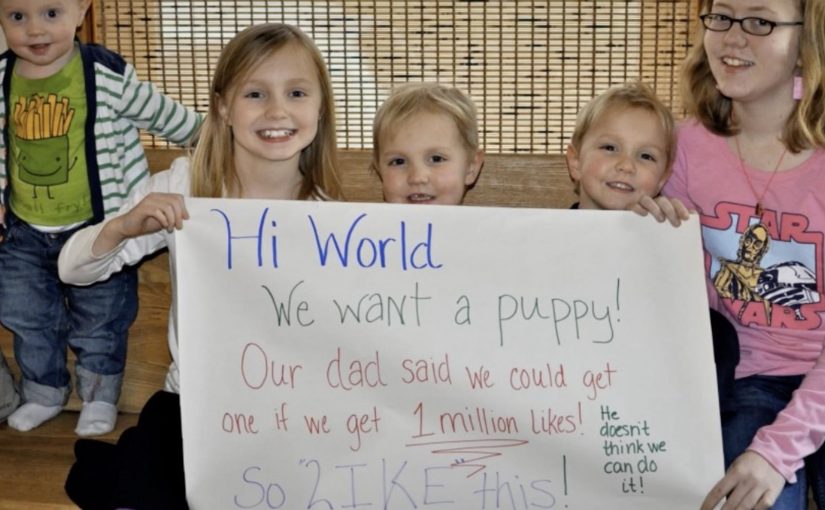
In the last months there have been cases of people uploading photos on Facebook and successfully asking for 1 million likes. So keeping that in mind, Doctors Without Borders decided to turn their campaign idea “good intentions don’t save lives” on its head and actually make people’s intentions count.

Through a special Facebook app people could create a post and ask their friends for likes while donating 1 Danish Krone to Doctors without Borders for each like they got. Each collection was run for 48 hours and only likes from your own Facebook friends counted. By setting a maximum amount you could also make sure you don’t go bankrupt. If your friends were too slow, you could also simply decide to donate more.

At the end of each donation drive people could post a picture saying thank you to all their friends who helped them donate. The campaign’s success is described as having made it a permanent solution and can still be found running for people who want to turn their friends likes into donation.

Turning “like hunting” into a donation engine

The mechanic is deliberately simple. Here, “like hunting” means asking friends to turn their likes into a capped donation total. You post, you ask for likes, and the counter becomes money. The 48-hour window adds urgency, and the “friends only” rule keeps it personal instead of turning it into a popularity contest across strangers.

In European nonprofit fundraising, micro-donations work best when the unit action is already a habit and the rules stay frictionless.

Why this lands on Facebook

It does not fight the attention behavior. It repurposes it. People already know how to like and how to help a friend. The campaign bundles those instincts and makes the cost feel manageable by letting the donor set a cap, then top up if momentum is slow. The real question is whether a low-value social signal can become a credible donation act, and this campaign proves it can when the cost is capped and the ask stays social.

Extractable takeaway: If you want participation at scale, do not ask people to learn a new behavior. Convert an existing social reflex into a counted contribution, and make the risk feel controllable.

What the “cap” is really doing

The maximum amount is more than budgeting. It is permission. When people know they cannot accidentally overspend, they are more willing to start, and starting is the hardest step in any donation flow.

What to steal for your next donation mechanic

  • Make the unit obvious. “One like equals one krone” is instantly understandable.
  • Time-box the drive. A short window creates a reason to ask now, not later.
  • Keep it inside the social graph. Friends-only engagement protects trust and reduces spam dynamics.
  • Build in safety rails. Caps remove fear, and optional top-ups preserve ambition.

A few fast answers before you act

What is Like Hunting?

It is a Doctors Without Borders fundraising mechanic that converts Facebook likes into donations, using a short, time-boxed “drive” created by an individual supporter.

Why does “friends-only likes” matter?

It keeps the action personal and credible, and it stops the drive from turning into mass like-begging from strangers. That helps the campaign feel like helping a person, not feeding an algorithm.

What makes the cap important?

The cap reduces perceived risk. People participate more readily when they know the maximum cost upfront, and the option to add more later keeps the mechanism flexible.

Why does the 48-hour window matter?

It gives the ask a deadline, which makes supporters more likely to post now and friends more likely to respond quickly. Without that time-box, the mechanic risks becoming passive background noise.

When should brands or NGOs use this pattern?

When there is a simple, repeatable action that people already perform socially, and when turning that action into a counted contribution can happen without heavy explanation or new habits.