

AI in Hollywood: Threat or Storytelling Upgrade?

AI is now part of everyday filmmaking. Some people see opportunity. Others see threat.

So, will AI destroy Hollywood and the film industry. Or will it change how we tell stories, who gets to tell them, and what “craft” even means.

AI is already in how films get made. Whether we admit it or not

The debate often sounds theoretical. Meanwhile, AI is already doing real work in how films get made. From early ideas to post-production: scripting support, concept design, scoring, editing assistance, voice work, and performance modification.

That matters for one simple reason. The question is no longer “Will AI arrive?”. The question is “What kind of AI use becomes normal, and under what rules?”.

If you look closely, the industry is already making that choice in small, easy-to-miss steps. The tools are frequently packaged as “features” inside software people already trust. Auto-transcription. Auto reframing for different screen formats. Tools that automatically cut out subjects from backgrounds. Tools that track motion in a shot. Noise reduction. Dialogue cleanup. Autotagging clips by faces or scenes. Call it machine learning, call it AI. The practical outcome is the same. Decisions that used to require time, specialists, or budget are getting compressed into buttons.

Because these features ship as defaults inside tools people already use, adoption becomes invisible, and “normal” shifts one button at a time.

The real question is how AI gets used, and what standards come with it.

In Hollywood production and modern brand storytelling teams, AI shifts the cost curve of production while raising the premium on taste, direction, and rights management.

AI is a tool. What matters is how you use it

There’s a repeating pattern in creative industries.

Extractable takeaway: When a tool compresses cost and time, the differentiator moves upstream to taste, direction, and the rules around what you are allowed to use.

A new tool arrives. People fear it will dilute artistry, eliminate jobs, and flood the market with mediocrity. Some jobs do change. Some workflows do get automated. Then the craft adapts, and the best creators use the tool to raise the ceiling, not lower the bar.

Sound did not kill cinema. Digital did not kill cinematography. Non-linear editing did not kill storytelling. CGI did not kill practical effects. What changed was access, speed, and the competitive baseline.

The sober takeaway is this. AI at its core is a tool. Like any tool, it amplifies intent. Without taste, it accelerates slop, meaning output that is fast but unconsidered. With taste, it accelerates iteration.

AI is leveling the playing field for filmmakers and creators

Here’s where the conversation gets practical.

AI lowers the cost of getting from idea to “something you can show.” It helps smaller teams and individual creators move faster. It also lets bigger studios compress timelines.

That’s the real shift. Capability is becoming less tied to budget, and more tied to taste, direction, and how well you use the tool.

Does AI help you be creative, or does it replace you?

Used well, AI helps you unlock options and enhance what you already made. It is not about creating a film from scratch. You still have to create. You still have to shoot. You still have to film. The difference is access. AI puts capabilities that used to require six-figure VFX budgets within reach, so more of your ideas can make it to the screen.

The line that matters is this: enhancement, not replacement.

The dark side. When “faster and cheaper” wins

The risk is not that AI exists. The risk is that business pressure pushes studios to use it as a shortcut.

When “cheap and fast” replaces craft, the damage shows up quickly: fewer human jobs, weaker trust, and more content that feels engineered instead of made. This is where AI stops being a creative tool and becomes a replacement strategy.

The pragmatic answer. It’s not AI or artists. It’s AI and artists

The realistic future is hybrid.

The best work will blend the organic and the digital. It will use AI to strengthen a filmmaker’s vision, not replace it. CGI can strengthen practical effects, and editing software can assemble footage but not invent the story. Similarly, AI can support creation without owning authorship.

So the goal is not “pick a side.” The goal is to learn how to use the machine without losing the magic. Also to make sure the tech does not drown out the heart.

AI is here to stay. Your voice still matters

AI is not going away. Ignoring it will not make it disappear. Using it without understanding it is just as dangerous.

The creators who win are the ones who learn what it can do, what it cannot do, and where it belongs in the craft.

Because the thing that still differentiates film is not gear and not budget. It is being human.

AI can generate a scene. It cannot know why a moment hurts. It can imitate a joke. It cannot understand why you laughed. It can approximate a performance. It cannot live a life.

That’s why your voice still matters. Your perspective matters. Your humanity is the point.

What to change in your next AI-assisted cut

  • Set the “allowed use” rules first. Decide what inputs are permitted, what must be licensed, and what needs explicit consent.
  • Use AI to expand options, not to dodge choices. Faster iteration is only useful if a human still owns direction and taste.
  • Protect trust as a production requirement. If viewers or talent feel tricked, the work loses leverage no matter how efficient it was to make.
  • Design for credit and accountability. Make it clear who is responsible for decisions, even when parts of the pipeline are automated.

A few fast answers before you act

Will AI destroy Hollywood?

It is more likely to change how work is produced and distributed than to “destroy” storytelling. The biggest shifts tend to be in speed, cost, and versioning, meaning producing multiple tailored cuts quickly. The hardest parts still sit in direction, taste, performance, and trust.

Where is AI already being used in film and TV workflows?

Common uses include ideation support, previs, VFX assistance, localization, trailer and promo variations, and increasingly automated tooling around editing and asset management. The impact is less “one big replacement” and more many smaller accelerations across the pipeline.

What is the real risk for creators?

The risk is not only job displacement. It is also the erosion of creative leverage if rights, compensation models, and crediting norms lag behind capability. Governance, contracts, and provenance, meaning where assets came from and what rights attach to them, become part of the creative stack.

What still differentiates great work if everyone has the same tools?

Clear point of view, human insight, strong craft choices, and the ability to direct a team. Tools compress execution time. They do not automatically create meaning.

What should studios, brands, and agencies do now?

Set explicit rules for data, rights, and provenance. Build repeatable workflows that protect brand and talent. Invest in directing capability and taste. Treat AI as production infrastructure, not as a substitute for creative leadership.
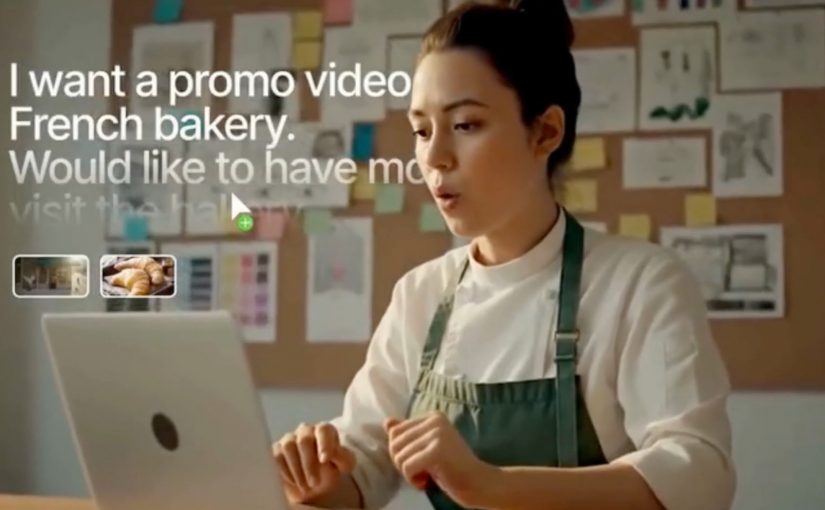

InVideo AI: Future of Ads, or Slop at Scale?

InVideo just dropped a campaign that might be one of the sharpest AI ads to date. Or one of the most controversial.

Not because the ad itself is “good” or “bad.” But because of what it demonstrates.

The premise is simple. A local business wants awareness and local footfall. A single prompt arrives. Then a “creative team” appears on screen. A writer, director, producer, and sound designer. They brainstorm, storyboard, pull assets, debate tone, change direction midstream, swap narrators, land a punchline, and ship a finished promo.

The twist is that the “team” is not human. It is AI agents collaborating in real time. Here, “AI agents” means role-based AI workers that each own part of the task and iterate toward a shared output.

Some people will see this and think: finally, creativity at the speed of thought. Others will see it and think: here comes manufactured content. At industrial scale.

So let’s unpack what’s actually happening here. Not the hype. Not the fear. The shift.

What this campaign is really showing

On the surface, it’s a product story.

Under the surface, it’s a proof-of-concept for a new production model. Prompt-to-video (turning a single intent into a finished video in one workflow), orchestrated by role-based agents, pulling from your assets, and iterating like a team would.

That matters because we are crossing a line:

  • Yesterday: AI helped you edit.
  • Today: AI can generate components.
  • Now: AI attempts to run the full production loop. Brief to concept to execution to polish.

If that sounds incremental, it isn’t. The bottleneck in content has never been “ideas.” It has been translation. Turning intent into something shippable, on brand, on time, and fit for a channel.

This is what changes. The translation cost collapses.

Because the work is split into roles that can iterate through decisions, the system can converge on a shippable cut faster than a single prompt that produces one draft.

The “agents” idea. Why it clicks so hard

Most AI video tooling gets described as features: text-to-video, voiceover, stock replacement, templates.

Agents are a different mental model. They mimic how work gets done.

Instead of one tool trying to be everything, you have multiple role-based systems that divide the labor:

  • Writer: Hook, script, narrative beats
  • Director: Framing, pacing, scene intent
  • Producer: Assets, structure, feasibility, assembly
  • Sound designer: Voice, music cues, timing, emphasis

The output is not just “a video.” It’s a workflow that looks like collaboration.

And that’s why the campaign is sticky. It doesn’t just show a capability. It shows an operating model.

Fast definition. What “AI agents” means in this context

AI agents are role-based AI workers that take responsibility for a portion of the task, coordinate with other roles, and iteratively refine toward a shared goal.

In practical terms, this is orchestration. Task decomposition. Decision loops. And multi-step iteration that feels closer to a real production process than a single prompt and a single output.

In enterprise marketing teams, agentic video tools compress production time while making governance, briefing quality, and brand standards the real constraints.

Why the bakery storyline matters. It’s not about video

The reason this lands is the bakery.

Extractable takeaway: When production becomes cheap and fast, advantage shifts from making assets to owning the constraints. Brief clarity, brand standards, and POV become the bottleneck.

A small business is a stand-in for every team that has historically been excluded from “premium” creative production. Not because they lacked ideas, but because they lacked:

  • Budget
  • Time
  • Specialist talent
  • Access to production infrastructure

If AI production becomes cheap and fast, a new baseline emerges.

Customer expectations tend to move in one direction. Up.

We’ve seen this pattern repeatedly elsewhere:

  • Shipping went from weeks to days. Then days to “why isn’t it here tomorrow?”
  • Support went from office hours to 24/7 chat.
  • Information went from gatekept to instant.

Content is heading the same way.

When a local business can generate credible, channel-ready creative quickly, the competitive advantage shifts away from “who can produce” and toward “who can differentiate.”

So is this the future of content. Or a shortcut that kills creativity?

Both outcomes are plausible, because the tool is not the strategy.

Here are the three trajectories I think matter.

1) Creativity gets unlocked for more people

AI reduces the friction between an idea and a first draft. That can empower founders, small teams, educators, non-profits, internal comms teams, and marketers who have always had the brief but not the bandwidth.

If you’ve ever had a good concept die in a doc because production was too heavy, you know how big this is.

The upside version of the future looks like:

  • More experimentation
  • More niche creativity
  • More localized storytelling
  • Faster learning cycles

2) The internet floods with “content wallpaper”

When production becomes cheap, volume spikes. When volume spikes, attention gets harder. When attention gets harder, teams chase what performs. When teams chase what performs, sameness creeps in.

The downside version of the future looks like:

  • Infinite mediocre ads
  • Homogenized pacing and tone
  • Interchangeable visual language
  • “Good enough” content dominating feeds

That’s the fear behind “slop at scale.” Not that content exists. That it becomes meaningless.

3) Premium creative becomes more premium

There is a third outcome that’s often missed.

When baseline production becomes abundant, true differentiation becomes rarer.

Human advantages do not disappear. They concentrate around the things AI struggles with reliably:

  • Strategy and intent. What are we trying to change in the market?
  • Cultural nuance. What does this mean here, with these people?
  • Original point of view. What do we stand for that others don’t?
  • Brand taste. What is “on brand” beyond templates?
  • Ethical judgment. What should we not do even if we can?
  • Lived insight. What’s the human truth behind the message?

In that world, AI does not replace creative leaders. It raises the bar on them.

The practical question every marketing leader needs to answer

People debate whether AI can “replace creatives.” That’s not the operational question.

The real question is: Where do you want humans to be irreplaceable, and where do you want machines to be fast?

Because if AI handles production, your competitive edge moves to:

  • The quality of your briefs
  • The clarity of your brand system
  • The strength of your POV
  • The governance of your outputs
  • The measurement of creative impact
  • The speed of iteration without brand drift

A simple maturity test you can run this week

If AI can produce at scale, the risk is not “bad videos.” It’s unmanaged systems.

Ask this:

Who owns the continuous loop of prompting, testing, learning, scaling, and deprecating AI-driven creative workflows in your organization?

If the answer is “no one,” you don’t have an AI capability. You have scattered experiments.

My take

Production is getting cheaper. Differentiation is getting harder.

So the real decision is not whether you can generate more content. It’s whether you can scale output without losing taste, brand truth, and accountability.

Is this the future of content. Or a shortcut that kills creativity? It depends on who owns the brief, who owns the guardrails, and who is willing to say no.

Operating rules for agentic video ads

  • Make ownership explicit. Assign a named owner for the prompting, testing, scaling, and deprecating loop.
  • Brief before volume. Treat brief quality as the lever, not output quantity.
  • Lock the brand system first. Define templates, tone rules, and claim constraints before you automate.
  • Measure drift, not just speed. Track time saved alongside brand drift and performance deltas.
  • Use “no” as a control. Write down what should not ship, and enforce it with review gates.

A few fast answers before you act

Can AI agents replace a creative team?

They can replicate parts of the production workflow and speed up iteration. They do not replace strategy, taste, accountability, and cultural judgment, which still need named human owners.

What does “prompt-to-video” actually mean?

It’s the ability to turn a single intent into a finished video. Script, scenes, voice, music, edit, and formatting produced in one workflow without traditional filming or manual timeline work.

Does this inevitably create “slop at scale”?

It can if teams optimize for speed and volume over differentiation. The practical antidote is stronger briefs, sharper constraints, and explicit review gates for brand and claims.

Where should humans stay irreplaceable?

Brief quality, brand standards, and the decision-making layer. What to say, what not to say, what is true, what is appropriate, and what is distinctive.

What is the first governance step before scaling AI video?

Assign ownership for the continuous loop. Prompting, testing, learning, scaling, and deprecating workflows, plus a clear approval policy for what can ship.

What is a safe pilot to run in the next 2 weeks?

Pick one repetitive internal format, lock a brand template, and run A to B tests with human review. Measure time saved, brand drift, and performance deltas before expanding to paid ads.

Mirakl Santa Quits

A Christmas brand film made with generative AI

Mirakl, the ecommerce software and marketplace platform provider, has launched a Christmas campaign built around a 60-second brand film titled “Santa Quits”. The creative twist is not the plot. It is the production method.

The film was created with AiCandy Australia. Mirakl describes every character and scene as AI-generated, then shaped into a finished narrative through human creative direction and filmmaking craft.

Santa quits, the world panics, and an elf restarts operations

In the film, Santa resigns under modern seasonal pressure, triggering worldwide protests as people demand Christmas be saved. The resolution is deliberately on-theme. An elf restarts the operation using “agentic commerce” powered by Mirakl Nexus, restoring gift delivery in time for Christmas Eve.

Here, “agentic commerce” means software-driven agents that can search, decide, and execute commerce workflows across systems under defined guardrails, with humans setting policy and handling exceptions.

When the plot is the product truth

The real question is how a B2B commerce platform proves it is built for an agent-driven future without hiding behind abstract slides and buzzwords. This film answers by turning the operating model into the story: seasonal demand overwhelms legacy operations, then an agentic system orchestrates recovery.

By using generative AI to produce the film while telling a story about AI-powered commerce, Mirakl makes the medium itself part of the evidence, which is why “agentic commerce” lands as an operating model rather than a feature label.

In global B2B ecommerce infrastructure categories, credibility comes from showing how your system holds together when pressure spikes and timelines are non-negotiable.

Why this lands as B2B marketing

For marketers, the move is not “AI-made ad”. It is alignment. Message and medium point to the same idea: when expectations become impossible, throwing more people and more dashboards at the problem stops working. You need infrastructure designed for AI-assisted execution, not just human effort at higher speed.

Extractable takeaway: A B2B brand film earns attention when it behaves like a systems demo, showing what breaks under stress, what orchestrates the fix, and what customers can reliably expect.

The production lesson: AI changes the economics of craft

AiCandy’s claim is not that AI makes creativity optional. It is that AI filmmaking can deliver cinematic work faster and on tighter budgets, as long as human direction stays in charge of narrative, tone, and finishing. That mirrors Mirakl’s product posture: automation scales execution, while humans define intent and manage exceptions.

What to steal from this campaign

This is a smart B2B move because it turns a future-facing concept into a concrete failure mode and a concrete recovery path. If you reduce it to “AI-made brand film”, you miss the strategic structure.

The film works because it connects three things into one coherent story:

  • A familiar cultural moment (Christmas pressure).
  • A clear operational failure mode (the system cannot scale).
  • A product truth (agentic commerce needs infrastructure).

Copy the system, not the gimmick. Make your narrative demonstrate the future you are selling. Then make the medium reinforce the message.


A few fast answers before you act

What is “Mirakl Santa Quits”?

“Santa Quits” is a Mirakl Christmas campaign built around a 60-second brand film. Mirakl positions it as a story about seasonal commerce pressure and how agentic commerce can restore operations at scale.

Who created the film and how was it produced?

The film was created with AiCandy Australia. Mirakl states that characters and scenes were produced via generative AI, then shaped into a finished narrative through human creative direction and filmmaking craft.

What does “agentic commerce” mean in this context?

In this story, agentic commerce refers to software-driven agents that can execute commerce operations with a degree of autonomy, such as coordinating tasks and workflows to restart and run delivery operations under defined guardrails. In the film’s narrative, an elf uses agentic commerce powered by Mirakl Nexus to restore gift delivery.

Why is this campaign notable for marketers?

Mirakl uses AI to tell a story about AI-powered commerce, aligning message and medium. It is also a concrete example of generative AI being used for a brand film, paired with human creative direction, to reach a cinematic outcome under real constraints.

What’s the real business point behind the “Santa Quits” story?

The plot frames seasonal demand as an operational stress test. The resolution suggests that automation and agentic systems can restart and scale commerce operations quickly, restoring reliability when timelines are non-negotiable.

What is a practical way to apply this idea without making “AI theatre”?

Start with one high-frequency content format and define clear quality criteria and approval checkpoints. Then measure cycle-time, cost, and consistency. If you cannot show repeatable outcomes, you are experimenting, not building a scalable capability.