The LivingSocial Taxi Experiment

Taxis are becoming a great media for unexpected cool advertising. In London, LivingSocial took over an everyday taxi and converted it into a surprising and delightful experience.

The objective was simple, and that was to create buzz around their website livingsocial.com, and at the same time showcase their many great discounts. So when unsuspecting passengers hailed this special taxi and got inside, there were give a choice i.e. carry on to their original destination, or ‘roll the dice’ and go for an exciting experience…

MINI: Photo Box Billboard

A billboard that turns fans into the creative

MINI has launched an innovative electronic billboard on Berlin’s Kurfürstendamm shopping boulevard. The billboard is connected to a Photo Box booth that captures the faces of MINI fans and puts them onto a massive screen along with each participant’s favourite MINI model, for a chance to win their preferred car.

Contestants have four colours and four models to choose from, including the MINI Hatch, Convertible, Clubman and Countryman.

The mechanic: Photo Box in Berlin. Facebook everywhere else

On the street, you step into the Photo Box, clamp on a pair of headphones, pick your colour and model, and the system outputs a ready-to-share moment on a giant public screen.

Fans from around the world can also join through the MINI Facebook app, where you can snap a picture with your webcam wearing a pair of virtual headphones in your favourite MINI colour.

In high-footfall city retail corridors, interactive out-of-home turns passersby into opt-in media by making participation itself the content.

Why it feels modern: ecommerce choice, but on a building

The experience borrows the best part of online shopping. Configuration. without forcing the rest of it. Specs, comparisons, and checkout. The “product” is self-expression, delivered in seconds, in public.

That public context matters. It creates instant social proof, and it makes the moment feel bigger than a personal post because it physically occupies the street.

The business intent: acquisition through identity

This is acquisition marketing that avoids hard selling. MINI lets people declare a preference. model plus colour. and then wraps that declaration in a contest mechanic. The brand gets reach, participation data, and a stream of shareable assets without asking people to create anything from scratch.

What to steal for your next interactive OOH build

  • Make the choice set small and satisfying. Four colours and four models is enough to feel personal, without feeling complex.
  • Design one iconic prop. Here, the headphones act as a visual signature that unifies street and Facebook participation.
  • Let the environment do the distribution. A giant screen creates built-in attention and bystander reach.
  • Mirror the experience online. The Facebook version keeps the same core mechanic so the idea travels beyond the location.

A few fast answers before you act

What is MINI’s Photo Box billboard activation?

It is an interactive out-of-home experience where fans take a photo, choose a MINI model and colour, and see themselves displayed on a massive screen, with a chance to win their preferred car.

How does the Facebook app extend the idea?

It recreates the same participation loop online. People take a webcam photo, add the virtual headphones in their chosen colour, pick a model, and join the same campaign experience from anywhere.

Why does this work as acquisition marketing?

It converts brand preference into a public, shareable artifact. The configuration step makes it feel personal, and the big-screen moment adds social proof and reach.

Coca-Cola: Happiness Truck

Happiness Machine, now with a Rio beach twist

Coca-Cola, whose Happiness Machine video was described as a runaway hit for the brand last year with 3 million views, is back with a sequel that offers more of an international flavor.

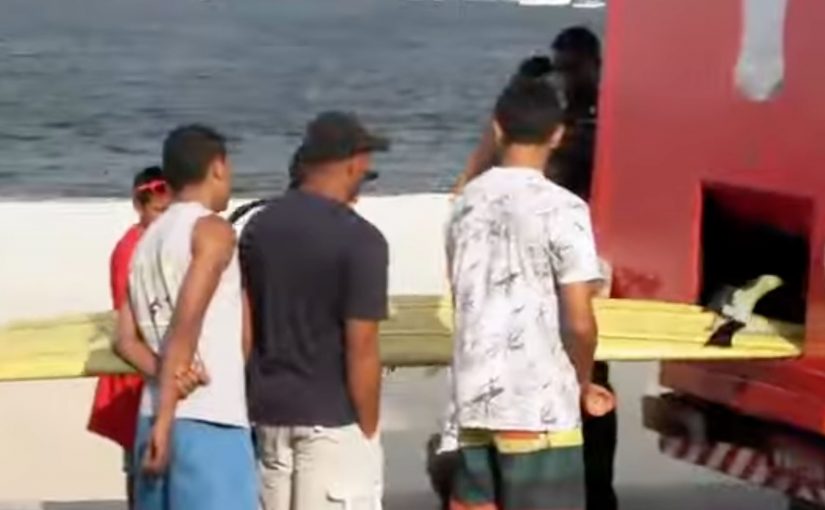
“Happiness Truck” takes place in Rio de Janeiro and is a twist on the original idea, which showed a Coke machine that spit out free Cokes, flowers, balloon animals, pizza and submarine sandwich at a college cafeteria. This time around, a special truck dispenses free Cokes as well as a beach toy, a surfboard, sunglasses, beach chairs, t-shirts and soccer balls.

The mechanic: one button, a public reward loop

The idea is almost embarrassingly simple. Put a big, inviting “PUSH” button on a branded truck. Let passersby trigger it. Then over-deliver on what comes out. Drinks first, then gifts that match the location and mood.

The Coca-Cola Happiness Truck is an experiential marketing activation where a branded truck dispenses free drinks and beach items to people who press a large button, turning a giveaway into a shared street moment.

In global FMCG marketing, these activations work best when the surprise is immediate, the moment is public, and the brand behavior feels generous rather than promotional.

Why it lands: the brand promise becomes observable

People do not need to be convinced by copy. They watch someone press a button and receive something real. The crowd reaction provides social proof, and the escalating gifts create a mini narrative that keeps people watching.

The Rio-specific items. surfboards, beach chairs, sunglasses. make the generosity feel locally tuned, not copy-pasted from the first film.

The business intent behind the “international sequel”

This is a sequel strategy that scales a successful format while refreshing the setting. It keeps the core concept intact. surprise rewards from a familiar Coca-Cola object. and broadens it into a global “where will happiness strike next” platform.

It also turns brand warmth into a repeatable content engine. Each location can add its own culturally legible gifts, which gives the series room to travel without changing the structure.

What to steal for your next street experience

  • Make the trigger obvious. One button beats instructions.
  • Design escalation. Start with the expected reward, then add unexpected layers to hold attention.
  • Localize the gifts. Choose items that instantly signal place and mood.
  • Capture the crowd, not just the hero. The bystanders are the credibility layer and the amplification engine.

A few fast answers before you act

What is Coca-Cola’s Happiness Truck?

It is a street activation in Rio de Janeiro where a branded truck dispenses free Coca-Cola and beach-themed gifts to passersby who press a large button, extending the earlier Happiness Machine concept.

How is it different from the original Happiness Machine?

The original centered on a vending machine in a cafeteria. Happiness Truck moved the same “surprise generosity” mechanic into the street and tailored the rewards to a Rio beach context.

Why does the push-button format work so well?

It removes friction and creates instant social proof. One simple action triggers a visible reward, so the story is easy to understand, watch, and retell.