
Coca Cola Friendship Machine

Coca Cola Friendship Machine

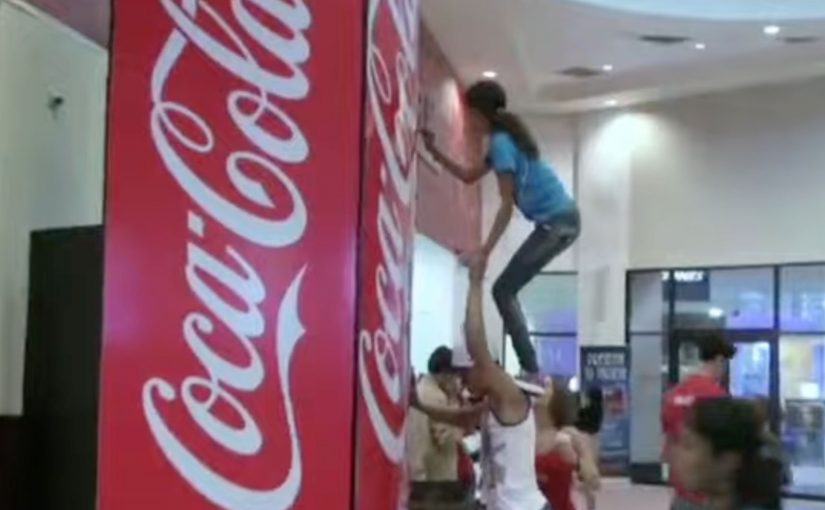
You walk up to a Coke machine that is about 12 feet tall. You cannot reach it alone. You ask a buddy for a boost. When you finally press the button, the machine rewards the teamwork by dispensing two Cokes instead of one.

What Coca-Cola is doing with the “Friendship Machine”

The game of vending machine one-upsmanship between Coca-Cola and PepsiCo continues with Coke’s “Friendship Machine”. To celebrate International Friendship Day, Coca-Cola in Argentina plants machines that appear to be about 12 feet tall and require that you ask a buddy for a boost to use it. As a reward, the Coke machine dispenses two Cokes instead of one.

In consumer brands running physical activations in public spaces, engineered constraints can be the simplest way to force a real-world social moment.

Why the Friendship Machine lands

Because the machine is too tall to use alone, it makes asking for help the trigger, which is why the second Coke feels like earned, shared generosity rather than a giveaway. Here, “friction” means a deliberate extra step that creates a specific behavior before the reward.

Extractable takeaway: If you want sharing to happen, design the mechanic so cooperation is required to unlock the value, not merely suggested after the fact.

The real question is whether your activation can make cooperation the trigger for the reward, instead of bolting “share” onto the end.

This is a stronger pattern than generic “share to win” mechanics because the social interaction is visible, immediate, and hard to skip.

The idea builds on Coke’s “Happiness Machine” viral video, where a machine keeps surprising students with free extras like soda and pizza. Coke also updates that generosity pattern with a “Happiness Truck” video, where a truck gives out Cokes alongside summer gear like surfboards, beach toys, and sunglasses.

PepsiCo responds with its own “Social Vending Machine” that lets you gift free Pepsi’s to friends and strangers via a text message.

How to steal this mechanic without copying it

  • Make teamwork the unlock. Ensure the reward only happens after a small, observable act of cooperation.
  • Design “fair friction”. The obstacle should feel purposeful, not annoying, and it should clearly connect to the reward.
  • Pay out in shared value. Give a two-person reward so the help feels reciprocated, not exploited.
  • Anchor to a moment people recognize. A simple calendar hook (like Friendship Day) makes the story easier to retell.

A few fast answers before you act

What is the Coca-Cola Friendship Machine?

It is a Coke machine designed to be too tall to use alone, so you need a friend’s help. When you do it together, it dispenses two Cokes as the reward.

Why make the machine intentionally difficult to use?

Because the friction creates the point. It forces a social interaction first, then makes the reward feel earned and shared, not just handed out.

How do the Happiness Machine and Happiness Truck relate?

They establish the “unexpected generosity” pattern. The Friendship Machine applies the same idea, but makes cooperation the trigger instead of surprise alone.

What makes this different from a typical “share to win” campaign?

The social action happens before the reward and in public. The mechanic makes cooperation unavoidable, instead of asking people to share after they already got the value.

How does this compare to PepsiCo’s Social Vending Machine?

Pepsi’s approach makes gifting the feature via text. Coke’s approach makes in-person collaboration the feature by requiring help at the machine itself.
Coca-Cola: Happiness Truck

Coca-Cola: Happiness Truck

Happiness Machine, now with a Rio beach twist

Coca-Cola, whose Happiness Machine video was described as a runaway hit for the brand last year with 3 million views, is back with a sequel that offers more of an international flavor.

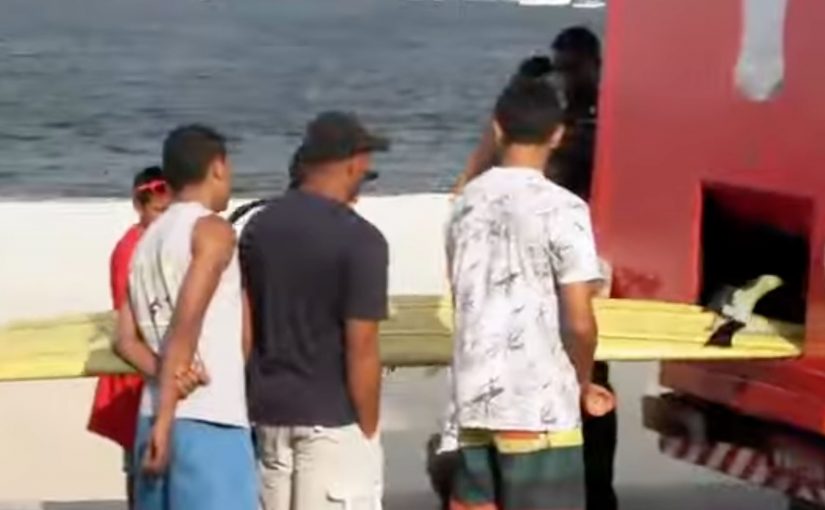
“Happiness Truck” takes place in Rio de Janeiro and is a twist on the original idea, which showed a Coke machine that spit out free Cokes, flowers, balloon animals, pizza and submarine sandwich at a college cafeteria. This time around, a special truck dispenses free Cokes as well as a beach toy, a surfboard, sunglasses, beach chairs, t-shirts and soccer balls.

The mechanic: one button, a public reward loop

The idea is almost embarrassingly simple. Put a big, inviting “PUSH” button on a branded truck. Let passersby trigger it. Then over-deliver on what comes out. Drinks first, then gifts that match the location and mood. Here, “public reward loop” means one person triggers the moment, everyone sees the payoff, and the crowd reaction invites the next press.

The Coca-Cola Happiness Truck is an experiential marketing activation where a branded truck dispenses free drinks and beach items to people who press a large button, turning a giveaway into a shared street moment.

In global FMCG marketing, these activations work best when the surprise is immediate, the moment is public, and the brand behavior feels generous rather than promotional.

Why it lands: the brand promise becomes observable

People do not need to be convinced by copy. They watch someone press a button and receive something real. The real question is whether bystanders can understand the payoff without explanation. The crowd reaction provides social proof, and the escalating gifts create a mini narrative that keeps people watching. The Rio-specific items, surfboards, beach chairs, sunglasses, make the generosity feel locally tuned, not copy-pasted from the first film. Because the trigger is public and the payoff is instant, the activation creates social proof without explanation.

Extractable takeaway: If the audience can see the action and the reward at a glance, you earn belief through visible behavior, not through messaging.

The business intent behind the “international sequel”

This is a sequel strategy that scales a successful format while refreshing the setting. It keeps the core concept intact. Surprise rewards from a familiar Coca-Cola object. and broadens it into a global “where will happiness strike next” platform.

It also turns brand warmth into a repeatable content engine. Each location can add its own culturally legible gifts, which gives the series room to travel without changing the structure.

Steal this street-activation pattern

This is worth copying when you can make the trigger obvious and the payoff immediate in public.

  • Make the trigger obvious. One button beats instructions.
  • Design escalation. Start with the expected reward, then add unexpected layers to hold attention.
  • Localize the gifts. Choose items that instantly signal place and mood.
  • Capture the crowd, not just the hero. The bystanders are the credibility layer and the amplification engine.

A few fast answers before you act

What is Coca-Cola’s Happiness Truck?

It is a street activation in Rio de Janeiro where a branded truck dispenses free Coca-Cola and beach-themed gifts to passersby who press a large “PUSH” button.

How is it related to the Happiness Machine?

It is described as a sequel that keeps the same surprise-generosity structure, but moves it from a cafeteria vending machine to a public street setting.

What is the core mechanic, step by step?

A public trigger creates a clear moment of action. An immediate reward lands first. Then the activation escalates with location-fit gifts, and filmed reactions provide the proof and the content.

Why does the push-button format work so well?

It removes friction and makes the story instantly legible. One simple action creates a visible payoff, so bystanders understand it immediately and social proof builds on the spot.

Why does localization matter in this execution?

The Rio-specific items make the generosity feel tuned to the place and mood, not copy-pasted. That detail makes the sequel feel fresh while keeping the structure familiar.

What business intent is this kind of activation serving?

It turns a brand promise into observable behavior and a repeatable content format. The same structure can travel to new locations without changing the concept.

Coca-Cola: Where Will Happiness Strike Next

Coca-Cola: Where Will Happiness Strike Next

A vending machine that behaved like a brand promise

The simplest activations often travel the farthest when the “idea” is visible in one glance. Coca-Cola’s Happiness Machine is a clean example of that kind of instantly understood storytelling.

A Coca-Cola vending machine was transformed into a happiness machine that delivered “doses” of happiness by dispensing more than people expected from a normal purchase.

How the Happiness Machine mechanism worked

The mechanism was a familiar object with an unexpected behavior.

A vending machine is supposed to be transactional. Insert money, get a product. By breaking that script and delivering more than expected, the machine turned an everyday moment into a surprise experience that people immediately wanted to share.

The physical interface did the heavy lifting. No explanation was required because the “before versus after” was obvious in real time.

In global FMCG organizations, activations scale faster when a bystander can understand the payoff in three seconds.

Why the surprise felt contagious

Surprise creates attention, but generosity creates warmth. The experience worked because it did not feel like a trick. It felt like a gift. That distinction matters.

Extractable takeaway: Brands should pair a surprise twist with generosity so sharing feels like celebrating people, not exposing them.

People are happy to share content when it makes them look human, not gullible.

And because the moment happened in public, reactions became social proof. Social proof here means other people’s visible reactions validating that the moment is worth paying attention to.

The business intent behind “doses” of happiness

The intent was to make Coca-Cola’s “happiness” positioning tangible in a way advertising rarely can.

The real question is whether your brand promise can be experienced in public without anyone needing a caption.

Instead of describing a feeling, the brand staged it. The vending machine became a repeatable format that produced real reactions. Those reactions became content, and that content extended the experience far beyond the original location.

Stealable moves from the Happiness Machine

  • Use a familiar object. If people understand the baseline instantly, the twist lands faster.
  • Break a script with generosity. “More than expected” creates goodwill and shareability.
  • Design for public reaction. The audience is not only the participant. It is everyone watching.
  • Make the brand promise physical. If your positioning is emotional, create a moment people can feel, not just read.

A few fast answers before you act

What is the Happiness Machine, in one sentence?

A normal Coca-Cola vending machine behaves unexpectedly by giving people more than they paid for, creating a gift moment instead of a transaction.

How does the mechanism work?

Use a familiar object. Break the expected script. Deliver an instant, legible payoff. Let public reactions create social proof and distribution.

Why does this kind of surprise travel so well?

Because the story structure is clean. Normal situation. Unexpected twist. Human reaction. That sequence is easy to capture and easy to share.

What business intent does this serve?

It makes the “happiness” positioning tangible. Instead of describing a feeling, the brand stages a moment people can experience and witness.

What can brands steal from this execution?

Keep the setup simple, make the payoff instantly understandable, and design for spectators as much as participants. The crowd is part of the creative.

What should you measure if you copy this pattern?

In-the-moment attention and dwell time, organic capture and shares, sentiment, and recall. Also track whether people retell the action, not just the logo.